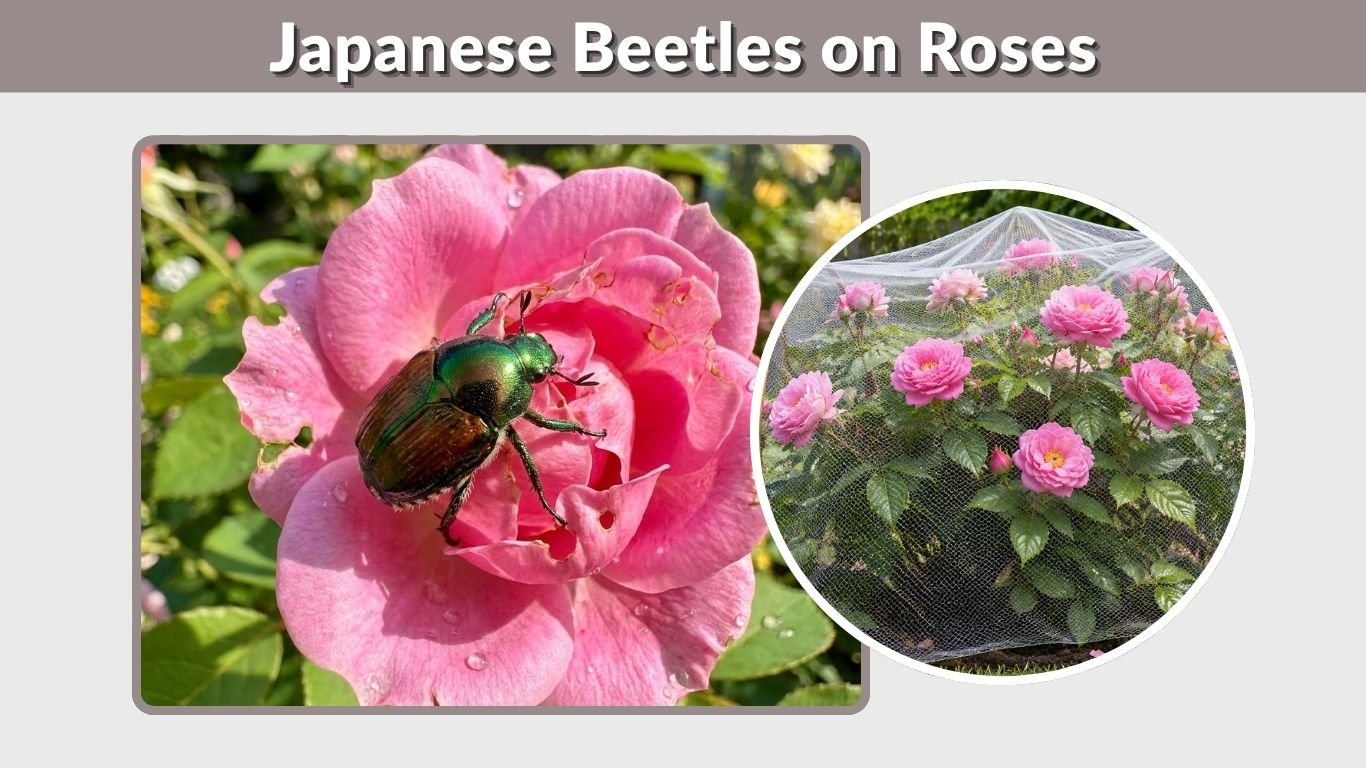
Japanese beetles on roses can quickly turn beautiful flowers and healthy leaves into damaged, skeletonized foliage. These metallic green and copper-colored insects feed on rose petals, buds, and leaves, sometimes gathering in large numbers. Their feeding can ruin blooms and weaken young or stressed plants. Fortunately, several effective methods can reduce Japanese beetle damage, including handpicking, physical barriers, and carefully selected treatments. Understanding why these pests attack roses, how to identify them, and which control methods work best can help gardeners protect their rose bushes.
Why Are Japanese Beetles Attracted to Roses?
Japanese beetles (Popillia japonica) are strongly attracted to roses because they provide tender leaves, flower petals, and other suitable feeding surfaces. Adult beetles feed on hundreds of plant species, but roses are among their preferred hosts. Once several beetles begin feeding, damaged plant tissues release odors that can attract additional beetles, increasing the severity of an infestation.
Why Do Japanese Beetles Like Rose Bushes?
Rose bushes provide abundant food during the summer, when adult Japanese beetles are most active. The insects often gather on open flowers and developing buds, consuming petals and tender foliage.
They are especially attracted to some light-colored blooms. When multiple beetles feed on the same flower, they can destroy its appearance within a short period.
When Do Japanese Beetles Attack Roses?
Japanese beetles generally emerge during early summer, often beginning in June or July in much of the United States.
Adult feeding typically continues for six to eight weeks, although seasonal timing varies by location and temperature. Beetles are particularly active during warm, sunny weather and often gather on exposed flowers.
How to Identify Japanese Beetle Damage on Roses

Recognizing Japanese beetle damage early can prevent more extensive feeding. These insects chew flower petals and leaf tissue, leaving irregular holes and damaged blooms. Unlike some other rose pests, Japanese beetles frequently feed in visible groups during daylight, making them relatively easy to identify when adults are present.
Signs of Japanese Beetles on Rose Bushes
Common signs of an infestation include:
- Skeletonized leaves: Beetles consume tissue between leaf veins, producing a lace-like appearance.
- Damaged flower petals: Rose blooms develop irregular holes or ragged edges.
- Brown leaves: Severely damaged foliage may dry out and turn brown.
- Clusters of beetles: Several adults may gather on the same flower or branch.
- Damaged buds: Feeding can prevent buds from opening normally.
- Reduced flower quality: Heavy feeding makes blossoms unattractive and short-lived.
What Do Japanese Beetles Look Like?
Adult Japanese beetles measure approximately 8–11 mm long. They have metallic green heads and thoraxes with copper-brown wing covers.
A distinctive feature is the presence of five white hair tufts along each side of the abdomen, plus another pair near the rear.
These markings help distinguish Japanese beetles from similar insects, including green June beetles and rose chafers.
How to Get Rid of Japanese Beetles on Roses Naturally

Natural removal methods are often effective for small gardens and moderate infestations. Handpicking is one of the most reliable approaches because it immediately removes feeding beetles without exposing beneficial insects to pesticides. Physical barriers can also protect valuable rose blooms, especially when used consistently during peak beetle activity.
1. Remove Japanese Beetles by Hand
Follow these steps to remove beetles from rose bushes:
- Inspect roses early: Check flowers and leaves during the morning when beetles are less active.
- Prepare soapy water: Fill a container with water and a small amount of dish soap.
- Remove beetles: Gently knock or pick the insects from rose bushes.
- Drop them into the container: The soapy water prevents captured beetles from escaping.
- Repeat daily: Continue inspecting roses throughout the beetle season.
2. Protect Roses With Fine Mesh Netting
Fine mesh netting can prevent adult Japanese beetles from reaching rose flowers and foliage.
Place the netting over a suitable support so it does not crush delicate blooms. Ensure the edges are secured to prevent beetles from entering underneath.
However, netting may also restrict access for pollinating insects. Remove it when necessary to allow beneficial insects to visit flowers.
3. Avoid Ineffective Home Remedies
Some gardeners recommend spraying roses with dish soap, garlic mixtures, or hot pepper solutions.
However, these homemade treatments generally provide unreliable Japanese beetle control. Strong soap mixtures may also damage rose leaves and petals.
Hand removal and physical barriers are more dependable nonchemical options.
Best Spray for Japanese Beetles on Roses
When Japanese beetle populations become difficult to manage manually, properly selected insecticide products may help reduce feeding damage. Treatment effectiveness depends on the active ingredient, application method, and timing. Because roses attract bees and other pollinators, gardeners should avoid unnecessary spraying and always follow product labels.
Does Neem Oil Work on Japanese Beetles?
Neem-derived products can temporarily discourage Japanese beetles from feeding on rose bushes.
Products containing azadirachtin may act as feeding deterrents, while ordinary neem oil formulations can have different effects. Their effectiveness varies, and protection may last only a few days.
Use only products specifically labeled for the intended application. Avoid spraying open flowers visited by pollinators and follow all temperature-related precautions.
Effective Japanese Beetle Treatment Options
Several options are available:
- Azadirachtin products: May reduce feeding through temporary repellency and feeding disruption.
- Beetle-specific biological insecticides: Certain registered Bacillus thuringiensis galleriae formulations target Japanese beetles.
- Pyrethrin-based sprays: Some labeled products provide contact control but can harm beneficial insects.
- Other registered insecticides: May suppress heavy infestations, although pollinator risks require careful consideration.
Should You Use Chemical Insecticides on Roses?
Chemical treatments should generally be reserved for situations where beetle damage is substantial and other methods are insufficient.
Many broad-spectrum insecticides can kill bees, natural predators, and other beneficial organisms. Repeated spraying may also contribute to secondary pest problems, including spider mite outbreaks.
Never apply insecticides contrary to label instructions or directly to open blooms when pollinators could be exposed.
How to Keep Japanese Beetles Off Roses
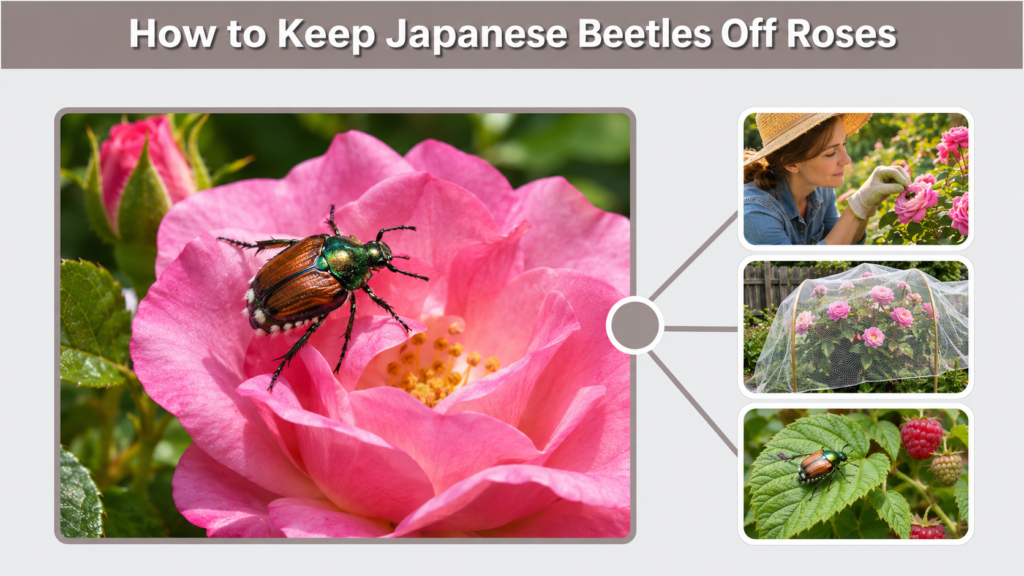
Preventing Japanese beetles from damaging rose bushes requires regular monitoring and consistent garden care. Because adult beetles can fly into gardens from surrounding areas, removing grubs from a single lawn will not necessarily prevent infestations. The most practical approach combines early detection, physical removal, and protection of vulnerable plants.
Japanese Beetle Prevention Tips
- Inspect roses regularly: Look for beetles beginning in early summer.
- Remove beetles promptly: Early removal can reduce feeding damage and further beetle attraction.
- Keep roses healthy: Water appropriately and maintain good growing conditions.
- Protect valuable blooms: Use fine mesh barriers when practical.
- Avoid unnecessary pesticides: Preserve beneficial insects and other natural enemies.
- Monitor nearby plants: Japanese beetles also feed on grapes, raspberries, and many ornamental plants.
Do Japanese Beetle Traps Protect Roses?
Japanese beetle traps use floral attractants and sex pheromones to draw adult beetles toward a collection bag.
Although these traps can capture many insects, they often attract more beetles than they catch. Placing traps near roses may therefore increase feeding damage.
For most home gardens, university extension specialists recommend avoiding Japanese beetle traps as a primary control method.
Can Japanese Beetles Kill Rose Bushes?
Japanese beetles can cause extensive damage to rose leaves and flowers, but established, healthy rose bushes generally survive seasonal feeding. Most damage is cosmetic, particularly when beetles destroy flower petals without seriously affecting the plant’s overall growth. Young, newly planted, or already weakened roses are more vulnerable to repeated heavy defoliation.
Japanese Beetles on Knock Out Roses
Knock Out roses can also attract Japanese beetles. Although these roses are known for their resilience and disease resistance, they are not immune to beetle feeding.
The insects may damage petals, buds, and leaves. Regular handpicking and monitoring are useful for protecting blooms throughout the summer.
Will Rose Bushes Recover From Japanese Beetle Damage?
Healthy rose bushes can usually recover after adult beetle activity decreases.
Damaged leaves will not repair themselves, but the plant may produce new foliage and flowers when growing conditions remain favorable.
Maintain adequate moisture, avoid unnecessary pruning, and monitor for other pest problems while the rose bush recovers.
FAQs
1. What Is the Best Way to Get Rid of Japanese Beetles on Roses?
Handpicking is one of the most effective methods for small rose gardens. Remove beetles early in the morning and drop them into soapy water. Repeat regularly during peak activity. Physical netting and carefully selected treatments can provide additional protection when necessary.
2. Does Neem Oil Kill Japanese Beetles on Roses?
Neem-derived products may discourage Japanese beetles from feeding, but their effectiveness depends on the formulation. Azadirachtin products can provide temporary protection. They should not be considered a guaranteed solution for heavy infestations, and applications must follow the product label.
3. Do Japanese Beetles Kill Knock Out Roses?
Japanese beetles can severely damage Knock Out rose flowers and leaves, but established plants usually survive seasonal feeding. Repeated heavy defoliation may weaken young or stressed bushes. Early beetle removal and proper rose care can reduce the likelihood of significant injury.
4. How Long Do Japanese Beetles Stay on Roses?
Adult Japanese beetles commonly remain active for approximately six to eight weeks during summer. Their appearance depends on local weather and geographical location. In many parts of the United States, feeding begins in June or July and decreases during August.
5. What Keeps Japanese Beetles Away From Roses Naturally?
Regular handpicking, physical netting, and early monitoring are reliable nonchemical methods. Neem-derived feeding deterrents may provide temporary protection when appropriately labeled. Avoid relying on Japanese beetle traps near rose bushes because they can attract additional beetles into the garden.