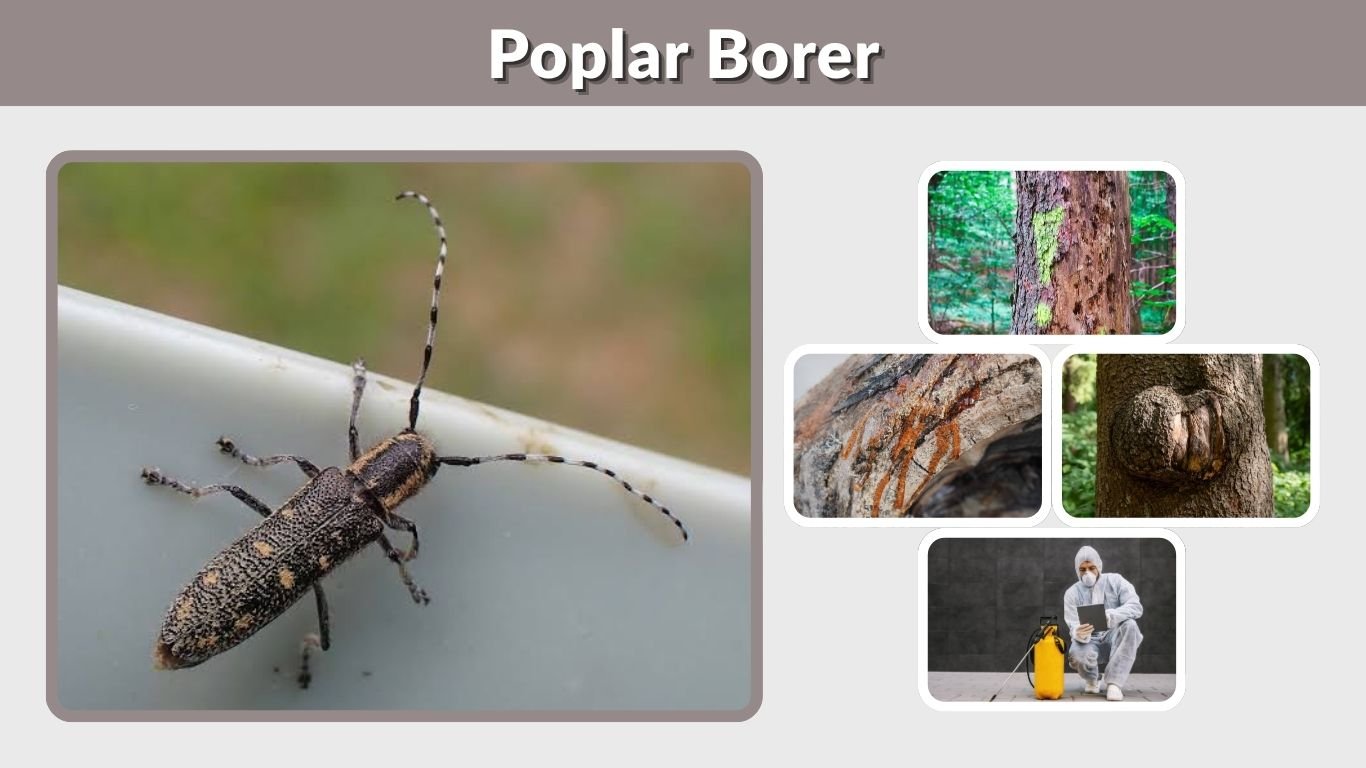
The Poplar Borer (Saperda calcarata) is a wood-boring beetle that attacks poplar, aspen, and cottonwood trees across North America. Its larvae tunnel through trunks and branches, weakening wood and sometimes causing serious structural damage. Infested trees may develop swollen bark, leaking sap, sawdust-like material, and visible exit holes. Although healthy trees can survive minor infestations, stressed trees are particularly vulnerable. Understanding how to identify Poplar Borer beetles and recognize early damage is essential for effective management. This guide explains their appearance, life cycle, habitat, damage, treatment, and prevention.
What Is a Poplar Borer?
The Poplar Borer is a longhorn beetle belonging to the Cerambycidae family. Its scientific name is Saperda calcarata, and it is native to North America. The insect primarily attacks trees belonging to the genus Populus, particularly quaking aspen, cottonwood, and other poplars.
Poplar Borer Beetle Facts
- Scientific name: Saperda calcarata
- Family: Cerambycidae
- Order: Coleoptera
- Adult size: Approximately 20–30 mm
- Body color: Grayish-blue with brown speckles
- Larval color: Creamy-white or yellowish-white
- Main hosts: Aspen, poplar, and cottonwood
- Distribution: United States and Canada
- Adult activity: Usually June through August
- Life cycle: Generally 2–3 years, sometimes longer
Poplar Borer Beetle Identification
Identifying a Poplar Borer requires examining its body shape, coloration, antennae, and feeding damage. Adult beetles are relatively large and elongated, while their larvae are pale, legless grubs that develop inside wood. The larvae cause most of the damage because they remain hidden beneath bark and within tree trunks.
Adult Poplar Borer Appearance
Adult Poplar Borers have elongated bodies covered with fine brown markings over a grayish or bluish-gray background.
Their antennae are long, often approaching the length of the body. The wing covers are hardened and feature numerous small spots.
Adults commonly appear on tree trunks, branches, and foliage during summer.
Poplar Borer Larvae Identification
Poplar Borer larvae are creamy-white, cylindrical, and nearly legless.
Fully developed larvae may reach approximately 30–40 mm long. They have enlarged front body segments and strong chewing mouthparts.
The larvae create tunnels through the inner bark, sapwood, and sometimes heartwood while feeding.
What Damage Do Poplar Borers Cause?
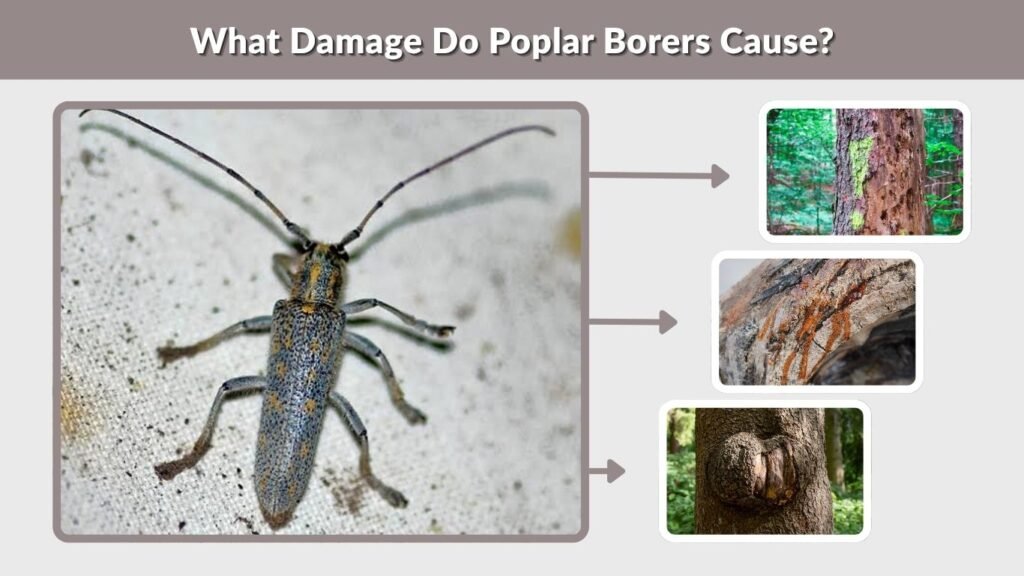
Poplar Borer damage occurs primarily when larvae tunnel through living wood. Their feeding disrupts internal tissues and weakens branches or trunks. Repeated attacks can make trees more vulnerable to wind damage, wood-decay fungi, and other environmental stresses.
Signs of Poplar Borer Infestation
- Bark holes: Round openings appear where beetles enter or emerge.
- Sawdust-like frass: Coarse wood particles accumulate around feeding sites.
- Leaking sap: Brownish or rust-colored liquid may seep from damaged bark.
- Swollen bark: Infested areas sometimes develop noticeable swellings.
- Branch breakage: Internal tunnels weaken branches during storms.
- Declining growth: Severely affected trees may develop sparse foliage or dieback.
Can Poplar Borers Kill Trees?
Poplar Borers rarely kill large, otherwise healthy trees directly. However, severe infestations can weaken branches and accelerate tree decline.
Young or stressed trees face greater risks. Larval tunnels also create openings that allow wood-decay organisms to enter.
Poplar Borer Life Cycle
The Poplar Borer undergoes complete metamorphosis through egg, larval, pupal, and adult stages. Development generally takes several years because larvae spend extended periods feeding inside wood. Temperature, geographic location, and host tree conditions influence the duration.
Four Stages of the Poplar Borer Life Cycle
Female beetles chew small slits into tree bark and deposit eggs during summer.
After hatching, larvae initially feed near the cambium before tunneling deeper into woody tissues. They remain inside the tree through winter and continue developing.
Mature larvae form pupal chambers beneath the bark or within the wood. Adults emerge through exit holes, usually during summer, and begin another generation.
Different Types of Poplar Borers
Several unrelated wood-boring insects attack poplar and aspen trees. Although they share similar common names, their physical characteristics, host preferences, and feeding behavior differ. Accurate identification is important because treatment methods may not work equally well against every species.
Bronze Poplar Borer
The Bronze Poplar Borer (Agrilus liragus) belongs to the Buprestidae family.
It is a metallic wood-boring beetle that attacks aspen and other poplars, especially weakened trees.
Its larvae feed beneath the bark, creating tunnels that disrupt nutrient movement. Adults often leave small D-shaped exit holes.
Flatheaded Poplar Borer
The Flatheaded Poplar Borer (Dicerca tenebrica) is another member of Buprestidae.
Its larvae have an enlarged, flattened front body region. They tunnel beneath bark and into wood, particularly in stressed or damaged trees.
Adults are elongated, dark metallic beetles that leave oval exit openings.
Poplar and Willow Borer
The Poplar-and-Willow Borer (Cryptorhynchus lapathi) is a weevil belonging to Curculionidae.
Adults have stout bodies, curved snouts, and contrasting dark and pale markings.
Its larvae tunnel through young willow and poplar stems, causing swelling, weakened branches, and occasional breakage.
How to Get Rid of Poplar Borers
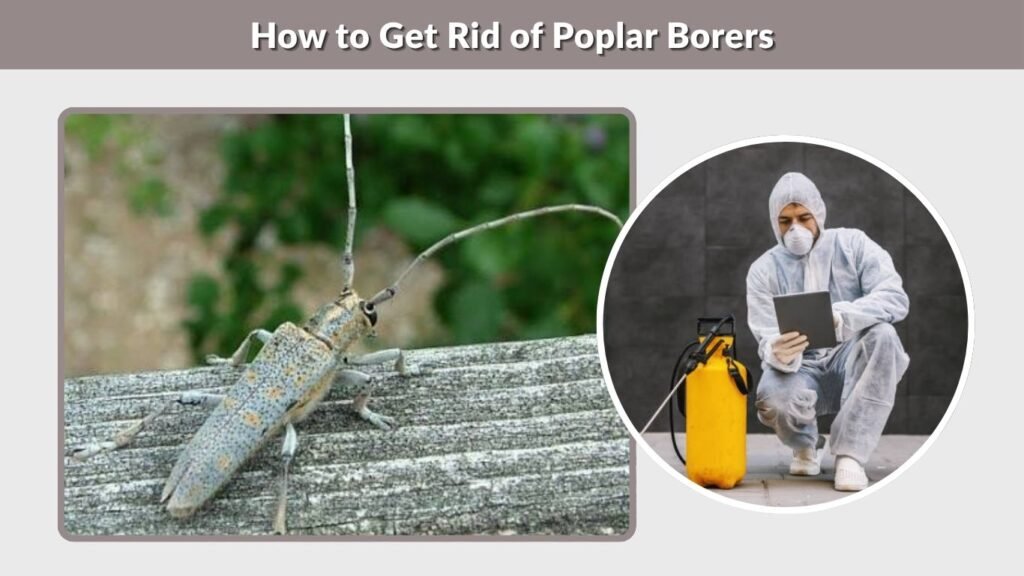
Controlling Poplar Borers requires a combination of proper tree care, early detection, and targeted intervention. Because the larvae develop inside wood, they are difficult to reach using ordinary surface treatments. Management is generally most effective before beetles lay eggs or larvae penetrate deeper tissues.
Effective Poplar Borer Control Methods
- Inspect affected trees: Check trunks and branches for fresh frass, sap leakage, and exit holes.
- Remove severely damaged wood: Prune unsafe branches and dispose of infested material appropriately.
- Improve tree health: Provide adequate watering and reduce environmental stress.
- Consider biological control: Certain beneficial nematodes, including Steinernema species, may provide partial control when applied directly into active galleries.
- Seek professional treatment: A qualified arborist can evaluate infestation severity and suitable treatment options.
- Remove hazardous trees: Severely weakened trees may require removal to prevent branch or trunk failure.
Poplar Borer Insecticide Treatment
Insecticides may help prevent additional Poplar Borer attacks, but timing is critical. Products targeting adults or newly hatched larvae are generally more effective than sprays applied after larvae have tunneled deep into wood.
When Should You Treat Poplar Borers?
Preventive bark treatments are usually timed around adult emergence and egg laying, often during early summer.
Some university extension programs discuss registered pyrethroid products for protecting susceptible trees.
However, insecticide registration, suitable application timing, and effectiveness vary by location. Deeply embedded larvae are difficult to control with ordinary systemic treatments.
Always follow local pesticide regulations and product labels.
How to Prevent Poplar Borer Infestations
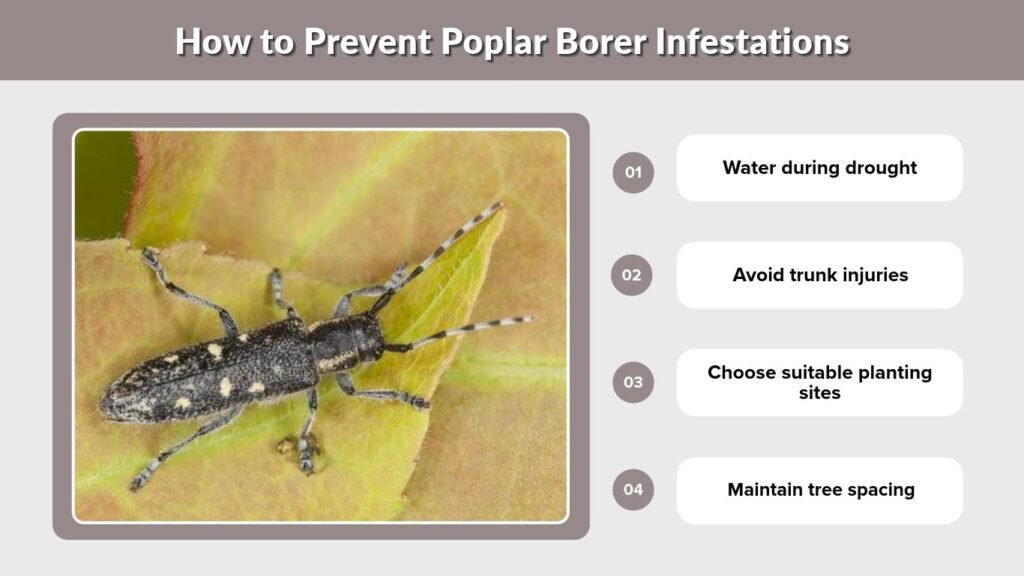
Healthy poplar trees are generally better able to tolerate insect attacks than trees weakened by drought, injuries, or unsuitable growing conditions. Preventive care reduces the likelihood of serious infestations and helps maintain healthy woodland and landscape trees.
Poplar Borer Prevention Tips
- Water during drought: Maintain adequate soil moisture.
- Avoid trunk injuries: Protect bark from lawn equipment and mechanical damage.
- Choose suitable planting sites: Avoid locations that cause repeated heat or drought stress.
- Maintain tree spacing: Support healthy growth while avoiding excessive trunk exposure.
- Inspect trees regularly: Look for fresh sap stains, frass, and bark openings.
- Remove heavily infested material: Prevent severely affected wood from becoming a source of additional beetles.
FAQs
1. What Does a Poplar Borer Beetle Look Like?
An adult Poplar Borer is an elongated, grayish-blue beetle with fine brown spots and long antennae. It typically measures 20–30 mm. Its larvae are pale, nearly legless grubs that tunnel through poplar, aspen, and cottonwood trees.
2. How Do You Get Rid of Poplar Borers?
Control involves maintaining tree health, removing severely infested wood, and considering properly timed treatments. Beneficial nematodes may provide partial larval control. Professional arborists can recommend suitable options when extensive damage or structural weakness is present.
3. What Is the Best Treatment for Poplar Borers?
The most appropriate treatment depends on infestation severity and the tree’s condition. Proper watering, sanitation, and preventive insecticide applications may help. However, insecticides are less effective against larvae already protected deep inside the wood.
4. Do Poplar Borers Attack Aspen Trees?
Yes. Quaking aspen is a major host of the Poplar Borer. Larvae tunnel into stems and trunks, causing sap leakage, wood damage, and weakened branches. Trees experiencing drought, injuries, or other environmental stresses are particularly susceptible.
5. Can Poplar Borers Spread to Other Trees?
Adult Poplar Borers can move between suitable host trees and lay eggs on nearby poplars, aspens, or cottonwoods. Severely infested trees may produce additional adults. Early identification, appropriate sanitation, and maintaining healthy trees help reduce further infestation.