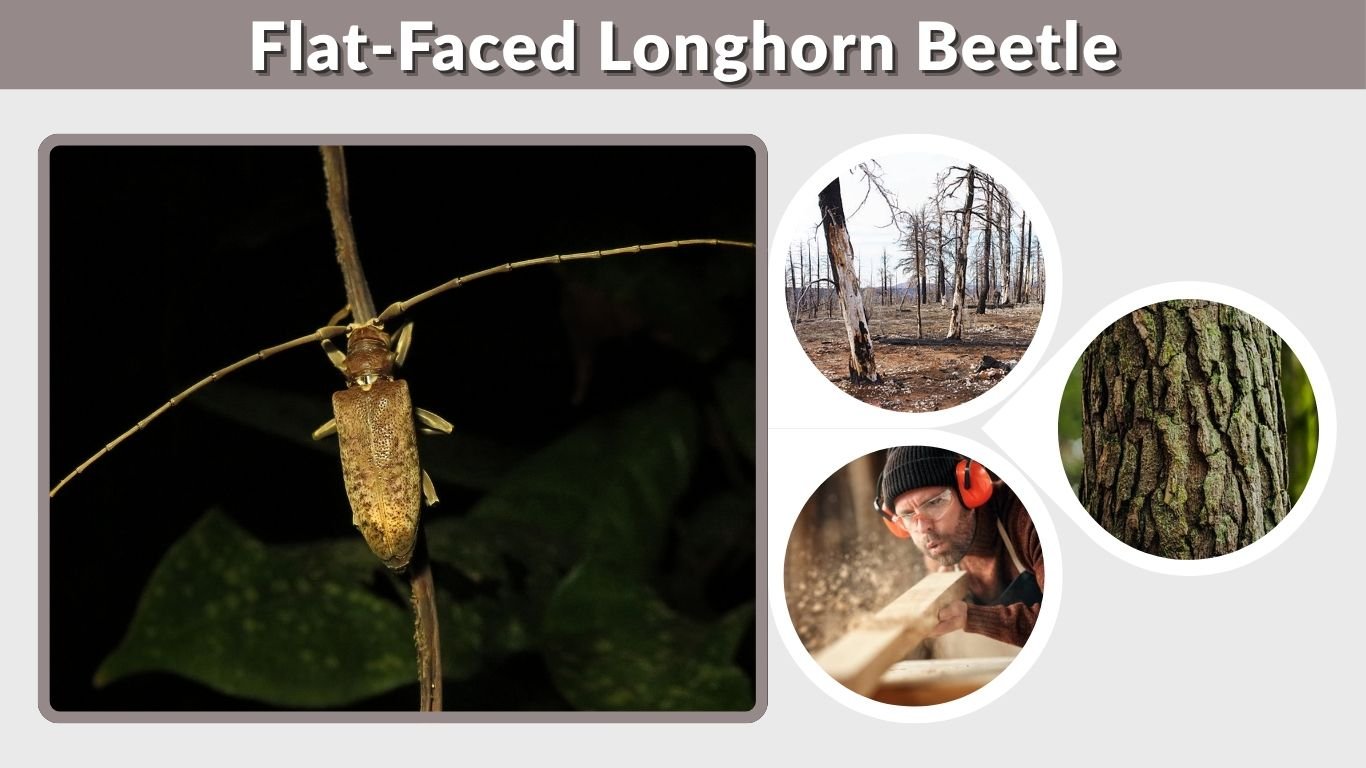
The Flat-Faced Longhorn Beetle is a fascinating insect recognized by its long antennae, distinctive flattened facial appearance, and patterned body. Belonging to the subfamily Lamiinae, these beetles inhabit forests, woodlands, gardens, and other environments worldwide. Some species display brown or gray camouflage, while others have colorful markings. Although their larvae develop inside wood and plant stems, most species are harmless to humans. Understanding their identification, classification, feeding behavior, and potential bite risks is important. This guide explores Flat-Faced Longhorn Beetles, their habitat, life cycle, genera, and ecological importance.
What Is a Flat-Faced Longhorn Beetle?
Flat-Faced Longhorn Beetles belong to the subfamily Lamiinae within the longhorn beetle family Cerambycidae. This large group contains more than 20,000 described species worldwide.
Unlike a single beetle species, the name Flat-Faced Longhorn refers to numerous related beetles sharing certain anatomical characteristics. They are particularly diverse in tropical forests, although many species also inhabit temperate environments.
Flat-Faced Longhorn Beetle Classification
- Kingdom: Animalia
- Phylum: Arthropoda
- Class: Insecta
- Order: Coleoptera
- Superfamily: Chrysomeloidea
- Family: Cerambycidae
- Subfamily: Lamiinae
- Common name: Flat-Faced Longhorn Beetles
- Distribution: Worldwide except Antarctica
- Primary habitat: Forests, woodlands, and vegetation
Flat-Faced Longhorn Beetle Identification
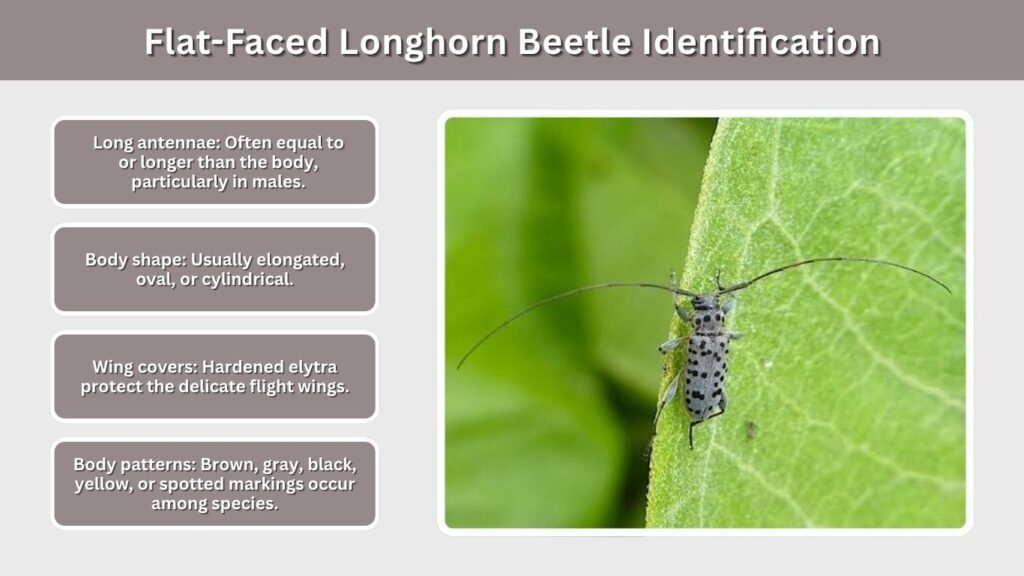
Flat-Faced Longhorn Beetles vary considerably in size, coloration, and body patterns. However, most possess elongated antennae, hardened wing covers, and a relatively vertical facial structure. These features help distinguish them from other beetle groups, although accurate species identification often requires closer examination.
Flat-Faced Longhorn Beetle Appearance
Several physical characteristics help identify members of Lamiinae.
- Long antennae: Often equal to or longer than the body, particularly in males.
- Flattened face: The front of the head is typically positioned vertically or strongly downward.
- Body shape: Usually elongated, oval, or cylindrical.
- Wing covers: Hardened elytra protect the delicate flight wings.
- Body patterns: Brown, gray, black, yellow, or spotted markings occur among species.
- Compound eyes: Often deeply notched around the antenna bases.
- Legs: Strong legs help beetles climb bark, branches, and vegetation.
How Big Are Flat-Faced Longhorn Beetles?
Body size varies dramatically among species.
Some tiny Lamiinae measure only a few millimeters long. Larger members, including the Harlequin Beetle (Acrocinus longimanus), can reach approximately 80 mm.
Antennae may extend well beyond the body, making certain species appear considerably larger.
Flat-Faced Longhorn Beetle Genera and Species
Lamiinae contains thousands of genera and species, making it one of the most diverse groups within the longhorn beetle family. Scientists classify these insects using anatomical features, reproductive structures, and genetic relationships. Several genera contain species recognized for their unusual appearance or importance in forestry.
Common Flat-Faced Longhorn Beetle Genera
- Monochamus: Includes pine sawyers, whose larvae develop in coniferous wood.
- Anoplophora: Contains species such as the Asian Longhorned Beetle.
- Acanthocinus: Includes bark-associated beetles with exceptionally long antennae.
- Oncideres: Contains twig girdlers that cut into branches to prepare breeding sites.
- Acanthoderes: Includes patterned beetles that often resemble tree bark.
- Acrocinus: Includes the distinctive Harlequin Beetle found in tropical America.
Is Aster a Flat-Faced Longhorn Beetle Genus?
Aster is a recognized genus of flowering plants belonging to the Asteraceae family.
It should not be confused with Lamiinae, which is a beetle subfamily containing many separate genera.
Scientific names must be interpreted within their taxonomic context because similar names can occur in different biological groups.
Where Do Flat-Faced Longhorn Beetles Live?
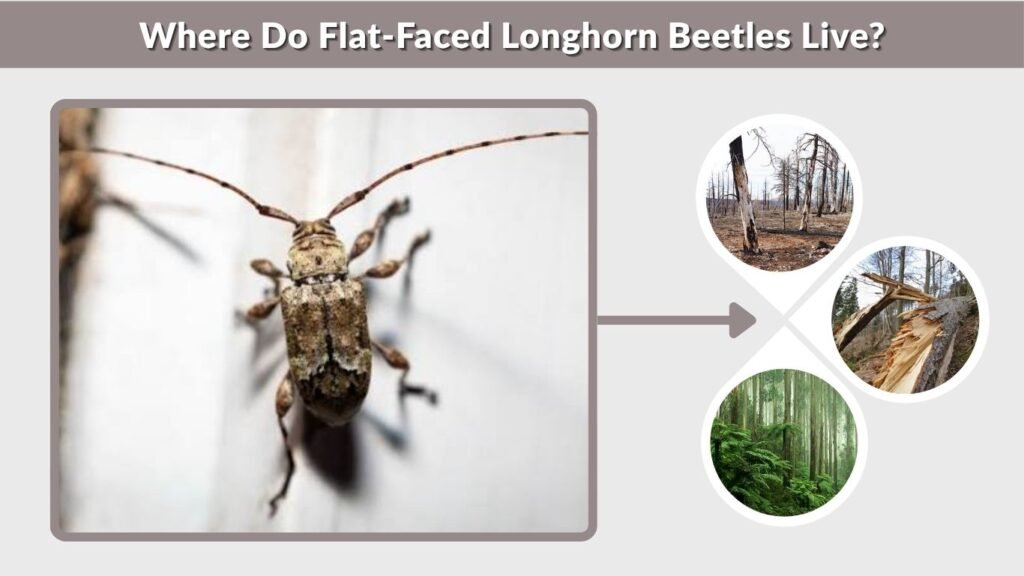
Flat-Faced Longhorn Beetles inhabit nearly every major terrestrial region except Antarctica. Their distribution is influenced by climate, host plants, and the availability of suitable breeding materials.
They are particularly diverse in tropical forests, where numerous tree species provide food and shelter.
Flat-Faced Longhorn Beetle Habitat
Many species live in forests containing dead trees, fallen branches, and woody vegetation.
Adults may rest on bark, leaves, or tree trunks, while larvae develop inside wood or plant stems.
Some species specialize in living trees, whereas others prefer dead or weakened vegetation. Their habitat requirements depend on the individual species.
What Do Flat-Faced Longhorn Beetles Eat?
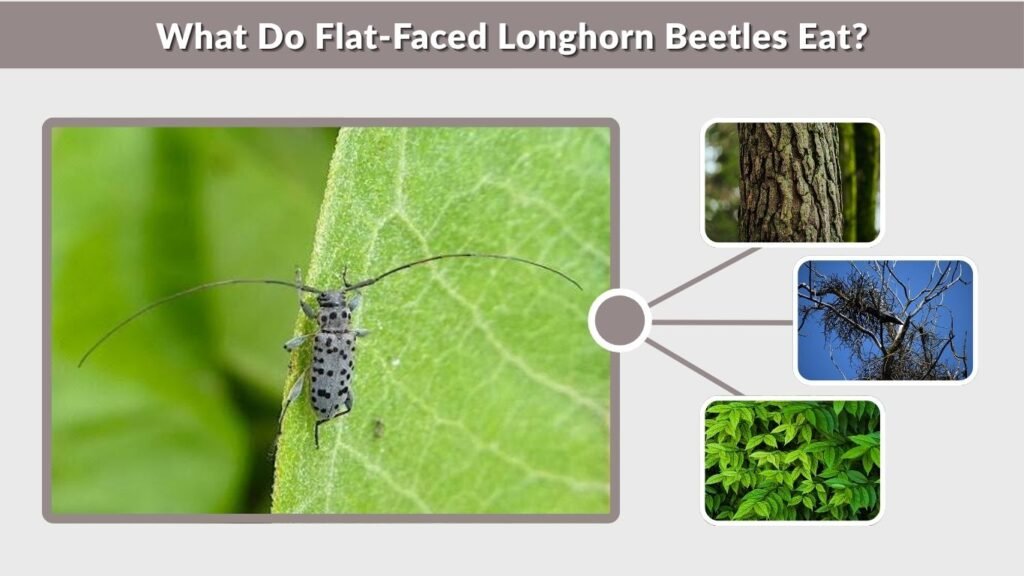
Flat-Faced Longhorn Beetles have different feeding habits during their adult and larval stages. Adults may consume leaves, bark, or other plant tissues, while larvae frequently tunnel through wood or stems.
These feeding behaviors can support decomposition or cause damage to living plants.
Adult Flat-Faced Longhorn Beetle Diet
Adult feeding habits vary among genera.
Some species consume tender leaves, bark, or twigs. Others feed on plant tissues or visit flowers.
Certain adults feed relatively little compared with their larvae, spending much of their time finding mates and suitable breeding locations.
Flat-Faced Longhorn Beetle Larvae
Larvae commonly develop within tree trunks, branches, or woody stems.
Their chewing activity creates tunnels as they consume plant material.
Species that develop in decaying wood contribute to decomposition, while those attacking living trees may cause economic damage.
Flat-Faced Longhorn Beetle Life Cycle
Flat-Faced Longhorn Beetles undergo complete metamorphosis, passing through four developmental stages. The duration varies considerably among species because temperature, host plant conditions, and food availability influence growth.
Four Stages of the Life Cycle
The life cycle begins when females deposit eggs on suitable host plants, often in bark cracks or specially prepared locations.
After hatching, pale, legless or nearly legless larvae tunnel into wood or stems. They feed and grow through successive molts.
Mature larvae eventually pupate within protected chambers.
Fully developed adults emerge, often leaving visible exit holes in the wood. They then search for mates and begin another reproductive cycle.
Do Flat-Faced Longhorn Beetles Bite?
Flat-Faced Longhorn Beetles are generally harmless to humans. They do not possess venomous stingers and do not actively seek people as prey.
However, like many beetles with functional chewing mouthparts, some larger species may pinch or bite when restrained or handled roughly.
Is a Flat-Faced Longhorn Beetle Bite Dangerous?
A defensive bite may cause temporary pain, minor redness, or small skin injuries.
Serious complications are uncommon, and these beetles are not known for transmitting diseases through bites.
Avoid grabbing or squeezing beetles. If bitten, clean the affected area with soap and water and monitor for unusual swelling or irritation.
Can Flat-Faced Longhorn Beetles Damage Wood?
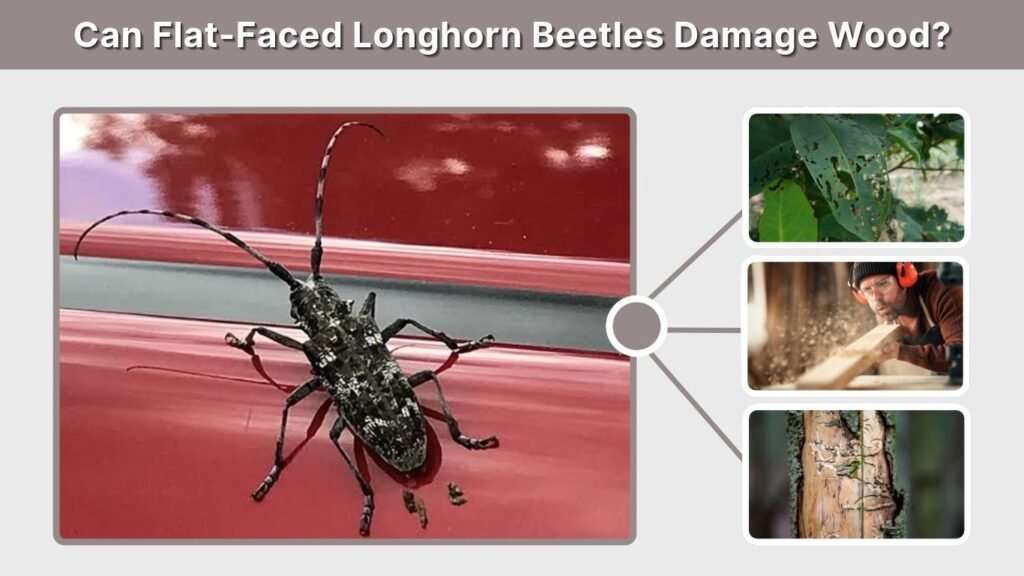
Some Flat-Faced Longhorn Beetles are important wood-boring insects. Their larvae tunnel through branches, trunks, or stems while feeding. Certain species attack living trees, while others develop primarily in dead or weakened wood.
However, finding an adult beetle indoors does not automatically indicate a structural infestation.
Signs of Flat-Faced Longhorn Beetle Infestation
- Exit holes: Round or oval openings where adults emerge.
- Wood dust: Sawdust-like material around affected wood.
- Internal tunnels: Galleries created by feeding larvae.
- Damaged branches: Weakening or dieback in affected trees.
- Adult beetles: Repeated appearances near infested wood.
- Bark damage: Cracks or disturbed areas associated with larval activity.
How to Prevent Wood-Boring Beetle Problems
Inspect firewood, untreated lumber, and wooden materials before bringing them indoors.
Keep firewood outside until needed and remove heavily infested dead branches when appropriate.
If repeated beetle emergence or fresh wood damage occurs, obtain professional species identification before selecting treatment.
FAQs
1. Are Flat-Faced Longhorn Beetles Dangerous?
Flat-Faced Longhorn Beetles are generally harmless to people. They do not sting or attack humans. However, some species may deliver a painful defensive pinch when handled roughly. Their main potential concern involves larval damage to trees or wood.
2. What Family Do Flat-Faced Longhorn Beetles Belong To?
Flat-Faced Longhorn Beetles belong to Cerambycidae, the longhorn beetle family. Their subfamily is Lamiinae, one of the largest groups within Cerambycidae. It contains thousands of species distributed throughout tropical, subtropical, and temperate environments worldwide.
3. Do Flat-Faced Longhorn Beetles Bite Humans?
Some Flat-Faced Longhorn Beetles can bite defensively when restrained or threatened. However, they do not normally bite people voluntarily. Their mouthparts are primarily adapted for feeding rather than attacking humans, and serious injuries are uncommon.
4. What Do Flat-Faced Longhorn Beetles Eat?
Adult Flat-Faced Longhorn Beetles feed on various plant materials, depending on species. Their larvae frequently consume wood or plant stems. Some species develop inside dead trees, while others feed within living branches and may damage their host plants.
5. Can Flat-Faced Longhorn Beetles Infest Houses?
Certain longhorn beetle larvae can emerge from infested lumber or firewood brought indoors. However, most forest-associated species cannot establish ongoing infestations in dry, finished structural wood. Professional identification helps determine whether a discovered beetle presents a genuine problem.