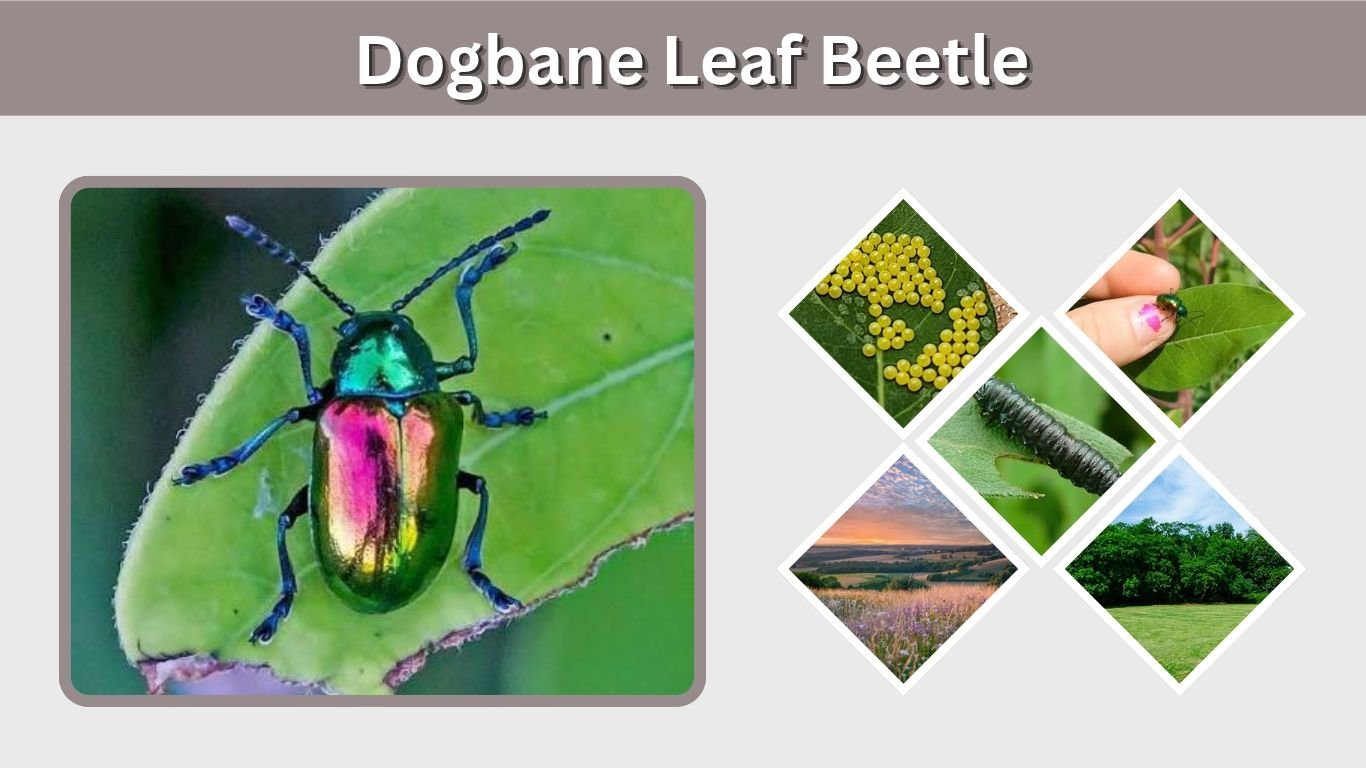
The dogbane leaf beetle is a beautiful North American insect known for its shiny metallic green, blue, and golden colors. Scientifically called Chrysochus auratus, this small beetle commonly lives on dogbane plants in grasslands, meadows, and roadsides. Although its bright appearance attracts attention, many people wonder whether dogbane leaf beetles bite, are poisonous, or damage garden plants. Understanding their appearance, habitat, feeding habits, life cycle, and natural defenses can help you identify these fascinating beetles and determine whether they need controlling.
What Is a Dogbane Leaf Beetle?
The dogbane leaf beetle (Chrysochus auratus) is a small, colorful insect belonging to the leaf beetle family, Chrysomelidae. It is native to North America and primarily feeds on dogbane plants.
Unlike many agricultural beetles, dogbane leaf beetles rarely cause significant problems for cultivated plants. Their specialized diet keeps them closely associated with wild vegetation.
These beetles are particularly interesting because they can consume plants containing toxic chemicals. They store some of these substances and use them as protection against predators.
Dogbane Leaf Beetle Scientific Classification
- Common Name: Dogbane Leaf Beetle
- Scientific Name: Chrysochus auratus
- Kingdom: Animalia
- Phylum: Arthropoda
- Class: Insecta
- Order: Coleoptera
- Family: Chrysomelidae
- Genus: Chrysochus
- Species: C. auratus
Dogbane Leaf Beetle Identification and Appearance
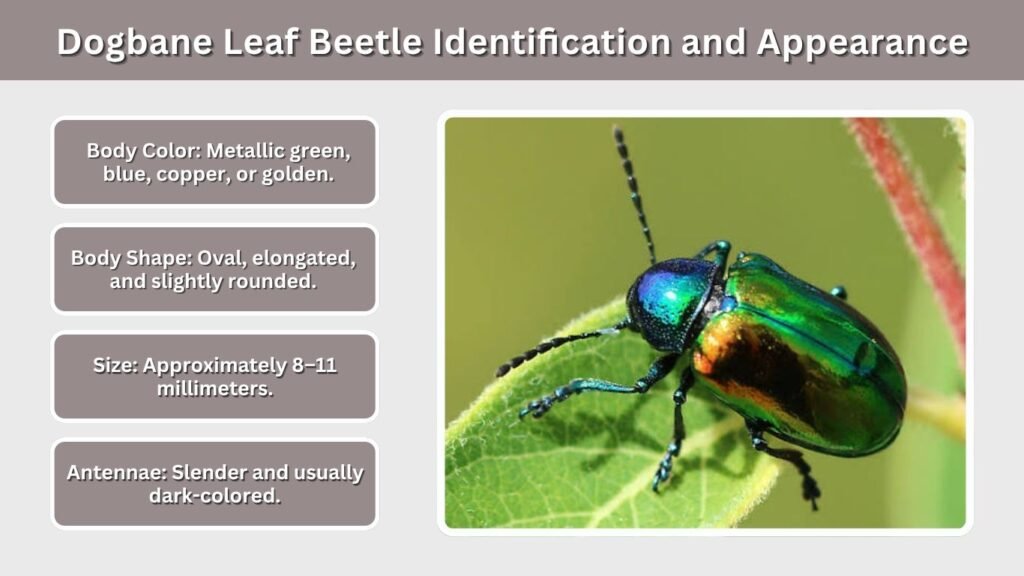
Dogbane leaf beetles are easily recognized by their metallic coloration and small, oval bodies. Their appearance changes slightly depending on lighting conditions and viewing angles.
Adult beetles usually measure approximately 8–11 millimeters long. Their smooth, rounded wing covers reflect sunlight, creating brilliant combinations of green, blue, copper, and gold.
Key Identification Features
- Body Color: Metallic green, blue, copper, or golden.
- Body Shape: Oval, elongated, and slightly rounded.
- Size: Approximately 8–11 millimeters.
- Antennae: Slender and usually dark-colored.
- Legs: Dark blue or nearly black.
- Wing Covers: Smooth, shiny, and strongly iridescent.
- Larvae: Whitish grubs with brown heads.
Their shimmering colors result from microscopic structures that reflect light differently depending on the observer’s position.
Where Do Dogbane Leaf Beetles Live?

Dogbane leaf beetles are native to North America, particularly the eastern and central United States and southern Canada. Their range also extends into parts of western North America.
They commonly inhabit grasslands, prairies, open woodlands, roadsides, meadows, and abandoned fields. These areas provide the dogbane plants necessary for their survival.
Dogbane leaf beetles occur in states such as Texas and Arizona, while populations have also been documented in parts of Washington and Oregon.
In the Pacific Northwest, their distribution overlaps with that of the closely related cobalt milkweed beetle.
They are not native to the United Kingdom and are not considered established members of its beetle fauna.
What Do Dogbane Leaf Beetles Eat?
Dogbane leaf beetles primarily feed on dogbane plants, especially Indian hemp dogbane (Apocynum cannabinum) and spreading dogbane (Apocynum androsaemifolium).
Adult beetles chew along leaf margins, leaving irregular feeding marks. The larvae live underground and consume the roots of host plants.
Although milkweed feeding has been reported, dogbane remains their primary food source.
Dogbane plants contain defensive chemicals called cardenolides, which can be toxic to many animals. However, these beetles have evolved the ability to tolerate and store certain compounds.
This unusual adaptation helps protect them from predators and allows them to survive on plants that many other insects avoid.
Dogbane Leaf Beetle Life Cycle
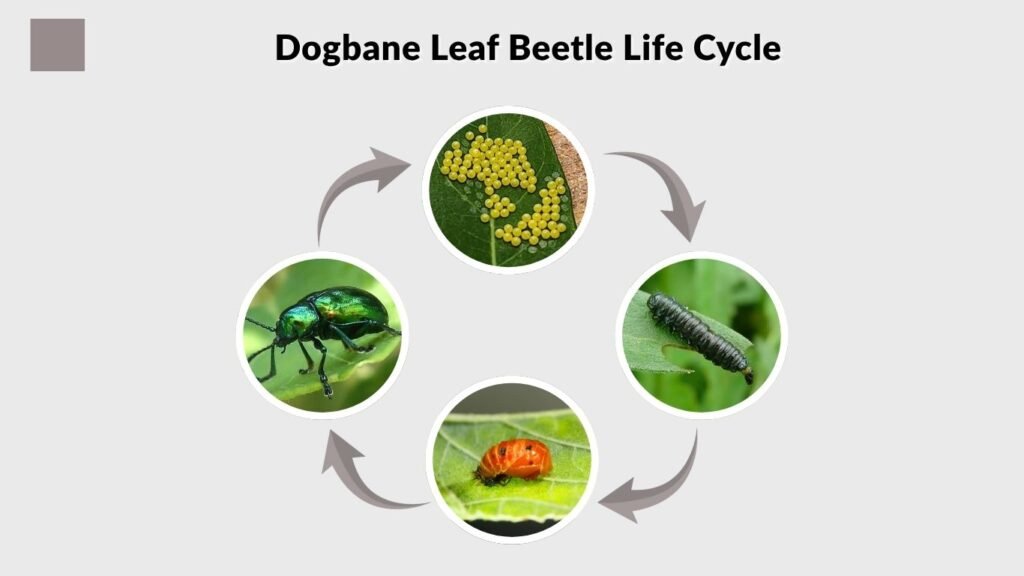
The dogbane leaf beetle undergoes complete metamorphosis, developing through four stages: egg, larva, pupa, and adult.
It typically produces one generation per year, with adults becoming active during late spring and summer.
1. Egg Stage
Female beetles deposit eggs in protective capsules attached to host plants or nearby vegetation.
These capsules protect the developing embryos until they hatch, generally during summer.
2. Larval Stage
After hatching, larvae move into the soil and begin feeding on dogbane roots.
They are pale, grub-like insects with brown heads. Most larval development occurs underground, making them difficult to observe.
3. Pupal Stage
The mature larvae eventually form pupal chambers in the soil.
Inside these chambers, they transform into adults. The underground stages allow the species to survive between growing seasons.
4. Adult Stage
Adult dogbane leaf beetles usually emerge in late spring or early summer.
They feed, mate, and lay eggs during their active period, which commonly lasts approximately six to eight weeks.
Can Dogbane Leaf Beetles Fly?
Yes, dogbane leaf beetles can fly. Like other beetles, they have hardened outer wing covers called elytra that protect their functional flight wings.
However, adults often remain close to their preferred host plants rather than traveling long distances.
They may fly between nearby vegetation while searching for food, mates, or suitable places to reproduce.
Their flight activity is most noticeable during warmer months when adults are active.
Although capable of flying, these beetles are generally more noticeable walking along leaves and stems.
Are Dogbane Leaf Beetles Good or Bad?
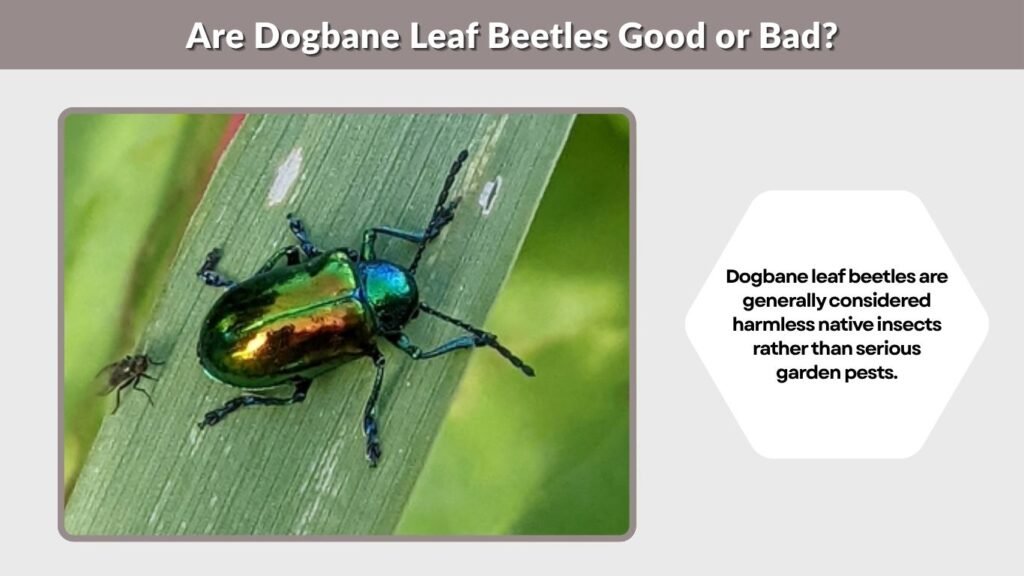
Dogbane leaf beetles are generally considered harmless native insects rather than serious garden pests.
Their feeding is usually restricted to dogbane and closely related plants, making them unlikely to damage common vegetables or ornamental flowers.
Benefits of Dogbane Leaf Beetles
- Native Biodiversity: They contribute to the diversity of insects in natural habitats.
- Natural Food Webs: They participate in ecological relationships involving plants, predators, and parasites.
- Vegetation Feeding: They consume dogbane foliage and roots.
- Scientific Interest: Their chemical defenses provide valuable information about insect adaptations.
Although heavy feeding can damage individual dogbane plants, these beetles rarely require management in ordinary gardens.
Are Dogbane Leaf Beetles Dangerous or Poisonous?
Dogbane leaf beetles are not considered dangerous to humans during ordinary encounters. However, they contain defensive chemicals obtained from their host plants.
These chemicals help discourage predators from eating them. When disturbed, beetles can release defensive secretions containing stored plant compounds.
Do Dogbane Leaf Beetles Bite?
Dogbane leaf beetles do not normally bite humans.
They have chewing mouthparts adapted for feeding on plants rather than attacking animals. They do not possess stingers and are not venomous.
Are Dogbane Leaf Beetles Poisonous to Humans?
Dogbane leaf beetles can contain toxic cardenolides, but they are not known to cause poisoning through ordinary skin contact.
Avoid eating them, deliberately crushing them against your skin, or allowing pets to chew them.
The dogbane plants themselves are also toxic if ingested, so handling or removing them requires appropriate precautions.
How to Get Rid of Dogbane Leaf Beetles
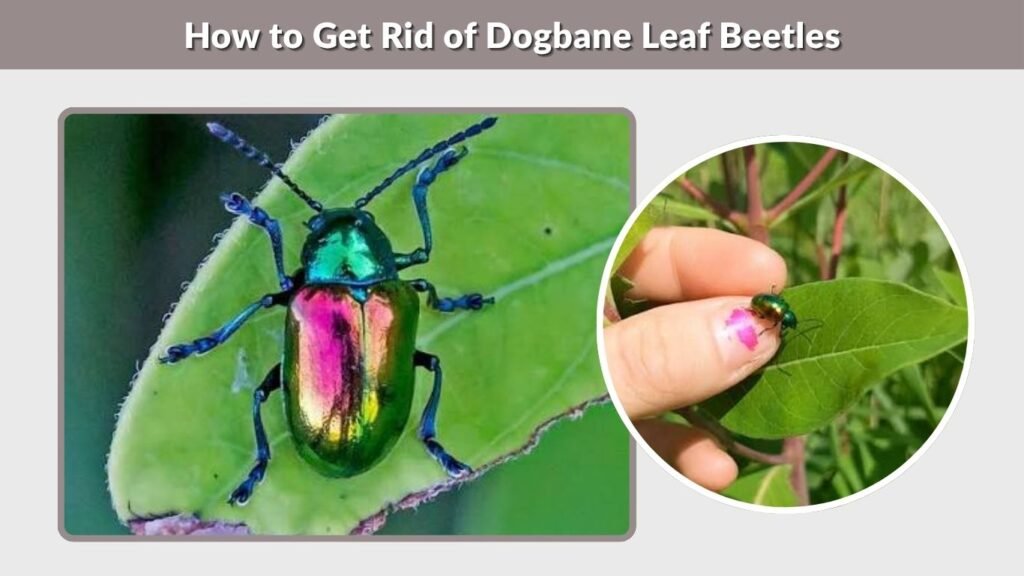
Dogbane leaf beetle control is usually unnecessary because these insects rarely damage cultivated plants.
However, if their numbers become excessive on valuable vegetation, simple management methods can reduce their presence.
Natural Dogbane Leaf Beetle Control Methods
- Hand Removal: Wear gloves and gently collect beetles from affected plants.
- Plant Inspection: Examine dogbane leaves regularly during summer.
- Physical Relocation: Move beetles away from areas where they create problems.
- Vegetation Management: Where appropriate, manage unwanted dogbane plants that support beetle populations.
- Avoid Broad Pesticides: Unnecessary insecticide applications may harm beneficial insects and surrounding wildlife.
Because larvae develop underground, removing only adult beetles may not immediately eliminate a local population.
For most natural landscapes, allowing these beetles to remain is the better ecological choice.
Dogbane Leaf Beetle Spiritual Meaning
There is no widely established traditional spiritual meaning specifically associated with the dogbane leaf beetle.
However, some people interpret its metallic colors as symbols of transformation, beauty, resilience, or personal growth.
Its ability to survive on chemically defended plants may also inspire symbolic associations with adaptability and protection.
These interpretations are personal beliefs rather than scientifically established meanings or universal cultural traditions.
Interesting Dogbane Leaf Beetle Facts
The dogbane leaf beetle has several remarkable characteristics beyond its attractive appearance.
One unusual behavior involves removing sticky plant latex from its mouthparts. After feeding, the beetle may drag its mouthparts backward across a leaf to clean away accumulated sap.
Its chemical defenses also make it a fascinating example of how insects adapt to toxic plants.
Another interesting behavior occurs during mating. Male beetles sometimes remain positioned on females after mating, helping reduce opportunities for competing males.
Despite their bright appearance, dogbane leaf beetles are not aggressive and generally spend their short adult lives feeding and reproducing around host plants.
FAQs
1. How Long Do Dogbane Leaf Beetles Live?
Adult dogbane leaf beetles typically live for approximately six to eight weeks during the warmer months. However, their complete life cycle takes about one year, including the egg, larval, and pupal stages. Most development occurs underground before adults emerge.
2. Can Dogbane Leaf Beetles Live in Washington State?
Yes, dogbane leaf beetles can live in Washington State, particularly in areas where suitable dogbane plants grow. They prefer open fields, meadows, and roadsides. Their distribution depends on local climate, available vegetation, and suitable conditions for reproduction and development.
3. What Animals Eat Dogbane Leaf Beetles?
Some insect-eating birds, predatory insects, and other natural enemies may feed on dogbane leaf beetles. However, these beetles store toxic compounds from dogbane plants, making them unpleasant or harmful to certain predators and providing an effective natural defense mechanism.
4. Are Dogbane Leaf Beetles Harmful to Gardens?
Dogbane leaf beetles are generally harmless to gardens because they primarily feed on dogbane plants. They rarely damage vegetables, flowers, or ornamental plants. Although heavy feeding may affect individual dogbane plants, these beetles usually do not require pest control measures.
5. What Makes Dogbane Leaf Beetles So Colorful?
Dogbane leaf beetles display brilliant metallic green, blue, copper, and golden colors because of microscopic structures on their bodies. These structures reflect light at different angles, producing an iridescent appearance. Their striking coloration also makes them easily recognizable in natural habitats.