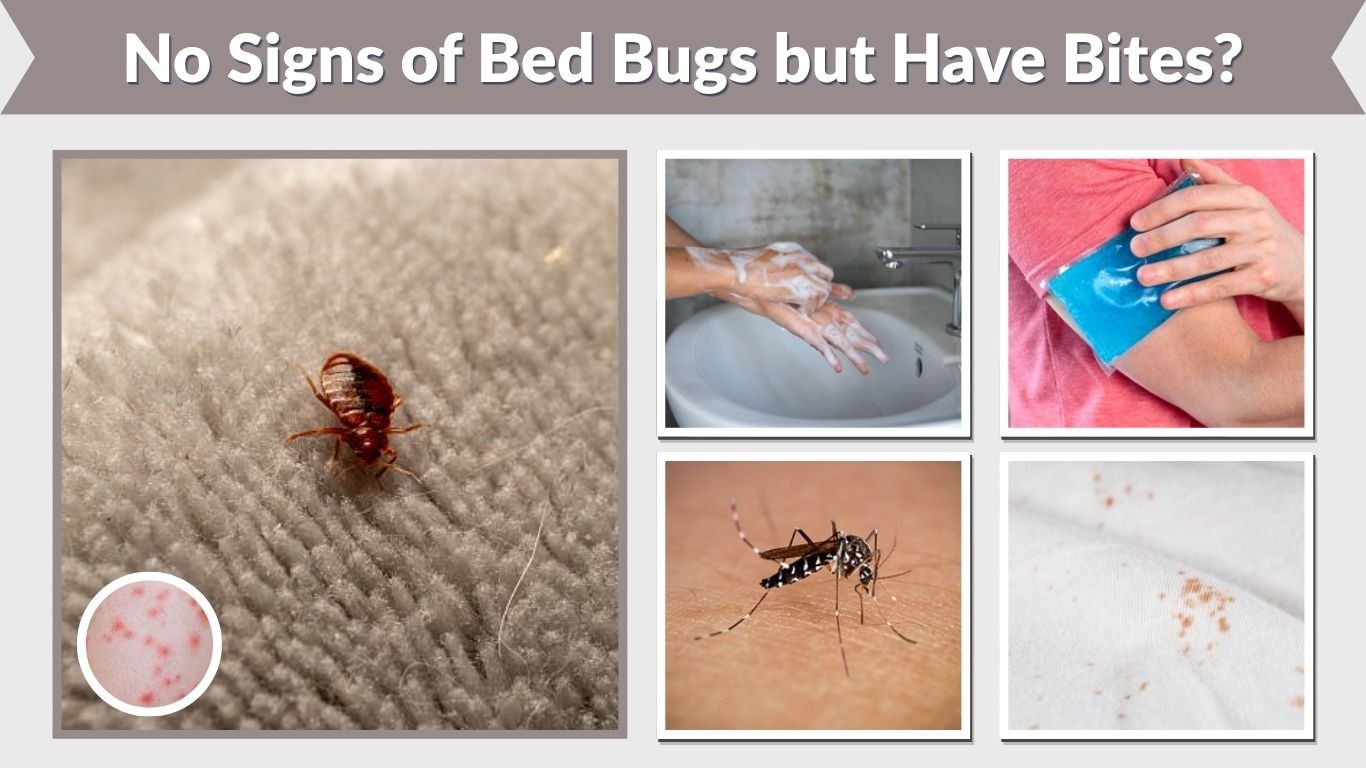
Waking up with itchy bumps but finding no evidence of bed bugs can be confusing and frustrating. Although bed bugs are known for biting people during sleep, several other insects and skin conditions can produce similar marks. Fleas, mosquitoes, mites, allergic reactions, and skin irritation may explain unexplained bites. However, early bed bug infestations can also be difficult to detect because these insects hide in tiny cracks and furniture seams. Understanding possible causes, hidden infestation signs, and proper inspection methods can help identify the problem.
Why Do I Have Bites but No Signs of Bed Bugs?
Finding unexplained bites without visible bed bugs does not automatically mean your home has an infestation. Bed bugs are excellent at hiding, but similar skin reactions can develop from many other causes. Even experienced professionals cannot reliably identify bed bug bites from appearance alone. Understanding these possibilities is important before purchasing insecticides or attempting unnecessary pest-control treatments.
Bed Bugs May Be Hiding
Bed bugs commonly hide inside mattress seams, bed frames, headboards, and narrow furniture cracks.
During early infestations, only a few insects may be present, making detection particularly difficult.
Their flattened bodies allow them to occupy extremely narrow spaces.
Furthermore, bed bugs generally emerge to feed and then return to their hiding places, so daytime inspections may miss them.
Not Every Itchy Bump Is a Bed Bug Bite
Flea bites, mosquito bites, allergic reactions, and skin conditions can produce raised, itchy bumps.
Bed bug bites sometimes appear in clusters or lines, but these patterns are not unique to bed bugs.
Skin reactions may also develop several days after exposure, making it difficult to determine exactly when or where a bite occurred.
Hidden Signs of Bed Bugs You Might Miss
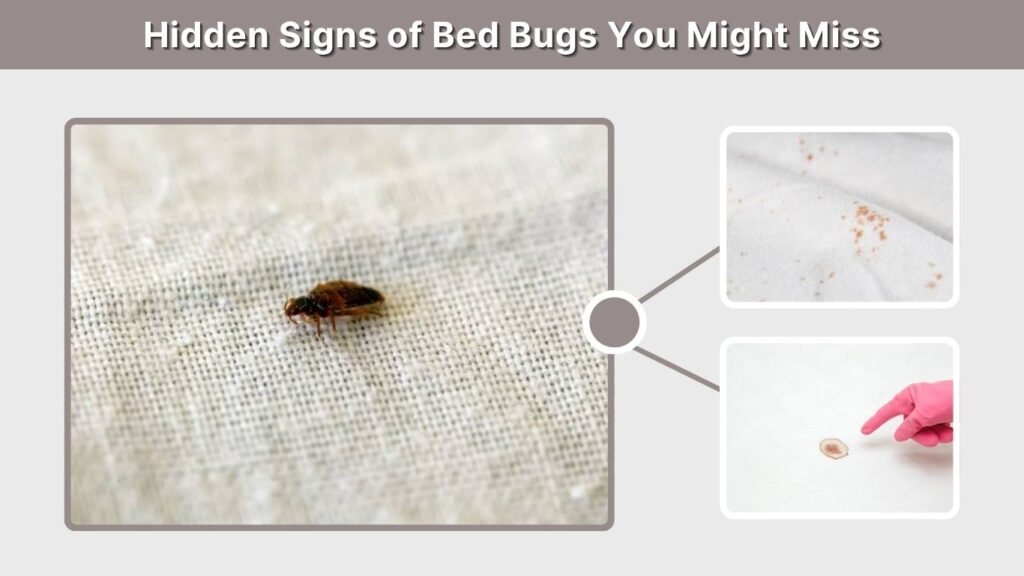
Bed bugs leave physical evidence that can help confirm their presence, even when the insects themselves remain hidden. These clues may appear around mattresses, furniture joints, and nearby sleeping areas. However, a small infestation may produce very little visible evidence. Careful examination with a flashlight is more reliable than judging the situation from skin reactions alone.
Common Signs of a Bed Bug Infestation
Look for these possible indicators:
- Dark spots: Tiny black or brown fecal stains on mattresses or furniture.
- Blood stains: Small reddish marks on sheets or pillowcases.
- Shed skins: Pale, empty exoskeletons left by growing bed bugs.
- Eggs: Tiny, whitish eggs hidden inside cracks.
- Live insects: Small, flattened, reddish-brown bugs.
- Musty odor: A distinctive smell sometimes noticeable during heavier infestations.
Where Do Bed Bugs Hide?
Bed bugs frequently shelter along mattress piping, beneath mattress labels, and inside box springs.
They may also occupy headboard joints, bedside furniture, baseboards, and upholstered chairs.
In more established infestations, insects can spread into additional cracks and protected areas around sleeping spaces.
Therefore, examining only the top of a mattress may overlook important evidence.
What Else Could Be Biting Me at Night?
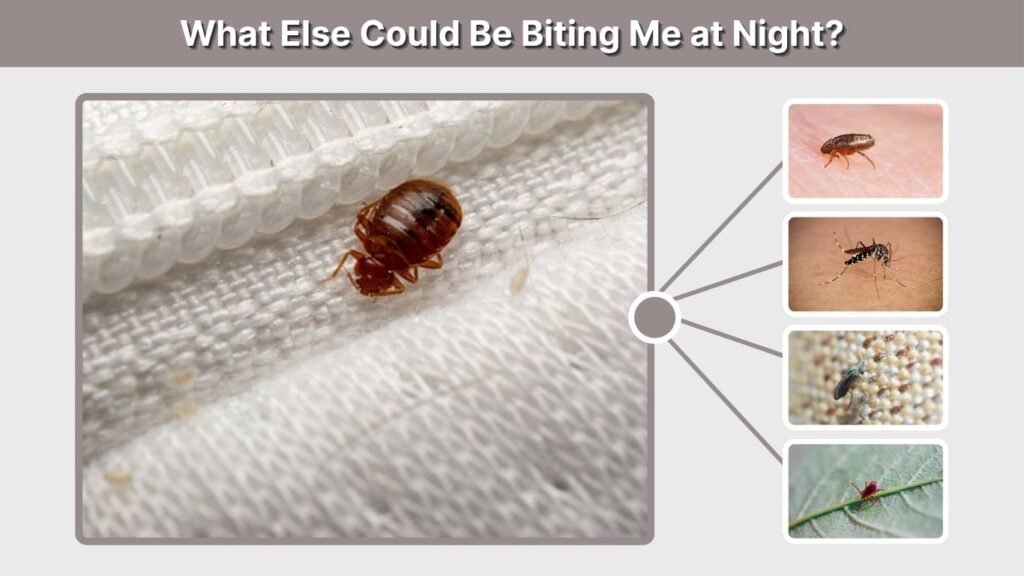
Several insects can bite people while they sleep, and some produce skin reactions resembling bed bug bites. Other conditions cause itching or bumps without any insect bite occurring. The location of skin irritation, exposure history, and presence of pets may provide useful clues. However, identifying the actual insect or obtaining a medical assessment is more reliable than comparing bite patterns.
Common Causes of Unexplained Bites
Possible explanations include:
- Fleas: Often produce itchy bumps around ankles and lower legs.
- Mosquitoes: Cause raised, itchy welts on exposed skin.
- Biting midges: Tiny flies that may cause small, irritated bumps.
- Bird or rodent mites: Can bite people when their usual animal hosts are unavailable.
- Chiggers: May cause intensely itchy bumps after outdoor exposure.
- Scabies mites: Cause persistent itching, often worse at night, and require medical diagnosis and treatment.
Allergies and Skin Conditions
Not every unexplained bump is caused by an insect.
Contact dermatitis may develop after exposure to detergents, fragrances, fabrics, or skincare products.
Hives can produce itchy, raised welts that appear suddenly and change location.
Eczema and other inflammatory skin conditions can also resemble insect bites.
If skin symptoms continue without supporting evidence of insects, a dermatologist can help investigate alternative explanations.
How to Check for Bed Bugs When You Find No Signs
A systematic inspection can help determine whether bed bugs are present. Rather than repeatedly examining random areas, focus on locations where these insects commonly shelter near sleeping people. Good lighting, careful observation, and appropriate monitoring tools improve the chances of detection. If no evidence appears, continued monitoring may be more useful than immediately treating the room with pesticides.
Step-by-Step Bed Bug Inspection
Follow these steps carefully:
- Inspect the mattress: Examine seams, piping, labels, and corners.
- Check the box spring: Look around fabric folds and structural joints.
- Examine the bed frame: Inspect cracks, screw holes, and headboard connections.
- Look behind furniture: Check bedside tables, drawers, and upholstered items.
- Inspect bedding: Search for unexplained dark spots or reddish stains.
- Use a flashlight: Illuminate narrow spaces where insects may hide.
- Install bed bug interceptors: Place appropriate monitoring devices beneath bed legs.
- Monitor regularly: Recheck suspected areas and identify any captured insects.
Can Bed Bugs Exist Without Visible Evidence?
Yes. Very small infestations may remain undetected during initial inspections.
Bed bugs can hide in places that are difficult to examine without specialized equipment.
However, continuing to experience itchy bumps does not prove an infestation exists.
If concerns persist, a qualified pest-management professional can conduct a more thorough inspection.
How to Treat Unexplained Bites on Your Skin
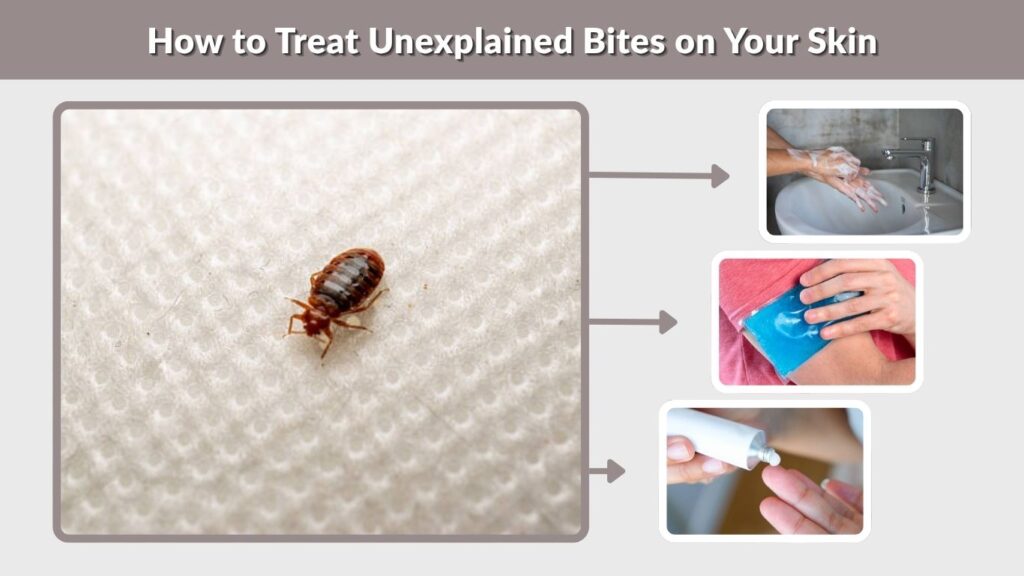
Most mild insect-bite reactions improve with simple home care, regardless of whether the exact insect has been identified. Treatment generally focuses on relieving itching, protecting irritated skin, and preventing infection. However, severe reactions or persistent unexplained symptoms deserve medical attention. Avoid applying insecticides, household cleaning chemicals, or other potentially harmful substances directly to the skin.
Ways to Relieve Itching and Irritation
For uncomplicated itchy bumps, consider these measures:
- Wash gently: Clean affected skin with soap and water.
- Apply a cold compress: Reduce itching and swelling.
- Use hydrocortisone cream: Follow product directions and age restrictions.
- Consider antihistamines: Appropriate oral medications may help relieve itching.
- Avoid scratching: Reduce the risk of broken skin and infection.
- Use gentle skincare: Avoid harsh products that worsen irritation.
When Should You See a Doctor?
Seek medical advice if the bumps persist, become painful, develop blisters, or show signs of infection.
Increasing warmth, spreading redness, pus, and fever may indicate complications.
Difficulty breathing, throat swelling, or faintness requires immediate emergency medical attention.
A dermatologist can evaluate unexplained skin lesions and recommend appropriate treatment.
What Should You Do if You Still Find No Bed Bugs?
If repeated inspections reveal no evidence of bed bugs, avoid assuming that every new bump represents another bite. Continue monitoring while investigating other possible insects, environmental exposures, and skin conditions. Unnecessary pesticide applications can create health risks without resolving the actual cause. A careful, evidence-based approach helps prevent wasted money and inappropriate treatments.
Avoid Treating Without Confirmation
Do not immediately apply bed bug sprays or insect foggers simply because itchy bumps appear overnight.
Some products are ineffective against hidden infestations, while improper use can expose occupants and pets to harmful chemicals.
Instead, collect physical evidence when possible and have suspected insects identified.
When to Contact a Professional
A pest-control professional may be helpful when inspections repeatedly suggest bed bugs or monitoring devices capture suspicious insects.
If no insects are found despite ongoing skin symptoms, consult a healthcare professional as well.
Both approaches can help distinguish pest problems from dermatological conditions.
FAQs
Unexplained bites can be difficult to identify because numerous insects and skin conditions create similar symptoms. People often assume bed bugs are responsible when marks appear after sleeping, even without visible evidence. The answers below explain whether bed bugs can remain hidden, what other causes to consider, and when additional inspection or medical attention may be appropriate.
1. Can You Have Bed Bug Bites Without Seeing Bed Bugs?
Yes. Bed bugs can remain concealed in small cracks and furniture seams. However, bites alone cannot confirm their presence, so look for physical evidence before concluding that your home is infested.
2. Why Am I Waking Up With Bites but No Bed Bugs?
Possible explanations include fleas, mosquitoes, mites, delayed skin reactions, and non-insect skin conditions. A systematic inspection and medical assessment can help identify the cause.
3. Can Bed Bugs Bite Without Leaving Blood Stains?
Yes. Blood spots are possible evidence of bed bugs, but they do not appear after every feeding event. Their absence does not completely rule out an infestation.
4. Can Stress Cause Bumps That Look Like Bug Bites?
Stress can sometimes trigger or worsen conditions such as hives and eczema. These conditions may produce itchy bumps resembling insect bites, although stress itself does not cause insects to bite.
5. How Long Can Bed Bugs Go Undetected?
Small infestations can remain unnoticed for weeks or longer, depending on insect numbers, hiding places, and individual skin reactions. Regular inspections and monitoring improve the chances of detection.