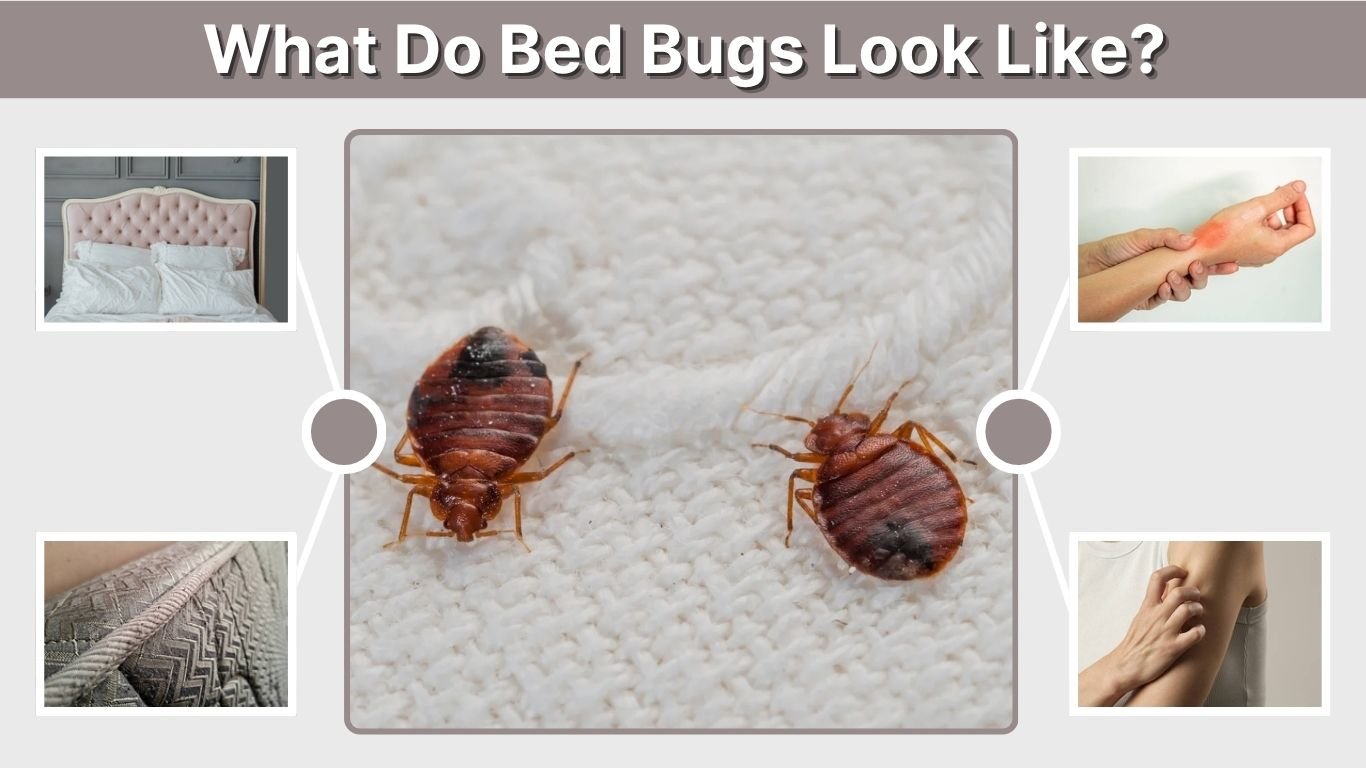
Bed bugs are small, flat, wingless insects that can be surprisingly difficult to identify, especially during their earliest life stages. Adults are typically reddish-brown and about the size of an apple seed, while young bed bugs can appear pale or almost transparent. Knowing what bed bugs look like on mattresses, sheets, skin, and furniture can help you recognize an infestation earlier. This guide explains how to identify adults, baby bed bugs, eggs, bites, shed skins, and other common signs around your sleeping area.
What Do Bed Bugs Look Like to the Human Eye?
Bed bugs are visible without a microscope, although young nymphs and eggs can be difficult to notice. Their appearance changes depending on age and whether they have recently fed. Adults have the most recognizable flattened, oval body shape. A recently fed bug becomes darker, longer, and more swollen as its abdomen fills with blood.
Adult Bed Bug Identification
- Adult bed bugs are generally about 5–7 mm long.
- Their bodies are broad, oval, and flattened from top to bottom.
- Unfed adults are usually brown or reddish-brown.
- Recently fed adults may appear darker red and more swollen.
- They have six legs and two visible antennae.
- Bed bugs have no functional wings and cannot fly.
- They do not jump like fleas but can crawl quickly.
- Their overall size and shape are often compared with an apple seed.
What Do Bed Bugs Look Like Up Close?
Up close, an adult bed bug has a segmented abdomen with visible horizontal lines across its body. Its head is comparatively small, and the body widens toward the abdomen. The insect looks extremely flat when unfed, which allows it to squeeze into narrow cracks, mattress seams, furniture joints, and spaces behind headboards.
After feeding, the abdomen expands noticeably and may look elongated rather than broadly oval. This difference sometimes makes fed and unfed bed bugs appear like different insects.
What Do Baby Bed Bugs and Eggs Look Like?
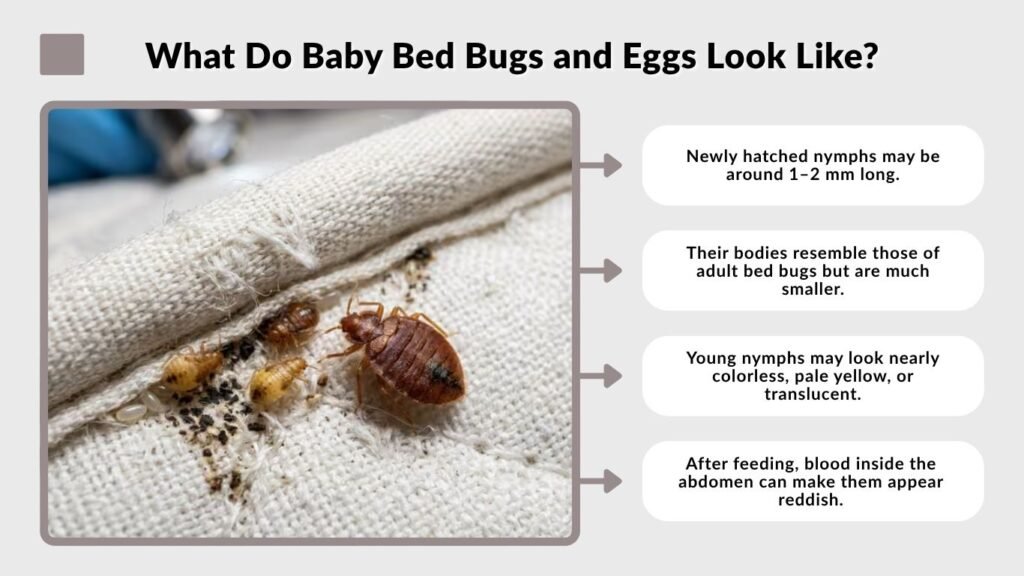
Baby bed bugs, called nymphs, resemble miniature versions of adults but are much lighter in color. Because they are so small and pale, they can be harder to see on light-colored bedding. Bed bug eggs are even smaller and are usually hidden in protected cracks or rough surfaces close to places where the insects rest and reproduce.
Baby Bed Bug Identification
- Newly hatched nymphs may be around 1–2 mm long.
- Their bodies resemble those of adult bed bugs but are much smaller.
- Young nymphs may look nearly colorless, pale yellow, or translucent.
- After feeding, blood inside the abdomen can make them appear reddish.
- Nymphs gradually become darker as they mature.
- Shed skins may remain behind after each stage of growth.
What Do Bed Bug Eggs Look Like?
Bed bug eggs are tiny, white to pearly white, and roughly 1 mm in size. They can resemble extremely small grains of rice, although they are much smaller than normal rice grains. Females attach the eggs to surfaces, which can make them difficult to brush away casually.
Eggs may be found in mattress seams, bed-frame joints, furniture cracks, behind headboards, or other protected locations near sleeping areas. Because of their small size, using a flashlight can make inspection easier.
What Do Bed Bugs Look Like on Mattresses and Sheets?
Finding an actual insect is strong evidence of bed bugs, but infestations often reveal themselves through several other signs first. Beds provide convenient hiding areas because bed bugs tend to remain near places where people sleep. Carefully inspecting seams, folds, box springs, headboards, and nearby furniture can reveal insects, eggs, shed skins, or spotting.
Signs of Bed Bugs on a Mattress
- Live reddish-brown adult bed bugs
- Tiny pale nymphs hiding along mattress seams
- Small white eggs attached near folds or cracks
- Pale or yellowish shed exoskeletons
- Dark brown or black fecal spotting
- Rusty or reddish stains caused by blood or crushed insects
- Bugs or debris around box springs and bed-frame joints
What Do Bed Bugs Look Like on Sheets?
On white sheets, live adults usually stand out as small brown or reddish insects. Nymphs may be more difficult to see because of their pale bodies. You may also notice tiny dark spots, shed skins, or rusty-colored stains.
Blood spots alone do not prove that bed bugs are present, so look for several signs together. Concentrate your inspection around the edges and folds of bedding and the mattress rather than only checking the center of the bed.
What Do Bed Bug Bites Look Like on Skin?
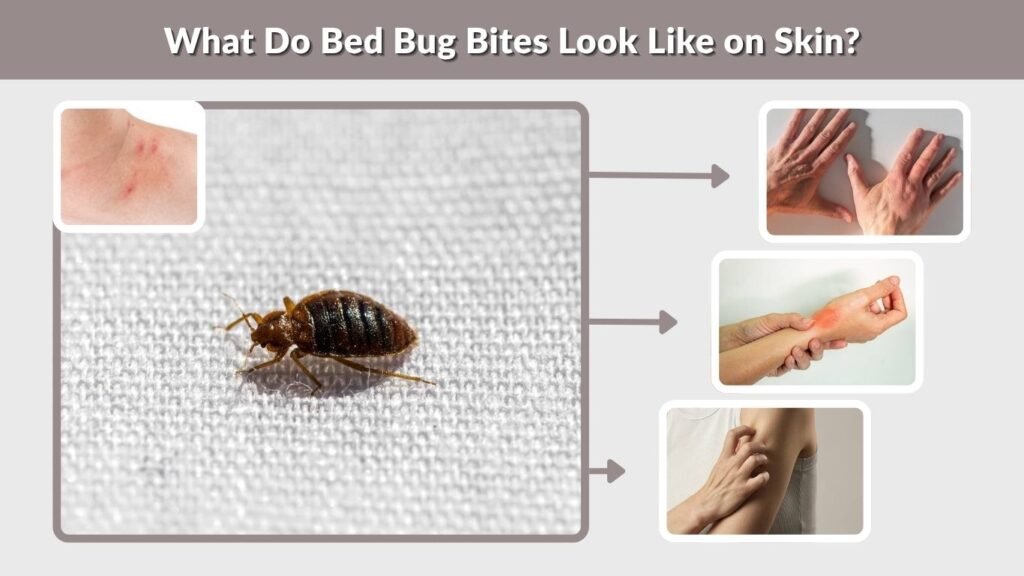
Bed bug bites vary significantly from person to person. Some individuals develop noticeable itchy marks, while others show little or no visible reaction. Because bites can resemble reactions caused by mosquitoes, fleas, or other conditions, skin marks alone cannot reliably confirm a bed bug infestation. Physical evidence around the bed is more useful for identification.
Common Appearance of Bed Bug Bites
- Small raised or slightly swollen areas
- Redness or discoloration around the bite
- Itching or irritation
- Several bites occurring close together
- Marks that sometimes appear in a line or cluster
- Bites commonly found on exposed skin such as arms, hands, neck, or face
- Reactions that may appear hours or even days after exposure
What Do Bed Bug Bites Look Like on Different Skin Tones?
Appearance varies with skin tone and individual reaction. On lighter skin, bites may look pink or red. On darker skin, redness may be less obvious and the affected area may instead appear darker, purplish, raised, or simply irritated.
Some people have almost no visible marks. For that reason, identifying bed bugs should involve inspecting the sleeping area for insects, eggs, fecal spots, or shed skins instead of relying only on skin appearance.
Other Bed Bug Signs You May Find
Bed bugs spend much of the daytime concealed in narrow hiding places, so indirect evidence can be important. Signs tend to accumulate close to beds and other resting locations when an infestation becomes established. Inspecting several types of evidence together provides a more reliable picture than focusing on one stain, bite, or suspected insect.
What Do Shed Bed Bug Skins Look Like?
Shed skins resemble empty, pale versions of bed bugs. They retain the general oval body shape but may look yellowish, translucent, or paper-like. Nymphs shed their outer covering as they grow, so finding several cast skins around mattress seams or furniture cracks can indicate ongoing activity.
What Do Dead or Squished Bed Bugs Look Like?
A dead bed bug usually becomes dry, flattened, and darker with time. A recently crushed bed bug that has fed may leave a reddish or rusty stain. Older dried insects may appear dark brown and brittle.
Because small beetles and other insects can look similar after being crushed, an intact specimen provides much better identification evidence.
How to Check Your Home for Bed Bugs
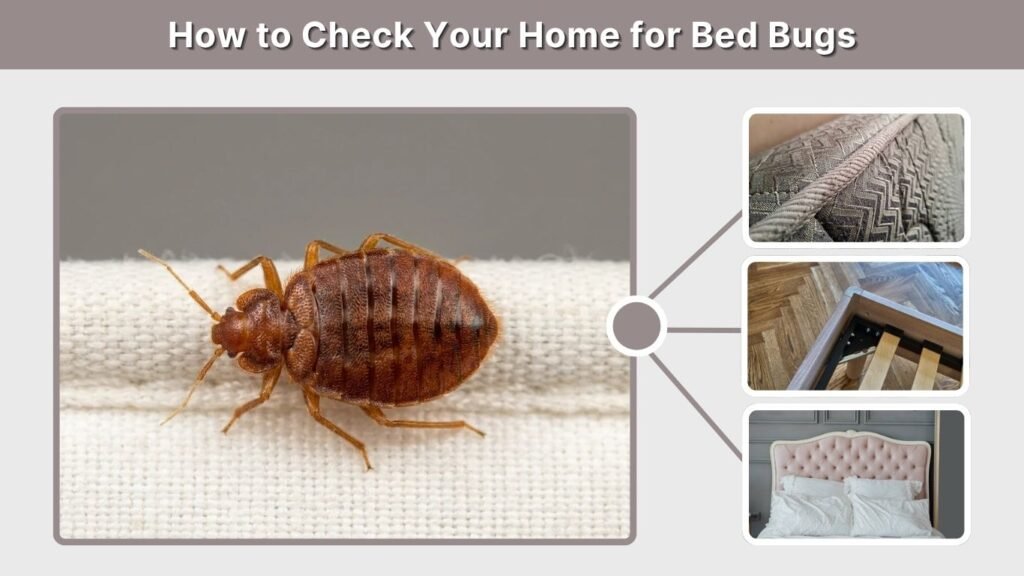
A careful inspection should focus on where people sleep and rest because bed bugs commonly hide nearby. They can occupy extremely small spaces, making a quick glance at the mattress insufficient. Use good lighting and inspect slowly, especially if you have unexplained bites or recently stayed somewhere where bed bugs may have been present.
Where to Look for Bed Bugs
- Mattress seams, piping, labels, and folds
- Under and inside box springs
- Bed-frame joints and screw holes
- Behind headboards
- Along baseboards and wall cracks
- Under nearby furniture
- Around nightstands and dresser joints
- Behind loose wallpaper near sleeping areas
Confirming a Suspected Bed Bug
If you find a suspicious insect, avoid identifying it only from bite marks or stains. Capture an intact example in a sealed clear container or secure it with clear tape for closer examination. The EPA recommends having suspected specimens properly identified before beginning extensive treatment.
FAQs
Because bed bugs change in size and color throughout their life cycle, identification is not always straightforward. People also frequently confuse them with fleas, tiny beetles, or harmless household insects. These quick answers address common questions about visibility, size, eggs, mattress signs, and distinguishing features that can help you decide whether further inspection is necessary.
1. Can You See Bed Bugs With the Naked Eye?
Yes. Adult bed bugs are easily visible to the naked eye and usually measure several millimeters long. Newly hatched nymphs and eggs are also technically visible but can be much harder to notice because they are tiny and pale.
2. What Do Tiny Bed Bugs Look Like?
Tiny bed bugs are usually young nymphs. They have the same basic oval shape as adults but may look nearly transparent or pale yellow. After taking a blood meal, their abdomen can become noticeably red.
3. What Do Bed Bug Eggs Look Like on a Mattress?
Eggs appear as extremely small white or pearly objects attached to protected surfaces. Look especially around mattress seams, folds, box springs, and nearby crevices rather than exposed flat areas.
4. Do Bed Bugs Look Like Fleas?
Not closely when examined carefully. Bed bugs are broader and flatter, while fleas are narrow from side to side and have enlarged hind legs adapted for jumping. Bed bugs cannot jump or fly.
5. What Is the Most Reliable Sign of Bed Bugs?
Finding a live bed bug, nymph, egg, or correctly identified specimen provides stronger evidence than bites alone. Shed skins, dark fecal spots, and rusty stains around mattresses and furniture can provide additional clues when several signs occur together.