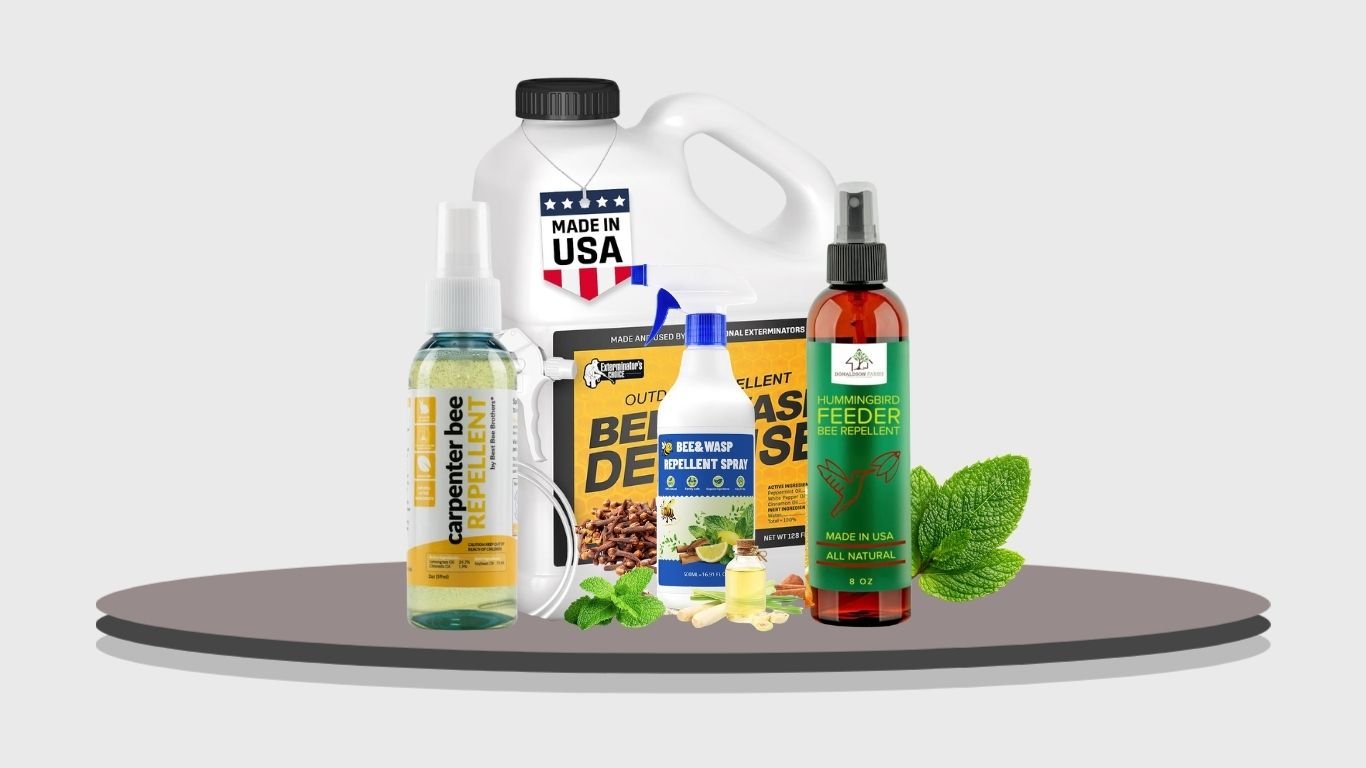
Finding the right bee killer spray can help manage unwanted bee activity around decks, sheds, fences, outdoor structures, and other problem areas. Different formulas are designed for different situations, including direct treatment, repellent use, and carpenter bee control. Some products use plant-based ingredients such as peppermint or citronella, while others are formulated for broader outdoor pest management. In this guide, we review 6 of the best bee killer spray options based on their intended use, application style, coverage, and overall practicality for controlling unwanted bee activity.
1. Colton’s Naturals Bee and Wasp Repellent Spray
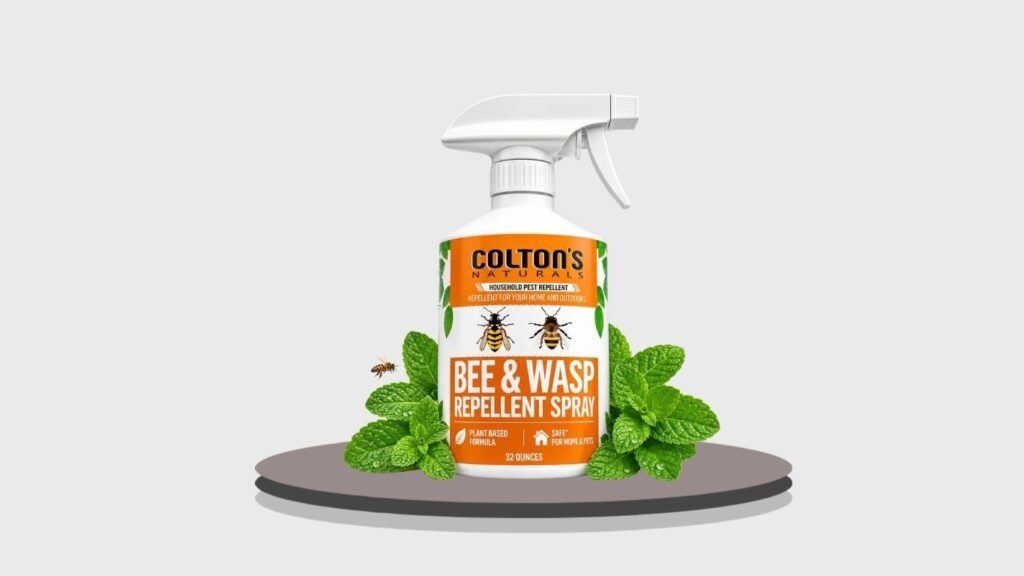
Colton’s Naturals Bee and Wasp Repellent Spray is a 32-ounce plant-based formula designed to deter bees and wasps from patios, porches, decks, and other problem areas. Although it may appear in searches for bee killer sprays, this product is better considered a repellent and deterrent rather than a conventional direct-contact insect killer. Its natural-style formulation and ready-to-use spray design make it particularly appealing for routine preventive treatment around frequently used spaces.
Key Features
- 32-ounce ready-to-use spray bottle
- Designed to repel bees and wasps
- Suitable for indoor and outdoor application
- Plant-based/natural-style formulation
- Citronella scent
- Useful around patios, porches, decks, and entrances
- Convenient spray application for targeted coverage
- Intended for repeated preventive treatment
Why It’s Best for Everyday Bee Deterrence
This spray stands out for homeowners who want to discourage bees and wasps from repeatedly visiting particular areas rather than relying solely on direct-kill insecticides. It can be applied around locations where insects tend to investigate or begin nesting, making it useful for porches, outdoor seating areas, entryways, and similar spaces.
Its 32-ounce capacity also provides enough product for treating multiple locations around a property. The ready-to-use format eliminates mixing or complicated preparation, which makes routine applications straightforward.
Performance & Lasting Protection
Colton’s Naturals is primarily designed for deterrence, so performance should be judged by how effectively it discourages returning insects rather than immediate knockdown. User feedback indicates that repeated application may be necessary because the effect is not necessarily permanent.
For the best practical results, areas with frequent bee or wasp activity may need periodic retreatment, particularly after weather exposure. This makes the product better suited to ongoing preventive maintenance than eliminating a large established nest.
Pros & Cons – Overall Verdict
Pros: The large bottle, easy spray application, plant-based positioning, and indoor/outdoor versatility make it convenient for routine bee and wasp deterrence. It is especially practical for people wanting to protect patios and commonly used outdoor spaces.
Cons: It is primarily a repellent, not a traditional fast-acting bee killer, and repeat applications may be required.
Overall, Colton’s Naturals Bee and Wasp Repellent Spray is a practical option when the goal is to discourage unwanted bee and wasp activity with an easy-to-apply preventive spray rather than depend on aggressive direct-kill treatment.
2. Exterminators Choice Bee & Wasp Defense Spray – 1 Gallon
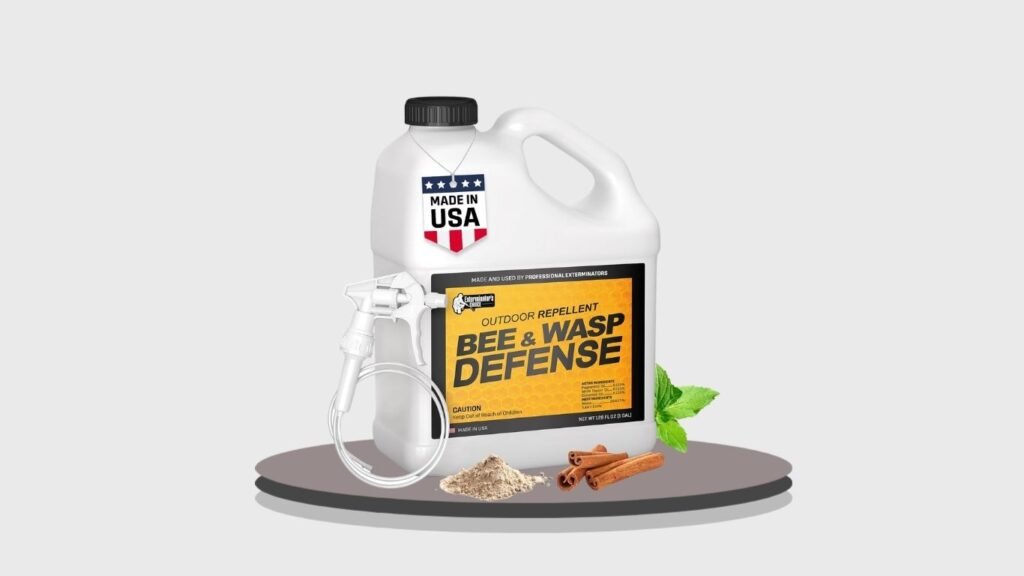
Exterminators Choice Bee & Wasp Defense Spray is a large-volume option designed for people who need to treat several outdoor or indoor areas where bees and wasps repeatedly appear. The one-gallon container makes it more suitable for broad property coverage than smaller trigger bottles. It is marketed as a naturally derived repellent made with essential oils and water rather than as a conventional fast-knockdown insecticide.
Key Features
- Large 1-gallon container
- Designed to repel bees and wasps
- Essential-oil-based formulation
- Suitable for indoor and outdoor treatment
- Useful around patios, garages, gardens, and entry areas
- Ready for repeated preventive applications
- Large quantity works well for multiple treatment zones
- Intended primarily as a deterrent rather than a contact killer
Why It’s Best for Large Treatment Areas
The main advantage here is simply coverage. Small bottles are convenient for isolated problem spots, but they can run out quickly when several sections of a property require treatment. A gallon-sized product is more practical for homeowners dealing with recurring activity around decks, sheds, fences, garages, and other structures.
It is especially useful when preventive spraying needs to become part of regular outdoor maintenance.
Performance & Durability
Because this product works primarily as a repellent, its performance depends on maintaining treated areas rather than expecting instant elimination of an active nest. Weather exposure, rainfall, cleaning, and normal surface wear can reduce a repellent barrier over time.
Routine inspection and retreatment can therefore be important. The larger container makes repeated applications more practical without requiring frequent replacement bottles.
Pros & Cons – Overall Verdict
Pros: Large capacity, versatile application areas, essential-oil-based formulation, and convenient coverage for bigger properties.
Cons: It is better classified as a repellent than a traditional bee killer, and ongoing treatment may be necessary.
Overall, Exterminators Choice Bee & Wasp Defense is particularly appealing for homeowners who need a generous supply of repellent for regular property-wide prevention rather than occasional spot treatment.
3. Exterminators Choice Natural Bee & Wasp Repellent Spray
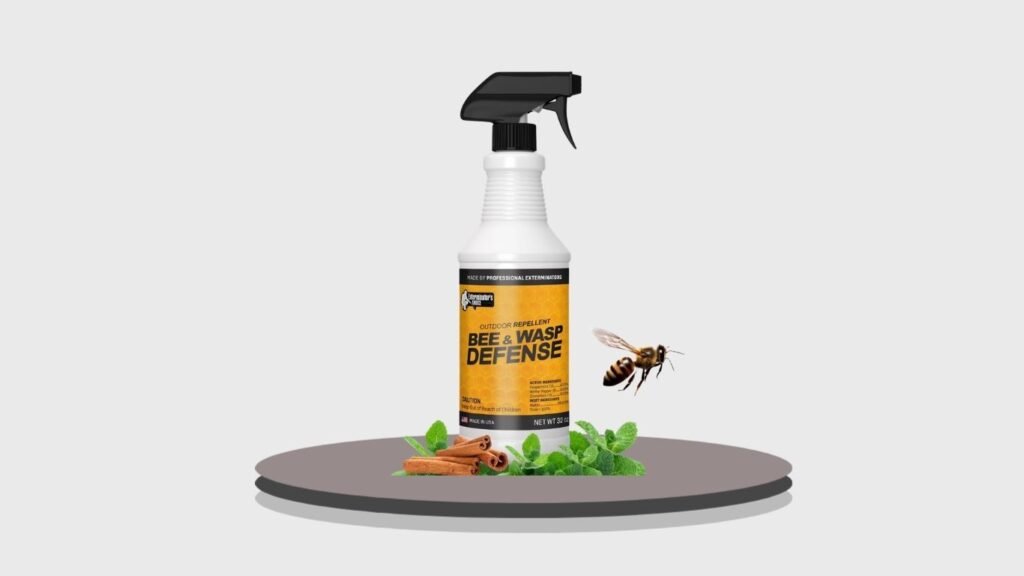
The Exterminators Choice Natural Bee & Wasp Repellent Spray provides a more manageable option for targeted bee and wasp prevention. Rather than relying on a conventional contact insecticide approach, it is positioned as a repellent formula intended to discourage stinging insects from spending time around commonly used areas. That makes it suitable for patios, entrances, porches, garages, and similar locations where repeated activity becomes inconvenient.
Key Features
- Designed for bee and wasp deterrence
- Ready-to-use liquid formula
- Suitable for targeted applications
- Useful around entryways and outdoor living areas
- Intended for preventive pest management
- Convenient alternative to gallon-size containers
- Can be incorporated into routine outdoor maintenance
- Designed to discourage recurring bee and wasp activity
Why It’s Best for Convenient Spot Treatment
Not every homeowner needs a gallon of pest-control spray. For smaller properties or isolated trouble spots, a more compact bottle can be easier to store, carry, and apply.
This option makes sense when activity is concentrated around one porch, doorway, railing, shed, or other limited area. It also allows treatments to be focused rather than covering large sections unnecessarily.
Performance & Durability
Repellent sprays generally perform differently from aerosol insecticides formulated for immediate knockdown. Their purpose is to make treated locations less attractive to unwanted insects.
For that reason, consistent coverage matters. Outdoor surfaces may require repeat applications after rainfall or prolonged exposure to weather. Treating known activity zones before bee pressure becomes severe may also provide a more practical preventive approach than waiting until an established nest develops.
Pros & Cons – Overall Verdict
Pros: Convenient bottle size, straightforward application, useful for targeted prevention, and suitable for several common household locations.
Cons: It should not be expected to provide the same immediate effect as a conventional contact insecticide, and repeated applications may be necessary.
Overall, this Exterminators Choice formula is better suited to homeowners who want a practical bee and wasp deterrent for localized areas without committing to a bulk gallon container.
4. Peppermint Bee Repellent Spray for Carpenter Bees
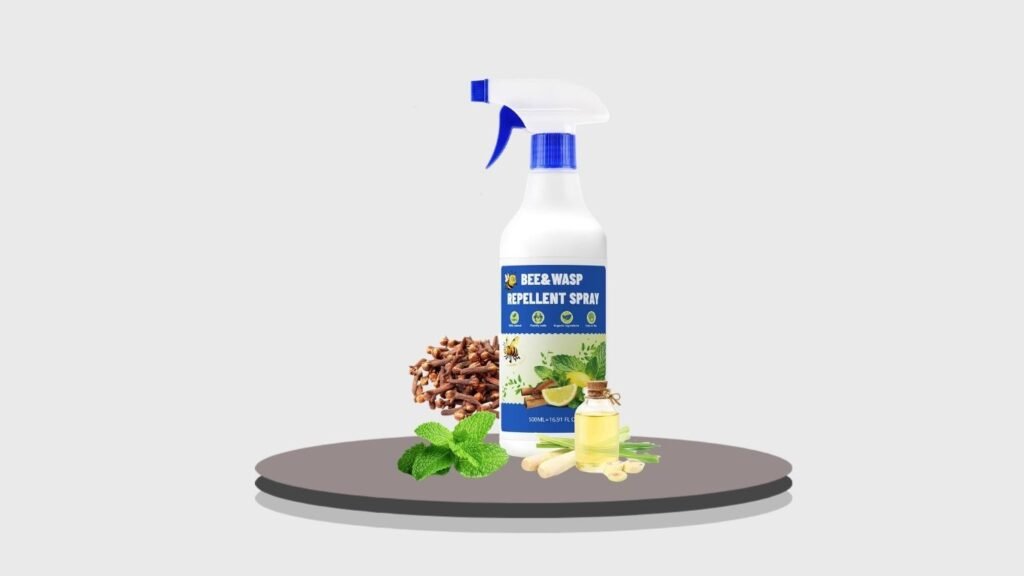
The Peppermint Bee Repellent Spray for Carpenter Bees is designed primarily for homeowners trying to discourage carpenter bees and other stinging insects from frequently visiting structures. Peppermint-based products are commonly marketed as scent-driven repellents, making this type of spray especially relevant around decks, railings, fences, eaves, and exposed wooden areas where carpenter bees may investigate potential nesting sites.
Key Features
- Peppermint-based repellent approach
- Intended for carpenter bee deterrence
- Suitable for outdoor structures
- Useful around decks, fences, porches, and wooden surfaces
- Ready-to-use spray application
- Can be used for targeted treatment
- Designed for preventive rather than direct-kill control
- Convenient for seasonal carpenter bee activity
Why It’s Best for Wooden Structures
Carpenter bees differ from honey bees because females excavate tunnels in wood for nesting. Areas such as fascia boards, railings, pergolas, and exposed structural wood can therefore receive repeated attention.
A targeted spray allows homeowners to concentrate treatment on vulnerable locations rather than applying product throughout an entire yard. The peppermint scent also makes this type of formula different from traditional synthetic aerosol insecticides.
Performance & Durability
Peppermint oil is widely promoted in consumer repellents, but evidence for reliable long-term carpenter bee control is limited, so it is better treated as one preventive measure rather than a guaranteed standalone solution.
Regular reapplication may be needed, particularly outdoors where rain, sunlight, and weathering can diminish scent-based treatments. Existing carpenter bee holes may also require additional management rather than repellent alone.
Pros & Cons – Overall Verdict
Pros: Easy spot application, useful around vulnerable wood, convenient for seasonal prevention, and avoids the feel of a traditional aerosol insecticide.
Cons: Long-term effectiveness of peppermint alone is not strongly established, and active nesting may require additional control measures.
Overall, this peppermint repellent is most appropriate as part of a preventive carpenter bee management strategy, particularly for regularly monitored wooden structures.
5. Donaldson Farms Hummingbird Feeder Bee Repellent Spray
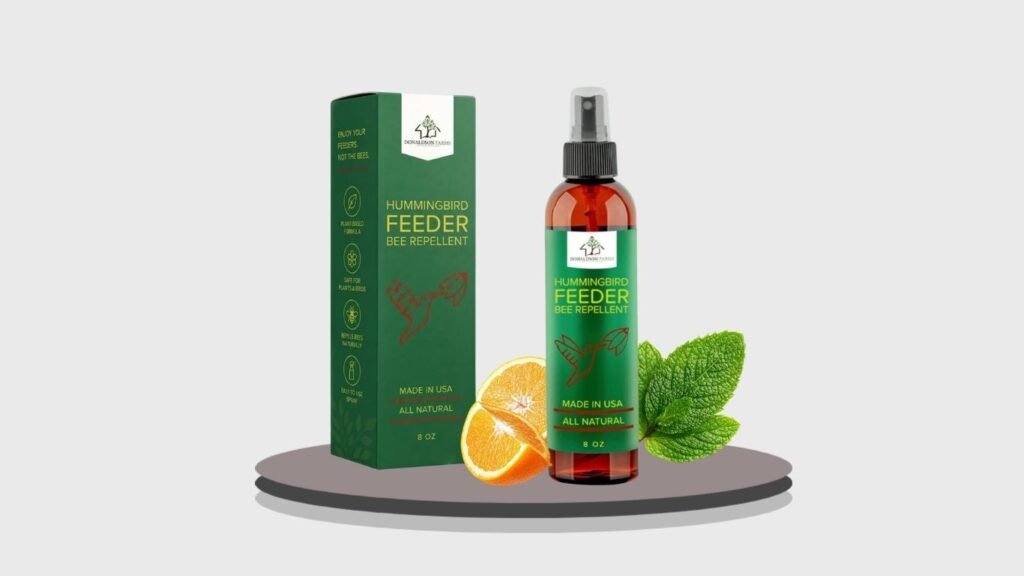
The Donaldson Farms Hummingbird Feeder Bee Repellent Spray is a specialized option created for a very specific problem: bees gathering around hummingbird feeders. Unlike general-purpose bee control products, it is intended to reduce bee presence without killing the insects. The manufacturer recommends lightly applying it around the feeder while avoiding direct spraying into feeding ports.
Key Features
- Specifically designed for hummingbird feeders
- Intended to repel rather than kill bees
- Ready-to-use spray formula
- Light application around feeder surfaces
- Manufacturer advises avoiding feeding holes
- Suitable for repeated seasonal applications
- Designed for outdoor bird-feeding areas
- Focused solution for feeder-related bee activity
Why It’s Best for Hummingbird Feeders
Sweet nectar naturally attracts more than hummingbirds, and bees can sometimes gather heavily around leaking or accessible feeder ports. A product specifically created for this setting offers a more targeted approach than applying a broad household insect spray near a feeding station.
Donaldson Farms instructs users to shake the product and lightly spray relevant areas while keeping it out of the feeding openings.
Performance & Durability
This is another product where consistency matters. The manufacturer states that regular use throughout the feeding season may be necessary to reduce bee activity.
It is also worth setting realistic expectations. The manufacturer’s page currently displays limited product-specific reviews with negative feedback, so results may vary considerably by feeder design, bee pressure, and application routine.
Pros & Cons – Overall Verdict
Pros: Purpose-built for hummingbird feeders, non-killing approach, simple application, and useful when bees repeatedly compete at feeding stations.
Cons: Results can vary, consistent reapplication may be required, and it should not be sprayed into nectar openings.
Overall, this is a specialized option rather than a general bee killer, making the most sense for people specifically dealing with bees around hummingbird feeders.
6. Best Bee Brothers Citrus Carpenter Bee Repellent Spray
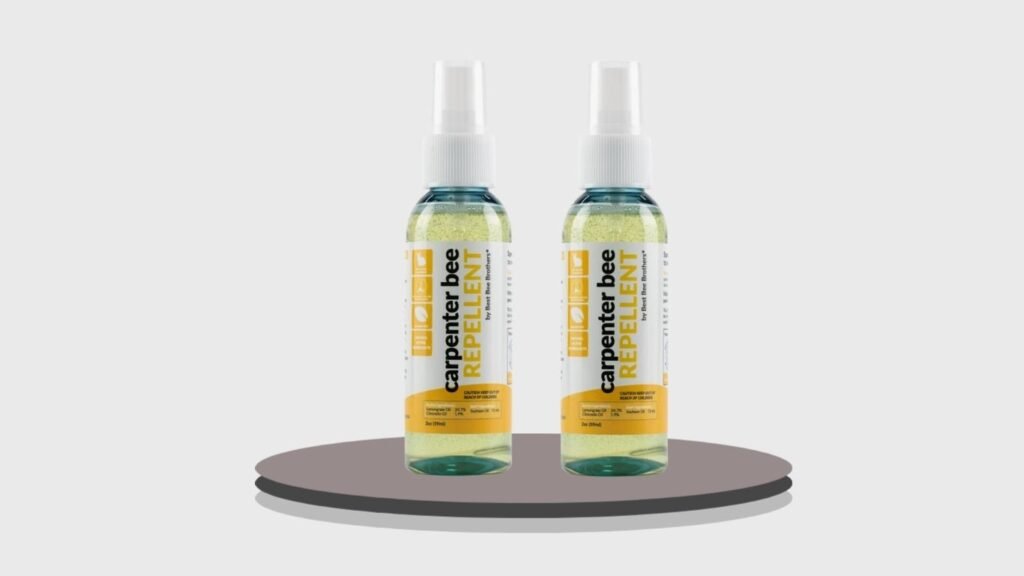
The Best Bee Brothers Citrus Carpenter Bee Repellent Spray is formulated specifically to discourage carpenter bees from nesting on wooden surfaces. Its active ingredients include lemongrass oil and citronella oil, giving it a citrus-style scent profile intended to make potential nesting areas less attractive. The manufacturer recommends applying it to outdoor wood such as railings and siding and reapplying regularly during carpenter bee season.
Key Features
- Specifically formulated for carpenter bees
- Lemongrass oil as a primary active ingredient
- Citronella oil included in the formula
- Designed for outdoor wooden surfaces
- Useful around railings, siding, furniture, and similar areas
- Available in multiple bottle sizes
- Designed for preventive carpenter bee deterrence
- Manufacturer recommends regular seasonal reapplication
Why It’s Best for Carpenter Bee Prevention
This spray stands out because its purpose is clearly defined. Carpenter bees can repeatedly inspect unfinished or weathered wood before excavating nesting tunnels, so treating those locations early can be more convenient than addressing damage afterward.
Best Bee Brothers recommends spraying from approximately 6–12 inches away and applying the product directly to vulnerable wooden areas.
Performance & Durability
According to the manufacturer, the repellent is designed to provide protection for several days, with reapplication every few days during active carpenter bee season recommended for continued coverage. Its listed active ingredients are lemongrass oil at 24.7% and citronella oil at 1.9%.
An important detail is that the product should not be sprayed onto carpenter bee traps because the repellent effect conflicts with a trap’s purpose of attracting bees.
Pros & Cons – Overall Verdict
Pros: Carpenter-bee-specific formulation, clearly listed essential-oil actives, straightforward application, and useful for preventive treatment of exposed wood.
Cons: Requires periodic reapplication and is a repellent rather than a conventional contact killer.
Overall, Best Bee Brothers Citrus Carpenter Bee Repellent is a particularly focused option for protecting decks, railings, siding, and other wooden structures during carpenter bee season.
FAQs
1. What is the best bee killer spray for outdoor use?
The right product depends on the problem. A large-volume spray can be more convenient for treating multiple outdoor areas, while a carpenter bee repellent is better suited to decks, fascia boards, railings, and exposed wood. Many products in this list are actually repellents rather than direct-contact bee killers, so always check the label before expecting immediate knockdown.
2. Do bee repellent sprays actually kill bees?
Not necessarily. Repellents are designed primarily to discourage bees from approaching, landing, or nesting in treated areas. Products such as Best Bee Brothers Citrus Carpenter Bee Repellent specifically work as deterrents rather than conventional killing sprays. Always follow the product label to understand whether a formula is a repellent, insecticide, or both.
3. How often should I apply bee repellent spray?
Application frequency depends on the specific label and environmental conditions. Outdoor repellents can lose effectiveness because of rain, sunlight, cleaning, and general weather exposure. For example, Best Bee Brothers recommends reapplying its carpenter bee repellent every few days during active season. The individual product label should always take priority.
4. Can I spray bee repellent directly on a nest?
Only use a product in the way its label specifically permits. Repellent sprays designed for surfaces may not be intended for treating an occupied nest directly. Established nests—especially those involving aggressive stinging insects or nests inside walls—can create significant sting risks. Professional pest-control assistance may be safer when a nest is large, difficult to reach, or positioned near frequently used areas.
5. What is the difference between bee killer spray and bee repellent spray?
A bee killer spray is an insecticidal product formulated to kill targeted insects, often through direct contact or residual treatment. A bee repellent spray primarily attempts to discourage bees from entering or nesting in a particular location. Several products commonly marketed or searched under “bee killer spray” are actually deterrents. Checking the active ingredients, intended pests, application instructions, and EPA/label information helps determine what a product is actually designed to do.