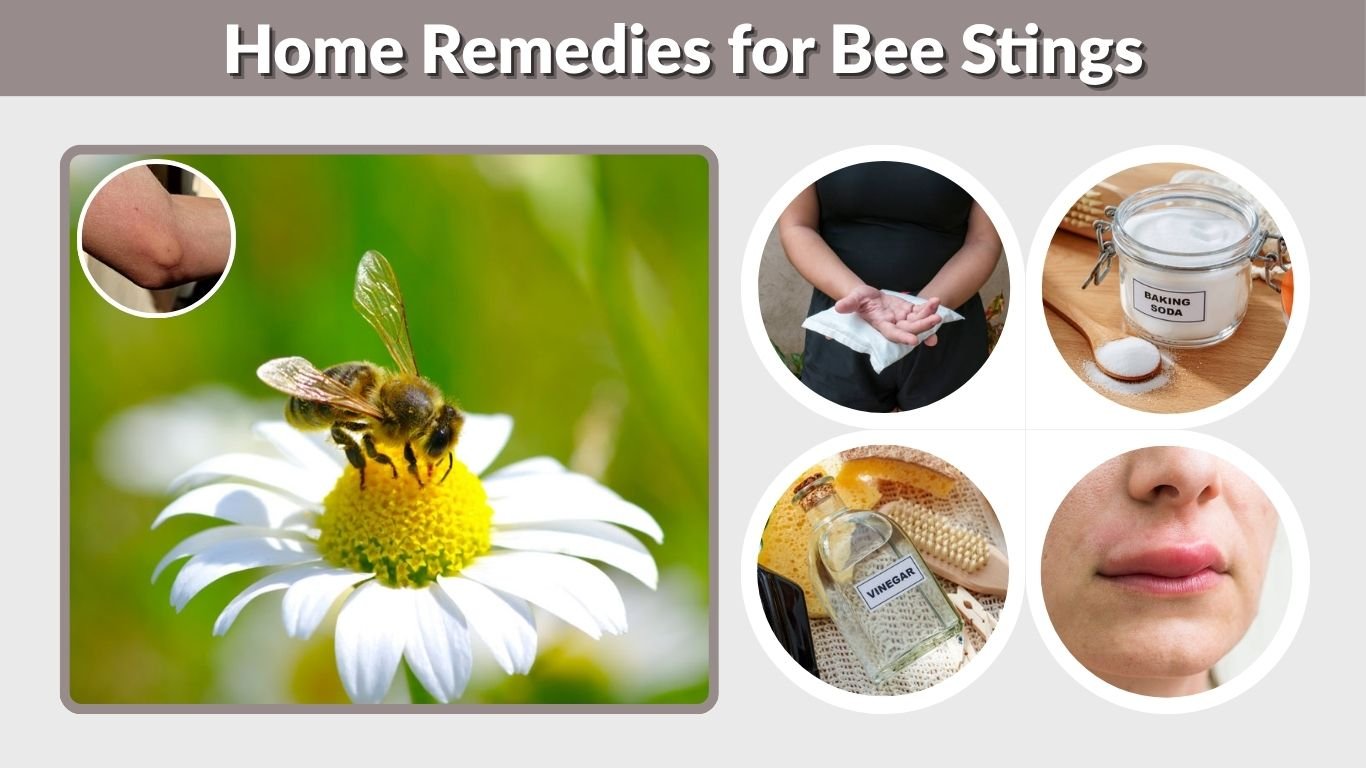
Bee stings can cause sudden burning pain, redness, itching, and swelling around the affected area. Fortunately, most mild reactions can be managed with simple home remedies for bee stings and basic first aid. Removing the stinger quickly, cleaning the skin, cooling the area, and controlling itching can make recovery more comfortable. However, natural remedies should never replace emergency treatment for a serious allergic reaction. This guide explains safe at-home remedies for bee stings, swelling, and itching, along with warning signs that need medical attention.
What to Do Immediately After a Bee Sting
The first few minutes after being stung can influence how uncomfortable the area becomes. Before trying creams or natural home remedies, move away from the bees, check the sting site, and perform basic first aid. Most uncomplicated stings cause localized pain and swelling that gradually improve, although stronger local reactions can remain noticeable for several days.
Remove the Stinger Quickly
Honey bees can leave a stinger in the skin. If you can see one, remove it as soon as practical. Scraping it sideways with a fingernail or the edge of a card is a simple method.
Do not spend unnecessary time worrying about the perfect removal technique—the priority is getting the stinger out promptly. Afterward, inspect the skin to make sure nothing obvious remains.
Clean and Cool the Sting
Once the stinger has been removed:
- Wash the area gently with soap and water.
- Pat the skin dry instead of rubbing it.
- Wrap an ice pack or cold pack in a thin cloth.
- Apply it to the sting for about 15–20 minutes.
- Remove rings or tight jewelry near the area before swelling increases.
Cold treatment is one of the simplest home remedies for bee stings because it can temporarily decrease pain and swelling. Never place ice directly against bare skin for prolonged periods.
Best Home Remedies for Bee Stings and Swelling
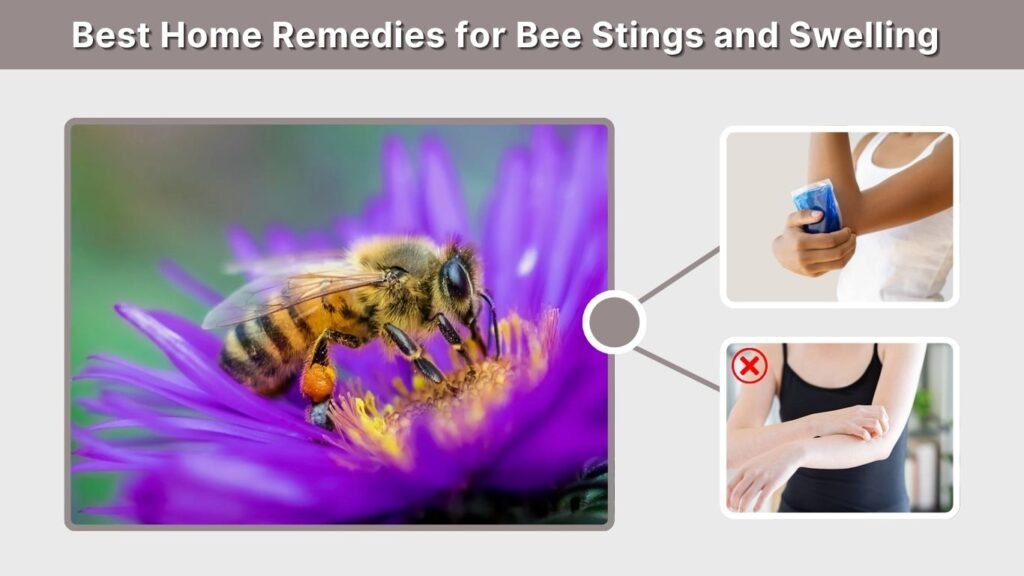
A mild bee sting usually does not require complicated treatment. Once the area has been cleaned, home care should focus on controlling swelling, pain, and irritation while allowing the skin to recover. Simple physical measures often have better medical support than popular household ingredients such as toothpaste, vinegar, or baking soda.
Use a Cold Compress
Cold therapy remains one of the most useful at-home remedies for bee stings. A wrapped ice pack or cool, damp cloth can reduce discomfort and temporarily calm inflammation around the sting.
Apply the cold compress for roughly 15–20 minutes at a time, then allow the skin to rest. It can be repeated periodically if the area remains uncomfortable. The NHS specifically recommends a wrapped ice pack or cold wet cloth for swollen insect stings.
Elevate a Swollen Arm or Leg
If the sting occurs on an arm, hand, foot, or leg, keeping that part of the body raised may help manage swelling.
Useful steps include:
- Elevating the affected limb when resting.
- Removing tight watches, bracelets, rings, or footwear.
- Avoiding unnecessary pressure on the swollen area.
- Continuing cold compresses periodically.
- Watching whether the swelling continues to expand.
Large local reactions sometimes become more swollen during the first day or two and may take several days to settle completely.
Avoid Scratching
Bee stings frequently become itchy as the initial pain decreases. Scratching may damage the skin and increase the chance of infection.
Instead, keep the area clean and use cold therapy when itching becomes distracting. Calamine lotion or an over-the-counter hydrocortisone cream may also help with itching and localized inflammation when used according to package directions.
Natural Home Remedies for Bee Stings: What Actually Helps?
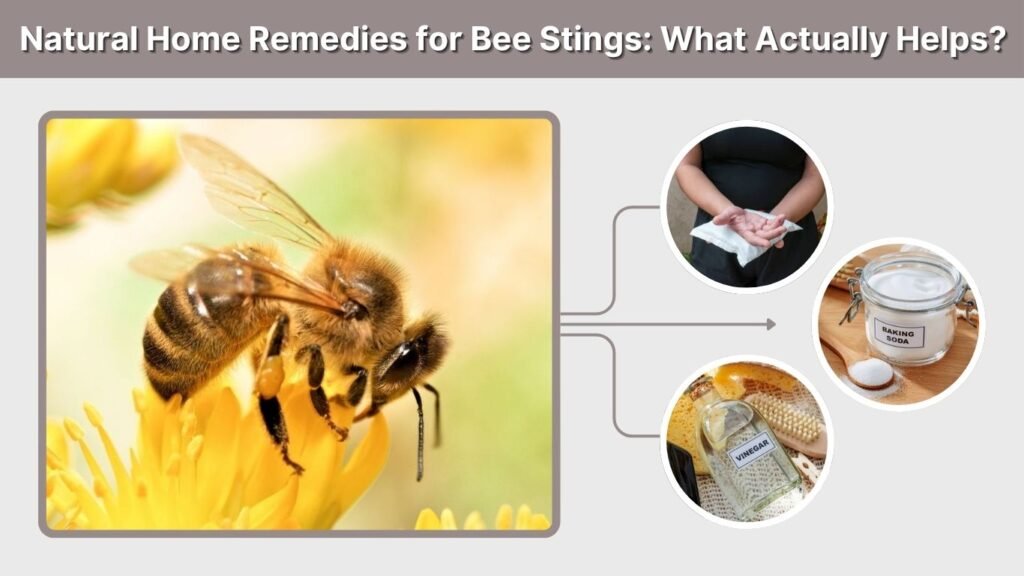
Many online lists recommend numerous natural home remedies for bee stings, ranging from baking soda and honey to vinegar and essential oils. However, natural does not automatically mean effective or harmless. When treating a sting at home, it is safer to prioritize simple approaches supported by standard first-aid guidance and avoid substances that may irritate already inflamed skin.
Simple Natural Approaches
For someone who wants minimal-product home care, the most practical options are:
- Cool running water for gentle cleaning.
- A clean cold-water compress for swelling.
- Resting the irritated area.
- Elevating a swollen arm or leg.
- Avoiding scratching, rubbing, and unnecessary pressure.
- Keeping the area clean while it heals.
These approaches do not neutralize bee venom, but they can make a mild local reaction more comfortable while the body naturally resolves it.
Baking Soda, Vinegar, Toothpaste, and Other Remedies
Baking soda paste is one of the best-known traditional bee sting remedies, but reliable evidence that it neutralizes venom or significantly improves symptoms is lacking. The NHS specifically advises against using bicarbonate of soda as a home remedy for insect bites and stings.
Similar caution applies to toothpaste, vinegar, tobacco, undiluted essential oils, and other household substances. They may irritate sensitive or broken skin without providing meaningful additional relief. Basic first aid, cold treatment, and proven anti-itch treatments are more predictable choices.
How to Reduce Itching, Pain, and Persistent Swelling
Some bee stings produce more than a few hours of discomfort. Redness and swelling can become larger over the following day or two before gradually improving. This is often called a large local reaction and is different from anaphylaxis. Symptom management at home may still be appropriate when the reaction remains localized and the person otherwise feels well.
Relief for an Itchy Bee Sting
Several options can help when itching becomes troublesome:
- Continue using cool compresses.
- Consider calamine lotion.
- Use hydrocortisone cream according to its directions.
- Consider an oral antihistamine if appropriate for you.
- Keep fingernails away from the irritated area.
- Wear loose clothing over the sting when possible.
People with medical conditions, those taking other medicines, pregnant people, and parents treating young children should check medicine labels or ask a pharmacist or healthcare professional before using an OTC medication.
Relief for Bee Sting Pain
Mild sting pain usually fades relatively quickly. If discomfort continues, an over-the-counter pain medicine such as acetaminophen/paracetamol or ibuprofen may be appropriate for some people when taken according to package directions.
Pain that becomes significantly worse instead of gradually improving, especially with increasing warmth, pus, fever, or spreading redness, deserves medical assessment because infection or another complication may need to be ruled out.
When Home Remedies for Bee Stings Are Not Enough
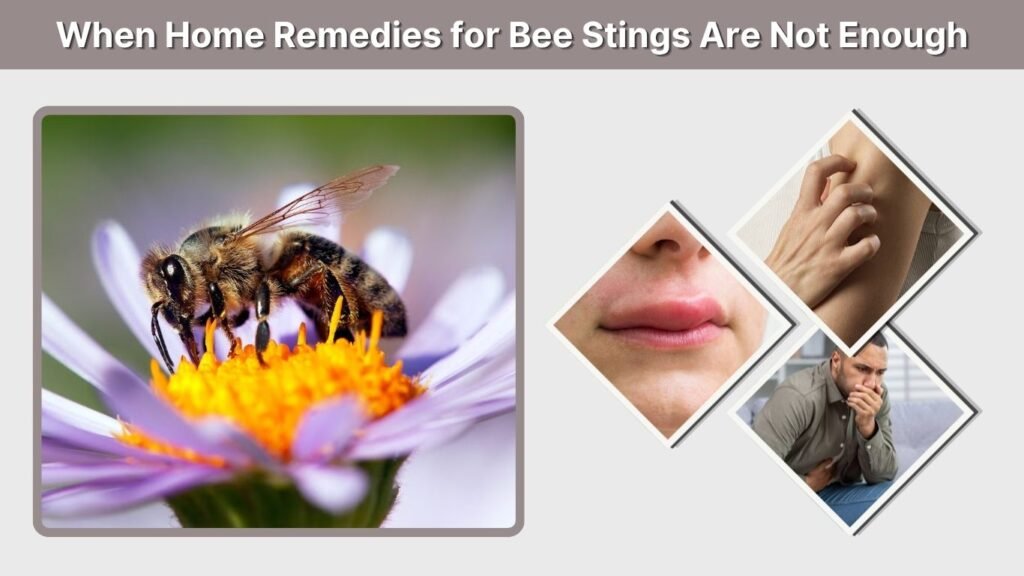
Home remedies are intended for mild, localized reactions—not serious allergies. Bee venom can trigger anaphylaxis in susceptible people, and symptoms can develop rapidly. Emergency symptoms may involve breathing, circulation, digestion, or widespread skin reactions rather than simply swelling around the sting. A person can have a serious reaction even after a single sting.
Signs of a Severe Allergic Reaction
Seek emergency medical help immediately for symptoms such as:
- Trouble breathing or wheezing
- Swelling of the tongue, lips, face, or throat
- Difficulty swallowing
- Widespread hives or severe itching
- Dizziness, fainting, or loss of consciousness
- Weak or rapid pulse
- Nausea, vomiting, or diarrhea with other allergic symptoms
If a person has been prescribed an epinephrine auto-injector for severe allergies, it should be used immediately as their healthcare professional instructed, followed by emergency medical care. Antihistamines are not a substitute for epinephrine in anaphylaxis.
Multiple Bee Stings
Multiple stings can expose the body to much more venom than a single sting. Mayo Clinic notes that numerous stings may cause symptoms such as nausea, vomiting, diarrhea, fever, and lightheadedness. Children, older adults, and people with underlying medical problems may be especially vulnerable.
Prompt medical advice is sensible after many simultaneous stings or whenever symptoms extend beyond an ordinary local reaction.
FAQs
Home treatment works best when symptoms remain mild and limited to the area surrounding the sting. Questions commonly arise about swelling, itching, natural ingredients, and how long a reaction should last. Understanding what is expected can help you avoid unnecessary treatments while recognizing symptoms that should receive professional medical attention.
1. What is the fastest home remedy for a bee sting?
Remove any visible stinger promptly, wash the area with soap and water, and apply a wrapped cold pack for about 15–20 minutes. These are among the most consistently recommended first-aid measures for uncomplicated bee stings.
2. What helps bee sting swelling go down?
Cold compresses and elevation of an affected arm or leg can help manage localized swelling. Swelling may increase during the first day or two before gradually improving, particularly with a large local reaction.
3. Does baking soda help bee stings?
Baking soda is a traditional remedy, but evidence for meaningful benefit is limited. The NHS advises against using bicarbonate of soda for insect bites and stings, so standard first aid and established itch-relief treatments are preferable.
4. How long does swelling from a bee sting last?
Mild swelling may resolve within hours. A stronger local reaction can become larger over the next day or two and may take several days to disappear completely. Seek medical advice if symptoms are severe, worsening unexpectedly, or accompanied by signs of infection or allergy.
5. Can home remedies treat an allergic reaction to a bee sting?
No. Home remedies cannot treat anaphylaxis. Breathing difficulty, throat or tongue swelling, fainting, widespread hives, or other severe symptoms require immediate emergency treatment. Use prescribed epinephrine immediately when indicated and seek emergency medical help.