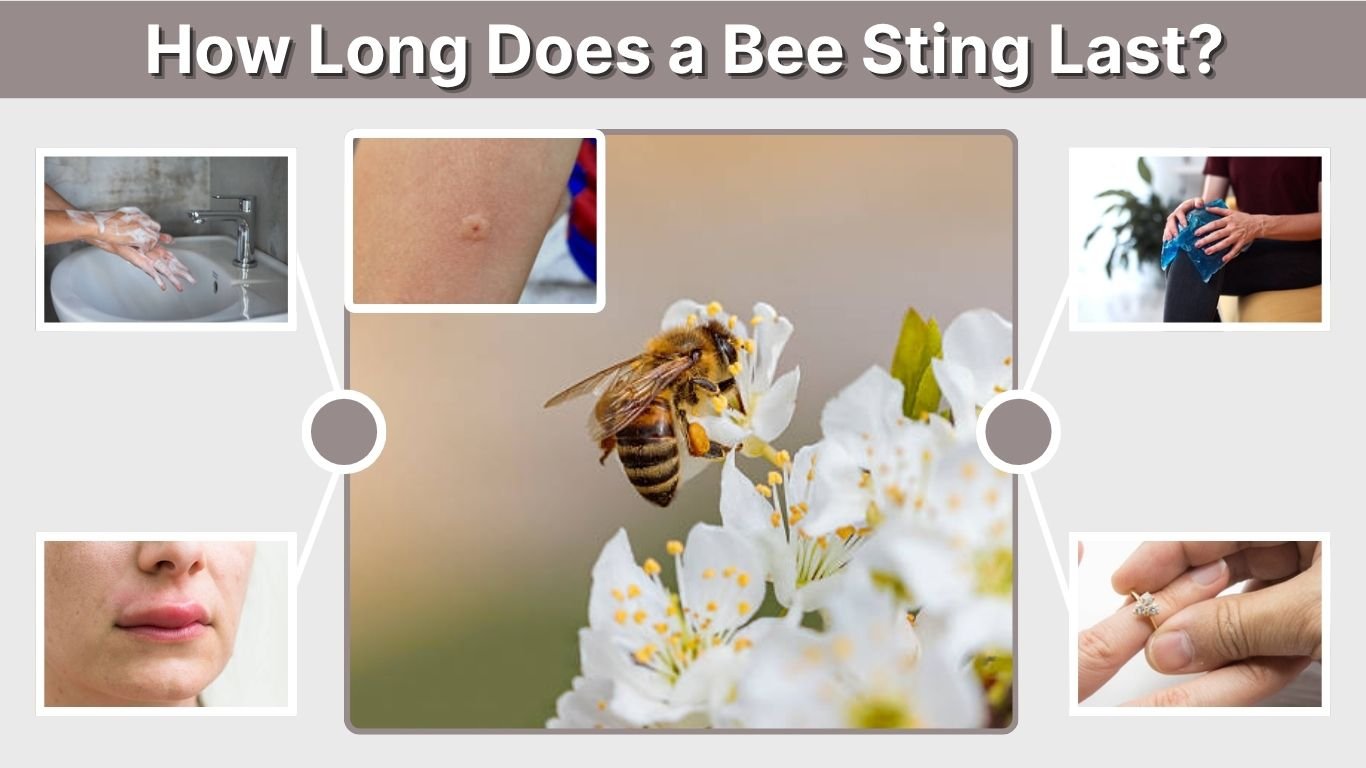
A bee sting usually causes immediate burning pain, redness, and swelling, but how long does a bee sting last? For a mild reaction, pain and swelling often improve within a few hours, while tenderness, itching, or redness may remain for a day or two. Stronger local reactions can worsen during the first 24–48 hours and may take up to a week to disappear. The duration depends on the amount of venom, sting location, number of stings, and your individual sensitivity.
How Long Does a Bee Sting Usually Last?
Most people develop only a mild local reaction after a bee sting. Sharp pain begins almost immediately, followed by a small raised welt, redness, and swelling around the sting site. These symptoms generally start settling relatively quickly. However, people who develop a larger local reaction can experience increasing swelling for another day or two before improvement begins.
Typical Bee Sting Timeline
A straightforward bee sting often follows this general pattern:
- Immediately: Sharp, burning, or stinging pain begins.
- First few hours: A red welt and localized swelling appear.
- First 24 hours: Pain usually decreases substantially in a mild reaction.
- 24–48 hours: Itching, tenderness, and swelling may remain.
- Several days: Most mild reactions continue fading.
- Up to 7 days or longer: A stronger local reaction may take this long to fully settle.
Mayo Clinic notes that mild swelling and pain generally disappear within a few hours, while moderate reactions can worsen during the following day or two and persist for up to seven days.
Why Some Bee Stings Last Longer
Not everyone responds to bee venom in the same way. One person might have a small welt for several hours, while another develops significant swelling that lasts several days.
The sting’s location also matters. A finger, hand, foot, eyelid, or lip can appear particularly swollen because there is limited space or loose tissue around these areas. Multiple stings can produce more severe symptoms because the person receives a larger total amount of venom.
How Long Does Swelling From a Bee Sting Last?
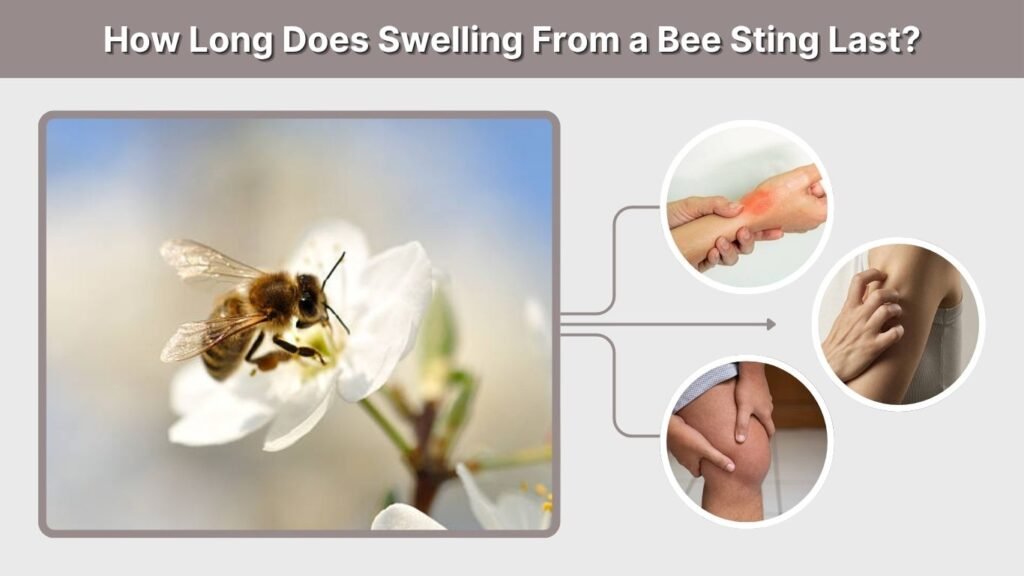
Swelling is one of the most noticeable symptoms after a bee sting. With a mild reaction, swelling typically remains close to the sting and improves within several hours or a couple of days. A larger local reaction behaves differently: swelling may continue expanding for 24–48 hours before gradually decreasing and can persist for several days.
Normal Swelling After a Bee Sting
Typical localized swelling may include:
- A raised bump around the sting
- Mild redness
- Warmth around the affected skin
- Tenderness when touched
- Mild to moderate itching
- Swelling limited mainly to the surrounding area
Swelling alone does not necessarily indicate a dangerous allergy. Larger local reactions can become impressive in size yet remain limited to the area surrounding the sting. Moderate reactions may take roughly several days, and sometimes up to about a week, to resolve.
What Helps Bee Sting Swelling?
Applying a wrapped cold pack or cool compress can reduce discomfort and swelling. Removing rings or other tight items is sensible when a hand or finger has been stung because swelling can make them difficult to remove later.
Keeping the affected limb elevated may also help. Avoid repeatedly scratching or rubbing the area, as damaged skin can become irritated and potentially infected.
How Long Does Bee Sting Pain and Itching Last?
Pain is usually strongest immediately after the sting because bee venom triggers an inflammatory response in the skin. For many people, the sharp pain improves within hours. Itching often appears afterward and may persist longer than the original pain, particularly when swelling and redness continue for several days.
How Long Does Bee Sting Pain Last?
A mild bee sting can hurt intensely at first but often becomes much less painful within a few hours. Residual tenderness may remain for a day or two.
When pain becomes progressively worse after initially improving, especially when accompanied by increasing warmth, spreading redness, or drainage, medical evaluation may be appropriate because these changes can indicate complications rather than a normal sting reaction.
How Long Does a Bee Sting Itch?
Itching may continue for several days while inflammation settles. People with larger local reactions may notice itching for much of the time that swelling remains.
Try not to scratch. Scratching can further irritate the skin and create small breaks that allow bacteria to enter. A cold compress and appropriate over-the-counter anti-itch treatment can help with mild symptoms.
How to Make a Bee Sting Heal Faster
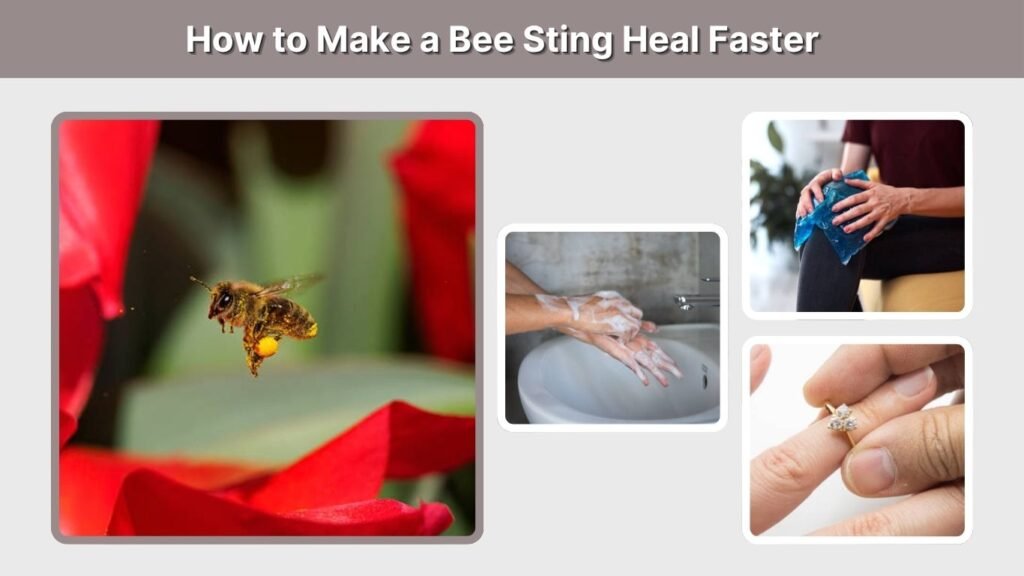
There is no instant way to eliminate bee venom once a sting has occurred, but proper first aid can control symptoms and protect the skin as it heals. Honeybees may leave their stinger behind, so dealing with it promptly is particularly important. Cleaning and cooling the area can then help with pain and swelling.
Bee Sting First Aid
For a mild sting:
- Remove a visible stinger promptly.
- Wash the affected skin with soap and water.
- Apply a cloth-wrapped cold pack for short periods.
- Remove tight jewelry near a swollen hand or finger.
- Avoid scratching the welt.
- Consider an appropriate antihistamine or anti-itch cream for troublesome itching.
- Monitor the area for increasing pain, redness, or swelling.
Most uncomplicated bee stings can be managed at home. However, treatment is different when symptoms extend beyond the sting site or suggest a serious allergic reaction.
How Long Does a Bee Sting Reaction Last?
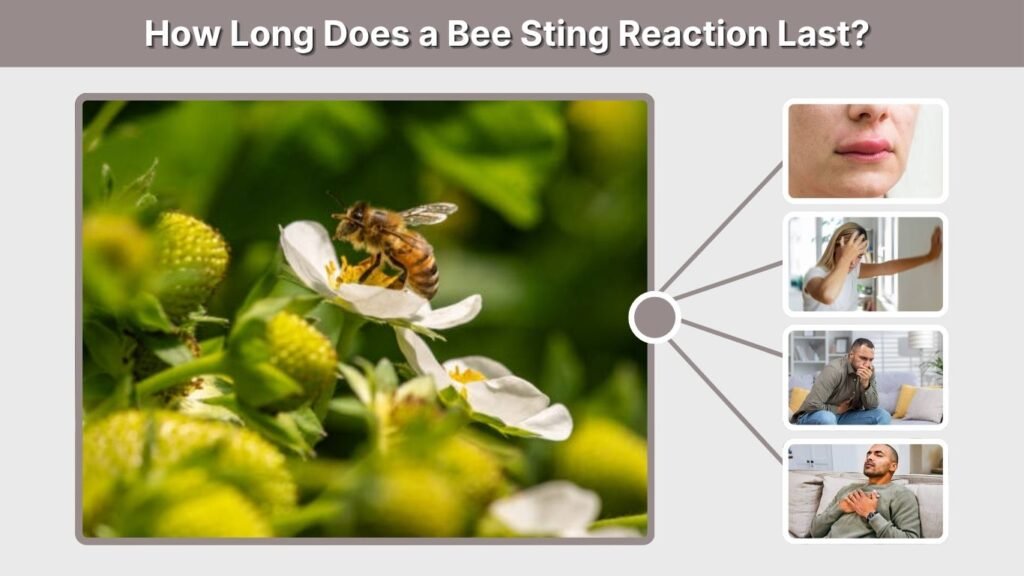
The answer depends on whether the reaction is mild, a larger local reaction, or systemic. Mild reactions generally resolve quickly. A stronger local reaction can last several days. A severe allergic reaction, or anaphylaxis, is different: it may begin within minutes and requires immediate emergency treatment rather than waiting to see how long it lasts.
Warning Signs of a Severe Allergic Reaction
Get emergency medical help immediately for symptoms such as:
- Trouble breathing or wheezing
- Swelling of the tongue, mouth, lips, or throat
- Difficulty swallowing
- Widespread hives
- Dizziness or fainting
- Weak or rapid pulse
- Vomiting or diarrhea with other allergic symptoms
- Confusion, collapse, or loss of consciousness
Anaphylaxis can develop rapidly after an insect sting. People who have been prescribed an epinephrine auto-injector should use it according to their emergency treatment plan and seek emergency care.
How Long Does a Bee Sting Last on a Dog?
Dogs can also develop pain, redness, and localized swelling after bee stings. Many uncomplicated stings cause only temporary local discomfort, but a dog’s reaction should be monitored carefully because significant allergic reactions can occur. Dogs are frequently stung around the muzzle, face, mouth, or paws while investigating insects outdoors.
When a Dog Needs Veterinary Care
Localized discomfort may settle without major complications, but facial swelling, repeated vomiting, diarrhea, weakness, hives, excessive drooling, or breathing difficulty require urgent veterinary attention. Allergic reactions often begin relatively soon after a sting but can sometimes be delayed for hours.
Do not automatically give a dog human antihistamines or pain medicines. The correct medication and dose should be confirmed with a veterinarian because some formulations contain ingredients that are unsafe for pets.
FAQs
1. How long does swelling last after a bee sting?
Mild swelling may improve within several hours to a couple of days. A larger local reaction can increase during the first 24–48 hours and may take several days or up to about a week to disappear completely.
2. How long does the pain from a bee sting last?
Sharp pain is usually immediate and often decreases substantially within a few hours. Mild tenderness can remain afterward. Pain that keeps getting worse instead of improving deserves closer attention.
3. How long does redness last after a bee sting?
Minor redness may disappear within one or two days, while redness associated with a larger local reaction may remain for several days. Rapidly spreading redness with increasing pain, warmth, or other signs of illness should be medically evaluated.
4. How long does a honey bee or bumble bee sting last?
For most people, the duration depends more on the person’s reaction than the bee type. Mild pain and swelling commonly improve relatively quickly, while larger local reactions can continue for several days. Honeybee stings also warrant checking the skin for a retained stinger.
5. Is it normal for a bee sting to swell the next day?
Yes. A stronger local reaction can continue getting larger during the first day or two before it begins to improve. However, sudden facial or throat swelling, breathing difficulty, widespread hives, dizziness, or fainting can indicate anaphylaxis and requires emergency medical care.