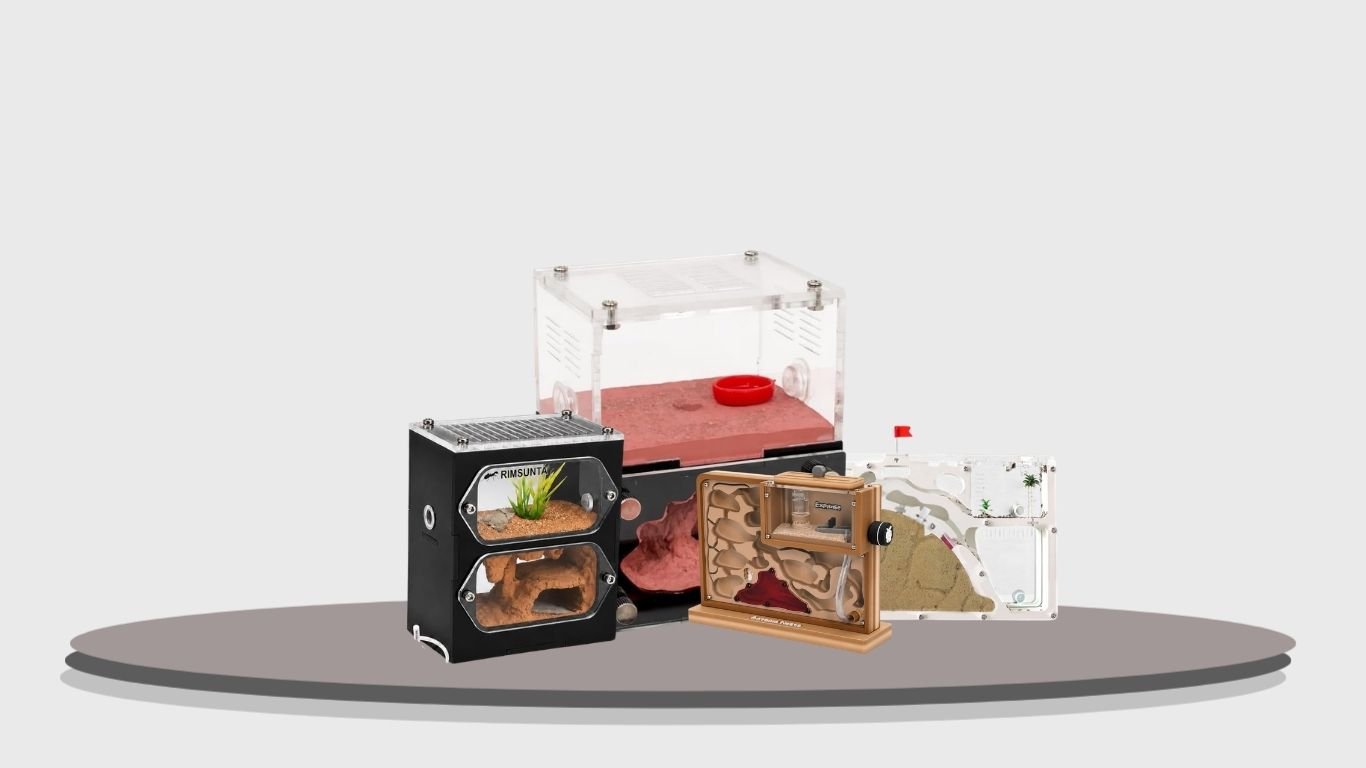
A well-designed ant formicarium makes it easier to observe colony behavior, tunneling, feeding, and nest development while giving ants a more controlled habitat. The best models balance visibility, ventilation, moisture control, expansion space, and secure construction so both beginners and experienced ant keepers can manage colonies more effectively. In this guide, we review 10 of the best ant formicariums, comparing nest design, viewing clarity, hydration features, outworld space, ease of maintenance, and overall usability for educational observation and long-term colony keeping.
1. RIMSUNTA Terra Core S Ant Farm Formicarium
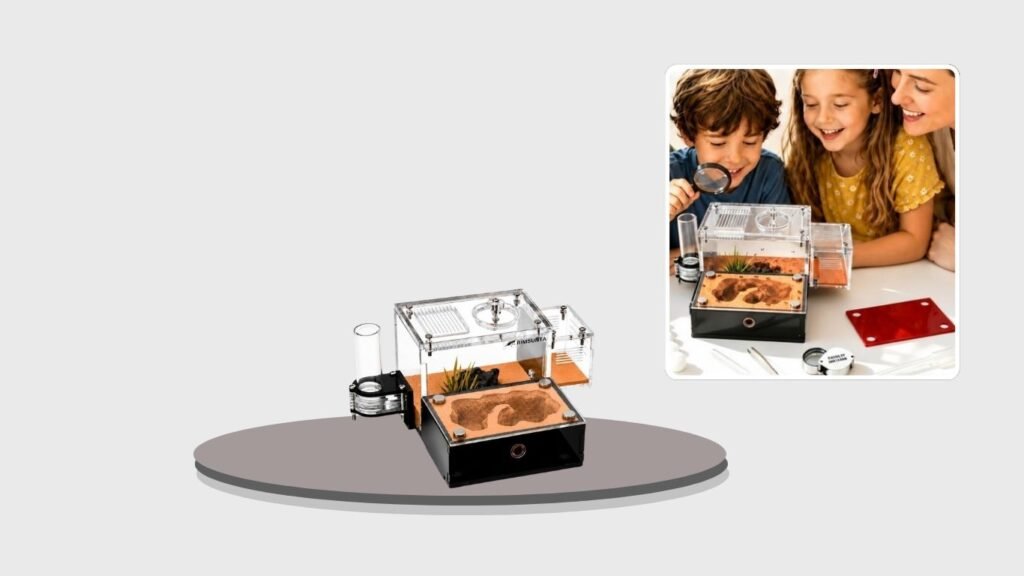
The RIMSUNTA Terra Core S is an observation-focused formicarium designed for small ant colonies and queen ants. Its transparent acrylic construction provides clear viewing of everyday colony activity, while features such as dual humidity management, a dedicated water feeder, a removable waste chamber, and an expandable design make colony care more manageable. The included red cover also creates a darker nesting environment while still allowing keepers to observe ants with minimal disturbance.
Key Features
- Clear acrylic construction for easy observation
- Designed for queens and small ant colonies
- Dual humidity management system
- Integrated 0.7 fl. oz. water feeder
- Magnetic removable waste chamber
- Red viewing cover for a darker nest environment
- Expandable formicarium design
- Separate areas for colony maintenance
- Compact design suitable for desks or shelves
Why It’s Best for Growing Ant Colonies
The Terra Core S is particularly appealing for keepers who want more control than a basic sand ant farm provides. A small colony benefits from having a appropriately sized nest where workers can establish organized chambers without being overwhelmed by excessive empty space.
Its expandable construction is another major advantage. Instead of moving the colony into an entirely different setup as it grows, the formicarium is designed to support expansion. That can make long-term colony management more convenient and reduce unnecessary disturbance.
Hydration, Visibility & Everyday Performance
Humidity is one of the most important factors in successful ant keeping, and the Terra Core S includes a dual-moisture system rather than relying solely on manual misting. The integrated water feeder adds another convenient hydration source.
Transparent acrylic offers excellent visibility into worker behavior, brood care, feeding, and nest organization. The red cover is useful when keepers want to observe the colony while maintaining a darker nesting area.
The magnetic waste chamber can also simplify maintenance by providing a designated area that is easier to access.
Pros, Cons & Overall Verdict
The strongest advantages are excellent visibility, controlled hydration, expandable construction, an integrated water source, and convenient waste management. These features make the setup considerably more functional than a simple educational ant farm.
The main consideration is that acrylic formicariums require careful humidity management, and very young colonies should not be placed into an enclosure that is unnecessarily large.
Overall, the RIMSUNTA Terra Core S Ant Farm Formicarium is a well-rounded choice for ant keepers who want a compact, observation-friendly habitat with enough practical features to support a growing colony over time.
2. CaveView Small-Ant Nest Formicarium
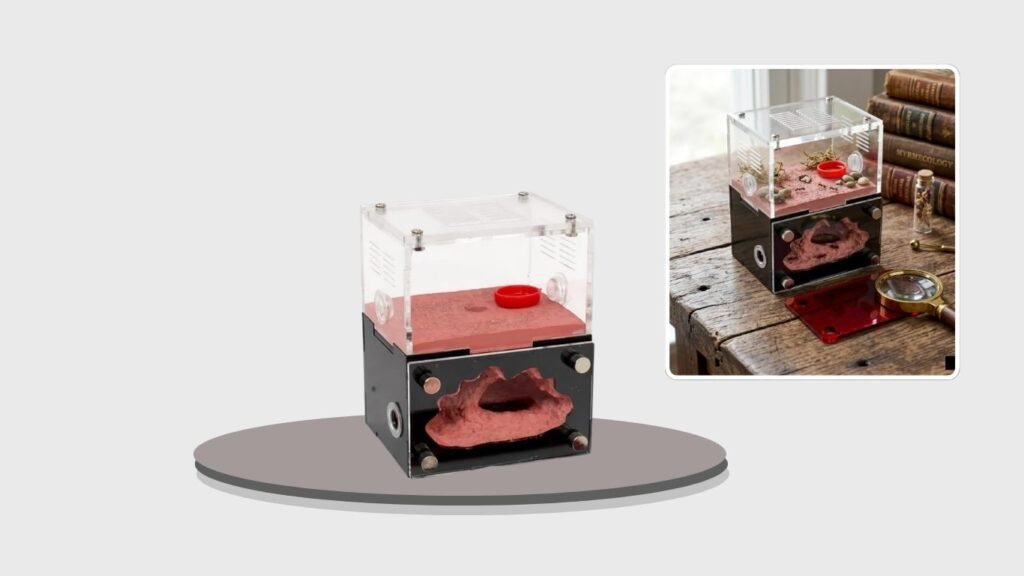
The CaveView Small-Ant Nest is designed specifically for queens with workers and newly established colonies that do not yet need a large formicarium. Measuring approximately 3.54 x 2.76 x 4.33 inches, it combines a compact nesting chamber with a clear outworld for feeding and observation. A built-in 20 ml hydration reservoir, removable red viewing cover, and 12 mm expansion ports make it particularly attractive for keepers who want a starter habitat that can continue adapting as their colony develops.
Key Features
- Compact 3.54 x 2.76 x 4.33-inch formicarium
- Designed for queens and small colonies
- Clear upper outworld for feeding and observation
- Built-in 20 ml hydration reservoir
- Advertised moisture support for around 25 days
- 12 mm connection and expansion ports
- Removable red observation cover
- Screw-secured front panel
- Expandable modular design
Why It’s Best for New Queens and Small Colonies
A young colony generally benefits from a nest that matches its current size rather than one with excessive unused space. CaveView addresses that need with a compact internal layout that keeps the queen and early workers relatively close together while still providing a separate outworld for food and routine maintenance.
The transparent construction is also useful for keepers interested in watching brood development, worker behavior, and colony growth without constantly opening the habitat.
Hydration, Expansion & Everyday Usability
The internal 20 ml water reservoir is designed to maintain moisture for around 25 days under normal conditions, reducing the frequency of hydration maintenance.
Its 12 mm ports provide another important advantage. Tubing or additional modules can be connected as the colony grows, which means the initial habitat does not immediately become obsolete once worker numbers begin increasing.
The removable red cover helps create a darker nest environment while still allowing convenient observation when desired.
Pros, Cons & Overall Verdict
CaveView’s strongest qualities are its colony-appropriate compact size, long-lasting hydration system, clear outworld, red cover, and expansion capability. It provides much more long-term flexibility than a basic decorative ant farm.
Its main limitation is capacity. A rapidly expanding colony will eventually need additional modules or a larger nest.
Overall, the CaveView Small-Ant Nest is an excellent starter formicarium for keepers raising a queen and early workers who want strong visibility, manageable hydration, and a clear path for future expansion.
3. Antopia.Nests Expanse Ant Farm Formicarium
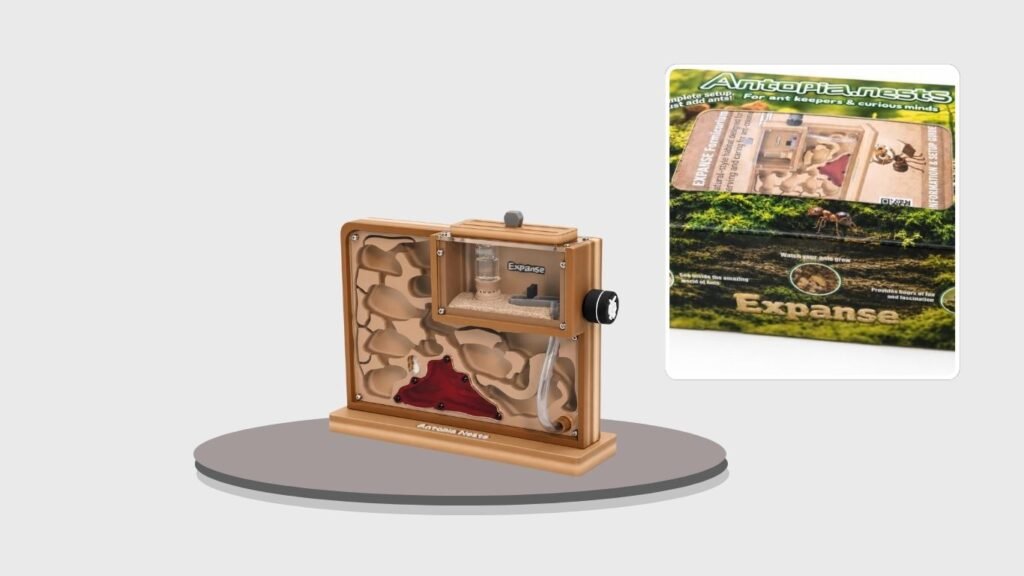
The Antopia.Nests Expanse is a larger cave-style formicarium built for keepers who want more nesting room, integrated moisture control, and a dedicated outworld in one coordinated habitat. It measures approximately 21 x 6 x 15 cm and features transparent viewing panels alongside a decorative rock-effect finish. Its spacious cave system and built-in feeding area make it a more substantial setup than beginner sand farms, particularly for established colonies that need room to expand.
Key Features
- Large cave-style nesting system
- Approximately 21 x 6 x 15 cm
- Integrated moisture system
- Built-in outworld for feeding and observation
- Transparent viewing panels
- Rock-effect exterior finish
- Expandable connection options
- Plastic construction
- Designed for hobbyists and educational observation
Why It’s Best for Established Colonies
The Expanse is particularly attractive when a colony has outgrown a tiny founding nest. Its larger cave network gives workers more space to organize brood, food storage, and colony activity without immediately requiring another module.
The integrated outworld is another practical feature. Feeding can take place in a separate accessible area instead of disturbing the main nest every time food needs to be added or removed.
That layout provides a more natural separation between nesting and foraging spaces.
Moisture Control, Observation & Build Quality
Antopia includes a dedicated moisture system intended to maintain more consistent humidity inside the nest. This is particularly useful for species that depend on stable moisture around brood chambers.
Clear viewing panels make colony behavior easier to observe, while the rock-effect design gives the setup a more decorative appearance than plain acrylic boxes.
At roughly 800 grams according to one listing, the enclosure also has more physical presence than lightweight educational ant farms.
Pros, Cons & Overall Verdict
The main advantages are spacious nesting chambers, integrated hydration, an included outworld, clear viewing, and an attractive cave-style design.
Its larger footprint makes it less suitable for very young colonies, which often do better in smaller nests before expansion. Moisture levels also still require regular observation rather than being treated as maintenance-free.
Overall, the Antopia.Nests Expanse Formicarium is a strong option for keepers ready to move beyond starter habitats and provide an established colony with more room, better moisture management, and a dedicated feeding zone.
4. Ant Farm Castle Observation Habitat
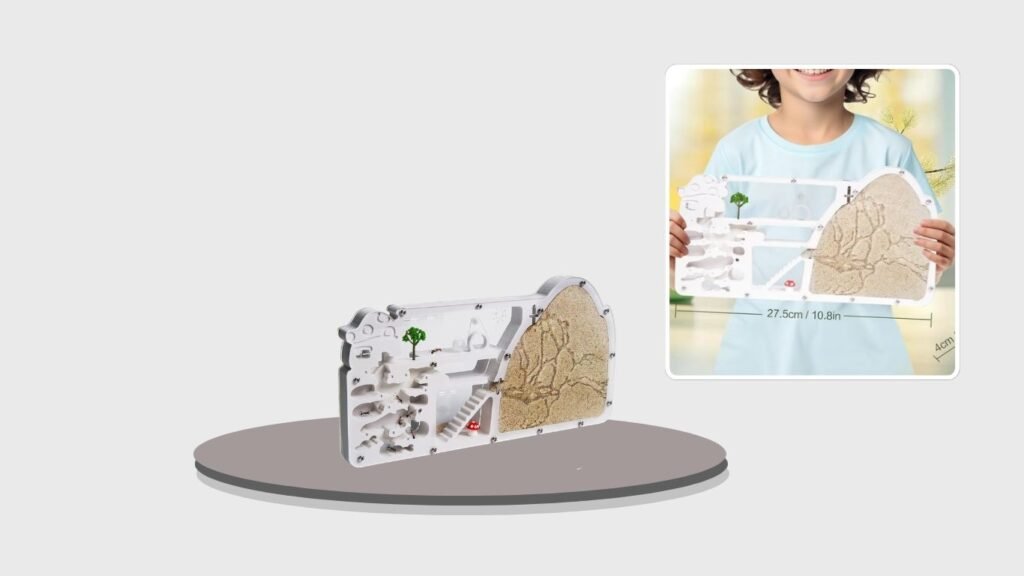
The Ant Farm Castle Observation Habitat combines a traditional sand-based ant farm with a more organized multi-zone design. Measuring approximately 10.8 x 5.8 x 1.6 inches, it provides dedicated areas for digging, feeding, watering, and egg-laying while allowing activity to be viewed from both sides. The integrated hydration system needs refilling only about every 10 days according to the product listing, while extremely small ventilation openings help maintain airflow without making escape easy.
Key Features
- Approximately 10.8 x 5.8 x 1.6 inches
- Double-sided viewing design
- Dedicated digging area
- Separate feeding zone
- Watering station
- Egg-laying chamber
- Automatic hydration system
- Approximately 10-day water-refill interval
- 0.01 mm ventilation holes
- Sand and setup accessories included
- Live ants not included
Why It’s Best for Educational Observation
The Castle design makes ant behavior particularly easy to understand because the habitat separates several colony activities into visible zones. Children, students, and first-time keepers can observe ants digging tunnels, collecting food, interacting, and caring for the colony without needing specialized ant-keeping knowledge.
Its double-sided viewing area also provides more visibility than many basic one-sided educational ant farms.
Hydration, Ventilation & Daily Use
The automatic water system is one of the most convenient features. According to the listing, it requires refilling approximately every 10 days, helping maintain moisture in the sand without constant manual watering.
Ventilation holes measuring about 0.01 mm are designed to allow airflow while helping prevent ants from escaping.
The package also includes dedicated sand, a dropper bottle, funnel, water tower, and instructions, so users receive most of the accessories needed to prepare the habitat.
Pros, Cons & Overall Verdict
The strongest advantages are excellent viewing space, defined habitat zones, easy hydration, included accessories, and educational value.
Compared with modular hobbyist formicariums, however, the sand-based design offers less precise control over chambers and long-term expansion. Live ants also need to be obtained separately.
Overall, the Ant Farm Castle Observation Habitat is an engaging choice for families, classrooms, and beginner ant keepers who want a highly visible habitat that emphasizes learning and natural digging behavior.
5. Sand Ant Farm Castle with Nutrient Sand
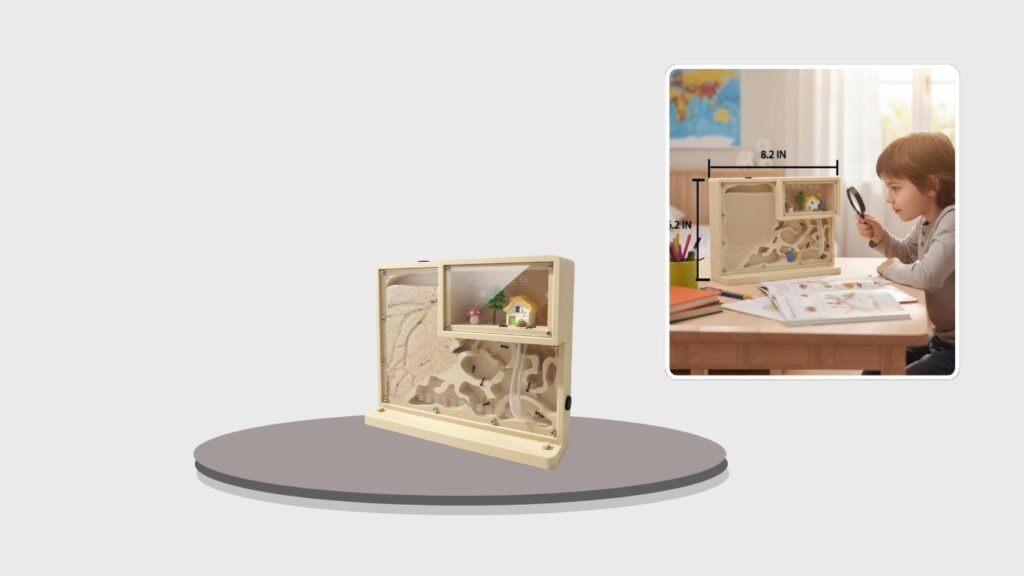
The Sand Ant Farm Castle is a compact observation habitat centered on natural digging behavior. Its approximately 8 x 6 x 1.5-inch enclosure provides a double-sided panoramic view along with separate areas for feeding, watering, tunneling, and nesting. The kit includes nutrient sand and setup tools, while an integrated hydration chamber is designed to keep the substrate moist for about 10 days between refills. This makes it a convenient option for beginners who want a more traditional sand-based ant-keeping experience.
Key Features
- Approximately 8 x 6 x 1.5 inches
- Double-sided panoramic viewing
- Nutrient sand included
- Dedicated feeding area
- Watering and digging zones
- Nesting area
- Approximately 10-day hydration system
- 0.01 mm micro-ventilation holes
- No assembly required
- STEM-focused educational design
- Live ants not included
Why It’s Best for Watching Natural Tunneling
Unlike pre-formed cave nests, a sand habitat allows ants to create much of the visible tunnel network themselves. That process is one of the most interesting parts of ant observation because the enclosure changes as workers excavate chambers and pathways.
The relatively wide panoramic face makes those developments easy to follow from outside the enclosure.
This can be especially valuable for educational use because users are not simply looking at ants moving through manufactured tunnels—they can watch parts of the nest being constructed over time.
Hydration, Visibility & Maintenance
The integrated hydration chamber is designed to maintain substrate moisture for approximately 10 days before requiring another refill. This reduces the need to manually drip water onto the sand every day.
Tiny 0.01 mm ventilation openings provide airflow while helping prevent escapes. The kit’s multi-zone design also separates food and water access from much of the digging area, which can make routine care easier.
At only about eight inches long, the habitat remains easy to display on a desk or shelf.
Pros, Cons & Overall Verdict
The biggest strengths are visible natural tunneling, double-sided viewing, included substrate, automatic hydration, compact dimensions, and strong educational appeal.
The main tradeoff is that sand tunnels can change or collapse, and this format is less modular than dedicated expandable formicariums.
Overall, the Sand Ant Farm Castle is particularly appealing for users who value the experience of watching ants excavate their own tunnel system and want an easy-to-manage starter habitat with useful hydration features.
6. RIMSUNTA ANT Terra Core S Dual View Formicarium
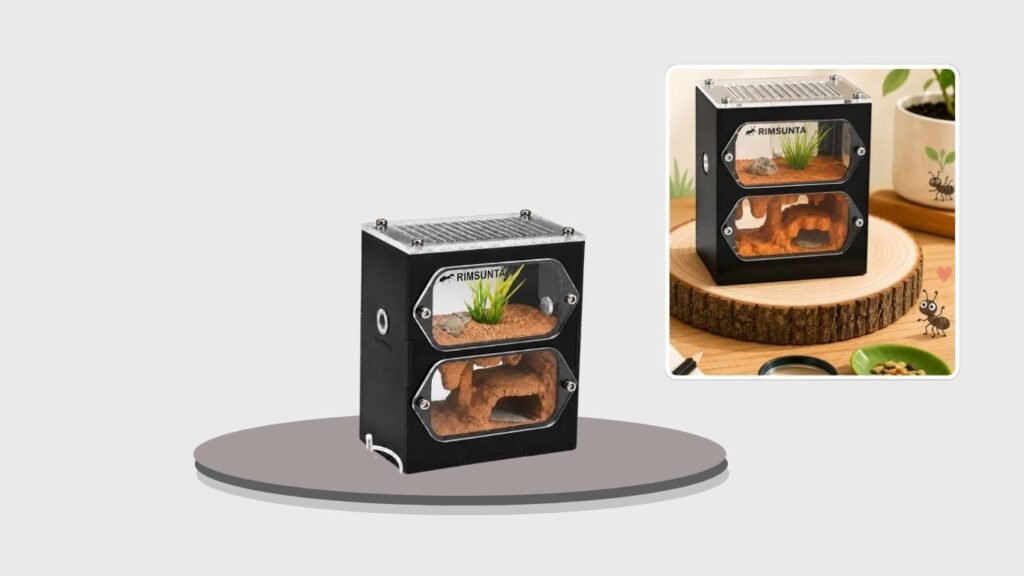
The RIMSUNTA ANT Terra Core S Dual View is a more advanced starter formicarium built around clear observation, stable humidity, and future colony expansion. Measuring approximately 3.93 x 2.36 x 4.52 inches, it combines a cave-inspired nest with transparent viewing from both sides. A gypsum-based nest core, removable waste chamber, external 10 ml water feeder, internal moisture reservoir, and standard connection ports make this model particularly appealing for keepers who want detailed colony observation without sacrificing practical maintenance features.
Key Features
- Dual-sided transparent viewing
- Cave-inspired internal design
- Gypsum-based nest core
- Removable external waste chamber
- Detachable water tower
- 10 ml external water feeder
- Approximately 7–10 days of drinking-water supply
- Internal moisture reservoir
- Up to approximately 15 days of humidity support
- 10 mm expansion ports
- Beginner ant-keeping tool kit included
Why It’s Best for Detailed Colony Observation
The Dual View format is ideal for keepers who want to see more of what is happening inside the nest. Transparent panels on both sides improve visibility of workers, brood, and chamber use rather than limiting observation to one face.
RIMSUNTA specifically describes the design as suitable for display-focused ant keeping and notes particular suitability for honeypot ants.
The scenic cave-style structure also gives the formicarium a more natural-looking presentation than a plain rectangular acrylic nest.
Hydration, Maintenance & Expansion
The external 10 ml water feeder is designed to provide approximately 7–10 days of drinking water, while the separate internal humidity reservoir can support nest moisture for up to around 15 days depending on environmental conditions.
A gypsum core helps hold moisture and supports direct humidification. The removable waste section simplifies cleaning without requiring major disturbance to the nesting area.
Standard 10 mm connection ports also allow tubing and additional modules to be introduced as colony needs change.
Pros, Cons & Overall Verdict
The strongest advantages are excellent dual-sided visibility, two separate hydration systems, gypsum moisture retention, removable waste management, expansion capability, and included beginner tools.
Its compact dimensions mean growing colonies will eventually need expansion, and humidity-loving setups still require careful monitoring to prevent conditions from becoming excessively damp.
Overall, the RIMSUNTA ANT Terra Core S Dual View is one of the more feature-rich starter formicariums for keepers who want attractive observation, convenient maintenance, and a clear upgrade path as their colony grows.
7. EXBEPE Large Sand Ant Farm Castle
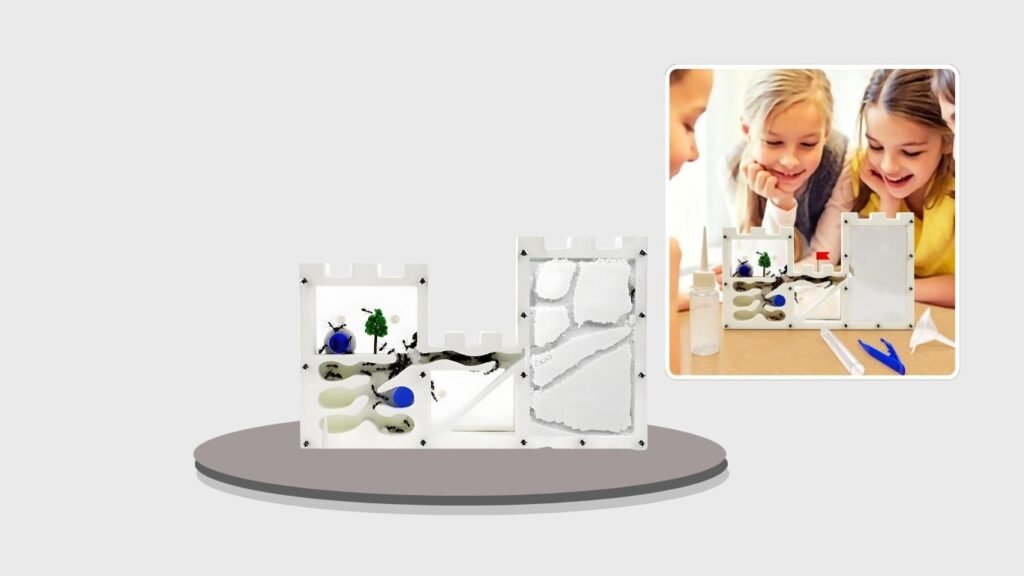
The EXBEPE Large Sand Ant Farm Castle combines a traditional digging habitat with a spacious acrylic observation design. Measuring roughly 9.4 x 1.8 x 5.9 inches, it provides enough room for ants to excavate visible tunnels while keeping the colony easy to observe from outside. The kit includes sand and soil, a water tower, dropper, funnel, tweezers, decorative pieces, and setup instructions, making it a fairly complete option for educational ant keeping. Live ants are not included.
Key Features
- Approximately 9.4 x 1.8 x 5.9-inch habitat
- Clear acrylic and plastic construction
- Sand-based digging environment
- Water tower included
- Dropper and filling bottle included
- Tweezers and funnel supplied
- Decorative trees and flag included
- Designed for live colony observation
- STEM-oriented educational setup
- Live ants not included
Why It’s Best for Natural Tunneling Observation
The EXBEPE stands out for keepers who want to watch ants create their own tunnels rather than simply move through pre-molded chambers. Its sand-based design allows workers to excavate pathways, relocate substrate, and gradually reshape the habitat.
That process makes the enclosure especially engaging for classrooms, children interested in biology, and adults who enjoy watching natural colony behavior develop over time. The relatively wide viewing area also makes those tunnels easy to follow as they expand.
Observation, Hydration & Everyday Maintenance
The included water tower and dropper simplify routine hydration, while the supplied tools help with initial setup and basic maintenance. Because sand moisture directly influences tunnel stability, careful watering is important; oversaturation can make the substrate less stable.
The transparent structure provides good visibility without requiring the colony to be disturbed repeatedly. Its compact footprint also makes it easy to position on a desk, shelf, or classroom display.
Pros, Cons & Overall Verdict
The strongest advantages are the complete accessory package, natural excavation experience, spacious viewing area, and educational value. Including substrate and maintenance tools means less additional equipment is needed before setup.
The main limitation is that sand habitats can be less predictable than molded formicariums because tunnels may shift or collapse. They also offer less precise expansion control for a rapidly growing long-term colony.
Overall, the EXBEPE Large Sand Ant Farm Castle is an appealing choice for users who prioritize visible tunneling and hands-on educational observation.
8. Tigerific Ant Park Real Sand Ant Farm
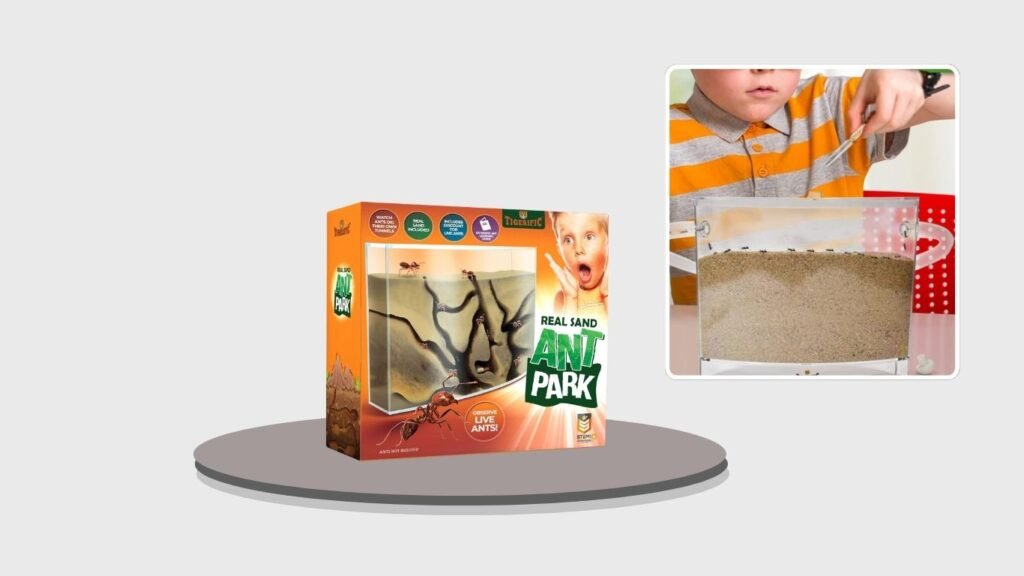
The Tigerific Ant Park is a transparent real-sand habitat designed primarily around STEM learning and easy observation. The kit includes the main ant farm, two bags of sand, an AntWay connector tube, water dropper, learning booklet, and access to an educational ant documentary. A coupon for discounted live harvester ants is also included, although the ants themselves are ordered separately. Its clear construction lets users watch tunneling, feeding, sand movement, and other daily colony activities from multiple angles.
Key Features
- Transparent real-sand habitat
- Two bags of sand included
- AntWay connector tube
- Water dropper supplied
- Educational learning booklet
- Ant documentary included
- Discount coupon for live harvester ants
- No assembly required
- Multiple viewing angles
- STEM.org authenticated educational design
- Live ants ordered separately
Why It’s Best for STEM Learning
Tigerific puts more emphasis on education than most basic ant farms. The booklet explains colony roles, ant behavior, anatomy, and other biology topics, while the documentary adds another learning format beyond simply watching the colony.
The AntWay tube is also a clever addition. Ants can travel through it, and it can be used as part of the observation experience or to connect habitats. This creates a more dynamic setup than a simple flat sand chamber.
Viewing Experience & Everyday Usability
The transparent enclosure provides multiple viewing angles, making it easier for several people to observe the farm at once. This is particularly useful in classrooms or family settings.
Real sand gives ants the opportunity to excavate visible tunnels, move substrate, and transport food. The farm requires no assembly, so initial preparation mainly involves adding the supplied sand and introducing ants according to the care instructions.
Tigerific also supplies guidance for feeding and safely adding live ants once they arrive.
Pros, Cons & Overall Verdict
The biggest strengths are the strong educational package, real sand, clear viewing, AntWay tube, included care accessories, and beginner-friendly setup.
The main drawback is that live ants are not supplied directly with the habitat, so they must be obtained separately. Sand colonies also require proper moisture management and supervision to maintain good tunnel conditions.
Overall, the Tigerific Ant Park is particularly well suited to families, classrooms, and young science enthusiasts who want an ant habitat with substantial educational content built around it.
9. ELNMLHT Ant Farm Castle with Yellow Sand
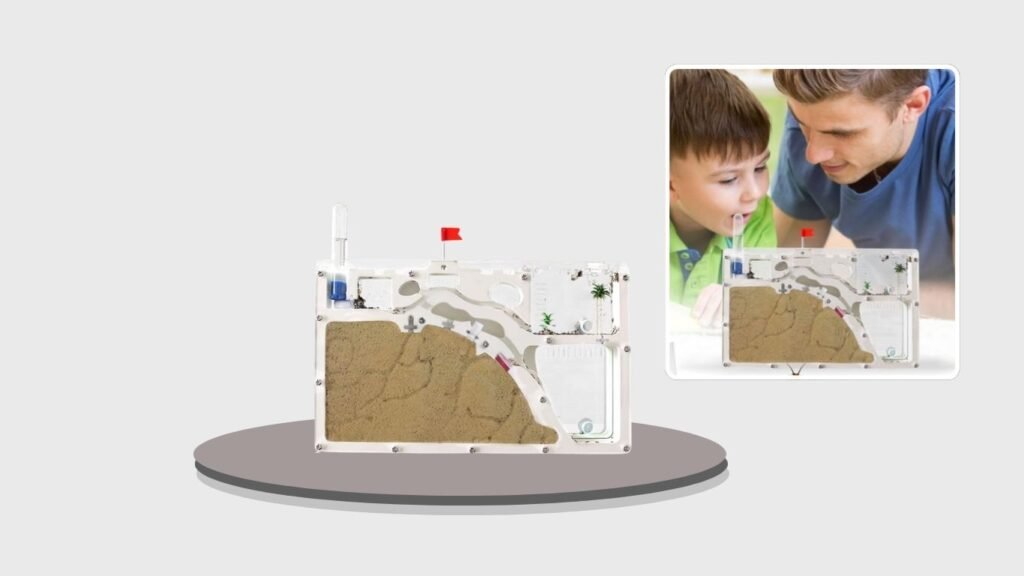
The ELNMLHT Ant Farm Castle is a sand-based observation habitat designed for children, students, families, and beginner ant keepers. It combines a transparent castle-style enclosure with yellow sand and a tool kit, allowing users to watch ants dig tunnels, move food, interact, and establish colony pathways. The design includes an automatic water-supply system and double-sided viewing, helping simplify routine care while keeping ant activity highly visible. Live ants are not included.
Key Features
- Transparent castle-style ant habitat
- Yellow sand included
- Double-sided observation
- Automatic water-supply system
- Ant-care tool kit included
- Designed for live colony observation
- Escape-resistant construction
- Suitable for home or classroom learning
- Compact footprint
- Educational science-focused design
- Live ants not included
Why It’s Best for Beginner Educational Projects
The ELNMLHT Castle works particularly well for a first ant-observation project because the kit provides much of what users need to begin. The supplied sand creates the digging environment, while the tools and water system reduce the need to source several accessories individually.
Its educational appeal comes from watching ants perform recognizable behaviors such as excavating, carrying material, moving food, and interacting inside the colony. This gives students a more hands-on way to explore insect biology than simply reading about ants.
Hydration, Visibility & Maintenance
The automatic water-supply feature is especially helpful because maintaining appropriate substrate moisture is one of the more demanding aspects of sand ant farms.
Double-sided viewing means tunnels can be observed from more than one angle, while the relatively compact design makes the farm easy to display without requiring a large dedicated area.
Users should avoid overwatering the sand, as excessive moisture can affect tunnel stability. Careful feeding and removal of uneaten food can also help keep the habitat cleaner.
Pros, Cons & Overall Verdict
The strongest advantages are its included yellow sand, automatic hydration feature, dual-sided visibility, accessory kit, and educational layout.
The main limitation is that some users may find the habitat smaller than expected, and sand setup can require more patience than a pre-formed acrylic nest.
Overall, the ELNMLHT Ant Farm Castle is a practical starter habitat for families or classrooms wanting an engaging, compact ant-observation project.
10. ELNMLHT Sand Ant Colony Terrarium Kit
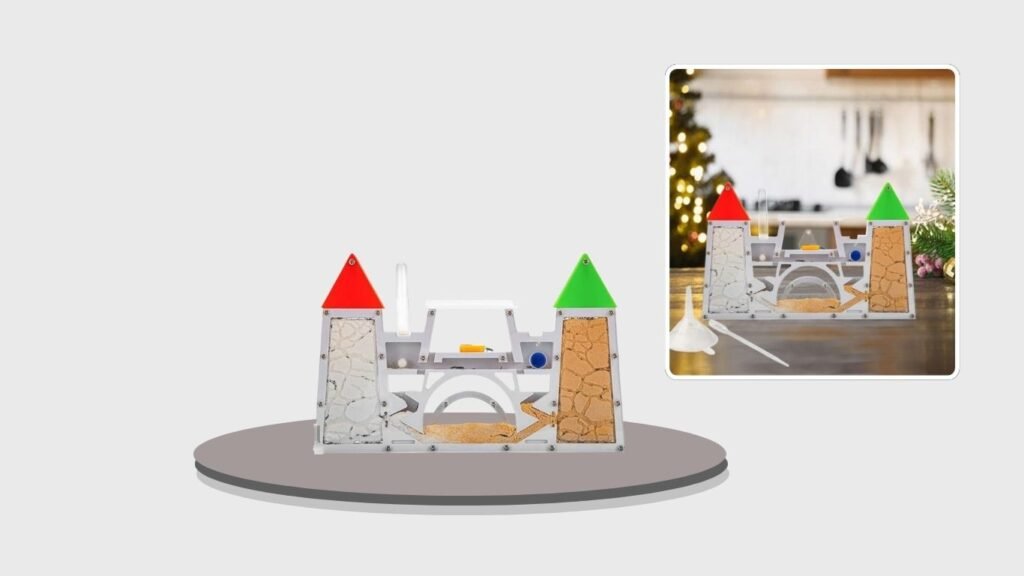
The larger ELNMLHT Sand Ant Colony Terrarium takes the brand’s educational castle concept and expands it into a more structured habitat measuring approximately 9 x 8.3 x 3.23 inches. Its transparent acrylic construction provides clear views of colony activity while separate functional areas are designed for loading ants, nesting, egg-laying, and excavation waste. This organized layout gives beginners a more visually structured way to observe how ants use different areas within a habitat. Live ants are not included.
Key Features
- Approximately 9 x 8.3 x 3.23 inches
- Transparent acrylic construction
- Sand-based ant habitat
- Dedicated ant-loading area
- Egg-laying chamber
- Excavation dump zone
- Multiple internal sections
- Clear observation panels
- User-friendly setup
- Educational science design
- Live ants not included
Why It’s Best for Multi-Zone Observation
The structured internal layout is what makes this ELNMLHT model especially interesting. Rather than presenting one simple sand chamber, the habitat includes distinct areas intended for different colony activities.
That allows keepers to observe where ants prefer to dig, deposit excavated material, congregate, and establish different sections of their nest. For educational use, this adds another layer to the experience because users can compare how ants interact with several available zones.
Build Quality, Visibility & Everyday Use
The acrylic body provides clear visibility and is sturdy enough for repeated educational use. At roughly nine inches across and more than three inches deep, it offers considerably more interior volume than many thin traditional ant farms.
Setup instructions are designed to make introduction of the colony relatively straightforward for beginners. Once established, the clear panels make ongoing observation possible without frequently opening the habitat.
The larger dimensions also provide more room for visible activity, although a growing permanent colony may eventually require a more specialized expandable formicarium.
Pros, Cons & Overall Verdict
The key strengths are the spacious acrylic construction, organized activity zones, good visibility, beginner-friendly setup, and strong educational value.
The main consideration is that this remains a sand-based educational habitat rather than a highly modular professional formicarium. Live ants must also be obtained separately.
Overall, the ELNMLHT Sand Ant Colony Terrarium Kit is an attractive option for users who want a larger observation habitat with clearly organized areas and plenty of space to watch colony behavior develop.
FAQs
1. What is a formicarium?
A formicarium is an artificial habitat designed for keeping and observing an ant colony. Depending on the design, it may contain pre-formed chambers, sand for natural excavation, hydration systems, feeding areas, and an outworld where workers can forage. Hobbyist formicariums are generally more specialized for long-term colony keeping, while educational ant farms often emphasize visible tunneling.
2. Are sand ant farms or pre-formed nests better?
They serve different purposes. Sand farms are excellent for watching ants excavate tunnels naturally, making them especially engaging for educational observation. Pre-formed nests offer more predictable chambers, easier moisture management, and often better expansion options. Keepers focused on long-term colony growth may prefer modular formicariums, while beginners interested primarily in tunneling may enjoy a sand habitat more.
3. Do ant formicariums come with live ants?
Many do not. Several products in this roundup—including the EXBEPE and ELNMLHT habitats—provide the enclosure and accessories but require live ants to be sourced separately. Tigerific includes a discount coupon for purchasing harvester ants from a third-party supplier rather than shipping ants directly with the farm. Always check local laws and shipping restrictions before obtaining live ants.
4. How much moisture does an ant formicarium need?
The correct humidity depends heavily on the ant species, nest material, temperature, and colony stage. Some species prefer relatively dry nesting areas with only one humid section, while others need consistently higher moisture. The goal is usually to create a moisture gradient rather than saturating the entire enclosure. Overwatering a sand habitat can destabilize tunnels, while allowing a founding colony to become too dry can also cause problems.
5. What should I look for when choosing an ant formicarium?
Consider colony size, ant species, hydration design, escape prevention, nest visibility, feeding access, maintenance, and expansion potential. Small founding colonies generally benefit from appropriately sized nests rather than huge empty chambers. For long-term keeping, connection ports and modular expansion are valuable. For educational use, transparent walls, real sand, easy hydration, and included observation tools can make the experience more engaging.