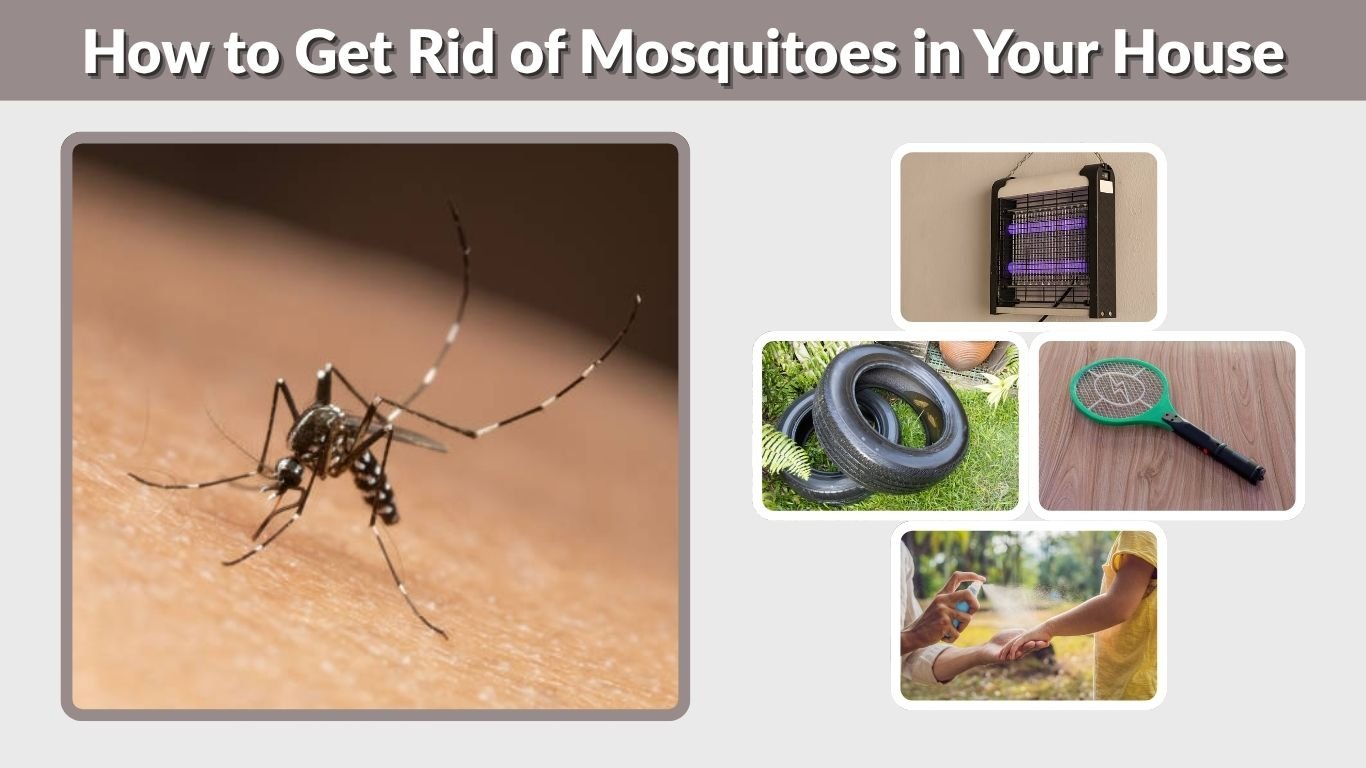
Finding mosquitoes inside your home can quickly become frustrating, especially when one keeps buzzing around at night or biting family members. Indoor mosquitoes usually enter through open doors, damaged screens, vents, or small gaps, while some may breed in standing water around the house. Fortunately, you can usually eliminate them with a combination of trapping, removing water sources, blocking entry points, and using appropriate mosquito-control products. Here’s how to get rid of mosquitoes in your house and reduce the chances of them returning.
Why Are Mosquitoes Getting Into My House?
Mosquitoes enter homes mainly while searching for blood meals, shelter, or cooler resting places. They may fly inside through open doors and windows or slip through damaged screens and small gaps.
Before treating the problem, understanding where they are coming from can make control much easier.
Common Reasons Mosquitoes Appear Indoors
- Open windows or doors
- Torn window and door screens
- Standing water in plant saucers
- Water collecting in buckets or containers
- Pet water left unchanged for long periods
- Clogged drains or gutters nearby
- Open vents and small wall gaps
- Dense vegetation close to doors and windows
Eliminating these conditions can significantly reduce indoor mosquito activity.
1. Use a Mosquito Swatter or Electric Racket
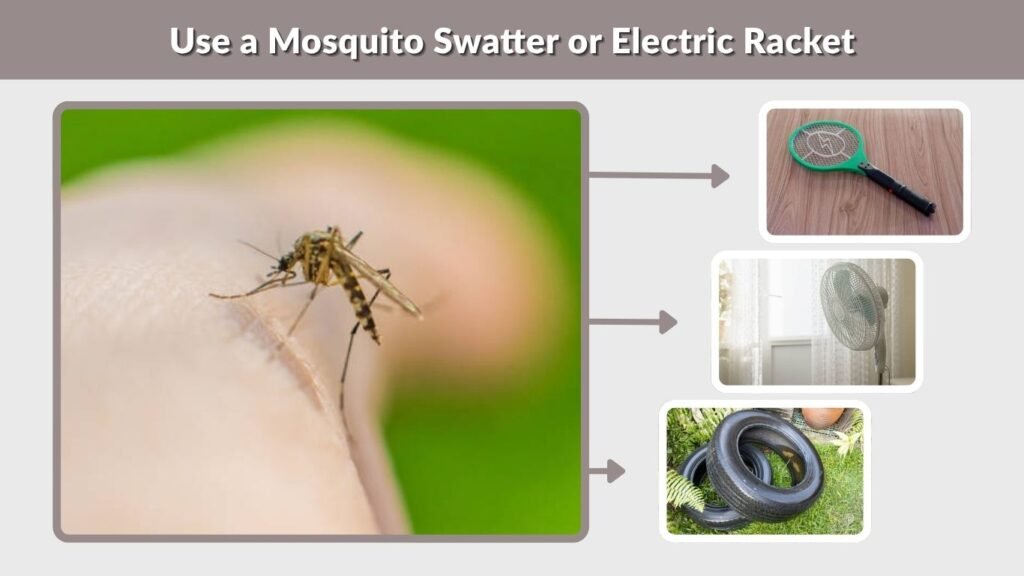
For one or two mosquitoes, manually eliminating them is often the fastest solution. Mosquitoes commonly rest on walls, ceilings, curtains, furniture, and dark surfaces after flying around.
An electric mosquito racket can be particularly convenient because it allows you to catch mosquitoes while they are flying.
How to Find One Mosquito in Your House
Turn off unnecessary lights and leave one light source on. Carefully inspect walls, ceilings, curtains, and dark corners. Mosquitoes often become easier to locate when the room is quiet.
If a mosquito keeps disturbing you at night, a flashlight can help reveal it resting near your bed or walls.
2. Run a Fan
Mosquitoes are relatively weak flyers. Strong airflow from a ceiling, pedestal, or table fan can make it more difficult for them to approach and land on you.
Positioning a fan near beds, seating areas, or entry points can therefore provide immediate relief.
Fans do not eliminate mosquitoes from the house, but they are an excellent temporary solution while you identify the source of the infestation.
3. Remove Standing Water
Standing water is one of the most important things to check when mosquitoes repeatedly appear indoors.
Female mosquitoes need water to complete their reproductive cycle, and even small amounts may provide suitable breeding conditions for certain species.
Check These Areas
- Flowerpot saucers
- Buckets
- Vases
- Pet dishes
- Air-conditioner trays
- Unused containers
- Bathroom containers
- Water collected around drains
Empty unnecessary standing water and scrub containers before refilling them. Scrubbing helps remove mosquito eggs that may remain attached to container surfaces.
4. Install or Repair Window Screens
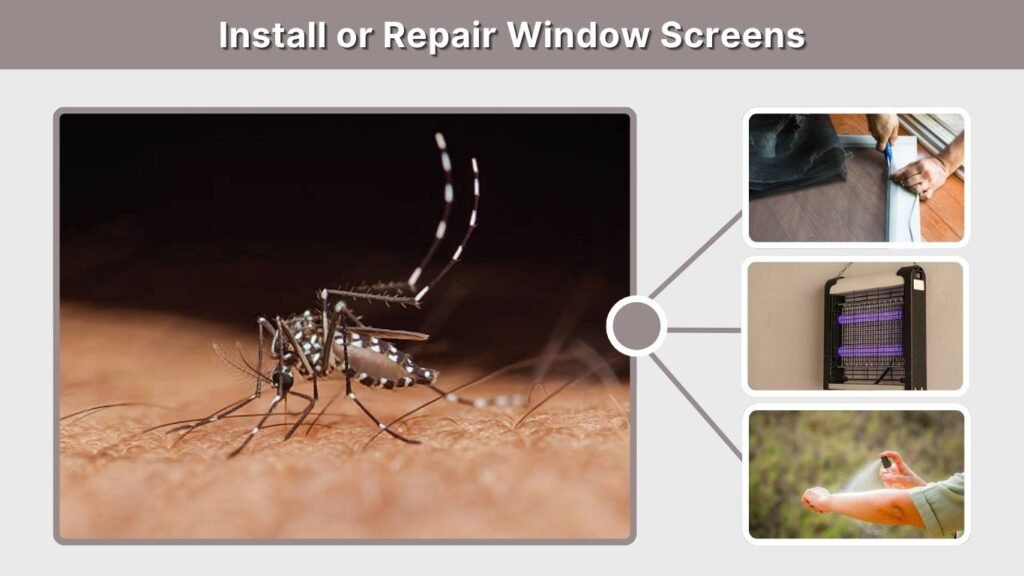
If mosquitoes continually enter from outside, physical barriers provide one of the most reliable long-term solutions.
Inspect window and door screens carefully for small tears or holes. Even a minor opening may allow mosquitoes inside.
Seal Common Entry Points
Check around window frames, doors, vents, pipes, and utility openings. Weather stripping or suitable sealant can close gaps around doors and windows.
Keeping doors closed, especially around dusk and dawn when some mosquito species are particularly active, can also reduce entry.
5. Use Indoor Mosquito Traps
Indoor mosquito traps can help when several mosquitoes are present or when individual insects are difficult to locate.
Depending on the design, traps may use light, airflow, heat, or other attractants to capture mosquitoes.
Place traps in areas where mosquitoes are regularly seen rather than directly beside competing light sources.
Best Locations
Good locations may include bedrooms, living rooms, enclosed patios, and darker corners near mosquito entry points.
Traps usually work best as part of a broader mosquito-control plan rather than as the only treatment.
6. Use an Indoor Mosquito Spray
An indoor insecticide labeled specifically for mosquitoes can provide faster control when several adults are present.
Follow all label directions carefully. Pay particular attention to instructions concerning ventilation, pets, children, food, aquariums, and treated surfaces.
Avoid spraying products that are intended exclusively for outdoor use inside your home.
7. Keep Doors Closed During Peak Activity
Mosquito activity varies by species, but many become particularly noticeable around evening and nighttime.
If mosquitoes frequently enter when people move through doors, reduce the amount of time exterior doors remain open.
Self-closing screen doors or properly fitted door sweeps can help if mosquitoes repeatedly enter through the same doorway.
8. Reduce Outdoor Mosquito Sources
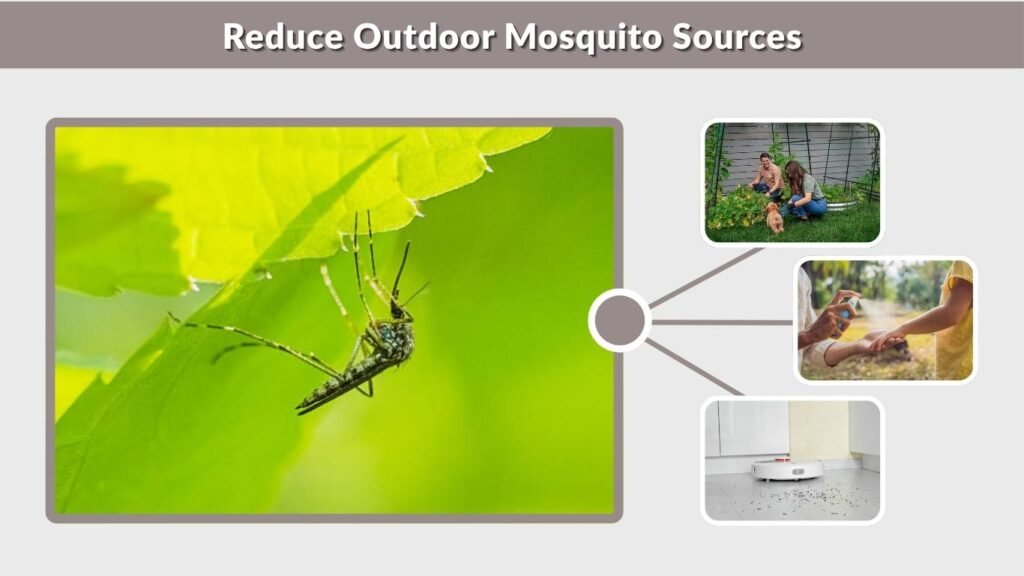
Sometimes an indoor mosquito problem begins outside the house.
Inspect your yard, balcony, patio, or surrounding area for standing water. Mosquito populations developing close to the building can easily enter whenever doors or windows open.
Outdoor Water Sources to Check
Look at birdbaths, gutters, buckets, toys, tarps, discarded containers, plant pots, and outdoor furniture.
Refresh necessary water frequently and remove containers that serve no useful purpose.
Reducing outdoor breeding areas can dramatically lower the number of mosquitoes attempting to enter your home.
9. Use Mosquito Repellent for Personal Protection
If you are still being bitten while dealing with the source, an appropriate insect repellent can provide temporary personal protection.
Products containing commonly used mosquito-repellent active ingredients can reduce bites when applied according to label instructions.
Repellent is particularly useful if mosquitoes have entered bedrooms or living areas but have not yet been completely eliminated.
10. Vacuum Resting Mosquitoes
A vacuum cleaner can be surprisingly effective for mosquitoes resting high on walls, ceilings, curtains, or behind furniture.
Using a hose attachment allows you to capture mosquitoes without chasing them around the room.
This technique is especially useful for a single mosquito that repeatedly disappears after flying.
How to Get Rid of One Mosquito in My House
One mosquito can sometimes be more annoying than a larger infestation because it may disappear for long periods before returning.
Start by closing the room and reducing clutter. Turn off most lights and check walls, curtains, ceilings, and furniture with a flashlight.
Run a fan near where you are sitting or sleeping. If the mosquito lands, use a swatter, electric racket, or vacuum to remove it.
If mosquitoes continue appearing over several days, however, you probably have either a repeated entry point or a nearby breeding source rather than just one trapped mosquito.
How to Get Rid of Mosquito Hawks in My House
The insects commonly called mosquito hawks are usually crane flies. Despite their mosquito-like appearance, crane flies are different insects and generally do not bite people.
Adult crane flies often enter homes accidentally because they are attracted to lights.
Turn off unnecessary outdoor lighting, repair screens, and keep doors closed to prevent them from entering. Individual crane flies can simply be captured and released outdoors or removed with a vacuum.
They usually do not require mosquito-control treatments.
How to Prevent Mosquitoes From Coming Back
Long-term mosquito control depends more on prevention than repeatedly killing individual adults.
Regularly inspect your home and surrounding property for standing water, damaged screens, and open entry points. Keep gutters and drains functioning properly, refresh water containers, and maintain screens around windows and doors.
Combining these preventive measures with fans, traps, and occasional targeted control can make your home much less attractive and accessible to mosquitoes.
FAQs
Can mosquitoes breed inside a house?
Yes. Some mosquito species can breed indoors if they find stagnant water. Plant saucers, buckets, containers, and other water-holding objects should be inspected regularly.
Why do I keep finding mosquitoes in my bedroom?
They may be entering through windows, doors, damaged screens, or gaps. They may also follow people into rooms and remain hidden on walls, curtains, or furniture during periods of inactivity.
What is the fastest way to kill one mosquito indoors?
A swatter, electric mosquito racket, or vacuum is usually the quickest solution for a single visible mosquito.
Do fans keep mosquitoes away?
Strong airflow can make it difficult for mosquitoes to fly and land on people. Fans are useful for reducing bites but do not eliminate the source of mosquitoes.
Why are mosquitoes still appearing after I kill them?
Repeated appearances usually indicate that additional mosquitoes are entering from outside or breeding in nearby standing water. Check entry points and water sources rather than treating only the adult mosquitoes you see.