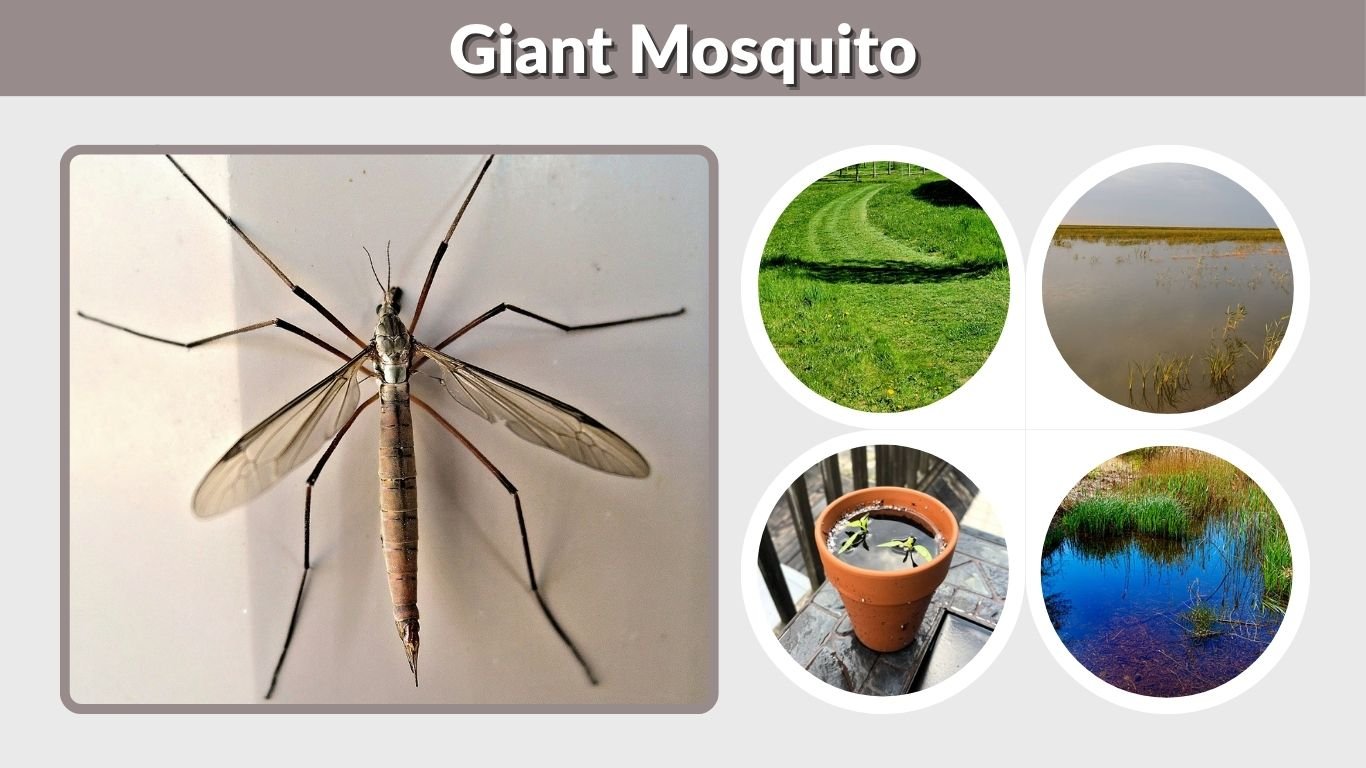
Seeing a giant mosquito-looking bug with long legs can be alarming, especially when it suddenly appears around your home or yard. In many cases, the insect is actually a harmless crane fly rather than an oversized mosquito. However, genuinely large mosquitoes also exist, including Psorophora ciliata, often called the gallinipper or American giant mosquito. Some large mosquitoes bite, while common mosquito look-alikes do not. Here is how to identify a giant mosquito, distinguish it from similar insects, and understand whether you should worry about bites.
What Is a Giant Mosquito?
The term giant mosquito is commonly used for unusually large mosquitoes as well as insects that merely resemble mosquitoes. One genuine example is Psorophora ciliata, a large mosquito found in the Americas and often informally called a gallinipper. Females can be noticeably larger than many familiar household mosquitoes and are persistent blood feeders.
Giant Mosquito Identification
- Larger and heavier-bodied than many common mosquitoes
- Long legs and narrow wings
- Psorophora ciliata has dark, conspicuous scales on its hind legs
- Yellowish scales may form bands on the body and proboscis
- Females have a functional proboscis for blood feeding
- Often flies rapidly and actively searches for hosts
- May become particularly noticeable following periods of heavy rain
Is the American Giant Mosquito a Gallinipper?
The name gallinipper is widely associated with Psorophora ciliata, although it is an informal rather than officially recognized common name. The term has historically been used in the southeastern United States for unusually large biting mosquitoes or similar insects.
Psorophora ciliata is among the largest mosquitoes encountered in the United States. Female wing length has been reported at approximately 6.0–6.7 mm, giving the insect a much more imposing appearance than many common mosquito species.
Where Are Giant Mosquitoes Found?
Psorophora ciliata occurs throughout a broad area of the Americas. In the United States, it is particularly associated with eastern and southeastern regions, including Florida.
It is a floodwater mosquito. Females lay eggs in locations that may later flood, and the eggs can survive dry periods until rain or rising water triggers hatching. This is why unusually large numbers may suddenly appear after storms or flooding.
What Bug Looks Like a Giant Mosquito?
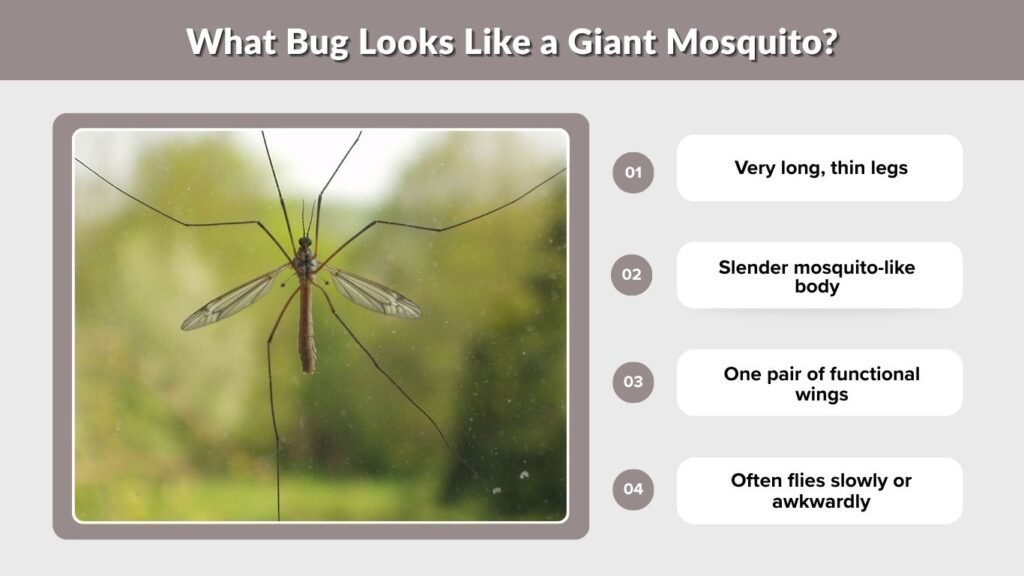
The insect most often mistaken for a giant mosquito is the crane fly. Crane flies have extremely long legs, narrow bodies, and two wings, giving them an unmistakably mosquito-like appearance when viewed from a distance.
Despite their intimidating size, adult crane flies are harmless to people.
Crane Fly Identification
- Very long, thin legs
- Slender mosquito-like body
- Usually much larger overall than common mosquitoes
- One pair of functional wings
- Often flies slowly or awkwardly
- Frequently appears around windows, doors, and lights
- Does not have mosquito-like biting mouthparts
Crane Fly vs. Giant Mosquito
A crane fly may look like an enormous mosquito, but the two insects behave very differently. Adult crane flies lack biting mouthparts and cannot bite people. Many adults feed little or not at all during their short adult lives.
A true female mosquito has a specialized proboscis and may actively land on exposed skin to obtain blood. The giant mosquito gallinipper, for example, is a genuine biting mosquito.
One easy clue is leg proportion. Crane flies usually have extraordinarily long, fragile-looking legs compared with their bodies, whereas giant mosquitoes have a more compact mosquito shape.
Do Giant Mosquitoes Bite?
Some do. If the insect is a female Psorophora ciliata, it can bite and is known for persistent blood-feeding behavior. University of Florida sources describe this species as a large, aggressive biting mosquito.
Crane flies, however, do not bite humans.
What Can a Giant Mosquito Bite Look Like?
A bite from a large mosquito may produce reactions similar to those caused by other mosquitoes:
- Redness around the bite
- Raised itchy bump or welt
- Mild swelling
- Local irritation
- Temporary soreness
The size of the mosquito does not automatically determine how severe your skin reaction will be. Individual immune responses vary.
Are Giant Mosquito Bites Dangerous?
A painful or large welt does not necessarily mean the mosquito transmitted disease. UF/IFAS lists Psorophora ciliata as not known to vector mosquito-borne pathogens in Florida, although many other mosquito species can transmit disease.
Avoid scratching bites because broken skin can become infected. Seek medical attention for severe swelling, trouble breathing, dizziness, or other signs of a serious allergic reaction.
Why Are Giant Mosquitoes Appearing After Rain?
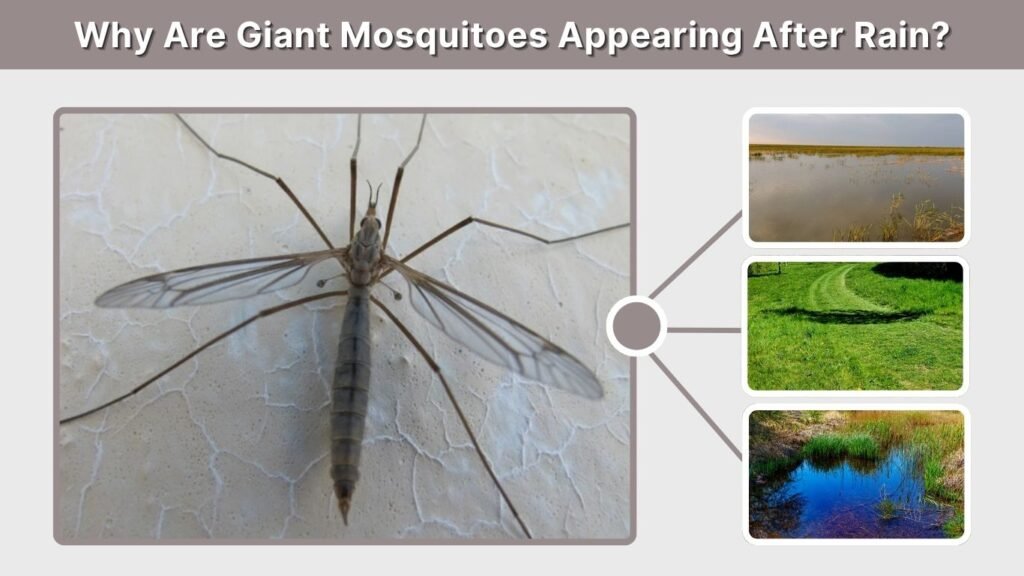
Heavy rainfall can create ideal conditions for floodwater mosquitoes. The eggs of Psorophora ciliata are deposited in damp areas that periodically collect water. They can tolerate extended dry conditions and hatch when flooding covers them.
This can result in many mosquitoes emerging within a relatively short period after significant rain. Recent UF/IFAS guidance notes that gallinipper populations can become especially noticeable one to two weeks after heavy rainfall.
Common Breeding Areas
- Flooded grassy areas
- Temporary pools
- Roadside ditches
- Low areas in yards
- Pastures
- Areas around ponds or streams
- Containers or depressions that hold rainwater
Removing unnecessary standing water around a property can reduce many mosquito breeding opportunities, although floodwater species can also develop in natural areas that homeowners cannot easily control.
What Is a Mosquito Hawk?
Another confusing name associated with the giant mosquito-looking insect is “mosquito hawk.”
People frequently use this term for crane flies because of the myth that they hunt mosquitoes. Adult crane flies generally do not prey on mosquitoes. Colorado State University Extension notes that “mosquito hawk” would be more accurately applied to dragonflies, which actually prey on mosquitoes.
So if a long-legged insect resembling a huge mosquito is bouncing around your window, it is probably not a mosquito-eating machine.
Is There a Giant Mosquito That Does Not Bite?
Yes. Toxorhynchites rutilus is another unusually large mosquito found in parts of the United States, but its adults do not blood-feed. Females obtain sugars from plant sources rather than taking blood.
Interestingly, its larvae are predators that consume other mosquito larvae. Psorophora ciliata larvae can also prey on mosquito larvae, even though adult female P. ciliata mosquitoes themselves bite.
This is an important reminder that not every giant mosquito should automatically be treated as a biting species.
How to Keep Giant Mosquitoes Away
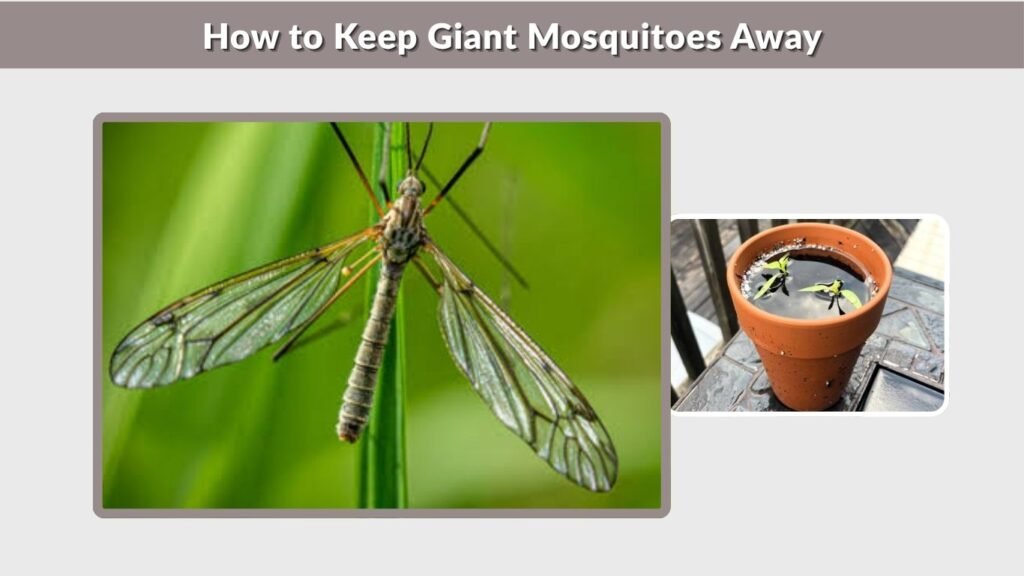
Mosquito control works best by reducing breeding sites and limiting opportunities for adults to reach people.
Around Your Home
- Empty containers holding standing water
- Clean gutters that retain water
- Change birdbath water regularly
- Keep window and door screens repaired
- Cover rain barrels properly
- Remove unnecessary outdoor containers
- Use appropriate mosquito repellent when mosquitoes are active
Floodwater mosquitoes may still arrive from surrounding natural areas, so removing standing water does not guarantee that every large mosquito will disappear.
Giant Mosquito or Crane Fly: Quick Difference
If you see a bug that looks like a giant mosquito, examine its shape and behavior before assuming it bites.
A crane fly typically has extremely long, delicate legs and an awkward flight pattern. It cannot bite people. A gallinipper has a more recognizable mosquito shape and females can actively seek blood meals.
Both may look dramatic when flying through a room, but only one is a genuine blood-feeding mosquito.
FAQs
1. What are those giant mosquito-looking bugs?
They are often crane flies. Crane flies resemble oversized mosquitoes because of their long legs and narrow bodies, but adults do not bite humans.
2. What is an American giant mosquito?
The name often refers to Psorophora ciliata, a particularly large mosquito also informally called a gallinipper. Females take blood meals and can deliver noticeable bites.
3. Are giant mosquito-looking bugs dangerous?
If the insect is a crane fly, it is harmless to people. If it is a genuine mosquito, females of some species can bite, so correct identification matters.
4. Are giant mosquitoes common in Florida and Texas?
Large mosquito species occur across parts of the United States, particularly in warm regions. Psorophora ciliata is well documented in Florida and has a broad American distribution. Heavy rain can make populations more noticeable.
5. Why is there a giant mosquito with a long tail?
A long appendage does not necessarily mean you are looking at a mosquito. Crane flies and several other flies or wasp-like insects may have elongated structures that make them resemble giant mosquitoes. Body shape, wings, mouthparts, and behavior provide better identification clues than size alone.