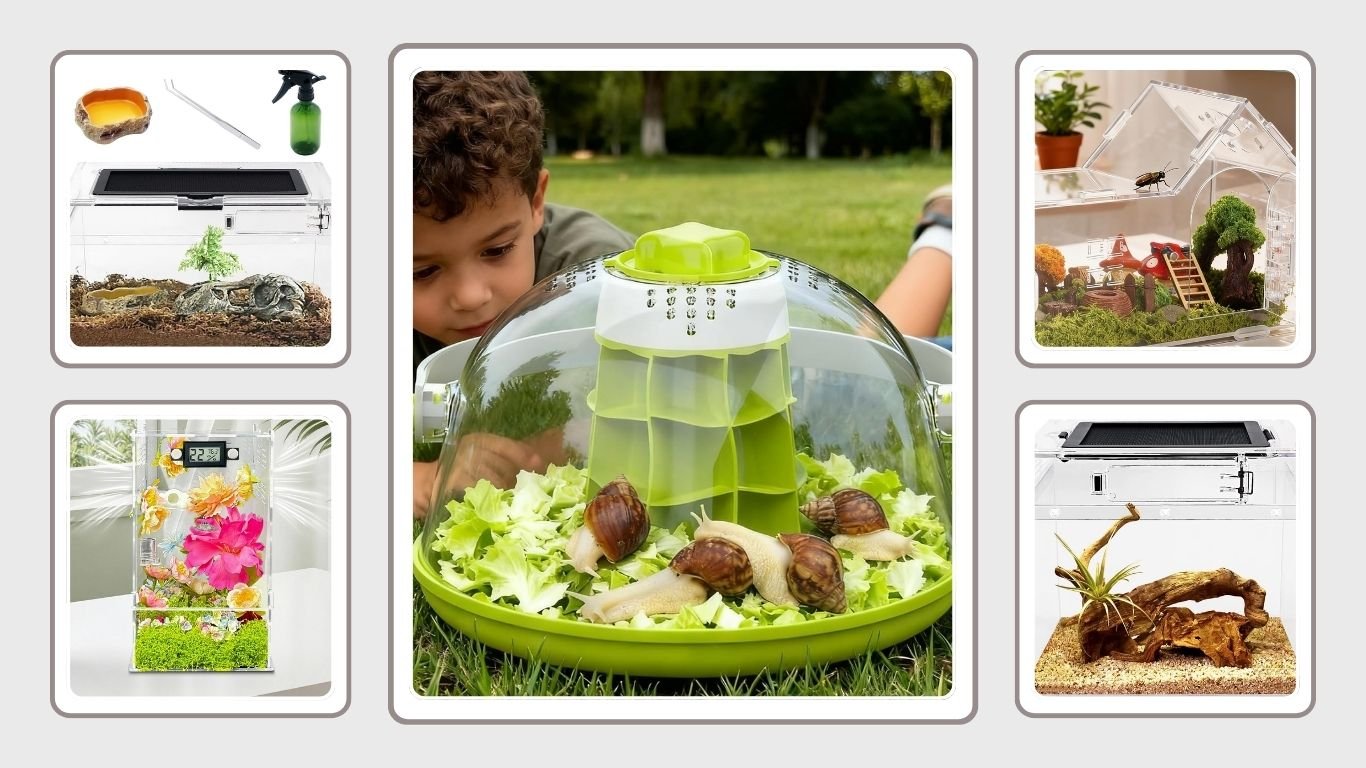
An insect observation terrarium makes it easier to study, display, and temporarily house insects while keeping them secure and visible. Whether you are observing beetles, mantises, caterpillars, jumping spiders, or other small creatures, the right enclosure should provide good ventilation, clear viewing panels, easy access, and enough space for natural movement. In this guide, we reviewed five of the best insect observation terrariums designed for hobbyists, students, and nature enthusiasts who want a practical, reusable, and comfortable setup for close-up insect observation.
1. Hamiledyi Insect Observation Terrarium Kit
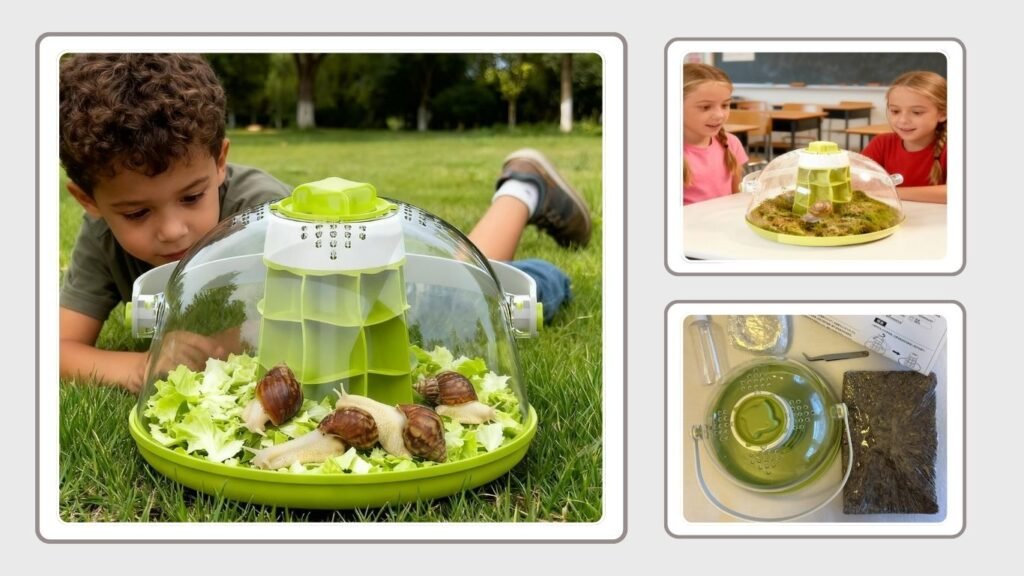
The Hamiledyi Insect Observation Terrarium Kit is a practical option for anyone who wants a clear, manageable habitat for observing snails, beetles, mantises, spiders, and other small creatures. Its transparent enclosure makes close observation easy, while the ventilation system helps maintain airflow inside. The kit also includes useful accessories for setting up and maintaining a small habitat, making it particularly convenient for beginners.
Key Features
- Transparent design for clear, all-around observation
- Multiple ventilation openings for continuous airflow
- Includes feeding bowl, tweezers, spray bottle, and dried moss
- Lightweight and portable enclosure design
- Suitable for snails, beetles, mantises, spiders, and other small creatures
- Removable components simplify routine cleaning
- Built-in handle makes relocation easier
Why It Is Best for Beginner Insect Keepers
One of the biggest strengths of this terrarium is its simple all-in-one approach. New insect keepers do not have to start with a completely empty container and then search for every basic accessory separately. The included spray bottle can help with moisture management, while tweezers make it easier to move food or small habitat materials without disturbing the animal.
The clear walls are also helpful for beginners because changes in behavior, feeding activity, substrate condition, and general enclosure cleanliness can be noticed quickly.
Observation and Ventilation Performance
For an observation enclosure, visibility is particularly important, and the transparent construction performs well in this area. Rather than having to repeatedly open the habitat to check the animal, users can observe movement and behavior through the walls.
Ventilation openings around the enclosure encourage fresh-air exchange, which is especially useful for insects and invertebrates that should not be kept in a completely sealed container. The design provides a useful balance between visibility, airflow, and accessibility for routine care.
Overall Value and Practicality
This model stands out as more than a simple plastic observation box. Its included accessories, portable construction, and spacious viewing area make it useful for hobbyists, classrooms, nature projects, and families interested in studying small animals.
It is especially appealing when the goal is to create a compact microhabitat without assembling every component individually. For small insects and similar creatures, the combination of clear visibility and convenient habitat-management tools gives this terrarium strong everyday practicality.
2. StyEdEk Jumping Spider and Insect Terrarium
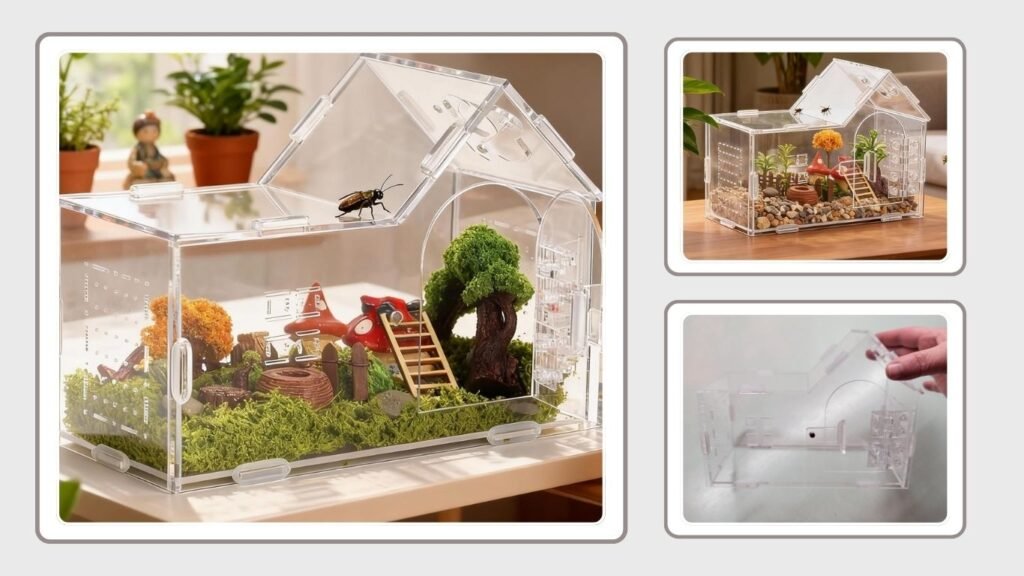
The StyEdEk terrarium offers a compact vertical enclosure designed particularly well for small insects and climbing invertebrates. Made with clear acrylic, it provides excellent visibility from different angles while keeping the overall footprint small. Its tall profile can be useful for jumping spiders and other creatures that naturally spend time climbing. The enclosure also features secure access and ventilation-focused construction.
Key Features
- Clear acrylic construction
- Compact 3.15 x 3.15 x 5.5-inch design
- Vertical layout suitable for climbing species
- Secure magnetic access system
- Ventilation for air circulation
- Lightweight tabletop-friendly construction
- Suitable for insects and other small invertebrates
Why It Is Best for Jumping Spiders
The vertical shape is one of the most attractive qualities of this enclosure. Jumping spiders commonly explore elevated surfaces, so providing usable height can make the enclosure more suitable for climbing branches, artificial plants, hides, and web-building areas.
Its small base also means it does not require much shelf or desk space. That makes it particularly convenient for hobbyists who keep one small specimen and want an enclosure that looks tidy without taking over an entire display area.
Clear Viewing and Secure Everyday Access
Acrylic walls allow the animal to remain highly visible, making this enclosure suitable for behavioral observation and photography. Owners can watch climbing, hunting, resting, and feeding behavior without opening the habitat unnecessarily.
The secure access design is another practical advantage. Small spiders and insects can move quickly, so an enclosure that closes reliably is important during normal care. Easy access also makes feeding and spot cleaning more convenient while minimizing unnecessary disturbance inside the habitat.
Overall Value and Practicality
This StyEdEk enclosure is most attractive for keepers who value a compact footprint, vertical space, and excellent visibility. It is not intended for larger animals that require considerable floor area, but that specialization is actually one of its strengths.
For a jumping spider, small mantis, or similarly sized invertebrate, its proportions make it easier to build a visually appealing miniature habitat. The combination of acrylic construction, secure access, and vertical room gives it a polished design that works well as both an observation habitat and a desktop display.
3. Reptile Growth 8 x 8 x 8 Mini Terrarium
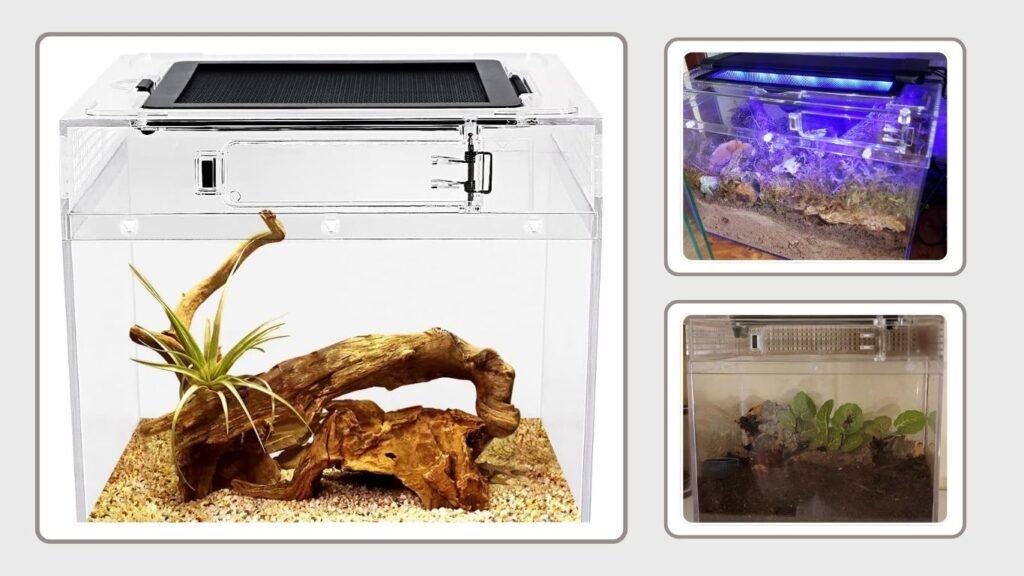
The Reptile Growth Mini Terrarium provides considerably more usable interior space than many tiny insect containers while maintaining excellent visibility. Its 8 x 8 x 8-inch cube configuration works well for a variety of invertebrates and small animals. A removable mesh top, sliding access system, and water-resistant base add useful functionality for keepers who want a more substantial observation habitat.
Key Features
- 8 x 8 x 8-inch enclosure size
- Clear polycarbonate construction
- Full-view design for easy observation
- Removable mesh screen top
- Sliding top access for feeding and maintenance
- Water-tight base
- Side opening for cable management
- Suitable for insects, tarantulas and other small animals
Why It Is Best for Versatile Habitat Setups
Unlike very small observation containers, this terrarium gives keepers enough room to experiment with substrate, hides, branches, plants, feeding areas, and other habitat elements. That makes it useful when observation is combined with longer-term husbandry rather than simply temporary insect viewing.
The cubic dimensions also provide a useful balance between floor space and height, allowing the enclosure to accommodate several different habitat styles depending on the species being kept.
Ventilation and Maintenance Performance
The removable mesh top is one of the enclosure’s strongest practical features. It encourages substantial airflow while also making the interior relatively easy to access during maintenance. The sliding opening can simplify feeding because the entire enclosure does not always need to be dismantled.
Its water-tight lower section is useful when slightly moist substrate is required. It can also help contain small amounts of water from misting, reducing the chance of moisture reaching the surface underneath the terrarium.
Overall Value and Practicality
For hobbyists wanting something more substantial than a basic bug container, this Reptile Growth model offers a strong balance of space, durability, visibility, and ventilation.
The larger interior also allows the enclosure to evolve with the keeper’s experience. A simple observation setup can be upgraded with natural substrate, cork bark, climbing material, artificial plants, or other enrichment. This versatility makes the terrarium especially appealing for people who want one enclosure capable of supporting several different types of small-animal setups over time.
4. Mini Reptile Terrarium Set 11.8 x 7 x 6 Inches
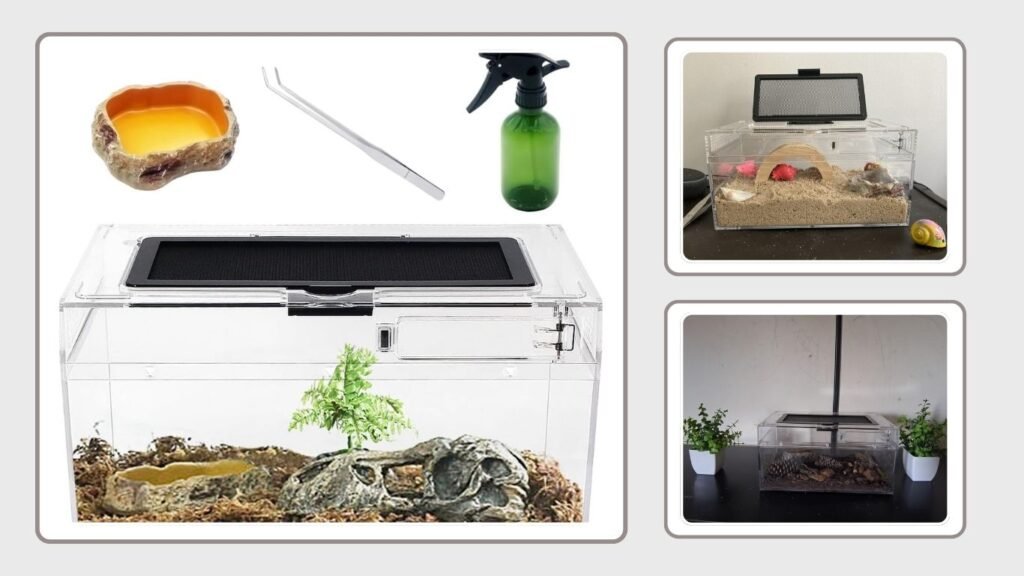
This Mini Reptile Terrarium offers a wide, low-profile design that provides more horizontal space than many cube-shaped insect habitats. Measuring approximately 11.8 x 7 x 6 inches, it is especially useful for insects and other small animals that benefit from floor area. Its transparent construction, ventilated screen top, and convenient feeding access combine observation with practical everyday care.
Key Features
- Approximately 11.8 x 7 x 6-inch dimensions
- Wide, low-profile habitat design
- Clear construction for broad viewing
- Durable polycarbonate material
- Metal screen top for ventilation
- Convenient feeding access
- Suitable for insects, tarantulas, jumping spiders, and other small animals
- Easy-to-view interior layout
Why It Is Best for Ground-Dwelling Insects
The wider footprint is the main reason this model stands out. Ground-oriented insects and invertebrates often benefit more from horizontal room than excessive enclosure height. The additional floor area gives keepers more freedom to create separate hiding, feeding, and activity zones.
Beetles, certain tarantulas, terrestrial spiders, and similar small creatures can therefore be observed without being confined to an overly narrow container.
Visibility, Airflow, and Feeding Convenience
The clear walls allow activity to be monitored from multiple directions, which is useful when studying feeding behavior, movement, burrowing activity, or interaction with environmental features.
A ventilated metal top supports airflow throughout the habitat while helping create a secure boundary. The feeding-access design is particularly convenient because small routine tasks can be completed with less disruption to the overall enclosure. This is valuable with fast-moving animals that may become more difficult to manage when a large lid is completely removed.
Overall Value and Practicality
This model is a particularly strong choice when horizontal space matters more than vertical climbing room. Its dimensions provide enough room to make the enclosure visually interesting while remaining compact enough for shelves, desks, or dedicated animal-care areas.
The combination of visibility, ventilation, feeding convenience, and usable floor area gives keepers considerable flexibility. For someone planning a natural-looking insect habitat with substrate, hides, bark, stones, or low plants, the wider design provides more possibilities than many compact observation boxes.
5. Jumping Spider Enclosure DIY Habitat Set
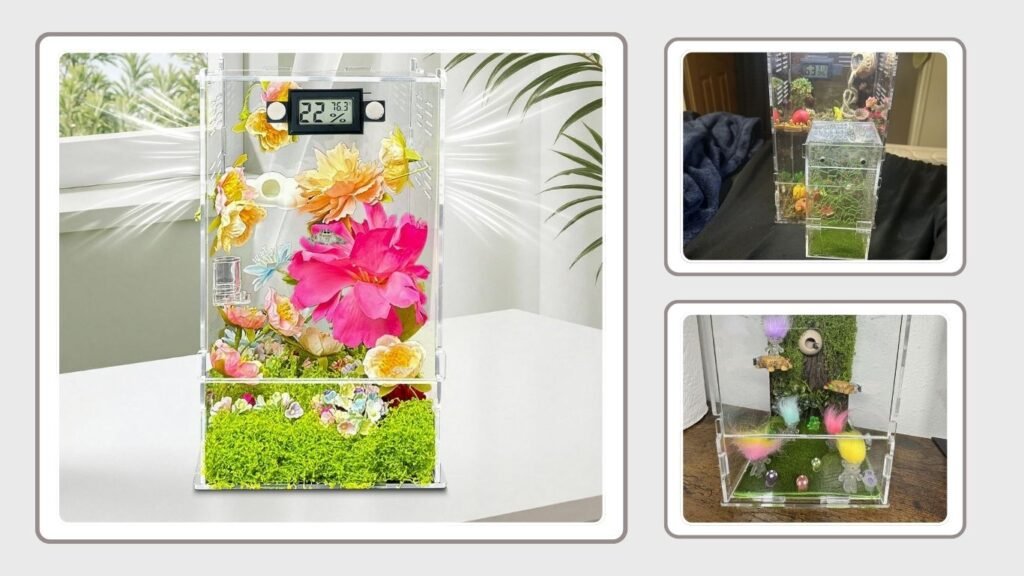
The Jumping Spider Enclosure DIY Habitat Set combines an acrylic enclosure with decorative and monitoring accessories, making it particularly attractive for anyone who wants to build a more complete display habitat. Its tall 9.5 x 5.5 x 5.5-inch dimensions provide useful climbing space, while transparent panels make observation easy. The set includes habitat decorations along with temperature and humidity monitoring equipment.
Key Features
- 9.5 x 5.5 x 5.5-inch vertical enclosure
- Fully transparent acrylic construction
- Ventilation holes positioned on both sides
- Temperature and humidity detector included
- Water-feeding accessory
- Spider hide included
- Artificial flowers and decorative materials
- Moss and additional habitat decorations
- DIY assembly design
- Tall interior suitable for climbing
Why It Is Best for Decorative Observation Setups
This enclosure is especially suitable for keepers who want the habitat itself to become part of the display. Instead of receiving only an empty acrylic box, users receive decorative materials that can be arranged to create climbing routes, resting locations, hiding areas, and visually interesting background elements.
That makes the setup process more engaging while allowing each habitat to look somewhat different. For jumping spiders in particular, the vertical arrangement gives owners room to position decorations at multiple heights.
Habitat Monitoring and Everyday Care
The included temperature and humidity detector adds practical value because environmental conditions can be monitored without relying entirely on guesswork. Although appropriate conditions always depend on the particular species being kept, having basic readings available makes daily habitat management easier.
Side ventilation holes support fresh-air movement through the enclosure. Meanwhile, the transparent acrylic panels allow close observation without repeatedly disturbing the animal. Feeding, hydration, activity, and resting behavior can therefore be checked quickly from outside.
Overall Value and Practicality
This DIY set works particularly well for someone who wants both an observation enclosure and an enjoyable habitat-building project. The included accessories reduce the amount of additional equipment needed to create an attractive initial setup.
Its taller shape, transparent construction, monitoring device, hides, and decorative pieces make it particularly suitable for jumping spiders and other small climbing invertebrates. For hobbyists who prefer a finished enclosure to look more like a miniature ecosystem than a simple storage container, this set provides a practical foundation with plenty of customization potential.
FAQs
1. What size terrarium is best for observing insects?
The best size depends on the insect species. Small spiders, beetles, mantises, and similar invertebrates usually do well in compact enclosures, while more active or ground-dwelling species benefit from additional floor space. The terrarium should provide enough room for movement, feeding, hiding, and habitat decorations without being excessively large.
2. Do insect observation terrariums need ventilation?
Yes. Proper ventilation helps maintain fresh airflow and reduces excess moisture buildup inside the enclosure. Many insect terrariums use mesh lids, ventilation holes, or cross-ventilation systems. The amount of airflow needed can vary by species, so humidity-loving insects may require a different setup from species that prefer drier conditions.
3. Can jumping spiders live in insect observation terrariums?
Yes, many insect observation terrariums are suitable for jumping spiders, especially vertical models with secure ventilation and enough climbing space. Decorations such as branches, artificial plants, cork bark, or hides can make the enclosure more functional. The ventilation openings should also be small enough to prevent the spider from escaping.
4. What should I put inside an insect observation terrarium?
The setup depends on the animal being kept, but common additions include suitable substrate, moss, small branches, bark, hides, artificial or safe live plants, and feeding accessories. The enclosure should remain easy to clean and should not contain sharp decorations or materials that could harm the insect.
5. How often should an insect terrarium be cleaned?
Spot cleaning should be done whenever leftover food, waste, mold, or other debris appears. A more thorough cleaning can be performed periodically depending on the species, enclosure size, and substrate type. Avoid excessive cleaning that completely disrupts the habitat, especially when keeping insects or spiders that have established resting areas, burrows, or webs.