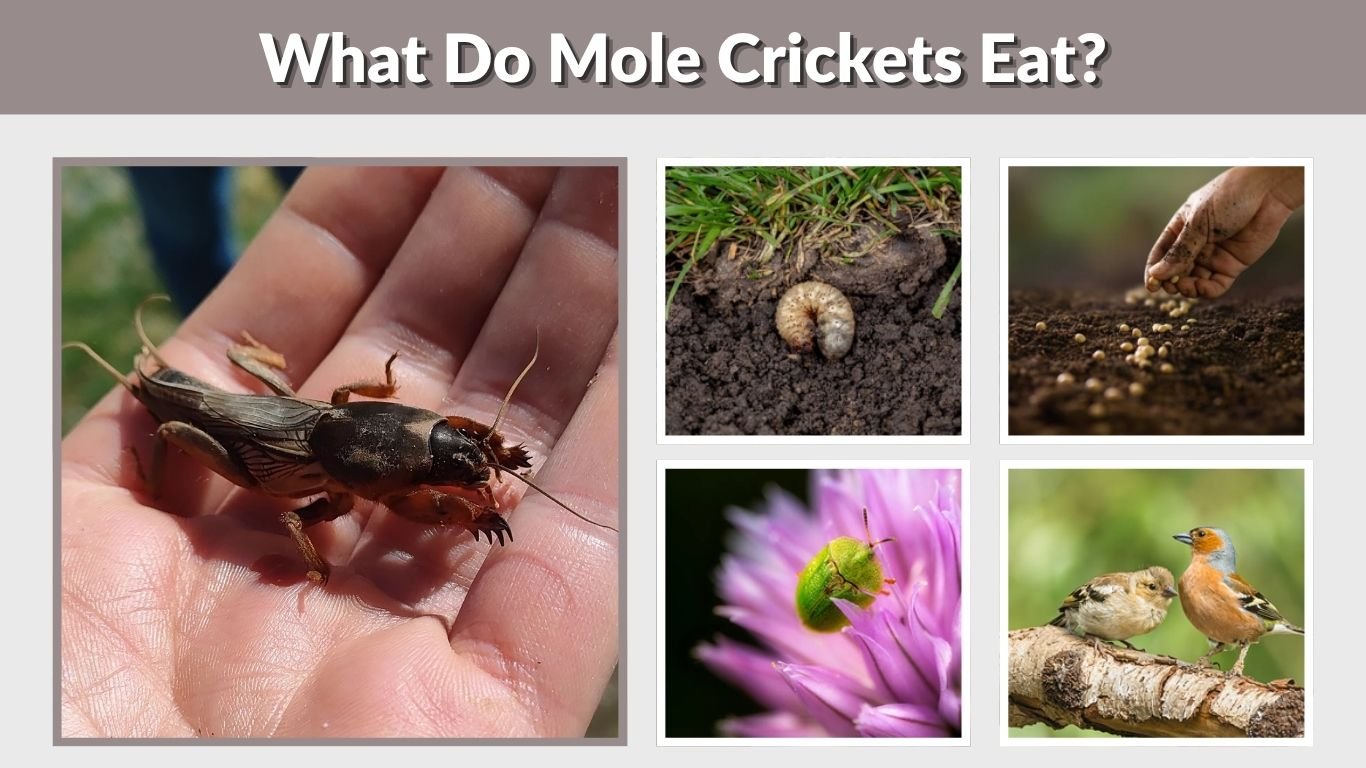
What do mole crickets eat? Their diet depends on the species, but most mole crickets feed on a mixture of plant material and small soil-dwelling animals. Some species primarily eat roots, grass, seedlings, and other vegetation, while others are more predatory and consume insects, worms, and similar prey. Their feeding habits can sometimes damage lawns, gardens, and young plants, especially when combined with their underground tunneling. Below are 10 common foods mole crickets may eat and how their diet affects the environment.
What Do Mole Crickets Eat?
Mole crickets are generally omnivorous, although their exact diet varies between species. Plant-feeding species can become troublesome lawn pests, while more predatory species may actually consume other insects living in the soil. Their large digging forelegs help them move through underground tunnels where they encounter roots, seeds, insects, and other potential food.
10 Foods Mole Crickets Eat
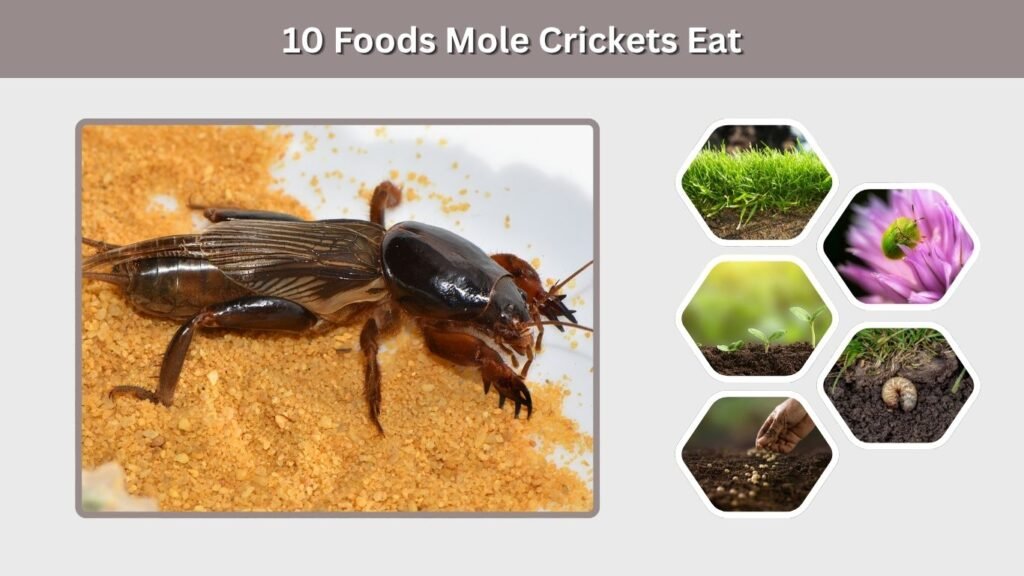
Mole crickets have a surprisingly varied diet that can include both plant and animal matter. Some species mainly feed on grass roots, seedlings, and other vegetation, while others hunt small insects and soil-dwelling invertebrates. Their underground lifestyle gives them easy access to roots, seeds, larvae, and worms. Here are 10 common foods that mole crickets may eat depending on their species and habitat.
- Grass roots
- Grass stems and shoots
- Plant roots
- Seedlings
- Seeds
- Small insects
- Insect larvae
- Earthworms and other soft-bodied invertebrates
- Decaying plant matter
- Small underground arthropods
The amount of plant or animal material consumed depends heavily on the mole cricket species and available food.
1. Grass Roots
Grass roots are one of the most important food sources for plant-feeding mole crickets. These insects spend much of their lives underground, making roots easy to reach without leaving their tunnels.
Do Mole Crickets Eat Grass?
Yes, some mole cricket species feed heavily on grass roots and other plant tissues. Their tunneling can also separate roots from surrounding soil, making damage worse.
Affected grass may become yellow, thin, or brown. In severe infestations, turf can feel loose and may pull away from the soil easily because the root system has been weakened.
2. Grass Shoots and Stems
Mole crickets may also feed on grass near the soil surface. Tender shoots are particularly vulnerable because they are easy for the insects to chew.
Do Mole Crickets Eat St. Augustine Grass?
Mole crickets can damage St. Augustine grass, particularly through tunneling and root disturbance. Some species may also feed directly on the grass.
However, the level of damage depends on the species, population size, soil condition, and overall health of the lawn. Other turfgrasses, including bermudagrass and bahiagrass, can also experience mole cricket damage.
3. Plant Roots
Mole crickets are not limited to lawn grasses. Plant-feeding species may attack the roots of many different plants growing in gardens, fields, and landscaped areas.
Why Roots Are Important Food
Roots are easily accessible from underground tunnels and provide moisture and nutrients.
Young plants are especially vulnerable because they have smaller root systems. If enough roots are damaged, the plant may wilt even when soil moisture is adequate.
Root feeding can also weaken plants and make them more susceptible to environmental stress.
4. Seedlings
Young seedlings are another food source for some mole crickets. Their tender tissues are easier to chew than older, tougher plants.
How Mole Crickets Damage Seedlings
Damage may include:
- Cutting young stems near ground level
- Feeding on tender roots
- Disturbing newly planted soil
- Uprooting seedlings while tunneling
- Causing plants to wilt
- Killing very young plants
Vegetable gardens and newly seeded areas can therefore be more vulnerable than mature plantings when mole cricket numbers are high.
5. Seeds
Some mole crickets may consume seeds found underground or near the soil surface. They can encounter newly planted seeds while moving through garden beds and agricultural soils.
Do Mole Crickets Eat Garden Seeds?
They may feed on certain seeds, but seed feeding is not equally important for every species.
Often, damage associated with newly planted areas results from a combination of direct feeding and soil disturbance. Their tunnels can move seeds, expose roots, and disrupt germination even when relatively little material is actually eaten.
6. Small Insects
Not all mole crickets are primarily plant eaters. Some species consume other insects and may behave as underground predators.
What Insects Do Mole Crickets Eat?
Depending on opportunity, they may consume:
- Small soil insects
- Insect nymphs
- Soft-bodied bugs
- Small beetle larvae
- Other underground arthropods
The southern mole cricket, for example, is considered more predatory than some closely related pest species.
This means that mole crickets can sometimes play both harmful and beneficial roles in the same environment.
7. Insect Larvae
Soft insect larvae found in soil can provide an important source of protein for predatory and omnivorous mole crickets.
Why Mole Crickets Eat Larvae
Mole crickets constantly encounter other soil organisms while digging.
Larvae are often slow-moving and relatively easy to capture. They can therefore supplement a diet that also includes plant material.
This feeding behavior explains why not every mole cricket found in a lawn should automatically be considered a serious plant pest.
8. Worms and Soft-Bodied Invertebrates
Mole crickets may feed on small worms and other soft-bodied invertebrates found in moist soil.
Underground Animal Food
Possible prey includes:
- Small worms
- Tiny arthropods
- Soft-bodied insect stages
- Other accessible soil invertebrates
These animals provide protein and are particularly important for species with stronger predatory tendencies.
Mole crickets locate much of this food while constructing their underground tunnel systems.
9. Decaying Plant Material
Mole crickets may occasionally consume soft or decomposing plant matter present within the soil.
Do Mole Crickets Eat Dead Plants?
They are not primarily decomposers, but organic material can form part of an opportunistic diet.
Decaying roots, plant fragments, and other soft vegetation may be encountered underground. However, living plant roots and small animal prey are generally more important food sources for species known to damage lawns and crops.
10. Small Underground Arthropods
The soil is filled with tiny arthropods, and some mole crickets take advantage of these readily available prey items.
An Opportunistic Underground Diet
Potential food may include small:
- Insect nymphs
- Larvae
- Soil arthropods
- Other tiny invertebrates
Their underground lifestyle gives mole crickets access to food sources that many above-ground insects rarely encounter.
The ability to eat both plants and animals can also help some species survive when one food source becomes temporarily scarce.
Do Mole Crickets Eat Bermuda Grass?
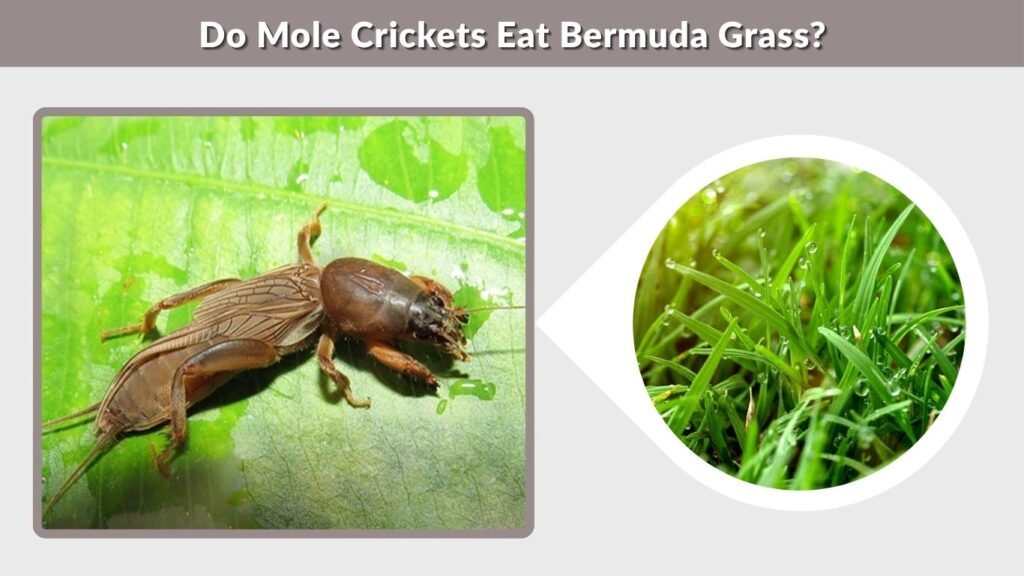
Mole crickets can damage bermudagrass, and certain pest species are particularly troublesome in turf areas. Feeding on roots and shoots contributes to injury, while tunneling may be equally important.
Signs of Feeding Damage
Watch for:
- Brown or yellow patches
- Thin turf
- Loose soil
- Raised tunnels
- Grass that pulls up easily
- Damaged roots
- Bare areas that gradually expand
Because similar symptoms can result from drought, disease, or other insects, finding active mole crickets is important before assuming they are the cause.
Do Mole Crickets Eat Other Insects?
Yes. Some mole cricket species are partly or strongly predatory. They may consume insects and other soil-dwelling invertebrates alongside plant material. Their diets therefore differ substantially from species that cause significant turf damage.
Southern Mole Cricket Diet
The southern mole cricket tends to be more predatory than major plant-feeding species such as the tawny mole cricket.
It commonly consumes animal prey encountered underground. Even so, its tunneling can still disturb roots and soil.
This difference shows why identifying the mole cricket species can be useful when assessing whether it is likely to become a serious lawn pest.
What Animals Eat Mole Crickets?
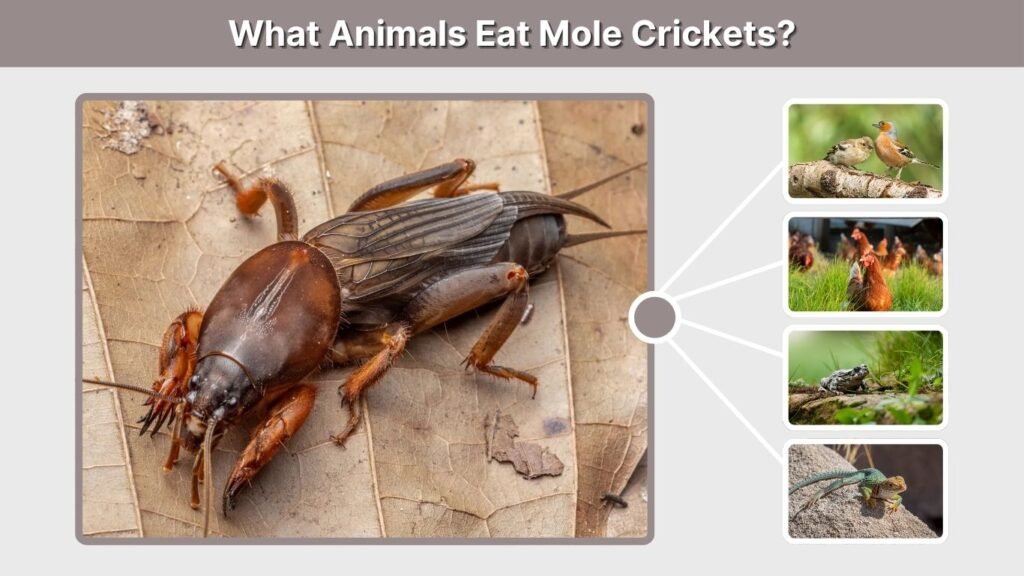
Although mole crickets are predators of some small organisms, they are also prey for many larger animals. Their relatively large bodies provide a nutritious meal for birds, reptiles, amphibians, and mammals.
Common Mole Cricket Predators
Animals that may eat mole crickets include:
- Birds
- Chickens
- Frogs and toads
- Lizards
- Snakes
- Armadillos
- Raccoons
- Some spiders
- Predatory insects
- Parasitic wasps
Predators may sometimes dig into lawns while searching for mole crickets, causing additional visible disturbance.
Do Birds and Chickens Eat Mole Crickets?
Birds are natural predators of many insects, and mole crickets can become part of their diet when they are exposed above ground.
Chickens and Mole Crickets
Chickens will often eat crickets and other insects they encounter while scratching through soil.
Wild birds can also capture mole crickets, particularly when the insects emerge from underground tunnels or fly during mating periods.
Natural predation can help reduce populations, although predators alone may not control a severe infestation.
FAQs
Mole cricket diets vary considerably depending on species and habitat. Some are mainly destructive plant feeders, while others are more predatory. Understanding these differences helps explain why one mole cricket population may damage a lawn while another causes relatively little feeding injury.
Do mole crickets eat grass?
Yes. Several mole cricket species eat grass roots, shoots, and other plant tissues. Their underground tunneling also damages grass by disturbing roots and drying the soil around them. Heavy infestations can create thin or brown patches throughout lawns and turf.
Do mole crickets eat ants?
Mole crickets can consume small insects and other arthropods, so an individual may potentially eat ants when opportunities arise. However, ants are not generally considered a primary or specialized food source. Diet varies depending on mole cricket species and available prey.
Do mole crickets eat flowers?
Mole crickets may damage flowering plants, particularly through feeding on roots or disturbing soil around young plants. They are less likely to target mature flowers themselves. Seedlings and tender roots are usually more vulnerable than established above-ground flowers.
What eats mole crickets?
Birds, chickens, frogs, toads, lizards, snakes, armadillos, predatory insects, and certain parasitic wasps can prey on mole crickets. Their predators vary according to habitat and geographic location.
Are mole crickets herbivores or carnivores?
Mole crickets vary by species. Some are primarily herbivorous and feed heavily on grass and plant roots, while others are more predatory and eat insects and other soil invertebrates. Many can therefore be described as omnivorous to some degree.