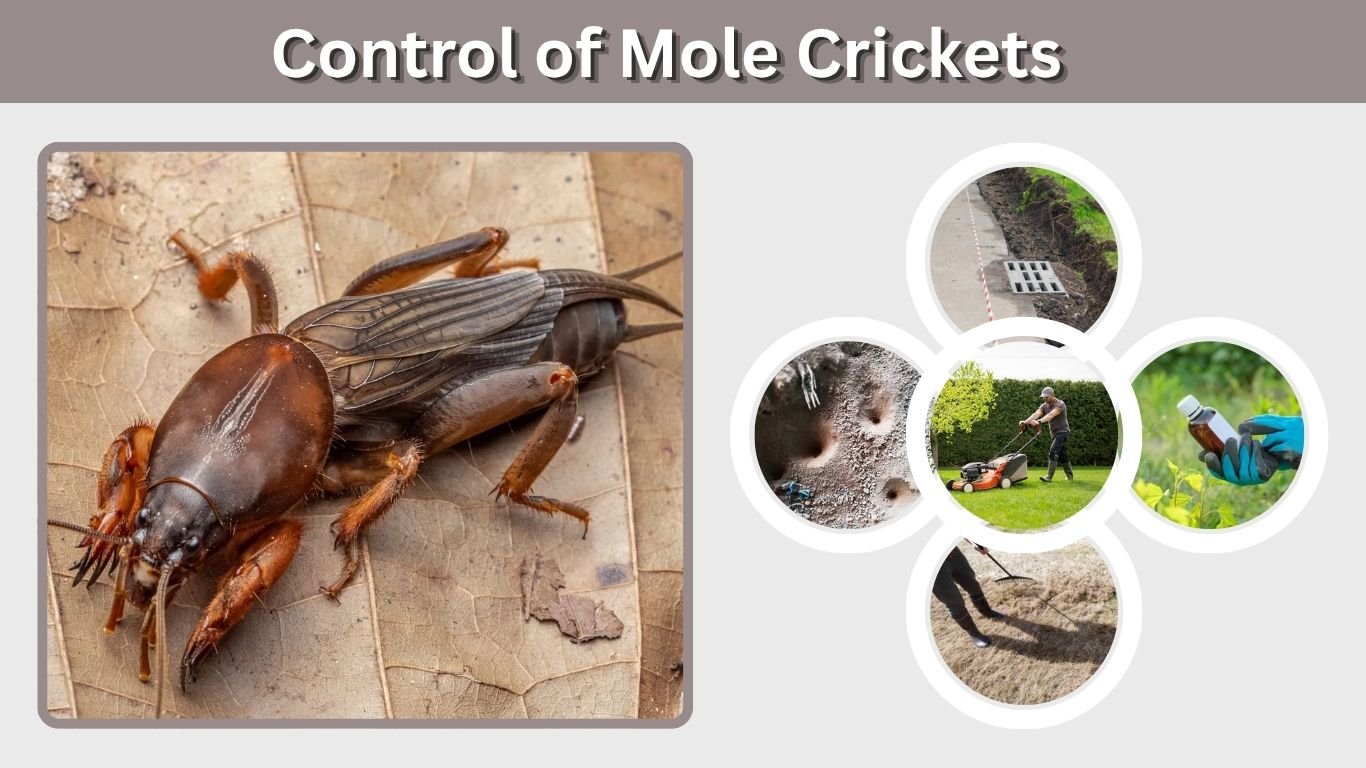
Effective control of mole crickets starts with finding where they are active and treating them before serious lawn damage develops. These underground insects tunnel through soil, disturb grass roots, and may create thin, brown, or dying patches across lawns and turf. Young mole crickets are usually easier to manage than mature adults, making early detection especially important. A combination of monitoring, good lawn care, biological control, and carefully selected treatments can reduce populations while helping healthy grass recover and resist future infestations.
How to Identify a Mole Cricket Problem
Mole crickets spend most of their time underground, so homeowners often notice damaged grass before seeing the insects themselves. Their tunnels disturb roots and loosen soil, while some species also feed directly on grass roots and shoots. Because drought, disease, and other pests can create similar symptoms, confirming mole cricket activity is important before beginning treatment.
Signs of Mole Cricket Damage
Common signs include:
- Irregular brown or yellow patches in grass
- Thin areas that gradually become larger
- Loose turf that lifts easily from the soil
- Small raised tunnels near the surface
- Damaged or shortened grass roots
- Areas of soft or disturbed soil
- Birds or other animals repeatedly digging in the lawn
- Increased weeds in weakened turf
Damage often becomes more noticeable when grass is already stressed by heat or inadequate moisture.
Check the Soil for Active Crickets
Inspect the boundary between healthy grass and damaged turf rather than focusing only on completely dead areas.
Mole crickets are frequently active close to expanding damage. Carefully examine the soil for tunnels, or use a flushing method recommended for turf insects to bring hidden crickets toward the surface.
Finding active insects helps distinguish mole cricket damage from problems caused by fungi, drought, grubs, or improper lawn care.
Best Time for Mole Cricket Control
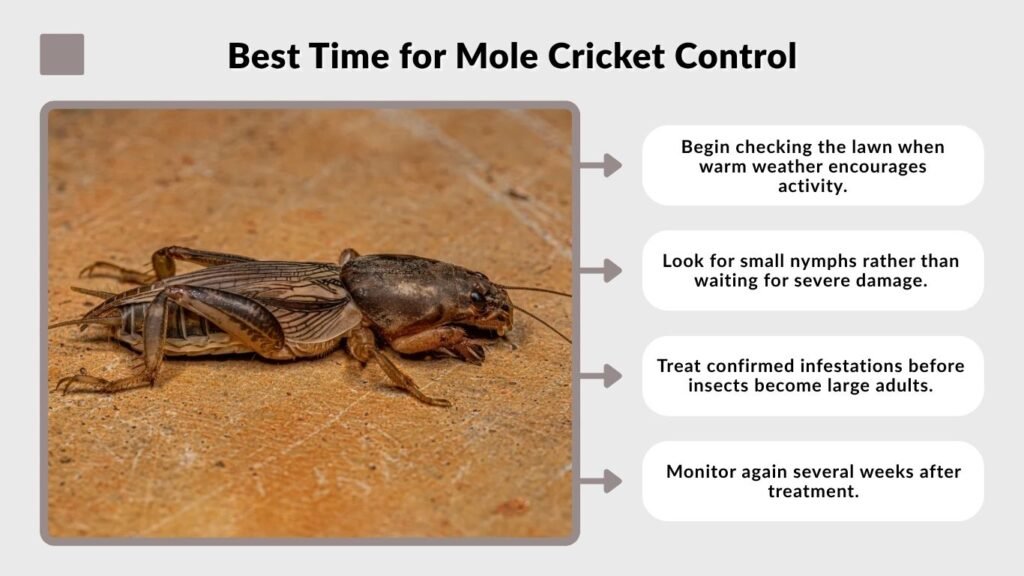
Timing has a major influence on how successful treatment will be. Mole crickets pass through egg, nymph, and adult stages. Young nymphs are smaller and generally easier to control because they have not yet developed the stronger bodies and deeper tunneling habits of mature insects. Monitoring during their seasonal development can therefore reduce both damage and treatment difficulty.
Treat Young Mole Crickets First
For the most effective control:
- Begin checking the lawn when warm weather encourages activity.
- Look for small nymphs rather than waiting for severe damage.
- Treat confirmed infestations before insects become large adults.
- Monitor again several weeks after treatment.
- Continue watching for fresh tunnels or expanding brown areas.
Treatment timing varies by climate and location, so local seasonal conditions should guide monitoring.
Why Adult Mole Crickets Are Harder to Control
Adult mole crickets are larger and may tunnel deeper into the soil. Their size and mobility can make treatments less effective than when populations consist mostly of young nymphs.
Adults may also fly and move between properties, which means a lawn can experience new activity even after an earlier infestation has been reduced.
This is why long-term management should focus on monitoring and prevention rather than relying on a single application.
Natural Control of Mole Crickets
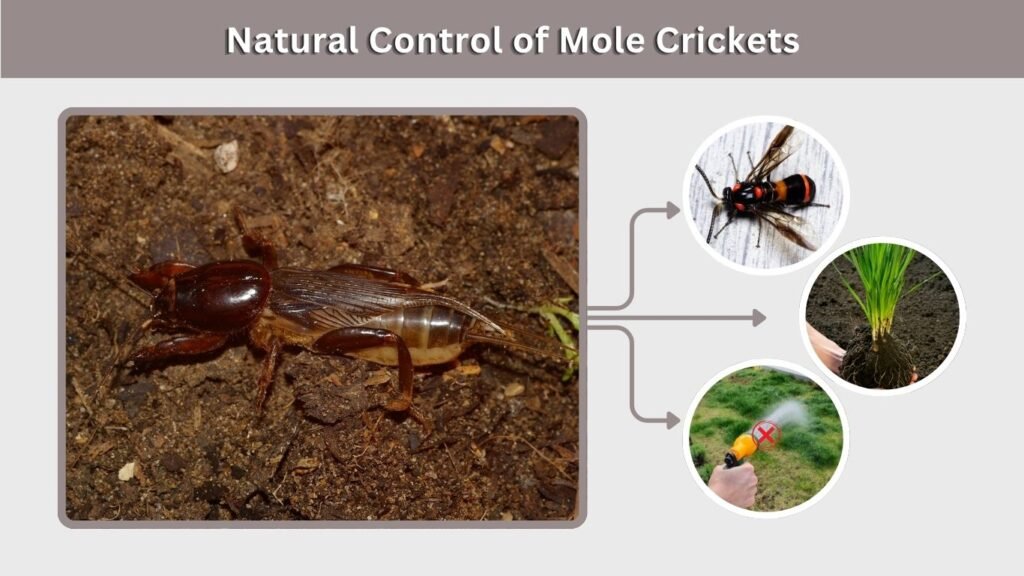
Natural control methods can be valuable when populations are still relatively low. They also work well as part of an integrated pest management approach. The goal is not necessarily to eliminate every mole cricket but to keep populations low enough that turf remains healthy and visible damage stays limited.
Natural Control Methods
Options include:
- Encourage beneficial predators and parasitic insects.
- Avoid unnecessary broad-spectrum pesticide applications.
- Maintain healthy soil and strong grass roots.
- Remove excessive thatch where insects can find protection.
- Avoid overwatering the lawn.
- Repair bare areas that encourage weed growth.
- Monitor regularly instead of treating automatically.
Natural predators may include birds, predatory insects, and specialized parasites that attack mole crickets.
Beneficial Nematodes
Certain beneficial nematodes can infect soil-dwelling insects and may be used as part of biological mole cricket management.
Successful use depends heavily on choosing an appropriate product and applying it under suitable soil moisture and temperature conditions. Nematodes are living organisms, so poor storage, dry soil, or improper application can reduce their effectiveness.
Always follow the instructions supplied with the biological control product.
How to Get Rid of Mole Crickets in a Lawn
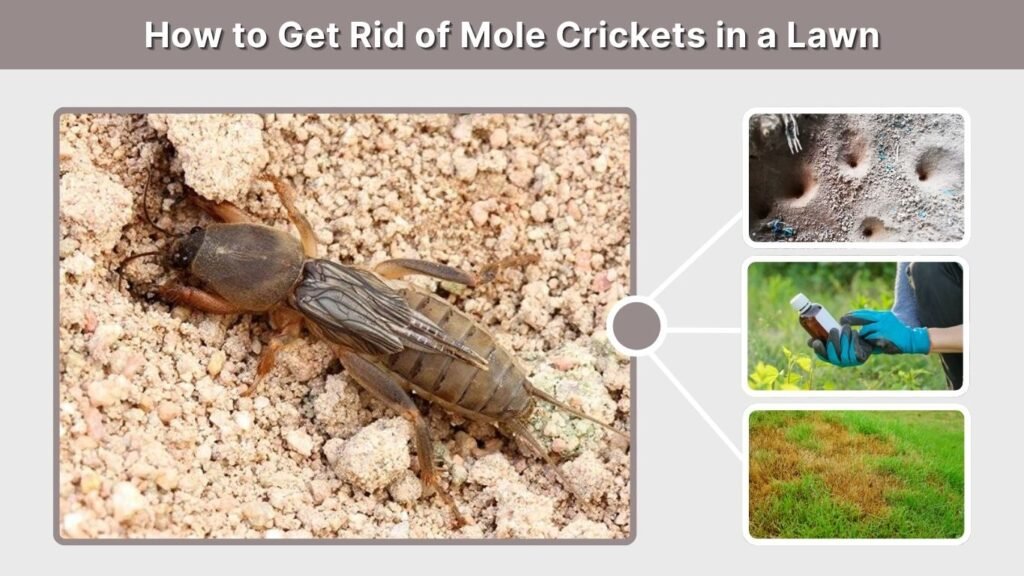
When mole cricket numbers become high enough to damage turf, targeted treatment may be necessary. The best approach combines direct control with lawn management rather than repeatedly treating the entire property without confirming insect activity.
Step-by-Step Mole Cricket Control
Use this approach:
- Confirm the pest. Look for tunnels and active mole crickets.
- Locate the worst areas. Identify where damage is currently expanding.
- Determine their growth stage. Small nymphs are generally easier to control.
- Choose an appropriate treatment. Use a product specifically labeled for mole crickets and turf.
- Follow application directions. Apply only the labeled amount.
- Water when instructed. Some treatments require irrigation to move material into the soil.
- Check the area again. Look for continued tunneling after treatment.
- Repair damaged turf. Encourage grass recovery once activity has declined.
Avoid applying treatments simply because an old brown patch is present. The insects may already have moved elsewhere.
Spot Treatment vs. Whole-Lawn Treatment
Spot treatment can be appropriate when activity is concentrated in a limited area.
Treating only active sections reduces unnecessary pesticide use and limits exposure to beneficial organisms. However, widespread infestations may require broader treatment.
The decision should be based on confirmed activity rather than the appearance of the lawn alone.
Mole Cricket Insecticide and Bait Options
Chemical control can help when mole cricket populations exceed acceptable levels. Different products work in different ways, and effectiveness can depend on soil moisture, insect age, application timing, and grass condition. Because product labels and approved uses vary, the label should always be treated as the primary instruction.
Using Mole Cricket Treatments Safely
Before applying any product:
- Confirm that mole crickets are present.
- Choose a treatment labeled for mole crickets.
- Verify that it is approved for your type of lawn or turf.
- Follow the stated application rate.
- Check whether watering is required before or after application.
- Keep children and pets away as directed.
- Avoid application before heavy rain unless the label allows it.
- Never increase the dose beyond label instructions.
More pesticide does not necessarily provide better control and can increase environmental risk.
When Professional Treatment May Help
Professional pest or lawn services can be useful when damage covers a large property, populations repeatedly return, or pest identification is uncertain.
A professional can evaluate the turf, determine whether mole crickets are actually responsible, and select treatment based on local conditions.
This can prevent repeated applications for a problem that may actually be caused by another insect, disease, or lawn-management issue.
Preventing Mole Cricket Damage
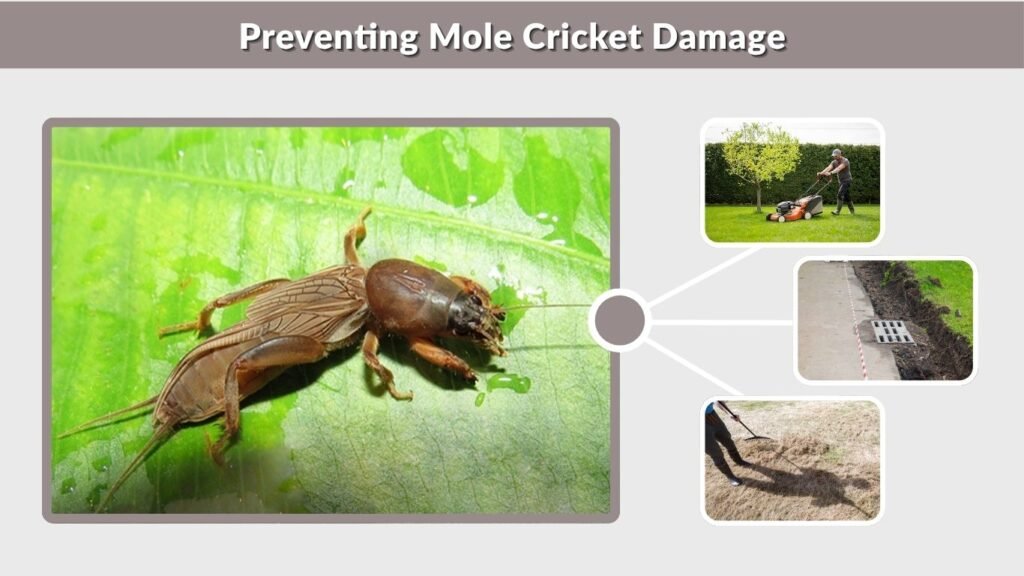
Prevention is easier when grass is healthy enough to tolerate limited insect activity. Proper mowing, irrigation, and fertilization promote stronger roots and help damaged areas recover. Prevention does not guarantee that mole crickets will never appear, but it can reduce the likelihood that a small population turns into serious turf damage.
Lawn Care for Prevention
Helpful practices include:
- Mow grass at the recommended height.
- Water deeply but avoid constantly saturated soil.
- Correct drainage problems.
- Fertilize according to the needs of your turf.
- Reduce unnecessary thatch buildup.
- Repair thin or bare grass areas.
- Inspect the lawn regularly during warm months.
- Address small infestations before damage spreads.
Healthy turf is generally more capable of recovering from limited root disturbance.
Why Mole Crickets Keep Coming Back
Recurring mole cricket problems can happen even after successful treatment. Adults may move into a lawn from nearby properties, and some insects may survive in untreated areas. Environmental conditions that favor moist soil and abundant grass can also continue attracting them.
Long-Term Mole Cricket Management
Long-term control works best when homeowners combine regular monitoring with good turf management.
Instead of treating on a fixed schedule, inspect the lawn for fresh activity. Early detection allows smaller areas to be managed before widespread damage develops.
Keeping records of when mole crickets usually appear can also help predict when monitoring should begin the following year.
FAQs
Mole cricket control can be frustrating because most activity occurs beneath the soil. Understanding how they damage turf and when they are easiest to manage makes treatment much more effective.
What is the best way to control mole crickets?
The best approach combines early detection, treatment of young nymphs, healthy lawn care, and targeted control of confirmed infestations. Avoid treating solely based on brown grass because several other lawn problems can produce similar symptoms.
What kills mole crickets naturally?
Natural enemies such as predatory insects, birds, parasitic wasps, and certain beneficial nematodes can help reduce mole cricket populations. Maintaining a balanced lawn ecosystem and avoiding unnecessary broad-spectrum pesticides can help preserve these beneficial organisms.
When should I treat my lawn for mole crickets?
Treatment is generally most effective when young mole cricket nymphs are present. These smaller insects are easier to manage than mature adults. Because timing varies by region and climate, monitor your lawn for fresh tunnels and newly hatched nymphs.
Can mole crickets destroy a lawn?
A heavy infestation can seriously damage turf. Their tunneling disrupts roots and loosens soil, while some species also feed on plant material. Over time, affected grass can become thin, brown, and easy to pull from the ground.
How can I prevent mole crickets from coming back?
Maintain healthy turf, avoid excessive irrigation, correct drainage problems, reduce unnecessary thatch, and inspect the lawn regularly for fresh tunnels. Early treatment of confirmed activity can prevent small populations from becoming large infestations.