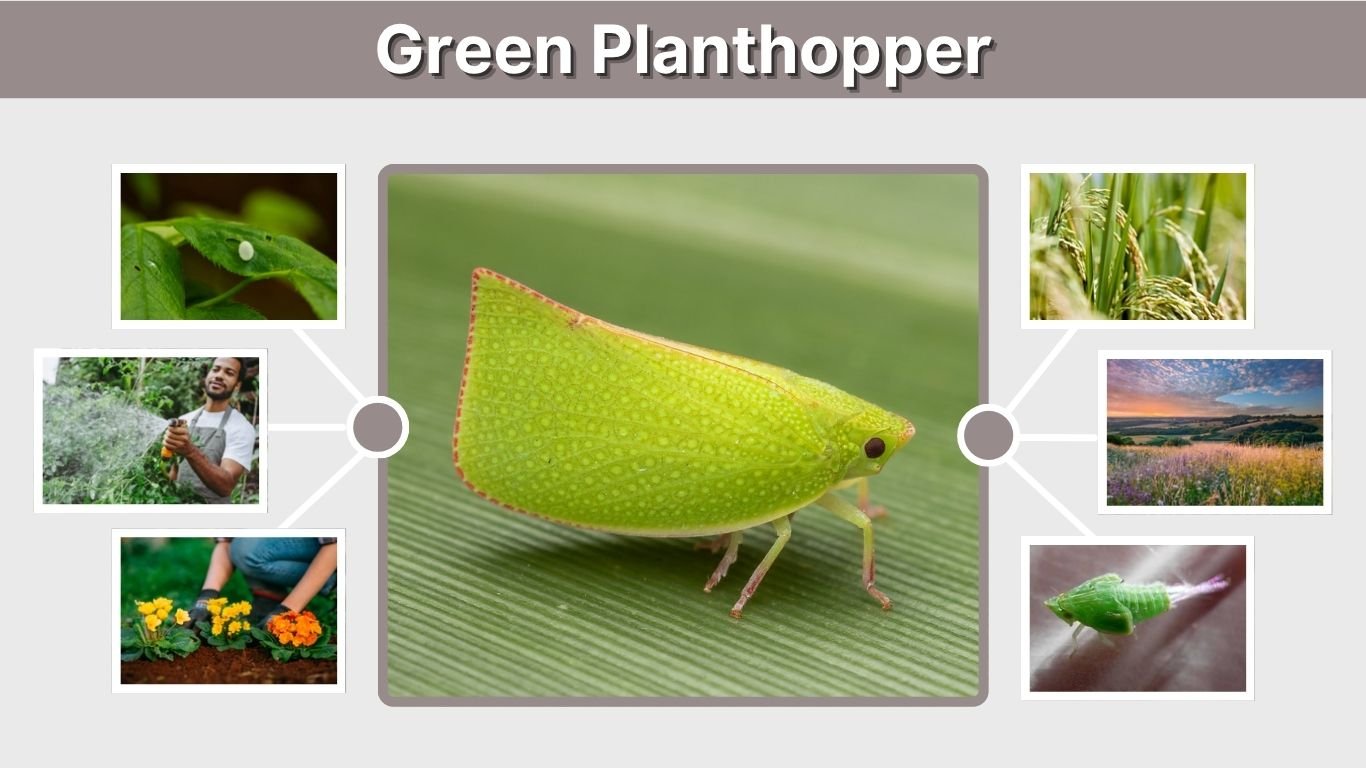
The green planthopper is a small plant-feeding insect known for its green coloration, strong jumping ability, and tendency to live on leaves, stems, and grasses. Several different planthopper species may appear green, including cone-headed, broad-winged, and flatid planthoppers. Most are harmless to people but may feed on plant sap and occasionally become noticeable on garden or crop plants. This guide explains green planthopper identification, nymphs, life cycle, habitat, feeding habits, bite risk, plant damage, and practical control methods.
What Is a Green Planthopper?
Green planthopper is a general name used for several small sap-feeding insects within the planthopper group. Planthoppers belong to the order Hemiptera and are closely related to leafhoppers, cicadas, and other true bugs. They use specialized piercing-sucking mouthparts to extract fluids from plants and are particularly well known for jumping rapidly when disturbed.
Green Planthopper Identification
Common characteristics may include:
- Bright green, lime green, or yellow-green coloration
- Small to medium body size
- Wings held roof-like over the body
- Powerful jumping legs
- Broad or wedge-shaped body
- Piercing-sucking mouthparts
- Short antennae
- Quick hopping behavior
- Association with leaves and stems
Exact appearance depends on species. Some green planthoppers have broad wings, while others have narrow bodies or unusual pointed heads.
Green Planthopper Scientific Name
There is no single scientific name for every insect called a green planthopper.
Planthoppers belong mainly to the infraorder Fulgoromorpha, which contains numerous families and species. Green-colored species can occur in groups such as Flatidae and other planthopper families.
Therefore, body shape, location, host plant, and detailed markings are needed to determine an exact scientific name.
Green Planthopper Nymph
A green planthopper nymph is the immature stage that develops after an egg hatches. Nymphs are wingless or have only developing wing pads, but they are already capable of moving and jumping very quickly.
Some nymphs look very different from adults because they may produce waxy material or have unusual tail-like filaments.
What Does a Green Planthopper Nymph Look Like?
Typical characteristics include:
- Tiny body
- Pale green or whitish-green coloration
- No fully developed wings
- Powerful hind legs
- Developing wing pads in older nymphs
- Rapid jumping behavior
- Sometimes white waxy filaments
- Frequent presence on stems or leaf undersides
The waxy coating seen on some species may help protect nymphs from moisture loss or predators.
Green Planthopper Life Cycle
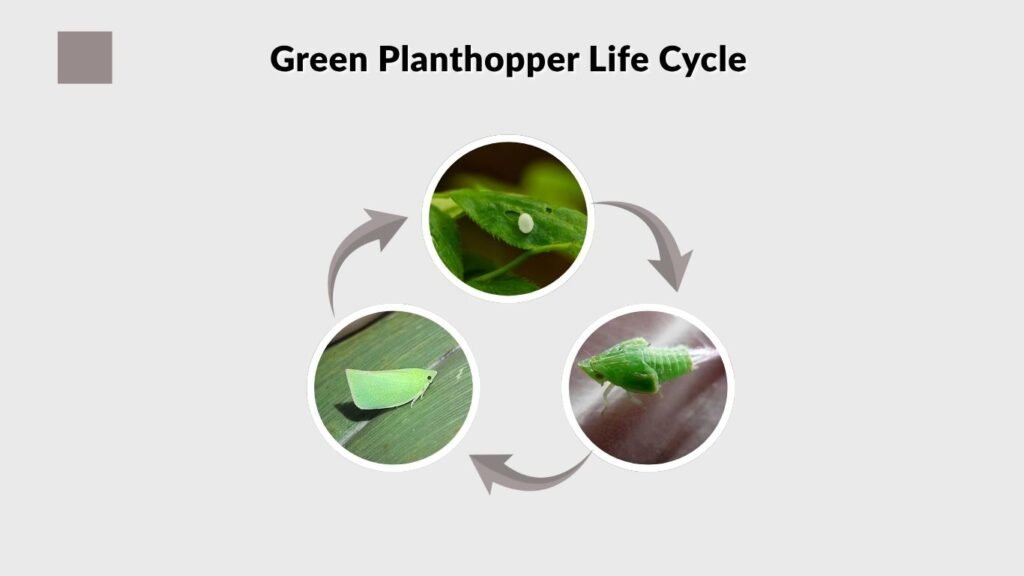
Green planthoppers undergo incomplete metamorphosis. This means there is no caterpillar or pupal stage.
The insect develops through egg, nymph, and adult stages. Nymphs gradually become larger and more adult-like each time they molt.
Main Life Cycle Stages
The general life cycle is:
- Egg – Females deposit eggs on or inside plant tissue.
- Young nymph – A small wingless insect emerges.
- Older nymphs – Several molts occur as the insect grows.
- Adult – Wings fully develop and reproduction begins.
Development time varies according to species, temperature, climate, and food availability.
Where Do Green Planthoppers Lay Eggs?
Females commonly place eggs in:
- Plant stems
- Leaf tissue
- Bark
- Tender shoots
- Grass stems
- Other protected plant structures
Because eggs may be inserted directly into plants, they can be difficult to notice.
What Do Green Planthoppers Eat?
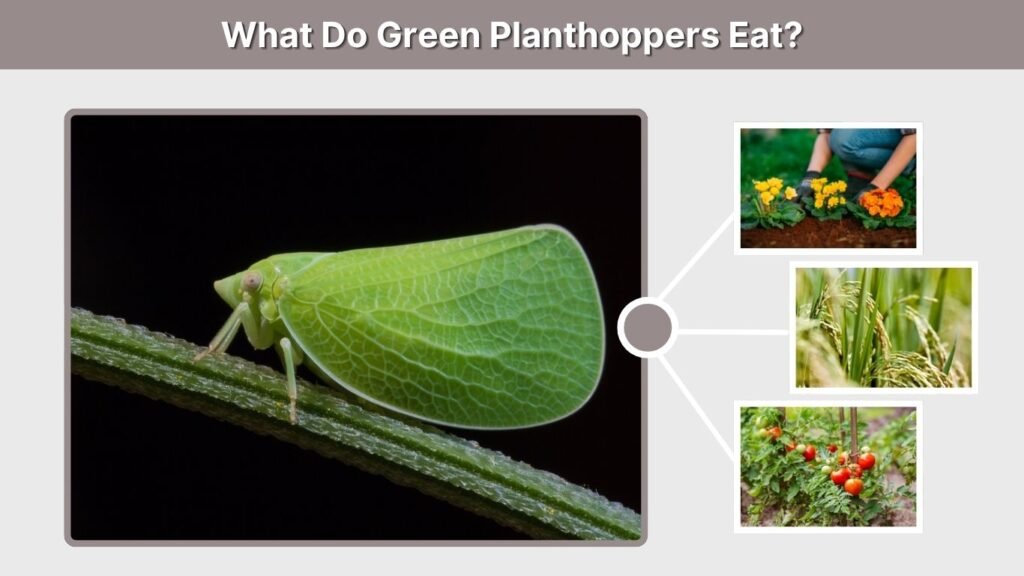
Green planthoppers feed primarily on plant fluids. Their mouthparts penetrate plant tissue and draw out sap or other fluids.
Different species may prefer grasses, shrubs, trees, flowers, or agricultural crops.
Common Host Plants
Green planthoppers may occur on:
- Grasses
- Hibiscus
- Shrubs
- Garden flowers
- Rice plants
- Weeds
- Trees
- Vegetable plants
- Ornamental plants
Most individual species have their own preferred host range.
Do Green Planthoppers Damage Plants?
A few planthoppers usually cause little noticeable damage. Larger populations, however, may remove enough plant fluids to weaken tender growth.
Some planthopper species are much more important agricultural pests than others.
Signs of Planthopper Feeding
Possible symptoms include:
- Yellowing leaves
- Pale feeding spots
- Reduced plant vigor
- Wilting
- Stunted growth
- Distorted young leaves
- Sticky residue on plant surfaces
- Black sooty mold developing on honeydew
Many sap-feeding planthoppers release sugary waste called honeydew. This sticky substance may coat leaves and provide a surface where dark sooty mold grows.
Green Planthopper on Hardy Hibiscus
Green planthoppers may occasionally be noticed on hardy hibiscus or other ornamental plants.
They can sit along stems and leaf surfaces while feeding. When approached, they often jump away immediately.
Are They Harmful to Hibiscus?
Small numbers generally cause little damage to a vigorous hibiscus.
A heavy infestation may contribute to:
- Leaf discoloration
- Sticky honeydew
- Reduced growth
- Sooty mold
- Stress on tender shoots
Inspecting the undersides of leaves and young stems can help determine how large the population actually is.
Green Cone-Headed Planthopper
The green cone-headed planthopper is recognized by its distinctive elongated or pointed head.
Its unusual appearance can make it look quite different from typical broad-bodied planthoppers.
Green Cone-Headed Planthopper Identification
Look for characteristics such as:
- Green body
- Long or pointed head
- Transparent or greenish wings
- Small size
- Strong jumping ability
- Association with vegetation
The pointed head can provide camouflage by making the insect resemble a plant bud, thorn, or part of a stem.
Green Cone-Headed Planthopper Nymph
Nymphs lack fully developed adult wings and may have a more compact body.
They generally remain on vegetation and use their powerful hind legs to jump when disturbed. As they molt, the distinctive adult body shape gradually develops.
Green Broad-Winged Planthopper
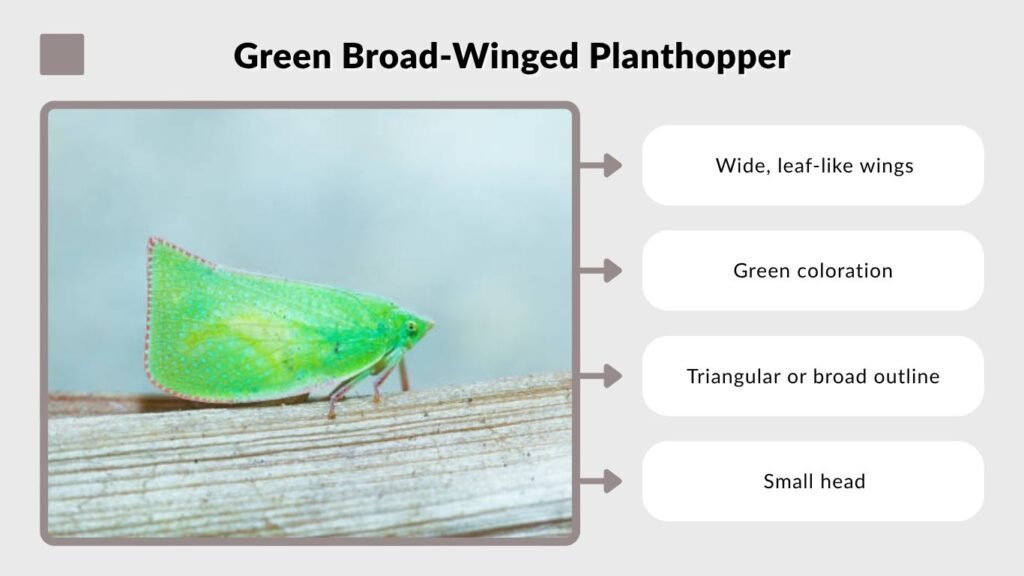
Broad-winged planthoppers have relatively wide wings that may make them resemble tiny leaves.
Green species can be especially difficult to notice while resting on foliage.
How to Recognize One
A green broad-winged planthopper may show:
- Wide, leaf-like wings
- Green coloration
- Triangular or broad outline
- Small head
- Jumping behavior
- Slow walking followed by sudden escape
Their coloration is an effective form of camouflage against predators.
Green Flatid Planthopper
Flatid planthoppers belong to the family Flatidae. Many species have broad, flattened wings and can appear green, pale green, white, or bluish.
Some nymphs produce conspicuous white wax.
Flatid Planthopper Features
Common features include:
- Broad wings
- Sideways flattened appearance
- Green or pale coloration
- Sap-feeding behavior
- Waxy material on some nymphs
- Strong jumping ability
Finding white fluffy or waxy material alongside small hopping insects can indicate the presence of flatid planthopper nymphs.
Green Planthopper vs. Green Leafhopper
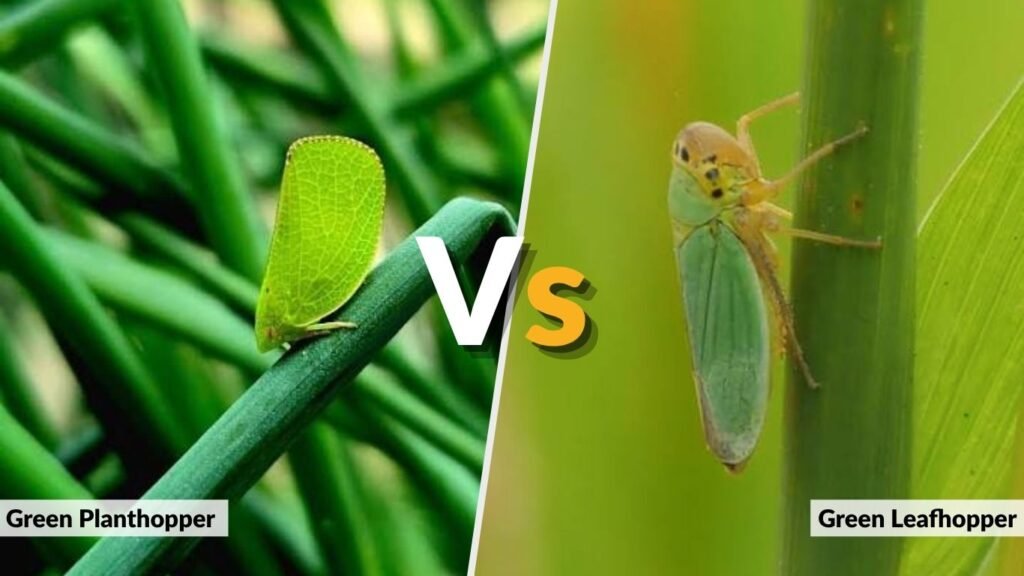
Planthoppers and leafhoppers can look very similar, particularly when both are small and green.
However, they belong to different groups and often differ in body form and wing structure.
Main Differences
| Feature | Green Planthopper | Green Leafhopper |
| Group | Fulgoromorpha | Cicadellidae |
| Shape | Highly variable | Usually wedge-shaped |
| Wings | Often broad or unusual | Usually narrow and roof-like |
| Nymph wax | Common in some species | Usually absent |
| Jumping | Excellent | Excellent |
| Diet | Plant fluids | Plant fluids |
Both can quickly jump away when disturbed.
Do Green Planthoppers Bite?
Green planthoppers are not considered biting pests of humans.
Although they have piercing mouthparts, these structures are specialized for obtaining food from plants rather than feeding on blood.
Are Green Planthopper Bites Dangerous?
Green planthoppers:
- Do not seek human blood
- Do not sting
- Are not aggressive
- Are not considered poisonous
- Usually jump away when touched
Very occasional accidental probing by plant-feeding true bugs can occur, but green planthoppers are not considered a meaningful health threat.
Green Planthopper Control
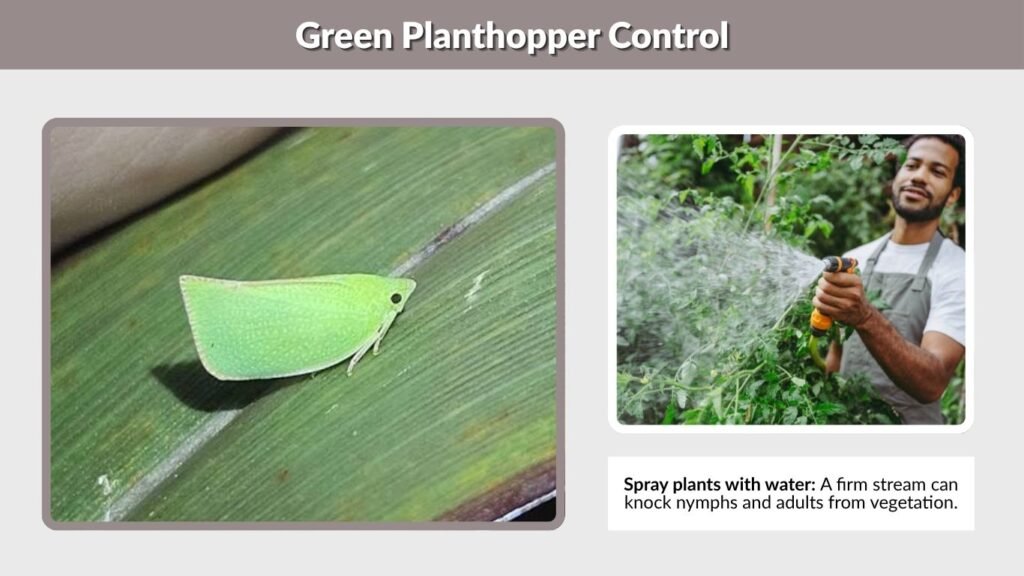
Most garden situations do not require aggressive treatment. Natural predators often keep populations under control.
Management becomes more useful when many insects are present and plants begin showing noticeable damage.
How to Get Rid of Green Planthoppers
Useful control methods include:
- Spray plants with water: A firm stream can knock nymphs and adults from vegetation.
- Remove heavily infested growth: Prune severely affected leaves or shoots.
- Control weeds: Nearby weeds may act as alternative host plants.
- Check leaf undersides: Look for nymphs and signs of feeding.
- Reduce excessive fertilization: Very lush new growth may attract sap-feeding pests.
- Use insecticidal soap: It can help against exposed nymphs when applied correctly.
- Encourage predators: Spiders and predatory insects naturally feed on planthoppers.
- Monitor plants regularly: Early detection makes management easier.
Should You Use Insecticide?
Insecticides are usually unnecessary for a few planthoppers on garden plants.
If populations become severe, use a product specifically labeled for the affected plant and target pest. Broad-spectrum treatments should be avoided when possible because they can also kill beneficial insects that naturally suppress planthoppers.
Natural Enemies of Green Planthoppers
Green planthoppers provide food for many other animals and insects.
Natural predators often play an important role in controlling populations.
Common Predators
They may be eaten by:
- Spiders
- Lacewing larvae
- Assassin bugs
- Predatory beetles
- Birds
- Predatory flies
- Parasitoid wasps
Maintaining a diverse garden environment can help support these beneficial predators.
Green Planthopper Range and Habitat
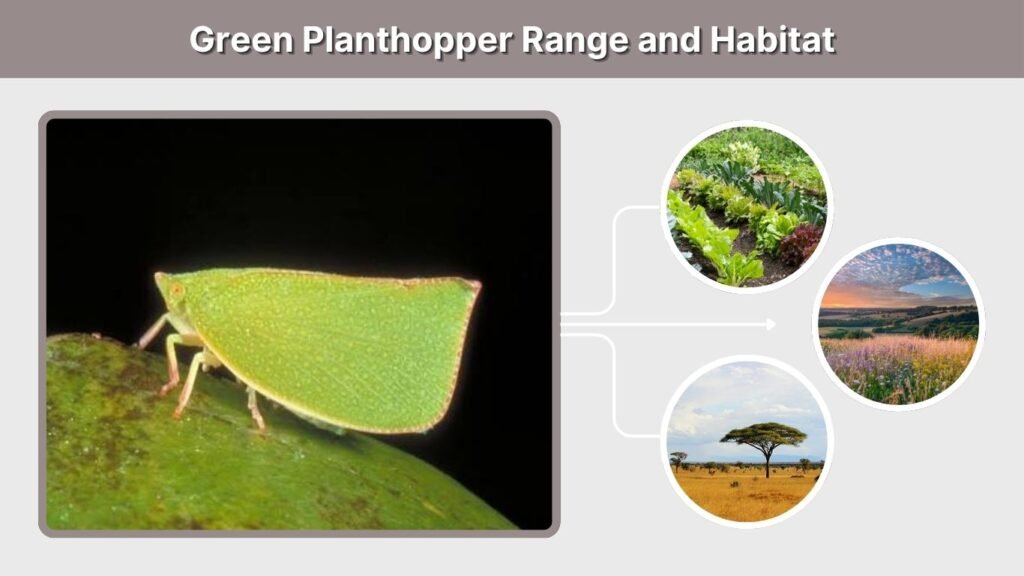
Green planthoppers occur in many parts of the world wherever suitable host plants are present.
Different species may be found across North America, Europe, Asia, Australia, and New Zealand.
Where Do Green Planthoppers Live?
Typical habitats include:
- Gardens
- Meadows
- Grasslands
- Forest edges
- Agricultural fields
- Wetlands
- Shrublands
- Parks
- Residential landscapes
Individual species may have much narrower geographic ranges.
Interesting Green Planthopper Facts
Green planthoppers have several adaptations that help these tiny insects survive around vegetation.
Quick Facts
- Green planthopper refers to several species.
- They feed primarily on plant fluids.
- They use powerful hind legs to jump.
- Nymphs do not have fully developed wings.
- Some nymphs produce white waxy material.
- Green coloration provides camouflage.
- Some species have unusually pointed heads.
- Heavy populations may weaken plants.
- They do not normally bite humans.
- Natural predators help control them.
FAQs
Are Green Planthoppers Harmful?
Green planthoppers are generally harmless to people. They may become harmful to plants when populations are large because both adults and nymphs feed on plant fluids. Most small garden populations cause limited damage.
Do Green Planthoppers Bite Humans?
Green planthoppers do not normally bite humans. Their piercing-sucking mouthparts are designed for feeding on plants rather than blood. They usually respond to disturbance by quickly jumping or flying away.
What Does a Green Planthopper Nymph Look Like?
A green planthopper nymph is usually tiny and pale green, white, or yellowish. It lacks fully developed wings and has powerful jumping legs. Some species also produce white waxy filaments around their bodies.
How Do You Get Rid of Green Planthoppers?
Use water sprays to dislodge them, remove heavily infested plant material, control weeds, encourage natural predators, and monitor plants regularly. Insecticidal soap can sometimes help with exposed young nymphs when populations become troublesome.
What Is a Green Cone-Headed Planthopper?
A green cone-headed planthopper is a green planthopper distinguished by its elongated, pointed head. This unusual shape provides excellent camouflage among stems and foliage. Like other planthoppers, it feeds on plant fluids and usually jumps away rapidly when disturbed.