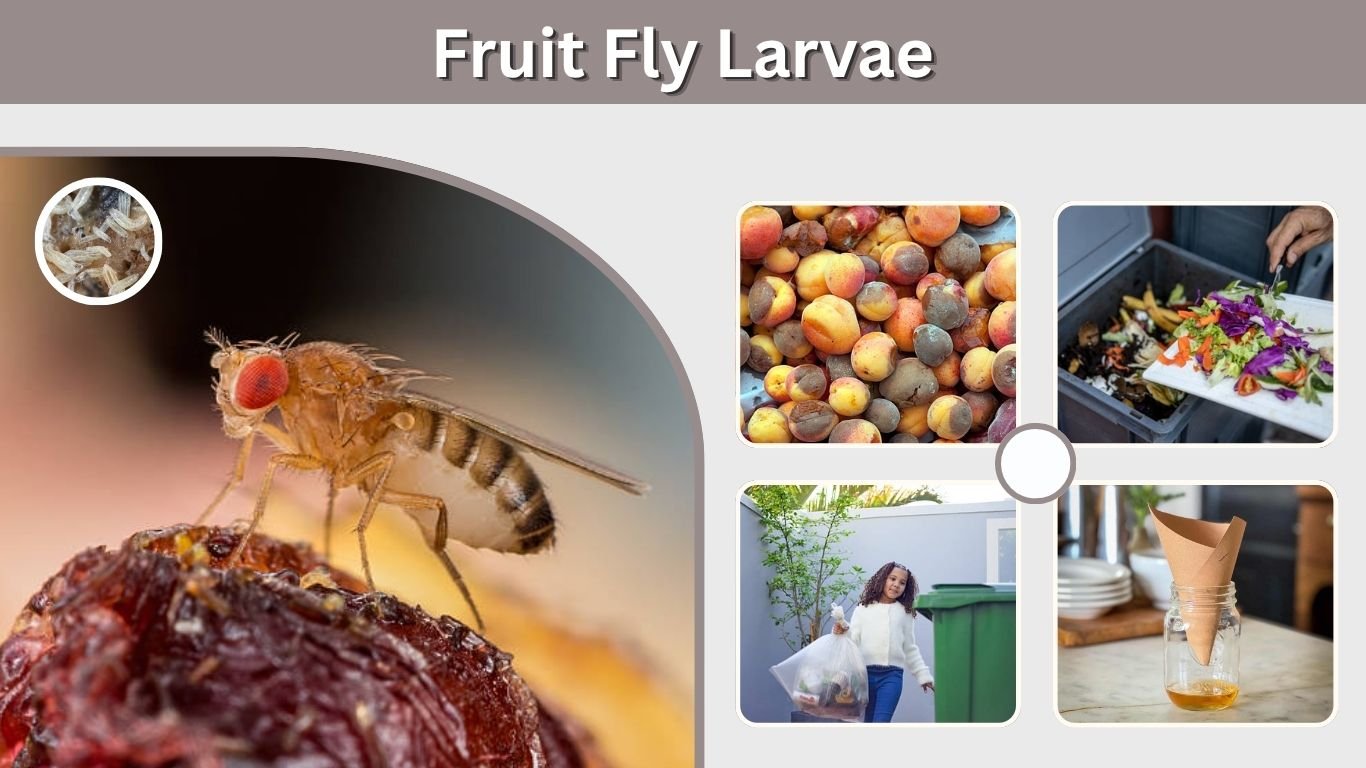
Fruit fly larvae are tiny, pale maggots that develop in moist, fermenting organic material. They may appear inside overripe fruit, beneath trash-can residue, in compost, or around dirty drains and garbage disposals. Although the larvae are easy to overlook, finding them means adult fruit flies have located an active breeding source nearby.
Understanding what fruit fly larvae look like, where they develop, and how to eliminate their food source is essential for stopping an infestation.
What Do Fruit Fly Larvae Look Like?
Fruit fly larvae have soft, legless bodies that resemble miniature white worms. They are often difficult to notice because their light coloring blends into fruit pulp, drain residue, and other moist materials.
Fruit Fly Larvae Identification
Common characteristics include:
- Creamy white, pale yellow, or nearly transparent body
- Smooth, segmented appearance
- No visible legs or wings
- Narrower head end and wider rear end
- Slow crawling or wriggling movement
- Tiny dark mouth hooks that may be visible under magnification
- Usually found in moist, fermenting material
Unlike some beetle larvae, vinegar fly larvae do not have a clearly hardened head capsule. Their bodies remain soft throughout the larval stage.
Fruit Fly Larvae Size
Most household fruit fly larvae reach approximately 3–4 millimeters long, although mature larvae of some species may approach 6 millimeters, or about ¼ inch. Newly hatched larvae are much smaller and may be almost impossible to see without magnification.
| Feature | Fruit fly larva |
| Color | White, cream, or translucent |
| Length | Usually 3–4 mm; sometimes up to 6 mm |
| Body shape | Legless, segmented, and tapered |
| Movement | Slow crawling or wriggling |
| Common location | Fermenting fruit and moist organic waste |
Are Fruit Fly Larvae Maggots?
Yes. A maggot is the legless larval stage of a fly, so fruit fly larvae are technically maggots.
However, not every maggot is a fruit fly larva. House flies, blow flies, drain flies, and numerous agricultural fruit flies also produce maggot-like larvae. Identification depends on the larva’s size, appearance, location, and the adult flies found nearby.
Fruit fly larvae are usually much smaller than house fly or blow fly maggots. They are also associated primarily with fermenting plant material rather than animal waste or decaying meat.
Where Do Fruit Fly Larvae Come From?
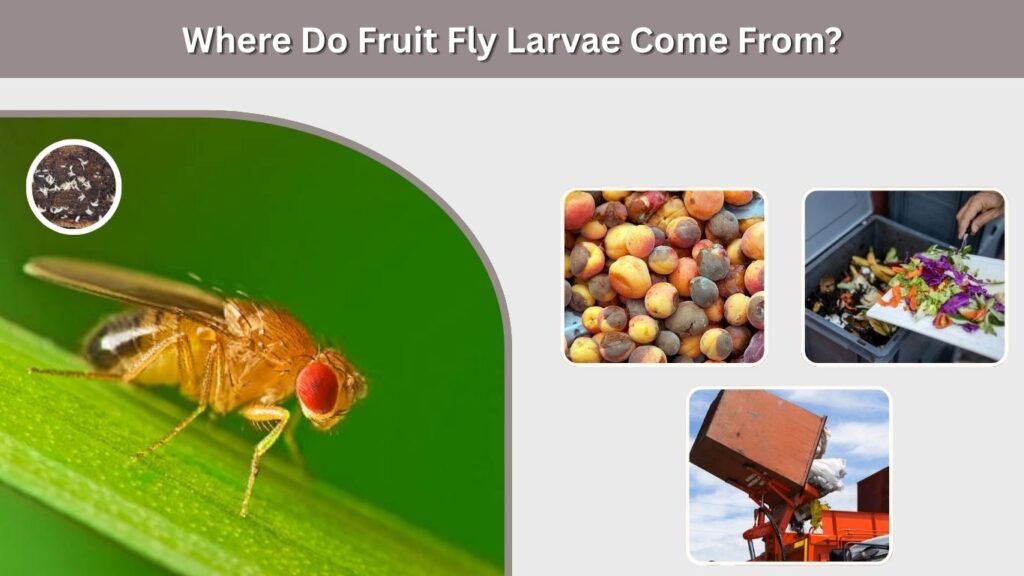
Adult female fruit flies lay eggs directly on or beside suitable larval food. The eggs are extremely small and may already be present on damaged produce when it enters a home.
After hatching, the larvae feed on yeast, microorganisms, fruit sugars, and decomposing organic material. Common household vinegar flies generally prefer damaged, overripe, or fermenting fruit. However, spotted-wing drosophila can lay eggs inside healthy ripening berries and other soft fruits.
Fruit Fly Larvae in the House
Indoor breeding locations may include:
- Overripe bananas, peaches, tomatoes, or mangoes
- Forgotten potatoes or onions
- Trash cans and recycling containers
- Compost bins
- Garbage disposals
- Juice, wine, or beer residue
- Dirty mops and cleaning cloths
- Food residue beneath appliances
- Empty bottles and beverage cans
- Fermenting sourdough starter or kombucha
The visible flies may gather around a sink even when the actual breeding source is a forgotten piece of fruit beneath a cabinet or appliance.
Fruit Fly Larvae in Drains and Sinks
Fruit flies can breed around drains when food particles and fermenting residue accumulate inside them. However, worm-like insects deep inside drain slime may also be drain fly larvae.
Fruit fly larvae are smooth, pale, and relatively small. Drain fly larvae are generally darker, more elongated, and adapted to living inside the gelatinous film coating dirty pipes.
Fruit Fly Larvae in Water
Fruit fly larvae are not truly aquatic. They require moist organic material and may survive in wet fruit pulp, beverage residue, kombucha, drain buildup, or water containing decomposing food.
Larvae swimming freely in clean standing water are more likely to be mosquitoes or another aquatic fly species. Fruit fly larvae usually remain close to a fermenting food source.
Fruit Fly Larvae in Berries
Larvae may occasionally be found in:
- Blackberries
- Raspberries
- Strawberries
- Cherries
- Mulberries
- Blueberries
Spotted-wing drosophila is particularly important because females can insert eggs into healthy fruit as it ripens. One or several larvae may then feed inside a single berry. Common household fruit flies usually infest fruit only after it becomes damaged or begins fermenting.
Fruit Fly Eggs and Larval Lifecycle
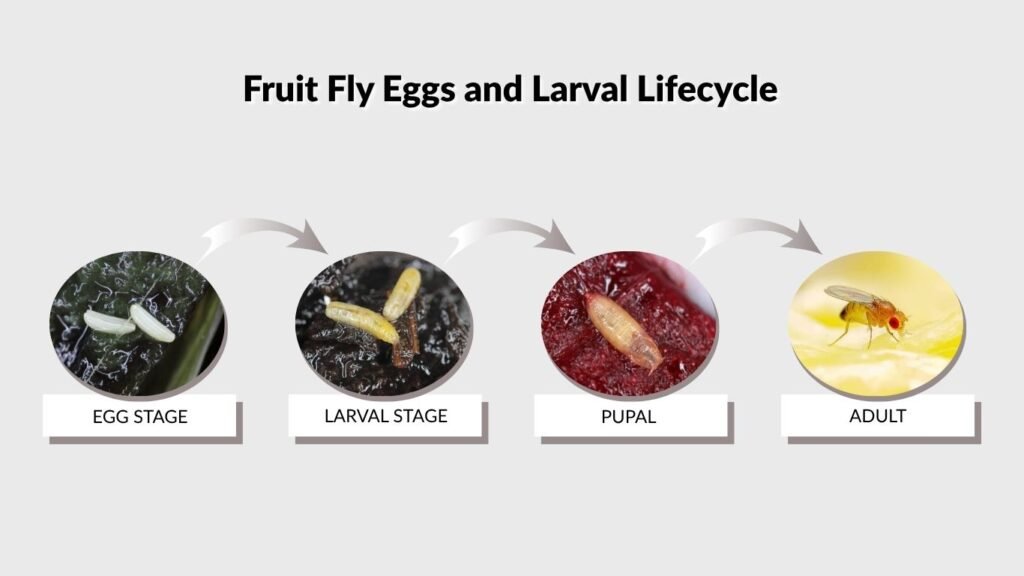
Fruit flies undergo complete metamorphosis through four main stages:
- Egg
- Larva
- Pupa
- Adult
Egg Stage
Females place eggs on moist food that newly hatched larvae can immediately consume. Under favorable indoor conditions, the eggs may hatch in approximately one day.
Larval Stage
The larval period contains three growth stages called instars. During this time, larvae eat almost continuously and molt twice as they increase in size.
The first and second instars may each last roughly one day. The third instar lasts longer and produces the largest, most visible larvae.
Pupal and Adult Stages
Mature larvae often crawl away from the wettest food material and search for a relatively dry surface. They then form brownish pupal cases.
New adults eventually emerge, mate, and begin laying eggs. Under favorable temperatures, the entire egg-to-adult lifecycle can occur in approximately 10 days. A female may produce hundreds of eggs, allowing a small unnoticed source to create a major infestation.
Are Fruit Fly Larvae Harmful?
Common household fruit flies are primarily nuisance pests rather than human parasites. Their larvae do not normally live in human skin or feed on healthy tissue.
Flies that cause human myiasis belong to particular parasitic species and should not be confused with ordinary kitchen fruit flies.
What Happens If You Eat Fruit Fly Larvae?
Accidentally swallowing one or two tiny larvae is unlikely to cause a serious problem for most healthy people. However, larvae usually indicate that the food is overripe, damaged, fermenting, or beginning to decay.
Discard heavily infested fruit rather than attempting to remove individual larvae. Contaminated or spoiled produce can support bacteria, yeast, and mold unrelated to the insects themselves.
Seek medical advice when accidental ingestion is followed by persistent vomiting, diarrhea, fever, severe abdominal pain, or other unusual symptoms.
How to Kill and Remove Fruit Fly Larvae
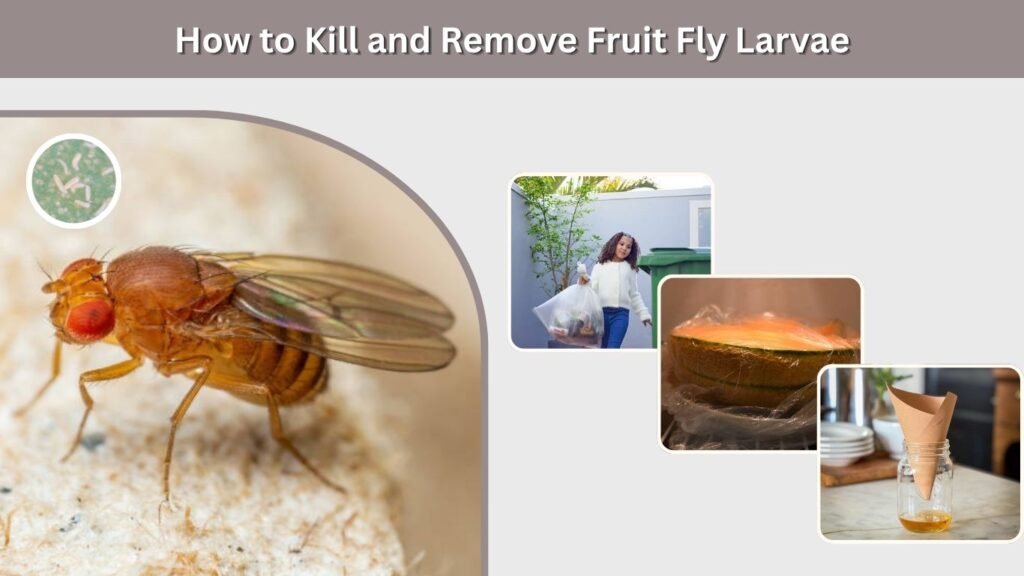
Killing adult flies alone does not eliminate an infestation. The larvae will continue developing unless their breeding material is located and removed.
1. Discard Infested Produce
Place infested fruit and vegetables inside a sealed bag before moving them through the house. Put the bag in an outdoor trash container.
Inspect nearby onions, potatoes, tomatoes, bananas, and other produce for soft spots or leaking liquid.
2. Clean Trash and Compost Containers
Empty containers and scrub their bottoms, rims, handles, and lid hinges. Small amounts of juice or fruit residue can support developing larvae.
Use tightly closing lids and remove organic waste frequently.
3. Clean Drains Mechanically
Scrub the inside of the drain opening and garbage disposal with an appropriate brush and cleaner. The objective is to remove the organic film where eggs and larvae develop.
Bleach, chemical drain cleaners, or occasional hot-water rinses may fail when they pass over the residue without removing it. Physical cleaning is therefore more reliable than simply pouring liquids into the drain.
4. Refrigerate Ripe Fruit
Store ripe or damaged produce in the refrigerator. Refrigeration slows fruit fly development and prevents adults from reaching the fruit to lay more eggs.
5. Use Traps for Remaining Adults
Place apple cider vinegar or fermenting fruit inside a small container. Add a drop of dish soap or cover the container with a paper funnel.
Traps reduce adult numbers, but they must be combined with removal of the breeding source.
6. Repeat the Inspection
Check beneath refrigerators, stoves, cabinets, trash bags, recycling bins, and produce storage areas. Continue cleaning until no adults, larvae, or pupal cases appear for at least one complete lifecycle.
FAQs
Can you see fruit fly larvae?
Mature larvae are visible without magnification, but newly hatched larvae are extremely small. Look for tiny white or translucent worms moving through damaged fruit, fermenting residue, or moist waste. A flashlight and dark background can make them easier to detect.
Does vinegar kill fruit fly larvae?
Household vinegar may kill larvae that remain submerged, but it is unreliable for treating an infestation. Vinegar poured down a drain may not penetrate the organic film. Removing infested food and scrubbing breeding surfaces provide better long-term control.
Does boiling water kill fruit fly larvae?
Boiling water can kill larvae it contacts directly, but it may not remove eggs or larvae protected inside drain residue. It can also damage certain plumbing materials. Thorough mechanical cleaning is more effective than relying on repeated hot-water treatments alone.
Does freezing kill fruit fly larvae?
Sustained freezing can kill many fruit fly eggs and larvae. However, freezing infested berries does not restore their quality or remove contamination. Severely damaged, leaking, moldy, or foul-smelling fruit should be discarded.
How long do fruit fly larvae live?
The larval period generally lasts about four to six days under warm, favorable conditions. Temperature, moisture, food quality, and species can change this timing. Mature larvae then leave the food and form pupae before emerging as adult flies.