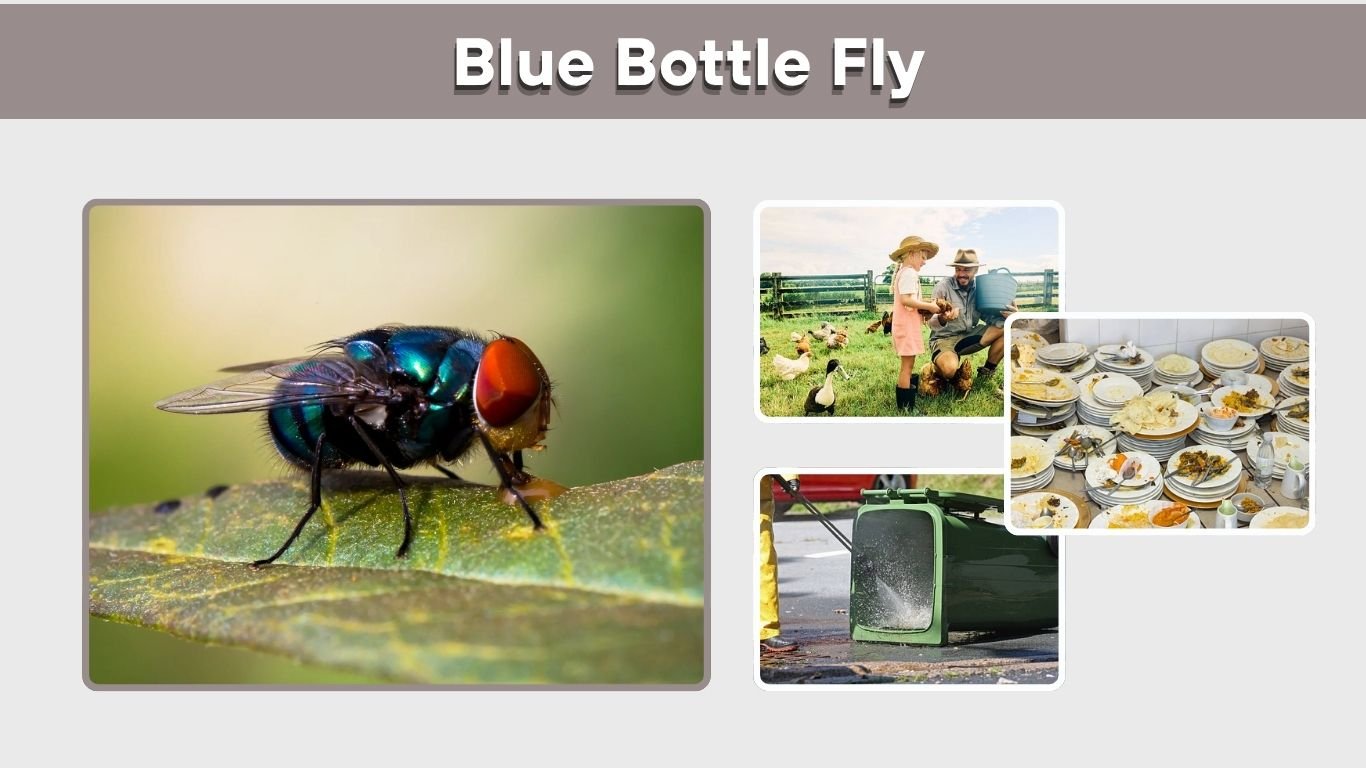
The blue bottle fly is a large blow fly recognized by its metallic blue abdomen, loud buzzing flight and attraction to decomposing animal material. These flies do not bite or sting, but they can contaminate food after visiting garbage, feces or carrion. Several Calliphora species are called blue bottles, particularly Calliphora vomitoria and Calliphora vicina. Finding many indoors often indicates spoiled meat, an unclean garbage container or a dead animal hidden nearby.
What Is a Blue Bottle Fly?
Blue bottle flies belong to the blow fly family Calliphoridae and the order Diptera. “Blue bottle” is a general common name rather than one universally defined species.
Calliphora vomitoria is commonly called the orange-bearded bluebottle, while Calliphora vicina is another widespread species frequently called the common bluebottle. Both have similar habits and can be difficult to separate without examining facial hairs, body bristles and other small features.
| Feature | Description |
| Scientific group | Calliphora species |
| Family | Calliphoridae |
| Order | Diptera |
| Size | Commonly about 8–14 mm |
| Color | Metallic blue or blue-black |
| Diet | Carrion fluids, waste, nectar and other liquids |
| Development | Egg, larva, pupa and adult |
| Bite risk | Does not normally bite |
| Main household concern | Hidden decomposing material |
Identification Characteristics
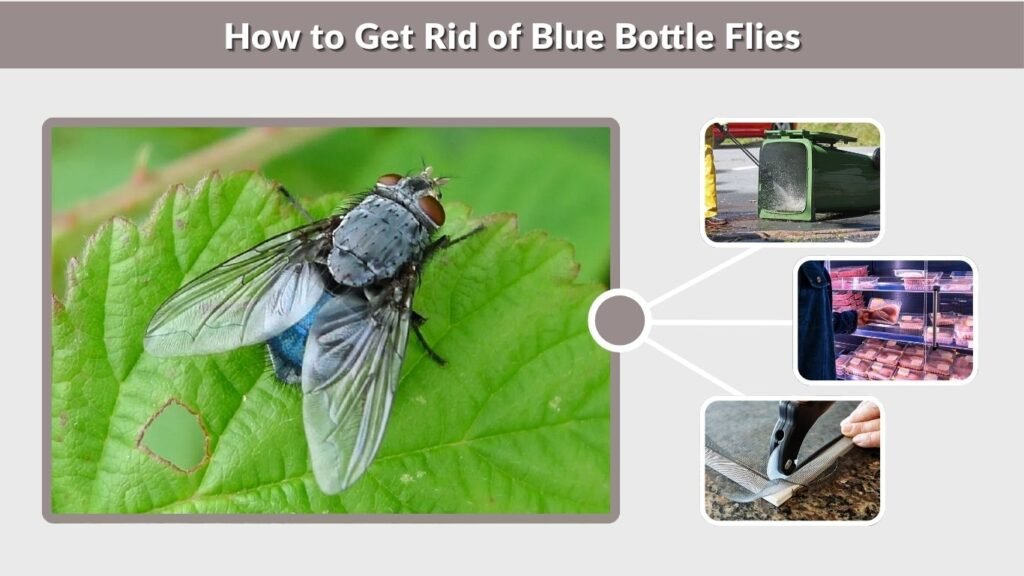
A blue bottle fly generally has:
- A bright metallic-blue abdomen
- A dark or grayish thorax
- Large reddish compound eyes
- Transparent wings
- Black, bristly legs
- Short antennae
- Sponge-like mouthparts
- A loud, deep buzzing sound
Blue bottles are usually larger and shinier than ordinary house flies. Their bodies may appear blue, purple, turquoise or nearly black depending on the lighting.
Blue Bottle Fly vs. House Fly
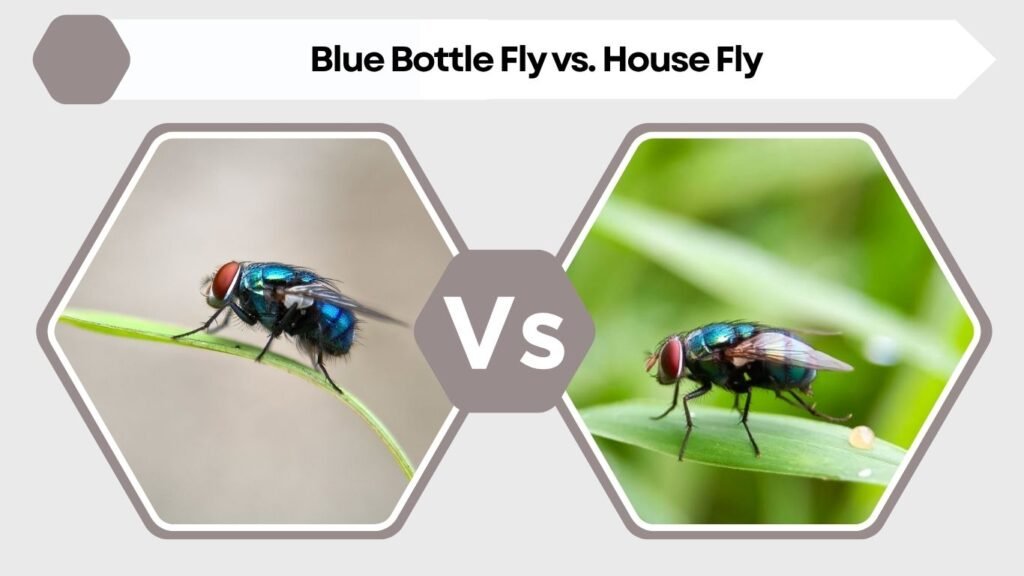
House flies are dull gray and usually have dark stripes across the thorax. Blue bottle flies are more robust and have a reflective blue abdomen.
| Feature | Blue bottle fly | House fly |
| Body color | Metallic blue | Dull gray |
| Typical breeding source | Carrion and decomposing animal matter | Garbage, manure and mixed organic waste |
| Flight sound | Often loud | Usually softer |
| Mouthparts | Sponging | Sponging |
| Bites humans | No | No |
| Indoor significance | May indicate a dead animal | Often indicates general sanitation problems |
Neither species has the piercing mouthparts needed to bite humans. Stable flies, which resemble house flies, are different and possess a pointed mouthpart used for blood-feeding.
Blue Bottle Fly vs. Green Bottle Fly
Blue and green bottle flies both belong to the blow fly family and have similar life cycles. However, blue bottles are generally associated with Calliphora, while green bottle flies commonly belong to Lucilia.
Green bottle flies are usually emerald or copper-green. Blue bottles have a deeper blue or blue-black abdomen and may have a duller thorax. Exact identification can require magnification because color changes with lighting and several species overlap in appearance.
Blue Bottle Fly Habitat and Diet
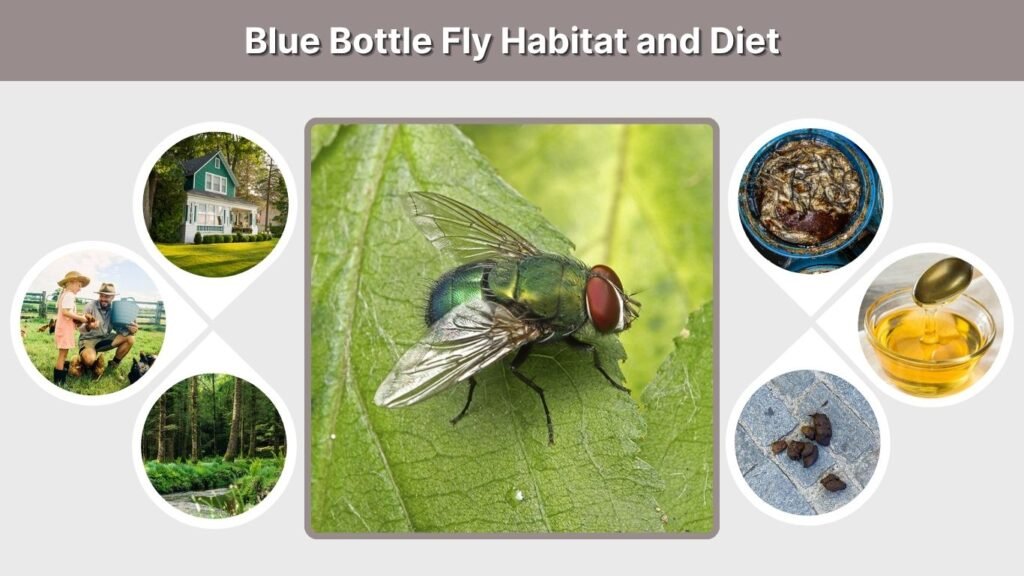
Blue bottle flies occur around homes, farms, forests, waste facilities and urban areas. They are especially attracted to odors released by dead animals, spoiled meat, feces and decomposing organic waste.
Adult flies consume liquids using sponge-like mouthparts. Their food may include:
- Fluids from animal carcasses
- Garbage liquids
- Fecal material
- Nectar
- Pollen
- Sugary liquids
- Juices from exposed food
Females search for moist, protein-rich material where their larvae can feed. Blow flies are often among the earliest insects to locate a recently dead animal.
Blue Bottle Fly Life Cycle
Blue bottle flies undergo complete metamorphosis with four main stages:
- Egg
- Larva or maggot
- Pupa
- Adult
Development speed depends heavily on species, food, moisture and temperature. Warm conditions speed up development, while low temperatures may delay hatching, larval growth and adult emergence. Research on C. vicina found that eggs may hatch in about 16 hours at 25°C but can require several days at very low temperatures.
Eggs and Larvae
Females lay pale eggs in groups on carrion, meat, garbage or another suitable food source. The eggs hatch into legless, cream-colored larvae called maggots.
The larvae pass through three growth stages known as instars. They feed together on moist decomposing material and become progressively larger. After completing their feeding period, mature maggots crawl away from the source to find a drier, protected place.
Pupae and Adult Flies
A mature larva forms a hard, brown puparium. Inside it, the insect transforms into an adult fly.
In warm environments, the entire egg-to-adult process may be completed in roughly two to three weeks, but cooler temperatures can extend it considerably. One laboratory study of C. vicina recorded approximately 17 days from egg to adult at 20°C and about 12.7 days at 25°C.
Adult lifespan also varies. Field populations may survive for only a short period, while protected laboratory flies supplied with food can live much longer. Therefore, a fixed lifespan cannot be applied to every blue bottle fly.
Blue Bottle Flies in the House
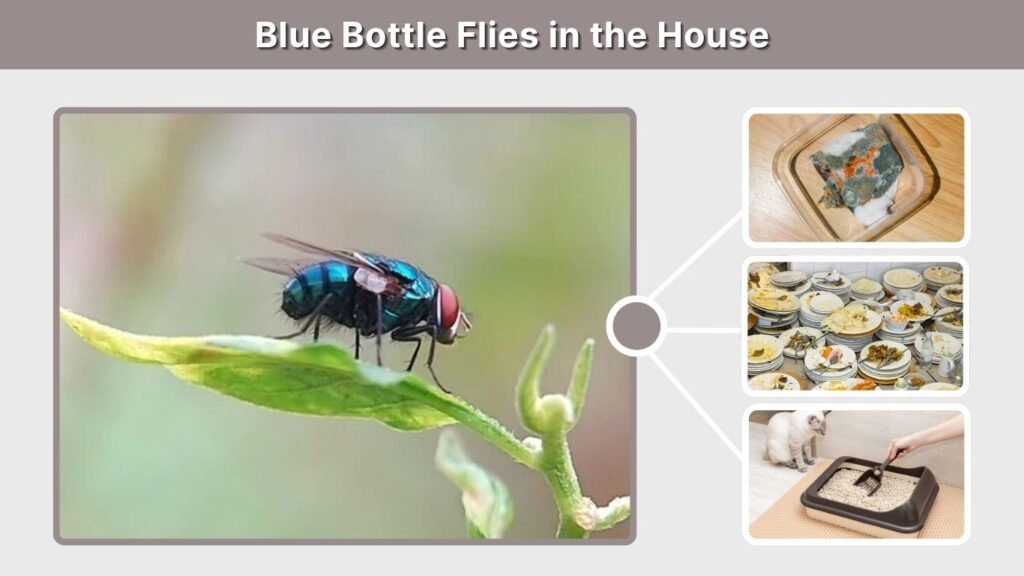
A single fly may have entered through an open window. However, many blue bottle flies appearing suddenly usually means adults have emerged from a nearby breeding source.
Common Indoor Sources
Inspect for:
- A dead mouse or rat inside a wall
- A dead bird in a chimney or attic
- Spoiled meat
- Forgotten food
- Dirty garbage bins
- Pet feces
- Animal remains beneath a porch
- Waste trapped behind an appliance
Blue bottle flies do not build nests. Their larvae develop directly in decomposing material. Newly emerged adults often gather at windows because they move toward light.
Flies appearing during winter may have developed in a warm indoor space or emerged after heating raised the temperature around hidden pupae. Blow flies are strongly associated with dead animals and decaying waste, so locating that source should be the first priority.
Do Blue Bottle Flies Bite or Sting?
Blue bottle flies do not bite or sting humans. Their mouthparts are designed to sponge up liquids, not puncture skin.
The fly may land on exposed skin because it is attracted to moisture, sweat or odors. This can feel irritating, but it is not feeding on blood.
Are Blue Bottle Flies Dangerous?
Blue bottle flies are not venomous or poisonous. Their primary risk comes from contamination. A fly may visit feces, garbage or carrion and later land on food, utensils or preparation surfaces. This behavior allows bacteria and other contaminants to be transferred mechanically.
Some blow fly larvae can occasionally become associated with neglected wounds or damaged tissue, a condition called myiasis. Anyone finding maggots in a human or animal wound should seek professional medical or veterinary treatment.
How to Get Rid of Blue Bottle Flies
Remove the Breeding Source
Finding and removing decomposing material is the most effective control method. Killing adult flies will provide only temporary relief when larvae or pupae remain hidden.
Wear gloves, place contaminated material in a sealed bag and clean the surrounding area. Professional help may be necessary when a dead animal is trapped inside a wall, chimney or inaccessible roof space.
Improve Sanitation and Exclusion
Reduce future problems by:
- Emptying food waste regularly
- Washing garbage containers
- Keeping meat refrigerated or covered
- Removing pet waste promptly
- Repairing damaged window screens
- Sealing gaps around doors, vents and pipes
- Keeping outdoor bins away from entrances
- Cleaning spills beneath appliances
Removing manure, rotting vegetation and dead animals is generally more effective than relying on pesticides.
Trap Remaining Adults
Fly swatters, sticky strips and enclosed ultraviolet sticky traps can remove adults after the source is eliminated. A commercial outdoor blow-fly trap may help around garbage areas, but it should be positioned away from doors because its odor-based bait can attract additional flies.
Indoor sprays may kill exposed adults but will not reach eggs, maggots or pupae hidden inside a carcass or wall cavity.
What Are Blue Bottle Fly Spikes?
“Spikes” is a commercial term commonly used for blow fly larvae sold as fishing bait or feeder insects. Pupae are the hard, inactive stage from which adult flies emerge.
Purchased blue bottle larvae or pupae may be used to feed jumping spiders, mantises, frogs and other insect-eating pets. Commercially produced feeders are safer than maggots collected from garbage or carrion, which may carry pathogens or chemical contamination. Blow fly larvae are also recognized as traditional angling bait.
Blue Bottle Flies and Forensic Science
Because blue bottle flies can locate remains quickly and their development is strongly connected to temperature, forensic entomologists examine their eggs, larvae and pupae when estimating the minimum period since insect colonization.
The species and local temperature data must be identified carefully. Even a small temperature difference can significantly change developmental estimates.
FAQs
Why do blue bottle flies suddenly appear indoors?
A group of adults may have emerged from spoiled meat, garbage or a dead rodent or bird. Check attics, chimneys, wall spaces, bins and areas beneath appliances.
How long does a blue bottle fly infestation last?
After the breeding source is removed, remaining pupae may continue producing adults for several days or longer. Cooler conditions can extend emergence.
Can blue bottle flies lay eggs on food?
Yes. Females may lay eggs on exposed meat or other moist animal-based food. Discard visibly contaminated food rather than trying to wash it.
Do blue bottle flies have nests?
No. They do not construct nests. Eggs are laid directly on carrion, meat, feces or other suitable decomposing material.
What is the best way to kill blue bottle flies?
Remove the breeding material first, then use swatters or sticky traps for remaining adults. Spraying adults without finding the source rarely solves an infestation.