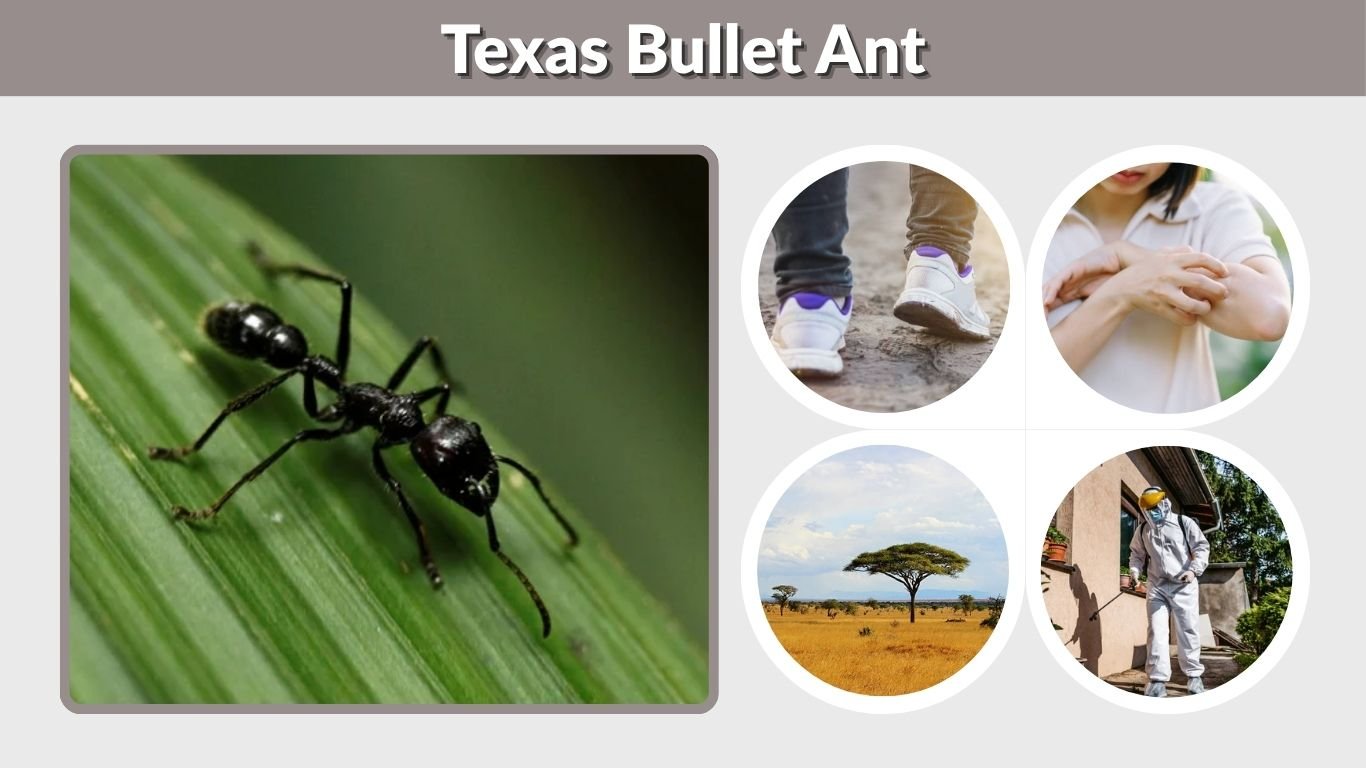
The phrase “Texas bullet ant” can be confusing because it does not usually refer to the famous tropical bullet ant, Paraponera clavata. True bullet ants live in Central and South American rainforests, not Texas. In Texas, the name “Texas bullet ant” is often used for Neoponera villosa, a large stinging ant also called the hairy panther ant or greater Texas bullet ant. It is not the same species as the real bullet ant, but it can still deliver a painful sting.
Are Bullet Ants in Texas?
True bullet ants are not native to Texas. The real bullet ant, Paraponera clavata, is a tropical rainforest ant found in Central and South America, including countries such as Honduras, Nicaragua, Costa Rica, Colombia, Ecuador, Peru, Bolivia, and Brazil. GBIF describes this species as living mainly in the wet Neotropical realm, especially lowland forest habitats.
However, Texas does have an ant commonly called the Texas bullet ant. This ant is usually Neoponera villosa, not Paraponera clavata. Cincinnati Zoo lists the Texas bullet ant as Neoponera villosa and gives its range as southern Texas and Mexico.
What Is the Texas Bullet Ant?
The Texas bullet ant is a common name for Neoponera villosa. Another common name is the hairy panther ant. BugGuide also lists “Greater Texas Bullet Ant” as one of the common names for Neoponera villosa.
Basic Identification
- Scientific name: Neoponera villosa
- Common names: Texas bullet ant, hairy panther ant, greater Texas bullet ant
- Type: Large stinging ant
- Range in the U.S.: Mainly southern Texas
- Habitat: Forests, grasslands, lowland areas, and woody nesting sites
- Main concern: Painful sting
This ant is not as famous as the real bullet ant, but people may compare it to the bullet ant because of its size, appearance, and painful sting.
Texas Bullet Ant vs True Bullet Ant
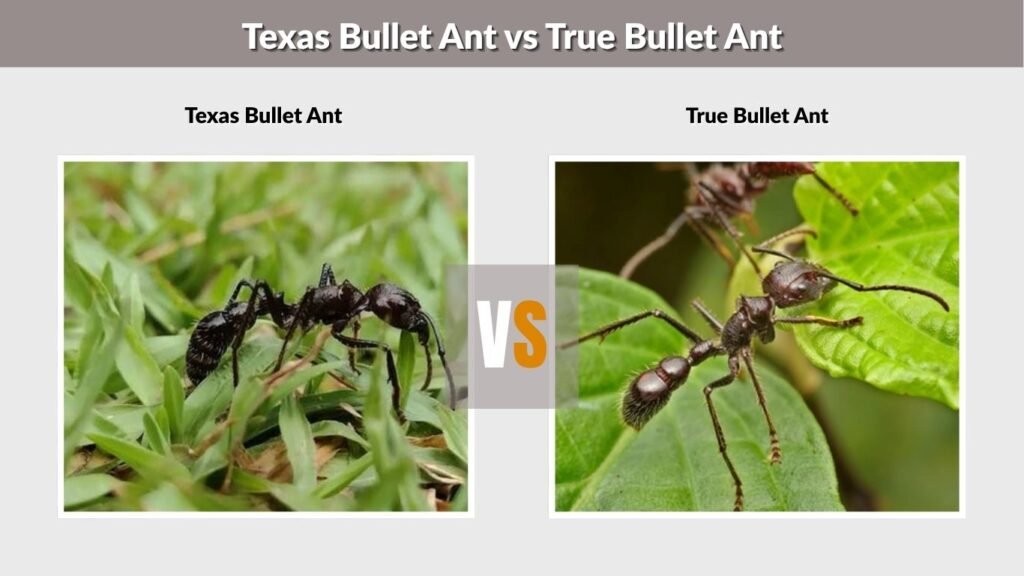
The Texas bullet ant and the true bullet ant are different species. They share some similarities, but they are not the same insect.
| Feature | Texas Bullet Ant | True Bullet Ant |
| Scientific name | Neoponera villosa | Paraponera clavata |
| Main range | Southern Texas, Mexico, farther south | Central and South America |
| Famous name | Hairy panther ant | Bullet ant |
| Habitat | Forests, grasslands, cavities, woody areas | Humid tropical rainforest |
| Sting | Painful | Extremely painful |
| Native to Texas? | Yes, in southern areas | No |
The true bullet ant is the insect famous for one of the most painful stings in the world. The Texas bullet ant can sting painfully too, but it should not be confused with Paraponera clavata.
Where Do Texas Bullet Ants Live?
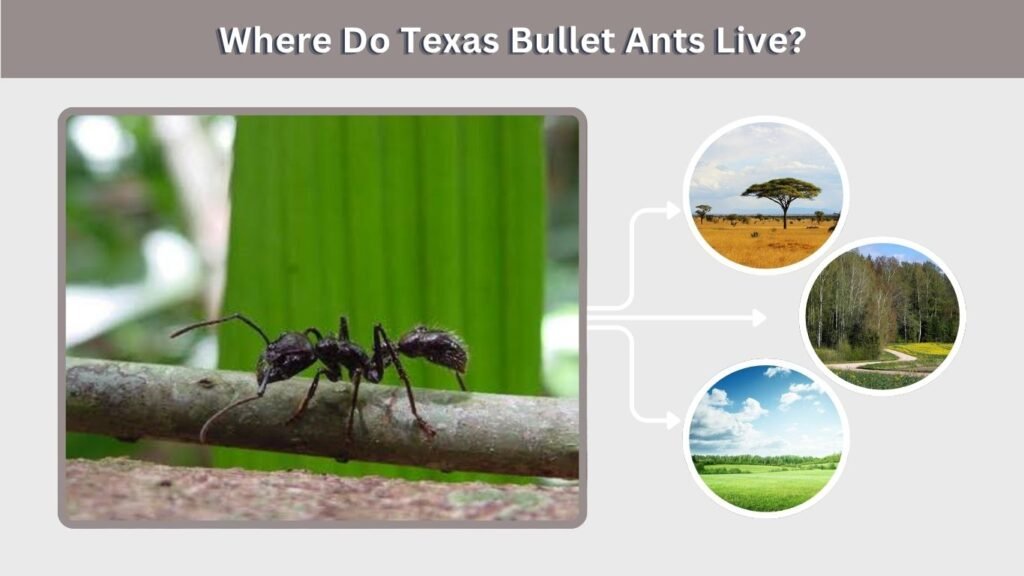
Texas bullet ants are mainly associated with southern Texas, especially warmer lower-elevation areas. BugGuide notes that Neoponera villosa is common in the southernmost part of Texas and suggests its northern U.S. range is more likely from lower-elevation areas around southern San Antonio to Del Rio and southward.
Common Habitat
Texas bullet ants may live in:
- Lowland forests
- Grasslands
- Wooded edges
- Logs and stumps
- Dead tree cavities
- Knot holes
- Dead sections of living trees
- Epiphyte bases
BugGuide describes this species as a cavity nester that uses logs, stumps, dead trees, knot holes, and similar spaces. It also notes that foraging is mainly arboreal, meaning workers often move through trees and vegetation.
Texas Bullet Ant Size
The Texas bullet ant is considered one of the larger ponerine ants in the United States. BugGuide describes Neoponera villosa as the largest ponerine ant in the U.S.
It is smaller than the famous tropical bullet ant but still large enough to stand out from many common household ants. Its dark body, hairy appearance, and strong build can make it look intimidating.
Texas Bullet Ant Sting
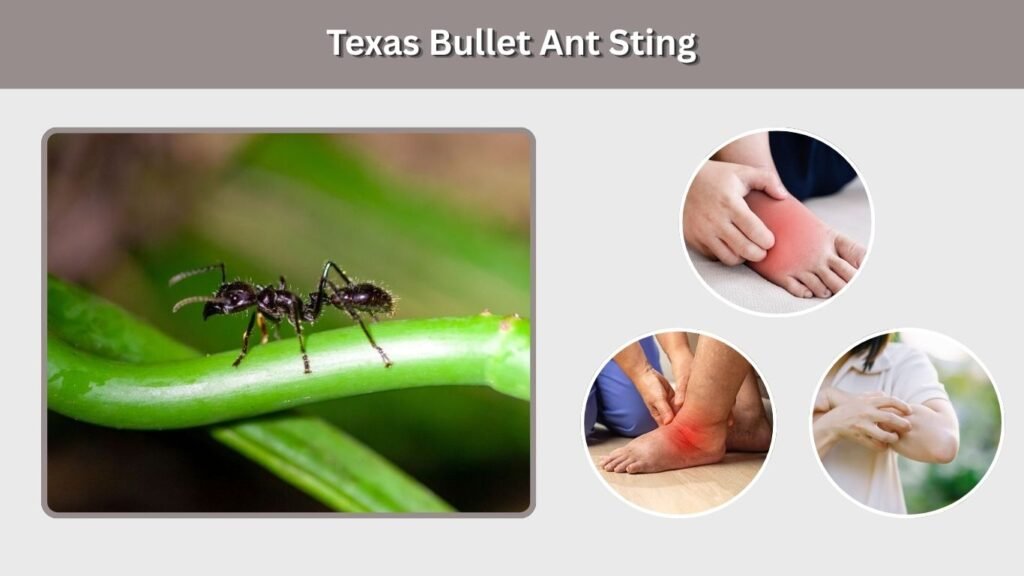
The Texas bullet ant has a painful sting. Cincinnati Zoo notes that Texas bullet ants are venomous and that their sting can cause severe pain and swelling.
Possible Sting Symptoms
- Sharp pain
- Burning feeling
- Swelling
- Redness
- Tender skin
- Itching after pain fades
- Local warmth around the sting area
Most stings cause local pain and swelling, but insect stings can be more serious for people with allergies. Mayo Clinic lists emergency warning signs after insect stings, including trouble breathing, swelling of the lips or throat, dizziness, fainting, weak rapid pulse, hives, nausea, vomiting, or diarrhea.
Is a Texas Bullet Ant Dangerous?
A Texas bullet ant is not usually considered deadly, but it should not be handled. The sting can be very painful, and allergic reactions are possible with insect venom. The biggest danger is not the ant attacking people without reason, but accidental contact, nest disturbance, or an allergic response.
Higher-Risk Situations
- Multiple stings
- Sting near the face, mouth, neck, or throat
- Known insect-sting allergy
- Trouble breathing after a sting
- Dizziness or fainting
- Widespread hives
- Severe swelling
Anyone with serious symptoms after a sting should seek urgent medical care.
Why People Search “Texas Bullet Ant”
Many people search this keyword because they see a large ant in Texas and wonder if it is the famous bullet ant from videos. Others may hear the name “greater Texas bullet ant” and assume it is the same as Paraponera clavata.
Common Search Confusion
| Search Term | What It Usually Means |
| Texas bullet ant | Usually Neoponera villosa |
| Bullet ant Texas | Asking if true bullet ants live in Texas |
| Are bullet ants in Texas? | True bullet ants: no; Texas bullet ants: yes |
| Texas bullet ant vs bullet ant | Comparing Neoponera villosa and Paraponera clavata |
| Texas bullet ant sting | Painful sting of Neoponera villosa |
Texas Bullet Ant vs Fire Ant
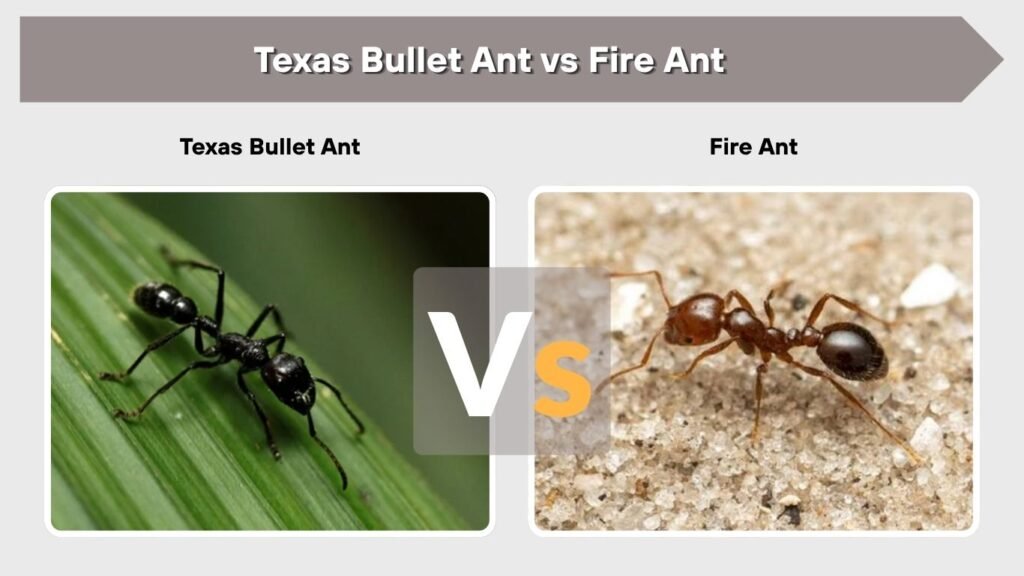
Texas has many stinging ants, and fire ants are much more commonly encountered by homeowners. Fire ants are smaller and often sting in groups, while Texas bullet ants are larger and less commonly seen.
| Feature | Texas Bullet Ant | Fire Ant |
| Size | Larger | Smaller |
| Common in yards | Less common | Very common in many areas |
| Sting | Painful, swelling possible | Painful, often multiple stings |
| Nesting | Cavities, wood, trees, lowland areas | Soil mounds |
| Behavior | Often arboreal/woody habitats | Ground-nesting colonies |
Texas Parks and Wildlife notes that imported fire ants deliver painful stings that produce red pustules, which is different from the larger Texas bullet ant/hairy panther ant.
Should You Buy Texas Bullet Ants?
Some keyword searches include “Texas bullet ant for sale” and “Texas bullet ant queen for sale.” This topic should be handled carefully. Stinging ants are not suitable for casual keeping, and local laws, shipping rules, and safety concerns may apply.
For normal readers, the best advice is simple: do not buy, collect, or handle Texas bullet ants unless you are trained, legally allowed, and properly equipped. They are venomous, can sting, and may be unsafe around children, pets, or allergic people.
How to Avoid Texas Bullet Ant Stings
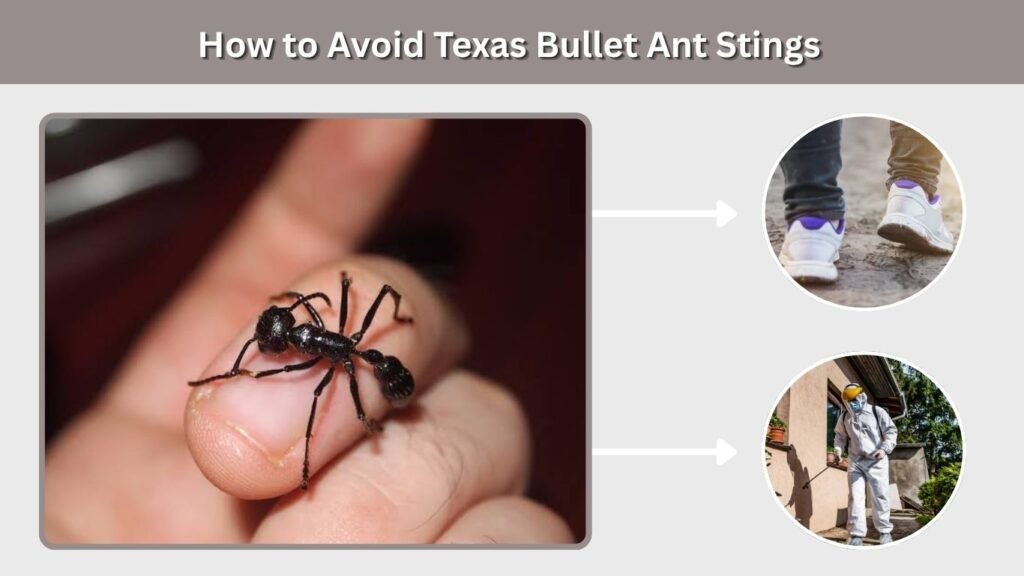
Texas bullet ants are not something to pick up or disturb. If you live in or visit southern Texas, be careful around logs, stumps, dead wood, and low vegetation.
Safety Tips
- Do not handle large ants by hand.
- Avoid disturbing logs, stumps, and dead branches.
- Wear gloves when moving wood or debris.
- Use closed shoes in grassy or wooded areas.
- Keep children from touching unknown insects.
- Take photos from a safe distance for identification.
- Contact a local extension office or pest expert for unusual ant problems.
FAQs
Are there bullet ants in Texas?
True bullet ants, Paraponera clavata, are not native to Texas. However, a different ant called Neoponera villosa is commonly known as the Texas bullet ant or greater Texas bullet ant.
What is the Texas bullet ant?
The Texas bullet ant is usually Neoponera villosa, also called the hairy panther ant. It is a large stinging ant found mainly in southern Texas, Mexico, and farther south.
Do Texas bullet ants sting?
Yes, Texas bullet ants can sting. Their sting may cause severe pain and swelling. People with insect-sting allergies should be especially careful and seek medical help if serious symptoms appear.
Is the Texas bullet ant the same as the bullet ant?
No. The true bullet ant is Paraponera clavata, a rainforest ant from Central and South America. The Texas bullet ant is usually Neoponera villosa, a different species.
Where are Texas bullet ants found?
Texas bullet ants are mainly found in southern Texas. They may live in lowland forests, grasslands, logs, stumps, dead trees, knot holes, and other woody cavities.