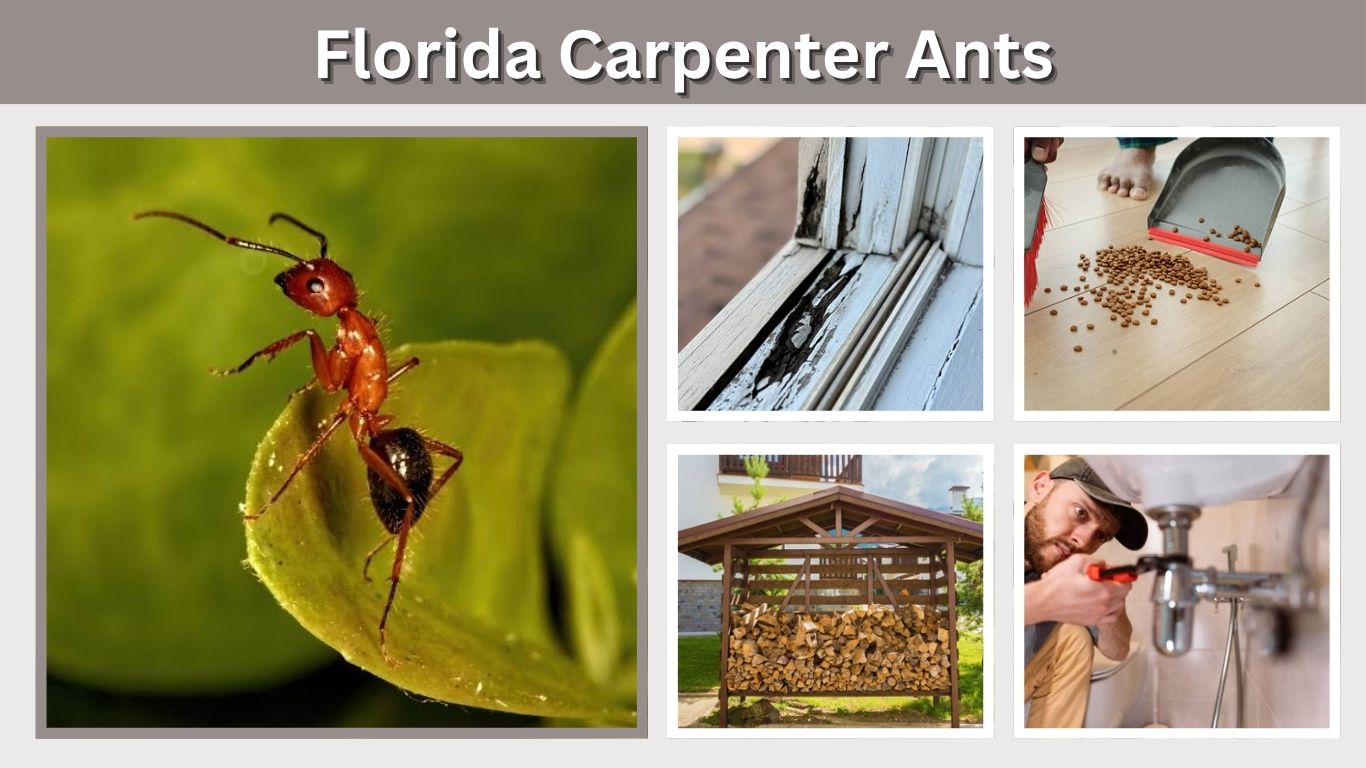
Florida carpenter ants are common household and outdoor pests in warm, humid parts of Florida. They are large ants that may nest in trees, wall voids, attic spaces, rotten wood, mulch, or around damp areas of the home. Unlike termites, they do not eat wood, but they can tunnel into softened or damaged wood to make nests. Seeing a few ants may not mean serious damage, but repeated activity indoors should be checked.
What Are Florida Carpenter Ants?
Florida carpenter ants are large ants often seen around homes, trees, patios, and landscape areas. They are active in warm weather and may enter houses while searching for food, moisture, or nesting space.
They are especially common in humid areas because moisture helps soften wood and creates better nesting conditions.
Florida Carpenter Ant Size and Color
Florida carpenter ants can vary in size. Workers are usually medium to large, while queens are bigger. Many are reddish-brown, black, or a mix of red and black.
| Feature | Florida Carpenter Ant |
| Size | Medium to large |
| Color | Red-brown, black, or red and black |
| Body | Narrow waist, segmented body |
| Antennae | Bent or elbowed |
| Wings | Only queens and males have wings |
| Common areas | Trees, walls, attics, mulch, damp wood |
What Do Carpenter Ants Look Like in Florida?
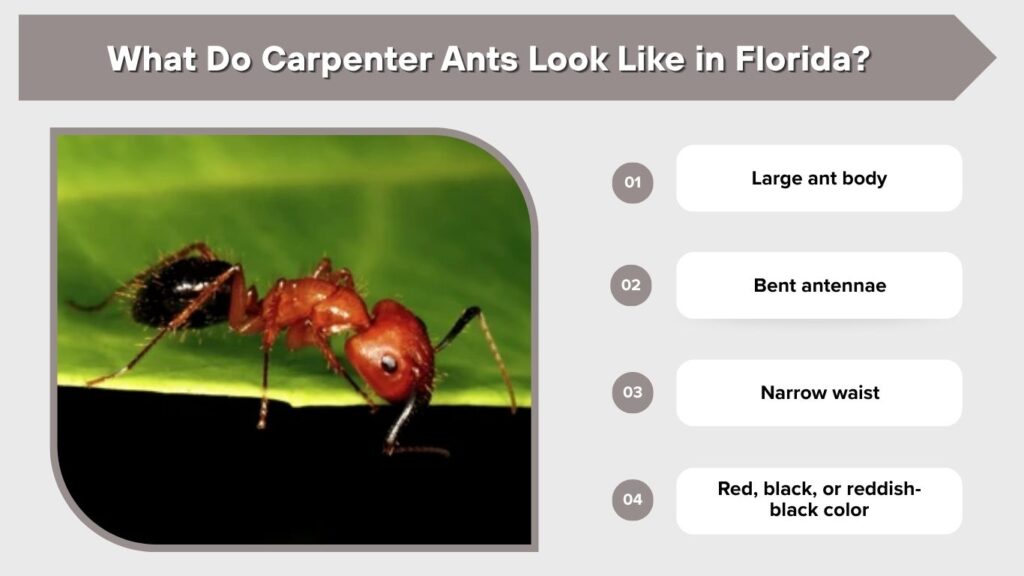
Florida carpenter ants have a clearly segmented body, bent antennae, and a narrow waist. They are often larger than sugar ants, ghost ants, and many other small household ants in Florida.
They may be seen crawling along walls, baseboards, tree trunks, fences, patios, and kitchen or bathroom areas.
Florida Carpenter Ant Identification
Look for these signs:
- Large ant body
- Bent antennae
- Narrow waist
- Red, black, or reddish-black color
- Activity near moisture or wood
- Trails along walls, trees, or foundations
- Winged ants during swarming periods
If the insect has equal-sized wings, straight antennae, and a thick waist, it may be a termite instead.
Florida Carpenter Ants With Wings
Winged carpenter ants in Florida are reproductive ants, also called alates or swarmers. Their job is to leave the colony, mate, and start new nests.
Seeing winged carpenter ants outdoors can be normal. Seeing them indoors, especially more than once, may suggest a nest inside the home or close to the structure.
Are Winged Carpenter Ants Dangerous?
Winged carpenter ants are not usually dangerous to people. However, they can be a warning sign. If a mature colony is producing winged ants indoors, the nest may already be established.
Common places to find winged ants include:
- Windows
- Sliding doors
- Bathroom lights
- Attic vents
- Garage areas
- Patio doors
- Wall gaps
Do Florida Carpenter Ants Bite?
Yes, Florida carpenter ants can bite if handled or disturbed. They do not sting like fire ants. A bite may feel like a pinch and can cause mild redness, swelling, or irritation.
Most bites are not serious, but people with sensitive skin may have stronger reactions.
Florida Carpenter Ant Bite Symptoms
Possible symptoms include:
- Mild pain
- Redness
- Small swelling
- Itching
- Skin irritation
- Temporary burning feeling
Wash the area with soap and water. A cold compress may help reduce swelling. Seek medical help if there is severe swelling, trouble breathing, spreading redness, or signs of infection.
Florida Carpenter Ants vs Fire Ants
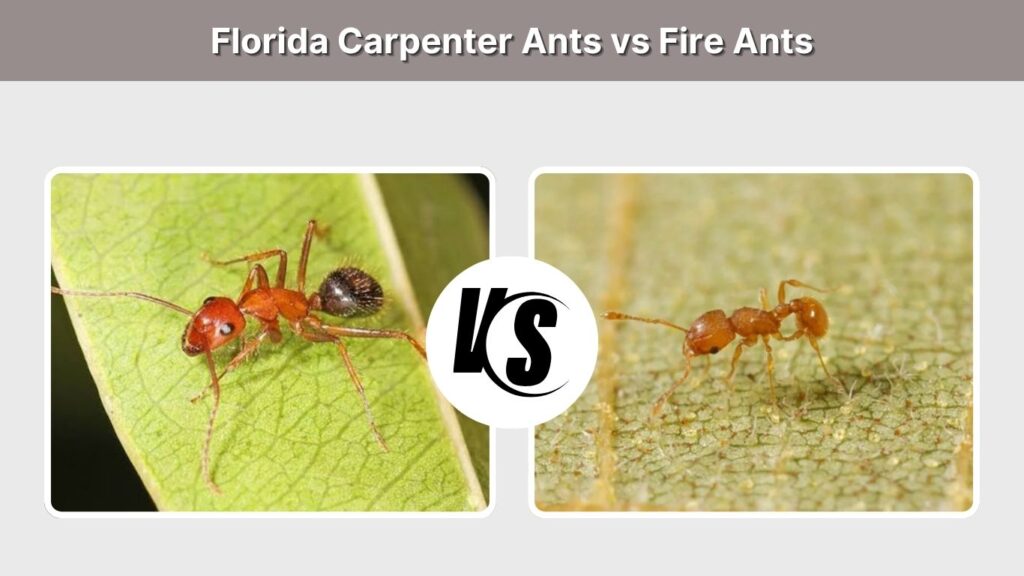
Florida carpenter ants and fire ants are often confused because both can be reddish. However, they behave differently.
| Feature | Florida Carpenter Ant | Fire Ant |
| Body size | Larger | Smaller |
| Nest | Wood, trees, walls, voids | Soil mounds |
| Sting | No sting | Painful sting |
| Bite | Can bite | Bite and sting |
| Behavior | Often trails indoors/outdoors | Aggressive near mound |
| Main concern | Nesting in wood | Painful stings |
Fire ants are more aggressive and can sting repeatedly. Carpenter ants are more concerning for nesting activity around wood and structures.
Do Florida Carpenter Ants Eat Wood?
No, Florida carpenter ants do not eat wood. They chew through wood to create tunnels and nesting galleries. This is different from termites, which eat cellulose in wood.
Carpenter ants are more likely to tunnel in wood that is already damp, softened, or decaying.
Why Are Florida Carpenter Ants in the House?
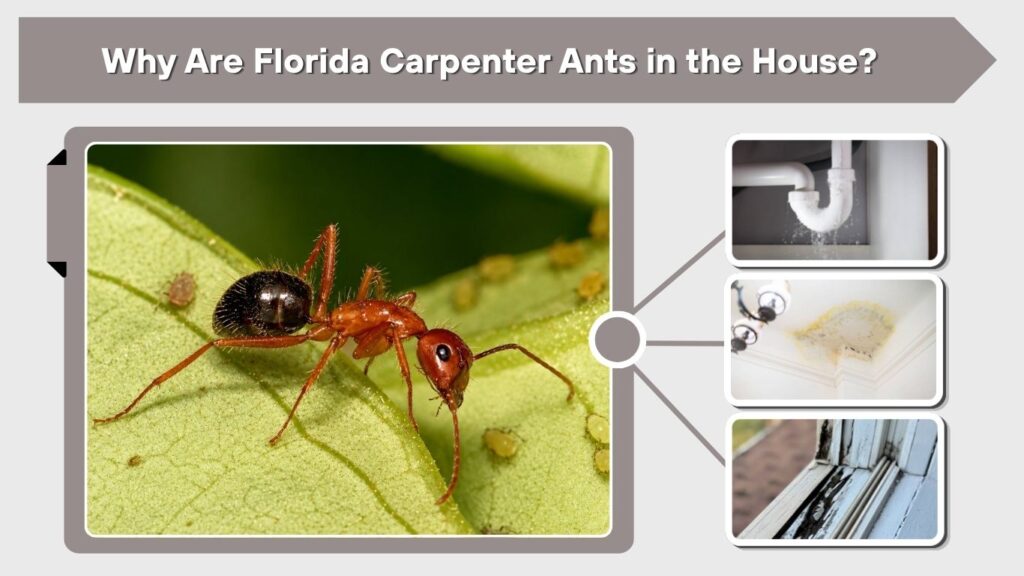
Florida’s warm, humid climate makes homes attractive to carpenter ants, especially when moisture is present. These ants may enter for food or may nest inside if conditions are right.
Common causes include:
- Leaky pipes
- Roof leaks
- Damp window frames
- Wet crawl spaces
- Rotten deck boards
- Tree limbs touching the house
- Mulch piled against the foundation
- Firewood stored near the home
- Cracks around doors or pipes
A few ants may be foragers, but frequent indoor activity should be inspected.
Florida Carpenter Ant Nest Locations
Florida carpenter ants may nest indoors or outdoors. Outdoor nests are common, but ants may move into homes through cracks or damp wood.
| Nest Location | Why Ants Like It |
| Trees and stumps | Soft or decayed wood |
| Wall voids | Hidden, protected space |
| Attics | Warm, dry shelter near roof leaks |
| Bathrooms | Moisture and plumbing access |
| Kitchens | Food and water sources |
| Mulch beds | Moist nesting area |
| Decks and fences | Weathered wood |
How to Get Rid of Florida Carpenter Ants
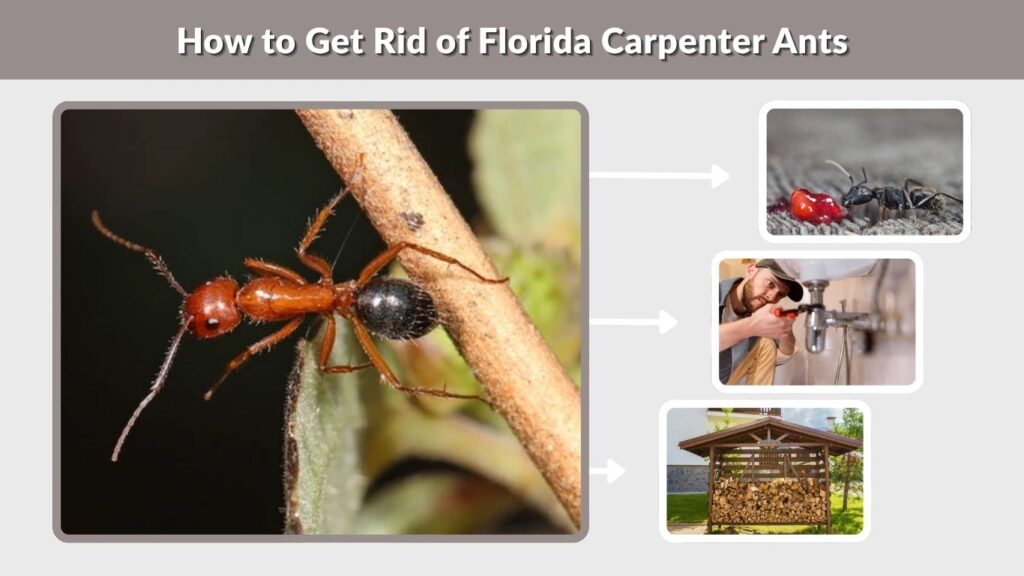
The best way to get rid of Florida carpenter ants is to find the nest and remove the conditions attracting them. Killing only the visible ants may not solve the problem.
Florida Carpenter Ant Control Steps
- Follow ant trails to locate nesting areas
- Use carpenter ant bait near trails
- Avoid spraying directly over bait
- Fix leaks and moisture problems
- Remove rotten wood, logs, and stumps
- Trim branches away from the house
- Seal entry points after activity drops
- Keep kitchens and trash areas clean
- Store firewood away from the home
Baits can work well because ants may carry the product back to the colony. Sprays may kill visible ants quickly but may not reach hidden nests.
Florida Carpenter Ant Treatment in the House
Indoor treatment depends on where the ants are nesting. If they are only foraging indoors, bait and exclusion may work. If they are nesting in walls, attic areas, or wet wood, treatment may require more work.
Avoid sealing holes before treatment if ants are coming from walls. This may cause them to move deeper into the structure.
When to Call Pest Control
Call a pest control professional if:
- You see winged ants indoors
- Ants return after baiting
- You find sawdust-like debris
- Ants are coming from walls
- You suspect activity in the attic
- There is moisture or wood damage
- You cannot tell if they are ants or termites
Professional treatment may include baiting, dust treatment, moisture inspection, and locating satellite nests.
How to Prevent Florida Carpenter Ants
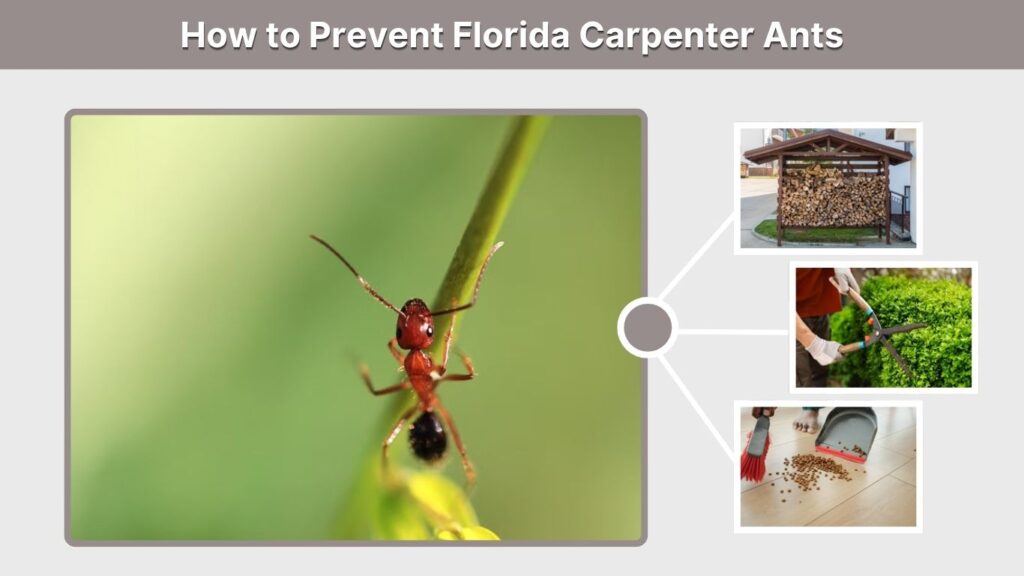
Prevention is especially important in Florida because warm weather allows ants to stay active for much of the year.
Use these prevention tips:
- Keep gutters clean
- Repair leaks quickly
- Reduce moisture around the foundation
- Store firewood off the ground and away from the house
- Trim shrubs and tree branches away from walls
- Keep mulch several inches from siding
- Seal gaps around pipes, doors, and windows
- Replace rotting wood
- Clean up food spills and pet food
FAQs
Are Florida carpenter ants dangerous?
Florida carpenter ants are not usually dangerous to people. They can bite if handled, but they do not sting. The main concern is their nesting activity in damp or damaged wood, especially if they move into walls or structural areas.
Do Florida carpenter ants bite?
Yes, Florida carpenter ants can bite. The bite is usually mild and may cause redness, swelling, or irritation. They do not sting like fire ants. Wash the bite area and watch for signs of infection or allergic reaction.
Do Florida carpenter ants have wings?
Some Florida carpenter ants have wings. Winged ants are reproductive males and queens. They usually appear during swarming periods. Winged ants outdoors may be normal, but winged ants indoors can signal a mature nest nearby.
How do you get rid of Florida carpenter ants?
Use carpenter ant bait near trails, fix moisture problems, remove rotten wood, and seal entry points after the ants are controlled. If ants are nesting in walls, attics, or damaged wood, professional pest control may be needed.
Do Florida carpenter ants eat wood?
No, Florida carpenter ants do not eat wood. They chew tunnels into wood to make nests. They prefer damp, soft, or decaying wood, but large colonies may expand into nearby dry wood over time.