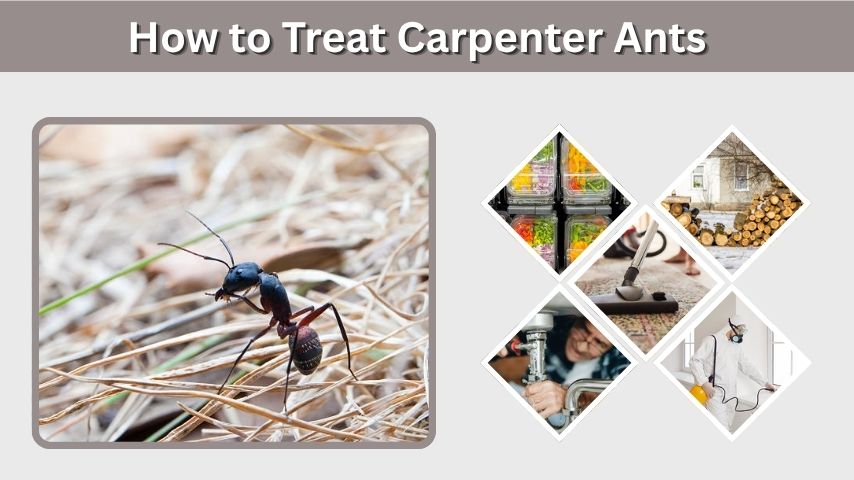
Carpenter ants can be difficult to treat because the main problem is usually hidden. These ants do not eat wood like termites, but they tunnel through damp or damaged wood to build nests. The best treatment is not just killing the ants you see. You need to find the nest, remove moisture, use the right bait or treatment, and prevent the colony from returning.
How to Treat Carpenter Ants
The first step is to confirm that you are dealing with carpenter ants. They are usually large, black, dark brown, or reddish-black ants. They may appear near windows, bathrooms, kitchens, basements, decks, or trees.
Carpenter ant treatment works best when you target both the visible ants and the hidden colony.
Basic Treatment Steps
- Follow ant trails to find where they are coming from
- Look for sawdust-like frass near wood, trim, or walls
- Check damp areas around sinks, tubs, windows, and crawl spaces
- Use carpenter ant bait near trails
- Avoid spraying directly on bait areas
- Fix leaks and remove damp wood
- Seal cracks after the colony is controlled
Sprays may kill visible ants fast, but bait is often better for reaching the nest.
How to Treat Carpenter Ants in the House
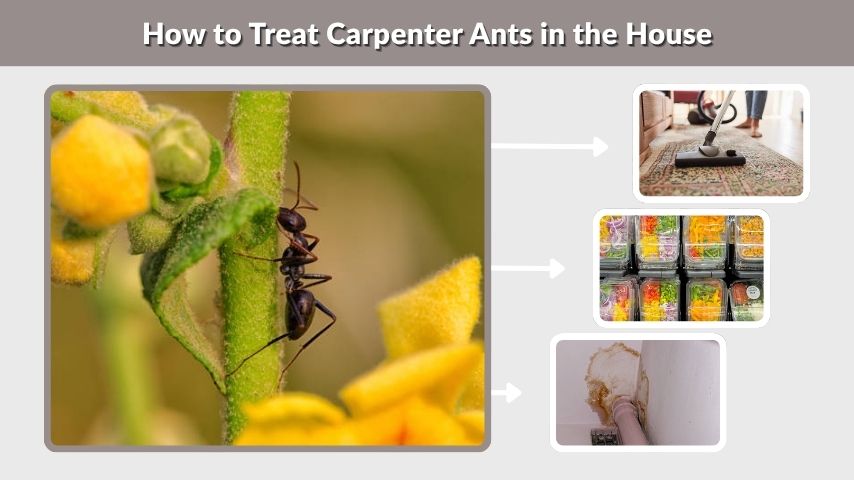
Carpenter ants inside the house often mean there is moisture or damaged wood nearby. Common nesting areas include wall voids, window frames, bathroom wood, kitchen cabinets, attic beams, and crawl spaces.
If you see carpenter ants indoors during winter or repeatedly in the same room, there may be an indoor nest.
Best Indoor Treatment Methods
- Place bait near active trails
- Vacuum visible ants instead of spraying them
- Keep counters and floors clean
- Store food in sealed containers
- Repair plumbing or roof leaks
- Remove rotting wood if possible
- Inspect around windows, doors, and baseboards
Do not seal every crack immediately. If the colony is inside, sealing holes too early may force ants to spread into new areas.
How to Treat Carpenter Ants in Walls
Carpenter ants in walls are harder to treat because the nest is hidden. You may notice ants coming from outlets, baseboards, window frames, or small wall gaps. Sometimes you may hear faint rustling sounds inside the wall.
| Sign in Walls | What It May Mean |
| Ants from outlets | Nest may be inside wall void |
| Frass near baseboards | Wood tunneling nearby |
| Rustling sounds | Active colony inside |
| Ants near wet areas | Moisture-related nesting |
| Winged ants indoors | Mature colony may be present |
Wall Treatment Options
For minor activity, baiting may work. Place bait where ants are traveling and allow them to carry it back. Do not spray the trail if you are using bait.
For heavy wall infestations, professional treatment is often safer and more effective. Pest control experts may use targeted dust, foam, or wall-void treatments.
How to Treat Carpenter Ants Outside
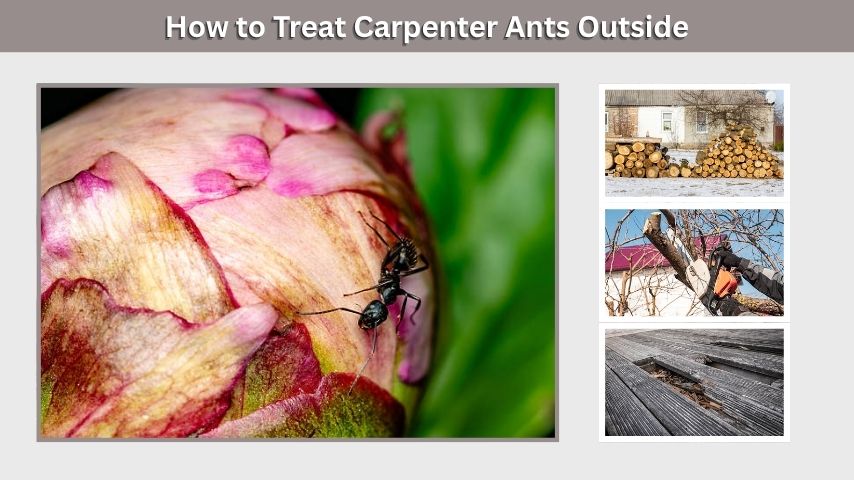
Outdoor carpenter ants often nest in stumps, logs, fences, decks, mulch, or damaged trees. Treating the outside is important because outdoor colonies can send ants into the house.
Useful outdoor steps include:
- Remove rotting logs and old stumps
- Keep firewood away from the house
- Trim branches touching the roof or siding
- Reduce heavy mulch near the foundation
- Place outdoor ant bait near trails
- Seal foundation gaps after activity drops
- Repair damaged deck or porch wood
Outdoor sprays may reduce activity, but they may not reach the main colony unless the nest is treated directly.
How to Treat Carpenter Ants in Trees
Carpenter ants in trees usually nest in decayed or hollow areas. They do not normally attack healthy wood first, but their presence may show that part of the tree is already damaged.
If the tree is close to your house, ants may travel from the tree into your home.
Tree Treatment Tips
- Inspect the tree for rot, wounds, or hollow spots
- Avoid sealing cavities with cement or foam
- Remove dead limbs and decayed wood when safe
- Use bait near ant trails around the tree
- Keep branches trimmed away from the house
- Call an arborist if the tree seems weak or unsafe
If a tree is badly hollow or leaning, treatment alone may not solve the safety problem.
How to Treat Carpenter Ants Naturally
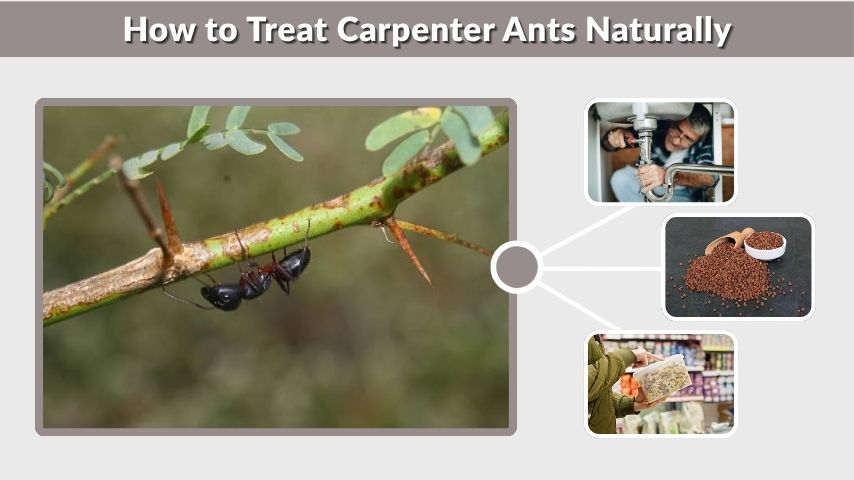
Natural methods may help with light activity, but they are not always enough for a hidden colony. The most effective natural approach is to make your home less attractive to ants.
Natural control steps include:
- Reduce moisture
- Fix leaks
- Remove rotting wood
- Clean food spills quickly
- Store pet food properly
- Use tight trash lids
- Trim vegetation away from the house
Some people use vinegar sprays to wipe trails, but this does not kill the colony. It may only disrupt scent trails for a short time.
How to Treat Carpenter Ants and Termites
Carpenter ants and termites need different treatment plans. Carpenter ants tunnel in wood, while termites eat wood. If you are unsure which pest you have, identify them before applying treatment.
| Feature | Carpenter Ants | Termites |
| Waist | Narrow | Thick |
| Antennae | Bent | Straight |
| Wings | Unequal pairs | Equal pairs |
| Wood sign | Clean tunnels, frass | Mud tubes, eaten wood |
| Food | Sweets, proteins, insects | Cellulose/wood |
If you suspect termites, contact a professional. Termite treatment is usually more specialized than carpenter ant treatment.
How Much Does It Cost to Treat Carpenter Ants?
The cost depends on the size of the infestation, nest location, home size, and whether the ants are inside walls or structural areas. A small treatment may cost less, while a large or hidden infestation can cost more.
| Treatment Type | Typical Cost Factor |
| DIY bait and supplies | Lower cost |
| Basic professional visit | Moderate cost |
| Wall-void treatment | Higher cost |
| Multiple colony treatment | Higher cost |
| Moisture or wood repair | Separate cost |
DIY treatment may be enough for small outdoor activities, but professional service is often worth it when ants are inside walls or returning repeatedly.
When to Call a Professional
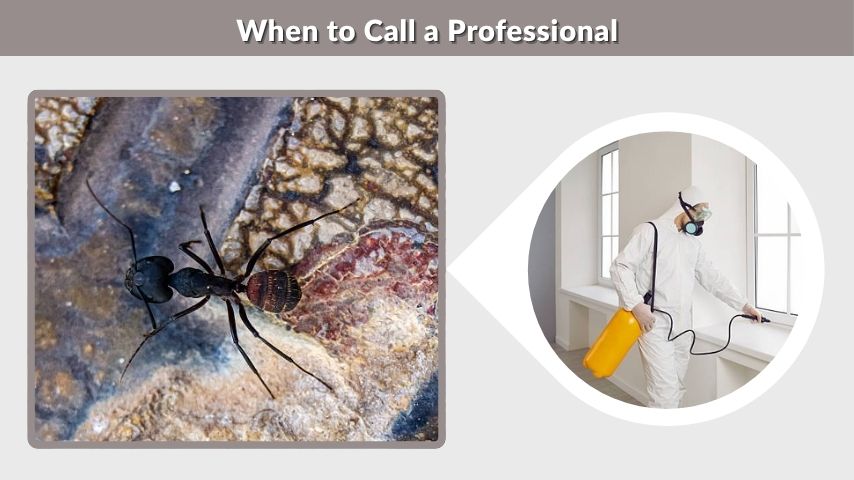
Call a professional if you see winged carpenter ants indoors, find frass, hear sounds in walls, or cannot locate the nest. Professional help is also recommended if ants return after baiting or if you suspect damage inside walls, ceilings, or structural wood.
Carpenter ants can have parent colonies and satellite colonies, so treating only one area may not remove the full problem.
FAQs
How do you treat carpenter ants in the house?
Use carpenter ant bait near trails, clean food sources, fix leaks, and inspect damp wood. Avoid spraying bait areas. If ants are inside walls or return often, professional treatment may be needed to reach the hidden nest.
What is the best treatment for carpenter ants?
The best treatment is finding the nest and using bait or targeted treatment. Bait works well because ants can carry it back to the colony. Moisture repair is also important because carpenter ants prefer damp or damaged wood.
How do you treat carpenter ants in walls?
Place bait near entry points and watch where ants travel. Do not seal holes too early. For heavy wall activity, professional wall-void treatment may be needed because the nest may be hidden deep inside the structure.
How do you treat carpenter ants in a tree?
Use bait near trails, remove dead limbs, and inspect the tree for rot or hollow areas. If the tree is weak, leaning, or close to the house, call an arborist to check whether it is safe.
How much does it cost to treat carpenter ants?
The cost varies based on infestation size, nest location, and treatment method. DIY bait is cheaper, while professional treatment costs more, especially for wall nests, multiple colonies, or repairs for moisture-damaged wood.