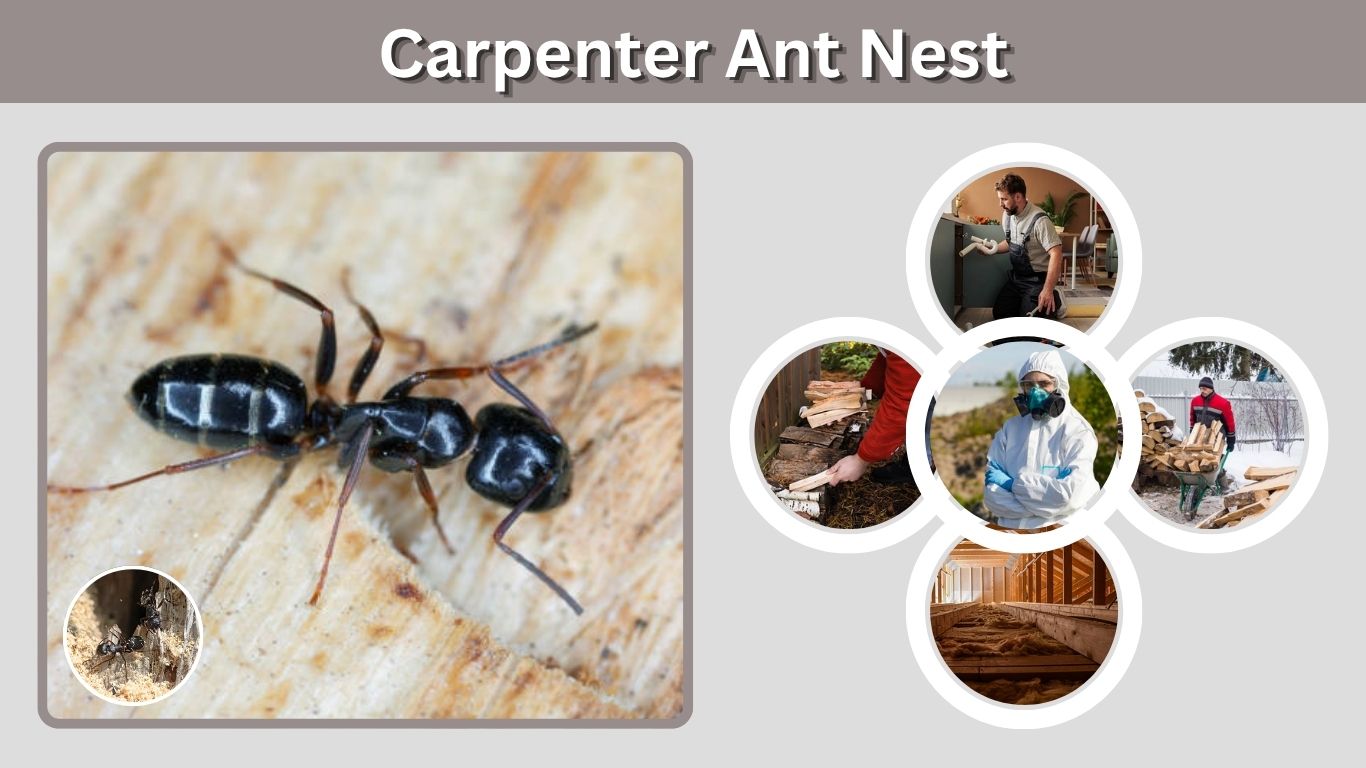
A carpenter ant nest can be hard to find because it is often hidden inside wood, walls, trees, attics, or damp structural areas. Unlike termites, carpenter ants do not eat wood. They tunnel through it to create smooth galleries for nesting, which can weaken wood over time if the colony stays active. Learning what a carpenter ant nest looks like, where it forms, and how to locate it is the first step toward proper removal.
What Is a Carpenter Ant Nest?
A carpenter ant nest is a hidden colony site where carpenter ants live, raise young, and expand tunnels through wood. These ants prefer damp, decaying, or moisture-damaged wood, but they may also extend into sound wood once a colony grows.
Carpenter ant damage usually appears as clean, smooth tunnels called galleries. The wood may look carved or sanded inside because the ants remove debris instead of leaving muddy material behind. University of Minnesota Extension notes that carpenter ant galleries are clean and smooth, and the damage often develops slowly over years.
What Does a Carpenter Ant Nest Look Like?
A carpenter ant nest does not usually look like a visible mound. Most nests are hidden inside wood or void spaces. The easiest signs are often outside the nest, not the nest itself.
| Sign | What It Means |
| Coarse sawdust-like frass | Ants are excavating wood nearby |
| Insect parts mixed with debris | Carpenter ants may be dumping nest waste |
| Large black or red-black ants | Workers may be foraging from a nest |
| Rustling sound in walls | A hidden colony may be active |
| Winged ants indoors | A mature indoor nest may be present |
Carpenter ant frass may contain wood fragments, soil, and insect parts. This is different from drywood termite pellets, which are more uniform and pellet-like.
Where Do Carpenter Ants Nest?
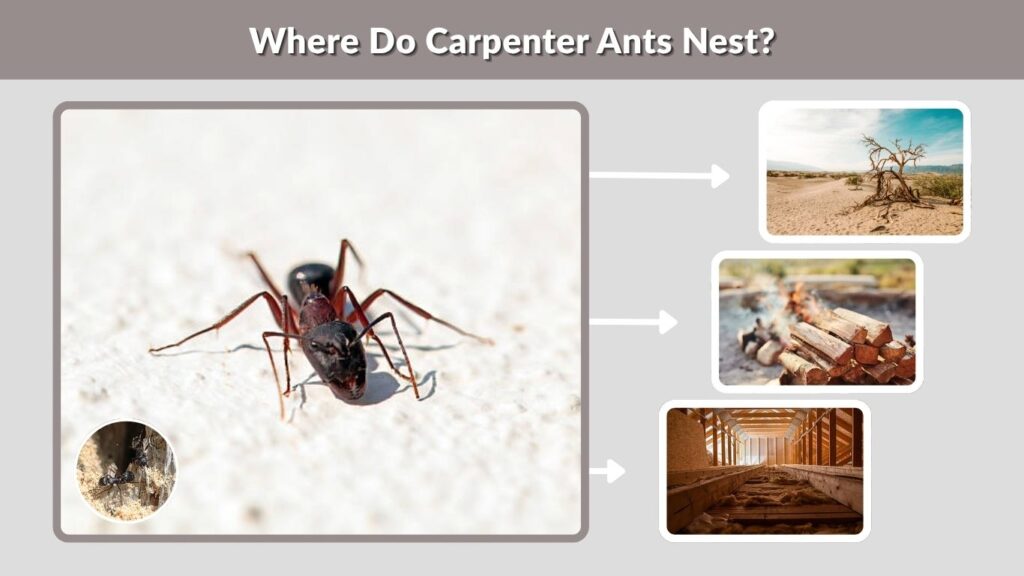
Carpenter ants can nest indoors or outdoors. The main colony is often outside, while indoor nests may be satellite nests connected to a larger colony.
Common Outdoor Nest Locations
Outdoor carpenter ant nests are often found in:
- Dead trees
- Tree stumps
- Firewood piles
- Fence posts
- Rotting logs
- Landscape timbers
- Wood debris in the yard
- Trees with hollow or damaged areas
UC IPM notes that the main colony is often outside in places like tree stumps, dead trees, firewood piles, or fence posts.
Common Indoor Nest Locations
Indoor carpenter ant nests are usually linked to moisture. Look near:
- Window frames
- Door frames
- Wall voids
- Attics
- Crawl spaces
- Subfloors
- Hollow doors
- Areas around sinks, tubs, and dishwashers
- Roof leaks or damaged fascia boards
Indoor colonies are often associated with moisture and may occur in hollow doors, window or door frames, or subfloor areas.
Carpenter Ant Nest in House
A carpenter ant nest in a house is a serious warning sign because it often means moisture-damaged wood is present. Seeing one or two ants indoors does not always prove there is a nest, but repeated sightings, especially at night, should be checked.
Signs of a nest in the house include:
- Ants appearing daily in the same area
- Ant trails near kitchens or bathrooms
- Frass near baseboards or window trim
- Winged ants indoors in late winter or spring
- Ants coming from cracks, outlets, or wall gaps
Seeing carpenter ants indoors during winter can indicate an inside nest, especially if workers are active in heated parts of the home.
Carpenter Ant Nest in Wall
A carpenter ant nest in a wall is one of the hardest types to locate. The ants may travel through electrical openings, plumbing gaps, baseboards, or cracks, while the actual nest stays hidden behind drywall.
To check a wall nest, listen for faint rustling sounds. Tap the wall gently and press your ear near the suspected area. Active colonies may make a dry rustling noise, especially when disturbed.
Do not randomly spray into walls. Spraying visible worker ants may reduce activity for a short time, but it usually does not eliminate the nest because only a small percentage of the colony is out foraging.
Carpenter Ant Nest in Ground, Yard, or Tree
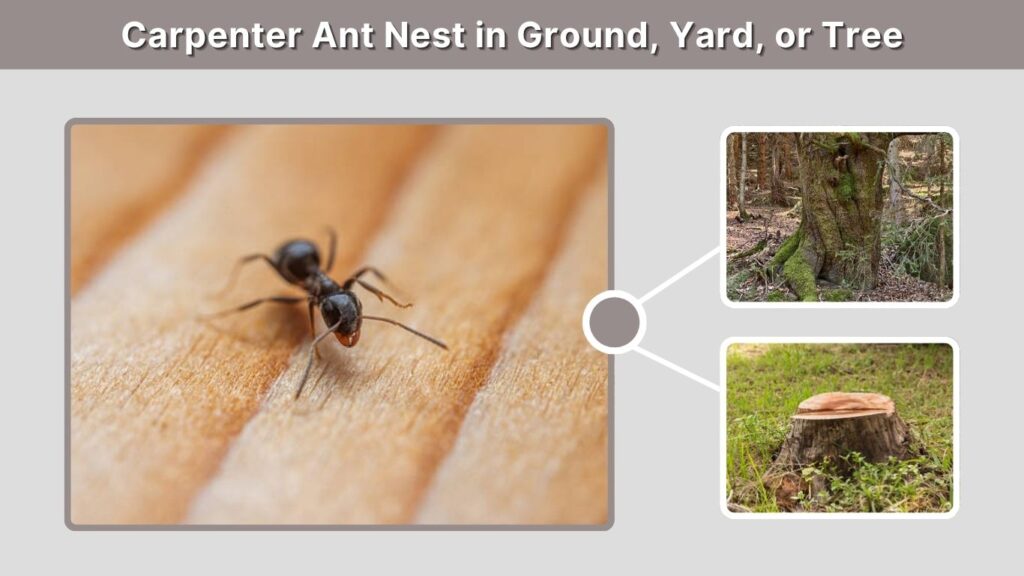
Carpenter ants can be found around the ground, but they usually prefer wood rather than open soil. A “carpenter ant nest in ground” is often connected to buried wood, roots, old stumps, logs, landscape timbers, or rotting boards touching the soil.
| Location | Why Carpenter Ants Nest There |
| Tree stump | Soft, decaying wood is easy to tunnel |
| Firewood pile | Protected, moist nesting area |
| Fence post | Wood-soil contact can cause decay |
| Tree cavity | Hollow spaces provide shelter |
| Landscape timber | Damp wood attracts colonies |
If a tree nest is near your home, ants may travel from branches to the roof, siding, or utility lines. Trimming branches away from the house can help reduce access.
How to Find a Carpenter Ant Nest
Finding the nest is the most important step. Carpenter ants are most active from evening to night, so inspection is often easier after sunset.
Follow Worker Ants
Watch where ants travel instead of crushing them. Workers often move between food and the nest. A red-filtered flashlight can help because ants are less disturbed by red light. University of Minnesota Extension recommends observing workers between sunset and midnight during spring and summer.
Use Food to Track Trails
Place a small bait food near active ants and watch where they carry it. Protein foods such as tuna may work well in spring, while sweet foods may attract them at other times. The goal is not to kill them immediately but to follow them back toward the nest.
Check Moisture Areas
Inspect places where water problems exist or existed before. Focus on:
- Leaky windows
- Plumbing areas
- Roof leaks
- Damp crawl spaces
- Wet insulation
- Rotten trim
- Wood touching soil
- Firewood near the foundation
Moisture control is important because carpenter ants prefer damp environments and often begin galleries in softened wood.
How to Remove a Carpenter Ant Nest
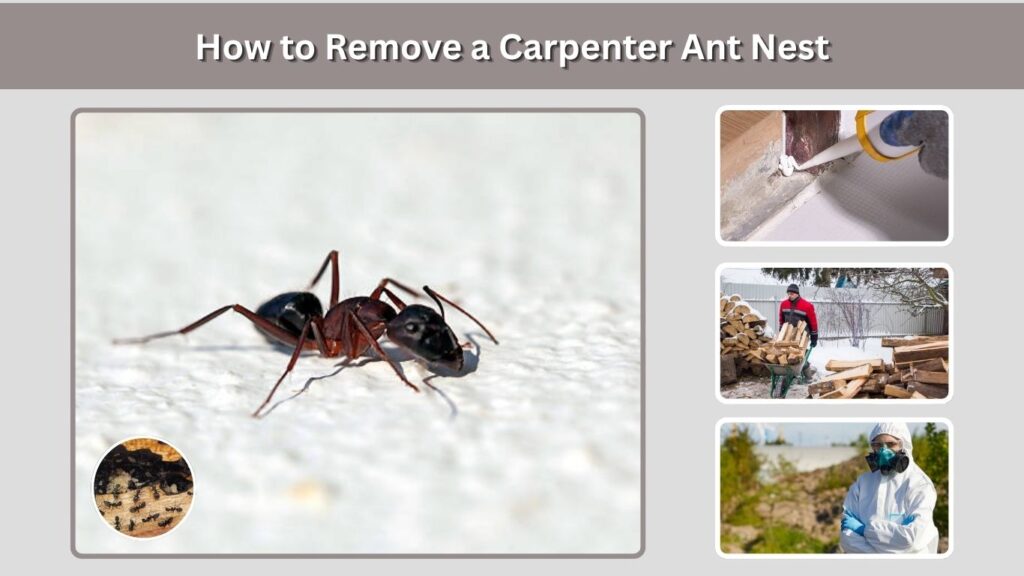
The best way to remove a carpenter ant nest is to locate the colony, treat the nest directly, fix moisture problems, and replace damaged wood. Simply killing ants you see on the counter is not enough.
Basic Removal Steps
- Locate the nest or main trail.
- Remove moisture sources.
- Replace rotten or damaged wood.
- Seal cracks and entry points.
- Move firewood away from the house.
- Trim branches touching the home.
- Use labeled carpenter ant bait or treatment correctly.
- Call a pest professional for hidden wall, attic, or structural nests.
Oregon State University recommends a plan that includes inspection, fixing leaks, repairing damaged wood, sealing entry points, removing wood debris, eliminating the colony, and following up afterward.
When to Call a Professional
Call a pest control professional if ants are coming from walls, ceilings, attics, hollow doors, or structural wood. Hidden nests may require targeted treatment into voids, and random pesticide use can miss the colony. University of Minnesota Extension notes that carpenter ant control is usually best handled by an experienced pest management professional when nests are hidden.
How to Prevent Carpenter Ant Nests
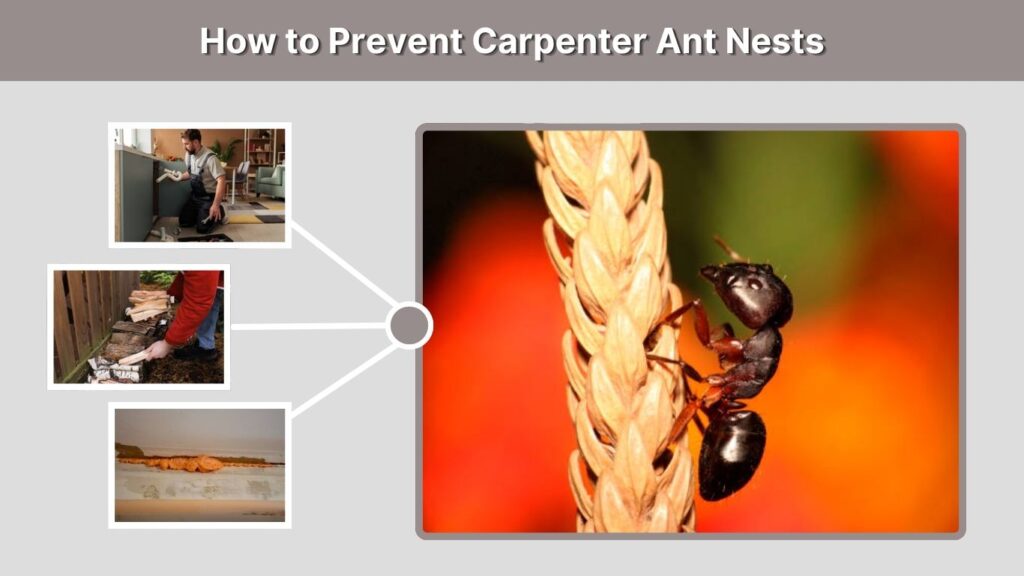
Prevention focuses on moisture, wood contact, and access points. Keep wood dry and remove nesting materials near the building.
Good prevention steps include:
- Fix leaky pipes, gutters, and roofs.
- Keep firewood off the ground and away from the house.
- Remove rotting stumps and wood debris.
- Seal gaps around utility lines.
- Reduce heavy mulch near the foundation.
- Improve attic and crawl space ventilation.
- Replace decayed trim, siding, or framing.
- Keep tree branches from touching the roof.
UC IPM recommends trimming vegetation away from structures, sealing entry points, reducing mulch depth, replacing decayed wood, correcting leaks, improving ventilation, and storing firewood away from structures.
FAQs
Do carpenter ants make nests in the ground?
Carpenter ants may appear to nest in the ground, but they usually nest in wood connected to the soil, such as buried roots, stumps, logs, or landscape timbers. Open soil mounds are more typical of other ant species.
How many carpenter ants are in a nest?
A mature carpenter ant colony may contain several thousand ants. Some colonies also form satellite nests, which means there can be more than one nest connected to the same infestation.
Do carpenter ants take bait back to the nest?
Yes, slow-acting baits can work because foraging ants carry food back and share it with the colony. UC IPM notes that slow-acting bait is important because only a portion of ants are foraging at one time.
What should I do if I find a carpenter ant nest?
Do not disturb it too much before planning treatment. Identify the nest location, check for moisture damage, remove wet or rotting wood, and use a labeled treatment or hire a professional if the nest is inside walls or structural areas.
Can carpenter ants move their nest?
Yes, carpenter ants may relocate if disturbed or if conditions change. This is why exposed nests should be treated carefully and why moisture repair is important. If the moisture problem remains, ants may return or form another nest nearby.