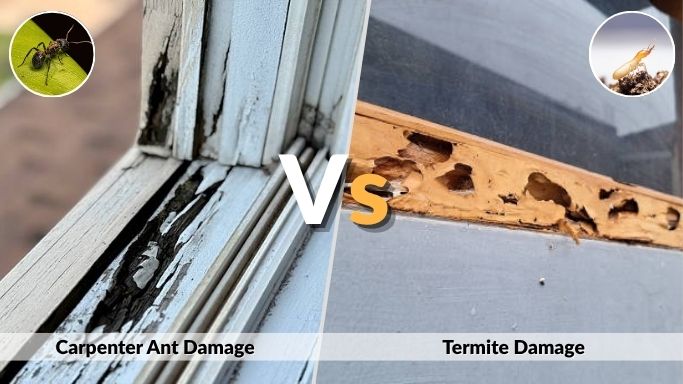
Carpenter ant damage and termite damage can both weaken wood, but they do not happen the same way. Termites eat cellulose in wood, while carpenter ants remove wood to build smooth nesting tunnels. This difference changes the signs you see, including frass, mud tubes, hollow wood, drywall marks, and gallery patterns. Learning the difference can help you act faster and choose the right pest control plan before structural damage becomes worse.
Carpenter Ant Damage vs Termite Damage: Quick Comparison
Carpenter ants and termites are both wood-related pests, but their damage patterns are different. Carpenter ants excavate wood and leave clean, smooth galleries. Termites consume wood and often leave muddy, layered, or hollowed-out damage inside boards. University extension sources note that carpenter ants do not eat wood; they remove it while making galleries and tunnels for nesting.
| Feature | Carpenter Ant Damage | Termite Damage |
| What they do to wood | Excavate wood for nesting | Eat wood/cellulose |
| Gallery appearance | Smooth, clean, sanded-looking tunnels | Rough, muddy, layered, or hollowed channels |
| Frass/debris | Coarse sawdust-like frass may appear outside openings | Usually little sawdust; drywood termites may leave pellets |
| Moisture link | Often starts in damp or decayed wood | Often linked to soil moisture and hidden access points |
| Common sign | Sawdust piles and large ants | Mud tubes, hollow wood, swarmers |
| Speed of damage | Usually slower | Can become severe if ignored |
| Best response | Locate and destroy nest | Professional termite inspection/treatment |
The biggest clue is this: carpenter ants usually leave evidence outside the wood, while termites often hide damage inside the wood.
What Carpenter Ant Damage Looks Like
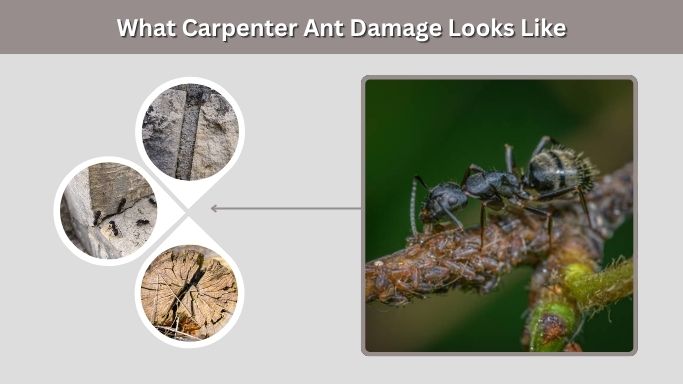
Carpenter ant damage usually looks clean inside the wood. Their tunnels are not packed with mud, soil, or fecal pellets. The galleries may look smooth, polished, or sanded because the ants keep their nesting areas clean. Penn State Extension describes carpenter ant galleries as smooth-sided and different from termite tunnels because they do not contain soil particles or fecal pellets.
Common Signs of Carpenter Ant Damage
Look for these signs around wood, walls, windows, bathrooms, kitchens, attics, and crawl spaces:
- Coarse sawdust near baseboards, trim, or wall gaps
- Small slit-like openings in wood
- Large black or reddish-black ants indoors
- Winged ants inside, especially in late winter or spring
- Rustling sounds inside walls
- Damage near damp or decayed wood
- Tunnels that look clean and smooth
- Ant trails at night
Carpenter ants often nest where moisture has softened the wood. Common places include window frames, door frames, roof leaks, bathroom walls, kitchen sinks, decks, porches, tree stumps, and wood touching the structure.
What Termite Damage Looks Like
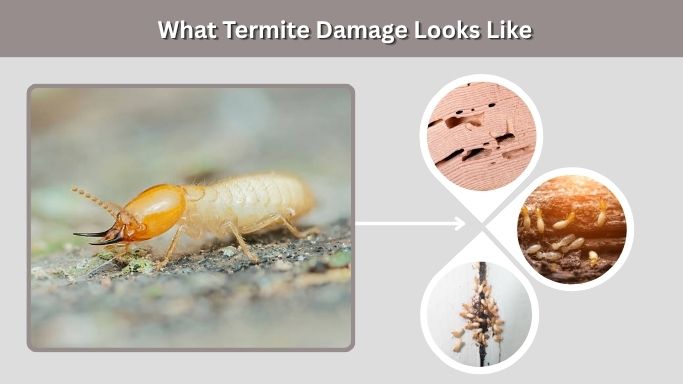
Termite damage is usually more hidden than carpenter ant damage. Subterranean termites often travel from soil to wood through shelter tubes, also called mud tubes. They may feed inside wood for a long time before the damage becomes obvious. Penn State Extension recommends probing suspect wood for soundness and visually inspecting for mud tunnels in areas where termites may be active.
Common Signs of Termite Damage
Termite damage may include:
- Mud tubes on foundations, walls, piers, or crawl spaces
- Hollow-sounding wood
- Blistered or bubbling paint
- Soft, damaged, or easily punctured wood
- Discarded wings near windows or doors
- Swarming termites
- Wood that breaks apart in layers
- Doors or windows that become hard to open
- Hidden damage behind drywall or trim
Subterranean termite damage often includes mud or soil inside tunnels. Drywood termite damage may include hard, pellet-like droppings instead of mud tubes.
Wood Damage Signs of Carpenter Ants vs Termites
Wood damage is the most important area to compare. Carpenter ants and termites both affect wood, but the inside of the damaged wood often tells the story.
Carpenter ants carve out galleries for living space. Termites eat through wood for food. That is why carpenter ant galleries usually look cleaner, while termite galleries may look rough, packed, muddy, or hollowed.
| Wood Sign | More Likely Carpenter Ants | More Likely Termites |
| Smooth tunnels | Yes | No |
| Mud inside damaged wood | No | Common with subterranean termites |
| Coarse sawdust nearby | Common | Less common |
| Pellet-like droppings | No | Possible with drywood termites |
| Wood sounds hollow | Sometimes | Common |
| Damage follows grain | Sometimes | Common |
| Moist or rotted wood | Common nesting site | Can also attract termites |
| Clean, open galleries | Common | Less likely |
If you open damaged wood and see clean, smooth tunnels with sawdust nearby, carpenter ants are more likely. If the wood is hollow, muddy, layered, or contains soil-like material, termites are more likely.
Frass: Carpenter Ant Frass vs Termite Frass
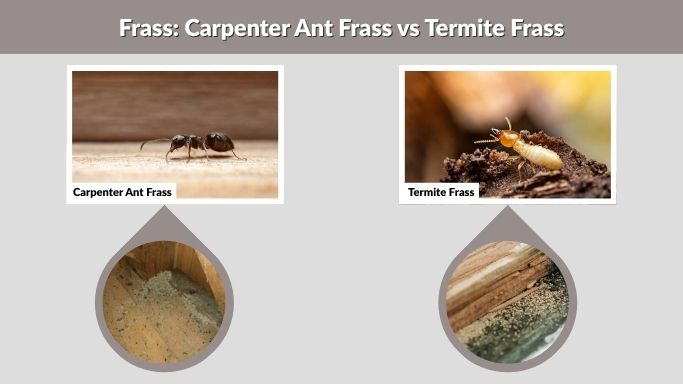
Frass is one of the easiest clues in a carpenter ant damage vs termite damage comparison. Carpenter ants push debris out of their tunnels. This debris often looks like coarse sawdust and may include tiny wood pieces, soil, or insect parts. University of California IPM explains that carpenter ant frass is different from the pelletized frass left by drywood and dampwood termites.
What Carpenter Ant Frass Looks Like
Carpenter ant frass may look like:
- Coarse sawdust
- Small wood shavings
- Mixed insect parts
- Debris below holes or cracks
- Piles near baseboards or windows
What Termite Frass Looks Like
Termite signs depend on the termite type. Subterranean termites usually do not leave sawdust piles because they use mud and soil in their tunnels. Drywood termites may leave small, hard pellets that look like tiny grains or seeds.
| Frass Type | Appearance | Pest Clue |
| Coarse sawdust with debris | Wood shavings, rough particles | Carpenter ants |
| Mud or soil-like material | Dirty tunnels, shelter tubes | Subterranean termites |
| Hard pellets | Tiny dry grains | Drywood termites |
| No visible frass | Hidden internal damage | Possible termites |
If you find sawdust under a wall, beam, or window frame, carpenter ants are a strong possibility. If you find mud tubes or pellet-like droppings, termites should be considered.
Drywall Carpenter Ant Damage vs Termite Damage
Drywall damage can be confusing because the pest may be inside the wood framing, not the drywall itself. Both carpenter ants and termites can create signs that appear on walls, ceilings, or trim.
Carpenter ants may push frass out through small openings near baseboards, window trim, or wall cracks. You may also hear faint rustling from inside a wall if the colony is active.
Termites may cause paint to blister, drywall to bubble, or wall surfaces to look stained, warped, or weak. In some cases, termite mud tubes may appear on drywall, foundation walls, or crawl-space surfaces.
Wall and Drywall Clues
Look for:
- Sawdust below trim = possible carpenter ants
- Mud tubes on wall surfaces = possible termites
- Bubbling paint = possible hidden termite moisture/damage
- Rustling sounds = possible carpenter ants
- Soft wood behind drywall = possible termites or carpenter ants
- Winged insects indoors = possible reproductive ants or termites
Because wall damage is often hidden, a professional inspection is smart if you see repeated signs in the same area.
Carpenter Ants vs Termites Tree Damage
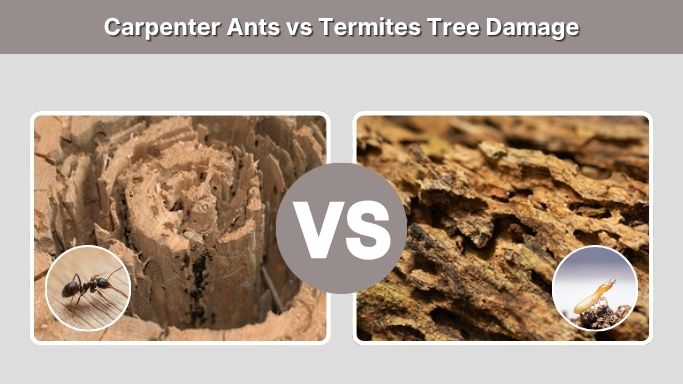
Carpenter ants and termites can both be found around trees, stumps, logs, and landscape wood. However, carpenter ants usually use trees that already have decay, hollow areas, cracks, or weakened heartwood. The University of Minnesota Extension notes that carpenter ants in trees often take advantage of rotted or weak wood and do not harm the tree in the same way a primary tree pest would.
Termites may also feed on dead wood, stumps, roots, mulch, logs, and wood-to-soil contact areas. Termites become a bigger home concern when wood, mulch, or soil contact gives them hidden access to the structure. Missouri Extension warns that wood in contact with soil near a foundation can increase termite risk.
Swarmers: Winged Carpenter Ants vs Winged Termites
Swarmers are reproductive insects that leave a mature colony to start new colonies. Both carpenter ants and termites can produce winged swarmers, and homeowners often confuse them.
Carpenter ant swarmers have a narrow waist, bent antennae, and front wings that are longer than the back wings. Termite swarmers have a broad waist, straight antennae, and wings of equal length. The University of Minnesota Extension lists these body differences as key ways to separate carpenter ants from termites.
Swarmers Comparison
| Feature | Carpenter Ant Swarmer | Termite Swarmer |
| Waist | Narrow, pinched | Broad, thick |
| Antennae | Elbowed or bent | Straight |
| Wings | Front wings longer than hind wings | Equal-length wings |
| Body color | Usually dark | Often dark swarmers, pale workers |
| Indoor meaning | May indicate indoor nest | May indicate termite colony nearby |
| Damage link | Nesting in wood | Feeding on wood |
If you find many winged insects indoors, collect a sample in a bag or jar for identification. This can help a pest professional choose the correct treatment.
Which Damage Is Worse?
Termite damage is usually considered more serious because termites eat wood continuously and can stay hidden for a long time. Large colonies can cause major structural damage if ignored. Missouri Extension notes that termite damage can build over months or years because colonies may include very large numbers of workers feeding on wood.
Carpenter ants can also weaken structural wood, especially when a colony stays active for years. However, carpenter ants do not eat the wood. They excavate it to make nesting space. Severe carpenter ant damage is still serious, especially around beams, floor joists, wall studs, window frames, and roof areas.
In simple terms, termites usually create the bigger structural risk, while carpenter ants often point to a moisture problem and an active nest in or near damaged wood.
How to Identify Carpenter Ant Damage vs Termite Damage
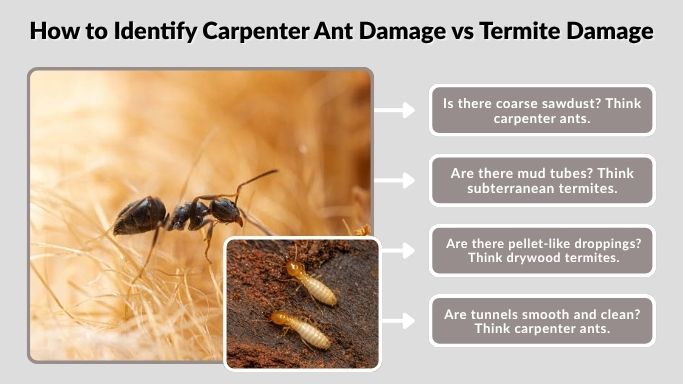
Correct identification starts with what you see around the damaged area. Do not rely on one clue only. Look at the wood, debris, insects, moisture, and location together.
Identification Checklist
Use this checklist:
- Is there coarse sawdust? Think carpenter ants.
- Are there mud tubes? Think subterranean termites.
- Are there pellet-like droppings? Think drywood termites.
- Are tunnels smooth and clean? Think carpenter ants.
- Is wood muddy, hollow, or layered? Think termites.
- Are the insects large black ants? Think carpenter ants.
- Are the insects pale, soft-bodied workers? Think termites.
- Is the damage near moisture? Either pest is possible.
- Are there winged insects indoors? Compare wings, waist, and antennae.
If you are unsure, avoid tearing apart large sections of wood without a plan. Disturbing colonies can make inspection harder.
What to Do If You Find Damage
If you find carpenter ant or termite damage, act quickly. These pests require different treatments, so guessing can waste time and money.
For carpenter ants, the goal is to locate and destroy the nest, fix moisture problems, and replace damaged wood. For termites, treatment often requires professional tools, soil treatment, bait stations, or other termite-specific methods. Missouri Extension states that postconstruction termite treatments should be performed by licensed pest management professionals because effective do-it-yourself termite control is not realistic for subterranean termites.
First Steps for Homeowners
Start with these steps:
- Take clear photos of the damage and insects.
- Save insect samples if possible.
- Check for leaks, damp wood, and wood-to-soil contact.
- Look for frass, pellets, mud tubes, or swarm wings.
- Avoid spraying random insecticide before inspection.
- Call a licensed pest professional if damage is active or structural.
- Repair moisture issues before replacing wood.
The sooner you identify the pest, the easier it is to stop the damage from spreading.
FAQs
What is the main difference between carpenter ant damage and termite damage?
The main difference is that carpenter ants excavate wood to build nests, while termites eat wood. Carpenter and galleries are usually clean and smooth. Termite damage is often hollow, rough, muddy, or layered.
How can I tell if wood damage is from carpenter ants or termites?
Look for frass, gallery texture, and mud. Coarse sawdust and smooth tunnels suggest carpenter ants. Mud tubes, soil in tunnels, hollow wood, or pellet-like droppings suggest termites.
Is carpenter ant damage as bad as termite damage?
Carpenter ant damage can become serious, but termite damage is usually considered more destructive because termites eat wood and can remain hidden for long periods. Both should be inspected if structural wood is involved.
What does carpenter ant damage look like in drywall?
Carpenter ants may cause sawdust piles near trim, wall cracks, or baseboards. You may also hear rustling inside walls. The main damage is usually in wood behind or around the drywall.
Should I call a professional for termite or carpenter ant damage?
Yes, especially if you see structural damage, mud tubes, swarmers, repeated frass, or activity in walls. Termites and carpenter ants require different treatments, so correct identification is important.