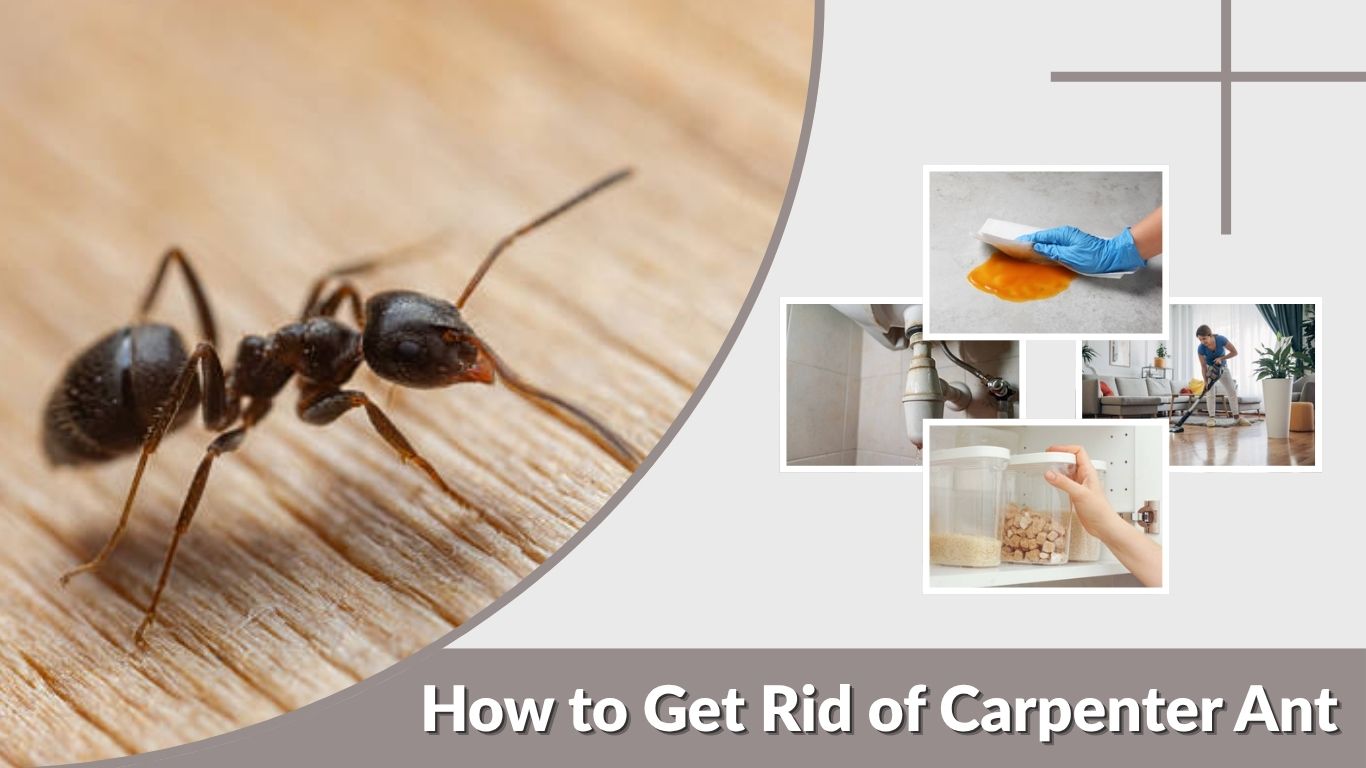
Carpenter ants in the house are more than a small nuisance. Unlike sugar ants that usually come indoors for food, carpenter ants may be nesting in damp or damaged wood. They do not eat wood like termites, but they excavate smooth tunnels inside it to build their nests. If the colony grows, the damage can become serious. The best way to get rid of carpenter ants is to find the nest, remove moisture problems, use the right treatment, and block future entry points.
What Are Carpenter Ants?
Carpenter ants are large ants that commonly nest in wood, especially wood softened by moisture, decay, or fungal growth. They are often black, reddish-black, or dark brown, depending on the species. Their name comes from their habit of carving galleries inside wood, not from eating it.
Carpenter ants are often confused with termites, but the two pests behave differently. Termites eat cellulose and often leave mud tubes or muddy galleries. Carpenter ants usually keep their galleries clean and may push out sawdust-like material called frass. Damp or rotting wood is especially attractive because it is easier for carpenter ants to tunnel through.
| Feature | Carpenter Ants | Termites |
|---|---|---|
| Wood behavior | Excavate wood to nest | Eat wood for food |
| Gallery appearance | Clean, smooth tunnels | Often muddy or packed |
| Common sign | Sawdust-like frass | Mud tubes or damaged wood |
| Body shape | Narrow waist | Broad waist |
| Wings | Front wings longer than back wings | Equal-length wings |
Signs of Carpenter Ants in the House
Before treating carpenter ants, you need to confirm that they are the problem. Seeing one or two large ants does not always mean there is a nest inside, but repeated sightings are a warning sign.
Large Ants Indoors
Carpenter ants are usually larger than many common household ants. You may see them in kitchens, bathrooms, basements, laundry rooms, attics, or around windows. They are often more active at night because many carpenter ants forage after dark. North Carolina State Extension notes that carpenter ants are nocturnal and can travel far from the nest while foraging.
Small Piles of Sawdust
One of the clearest signs of a carpenter ant nest is frass. This looks like tiny wood shavings, sawdust, or debris near baseboards, window frames, door frames, crawl spaces, or damaged wood. Rutgers Extension explains that sawdust can indicate a nest nearby and that locating the nest is the first important step in control.
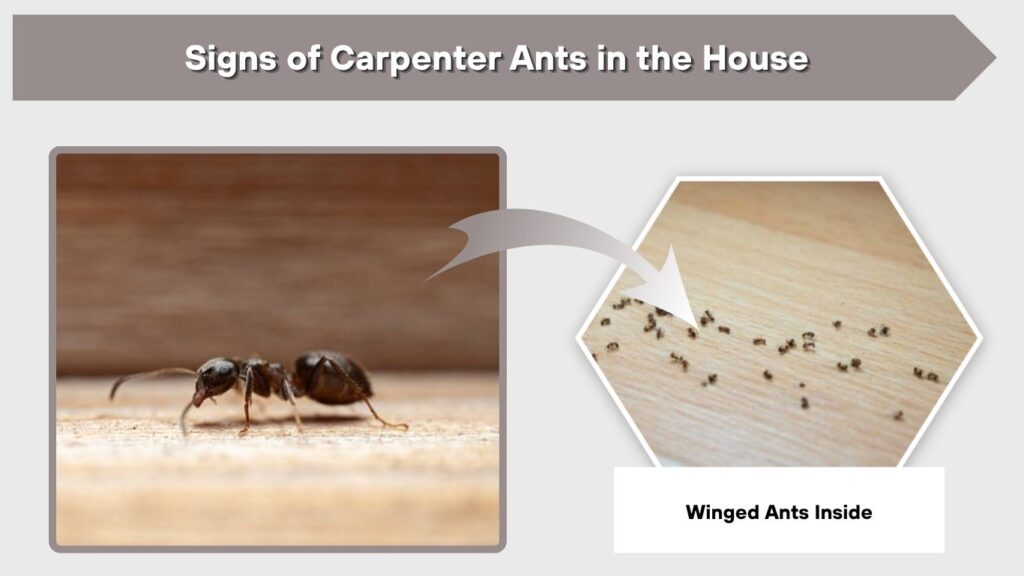
Winged Ants Inside
Winged carpenter ants indoors can mean a mature colony is nearby. These ants are reproductive ants that leave the colony to start new nests. If you see winged ants near windows, lights, or walls, do not ignore them.
Rustling Sounds in Walls
In a quiet room, some homeowners hear faint rustling or crackling sounds from wall voids or wood. This can happen when a large colony is active inside structural wood.
| Sign | What It May Mean | Where to Check |
|---|---|---|
| Large ants at night | Foraging workers | Kitchen, bathroom, pantry |
| Sawdust-like frass | Nest nearby | Baseboards, windows, crawl space |
| Winged ants indoors | Mature colony | Windows, lights, attic |
| Damp damaged wood | Possible nesting site | Sills, joists, decks, leaks |
| Repeated sightings | Indoor or nearby outdoor nest | Trails, foundation, trees |
Why Carpenter Ants Come Indoors
Carpenter ants usually enter homes for food, water, shelter, or nesting space. Moisture is one of the biggest reasons they stay. Wood around plumbing leaks, roof leaks, poorly sealed windows, wet crawl spaces, clogged gutters, or damp basements can create ideal nesting conditions.
Common attractants include:
- Leaky pipes under sinks or behind walls
- Wet window sills or door frames
- Roof leaks near attic beams
- Firewood stored against the house
- Tree branches touching the roof
- Mulch piled against siding
- Cracks around pipes, vents, and foundation gaps
- Food crumbs, grease, honey, syrup, and pet food
Georgia Extension explains that moisture-damaged wood is especially attractive because damp wood is easier for carpenter ants to chew, and warm, moist conditions can support colony growth.
How to Get Rid of Carpenter Ants in the House
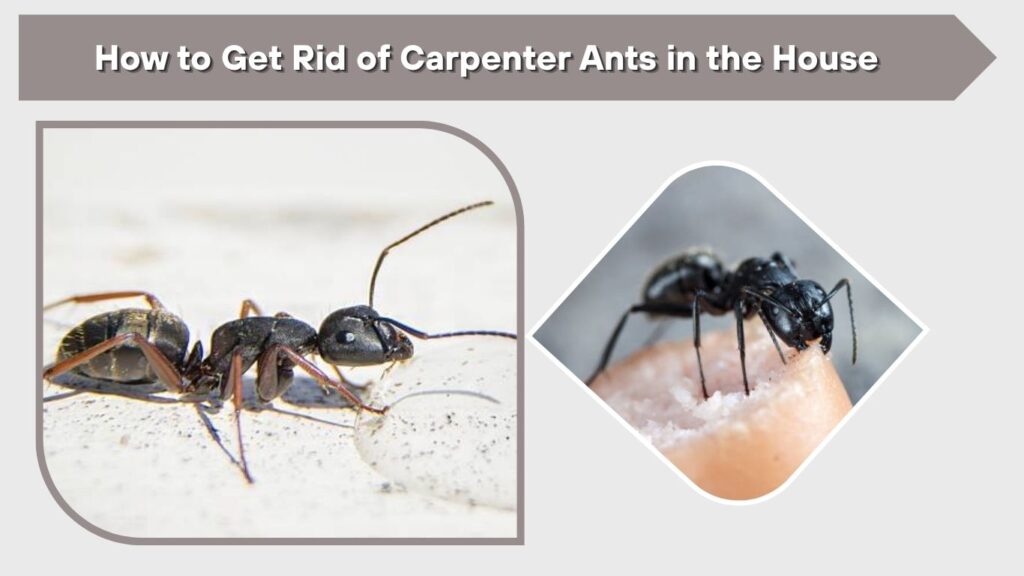
Getting rid of carpenter ants is not just about killing the ants you see. The visible ants are usually workers. If the queen and nest survive, the problem will continue. The goal is to locate the colony, treat it correctly, and remove the conditions that allowed it to thrive.
Step 1: Confirm the Ant Species
Start by making sure you are dealing with carpenter ants. Look for large ants, a narrow waist, bent antennae, and possible frass near wood. If you are unsure whether the insects are carpenter ants or termites, collect a few in a sealed bag or take clear photos and ask a local pest professional or extension office.
Correct identification matters because termite treatment and carpenter ant treatment are different.
Step 2: Track Ant Trails at Night
Carpenter ants often forage after sunset. Use a flashlight to follow their movement. Watch where they enter and exit walls, cabinets, trim, outlets, or exterior gaps.
You can also place small bait stations of sugar water or diluted honey where you see activity. Rutgers Extension recommends using diluted honey, sugar water, or crushed insects to help locate trails, then checking after one to two hours.
Step 3: Find the Nest
The nest may be inside your home or outside nearby. Indoor nests are often found in damp areas, while outdoor parent colonies may be in tree stumps, logs, fences, decks, or landscape timbers.
Check these areas carefully:
- Around sinks, tubs, toilets, and dishwashers
- Behind baseboards and wall voids
- Window and door frames
- Attics with roof leaks
- Crawl spaces and basements
- Deck posts and porch columns
- Firewood piles and tree stumps
- Foam insulation or hollow doors
A carpenter ant nest can be surprisingly far from where you see workers. North Carolina State Extension notes that a nest could be as far as 300 feet from a foraging area.
Step 4: Remove Moisture and Damaged Wood
This step is essential. Even if you kill the current ants, new ants may return if damp wood remains.
Fix leaks, improve ventilation, clean gutters, replace rotted trim, and dry out crawl spaces. Remove damaged wood when possible. If carpenter ants are inside structural wood, you may need both pest control and repair work.
Do not cover damaged wood with paint, caulk, or new trim before solving the moisture issue. That can hide the problem while the colony continues to grow.
Step 5: Use Carpenter Ant Bait
Carpenter ant bait can work well when ants carry it back to the nest. Bait is usually better than spraying visible ants because it targets the colony. Use bait labeled for carpenter ants and place it near active trails, not randomly around the house.
Do not spray insecticide directly on or near bait stations. Sprays can repel ants and stop them from carrying bait back to the nest.
Carpenter ants may change food preferences during the season. Sometimes they prefer sweets; other times they prefer protein or grease-based bait. If one bait is ignored, try another carpenter-ant-labeled bait type.
Step 6: Treat the Nest Directly
The most effective treatment is often direct nest treatment. University of Minnesota Extension states that the best control method is delivering insecticide into the nest, and because carpenter ant control can be complex, hiring a pest management professional is often best.
If the nest is inside a wall, a professional may use dust, foam, or other labeled treatments in wall voids. Colorado State Extension notes that dust formulations can be effective because workers can carry dust into the nest.
Only use products according to the label. The EPA explains that pesticide labels are legally enforceable and provide directions for safe and legal use.
Natural and Non-Chemical Carpenter Ant Control
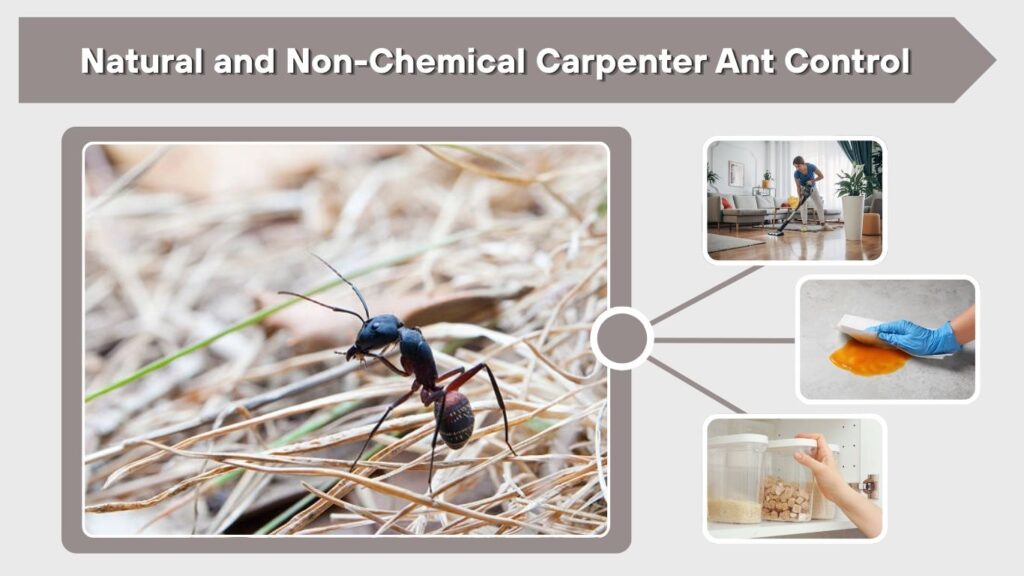
Natural methods can help reduce carpenter ant activity, but they may not eliminate a large hidden colony by themselves. Use them as part of a broader plan.
Useful non-chemical steps include:
- Vacuuming visible ants and disposing of the bag or contents outside
- Cleaning food spills and grease from counters and floors
- Storing sweets, grains, and pet food in sealed containers
- Removing wet wood, cardboard, and old insulation
- Trimming branches away from the roof
- Moving firewood at least several feet away from the house
- Using a dehumidifier in damp basements or crawl spaces
Diatomaceous earth or boric-acid-based products may help in cracks or voids, but they must be used carefully and only where the label allows. Avoid spreading powders openly in areas where children or pets can contact them.
How to Prevent Carpenter Ants From Coming Back
Prevention is just as important as treatment. Carpenter ants often return when the original moisture or access problem remains.
Seal cracks around the foundation, pipes, wires, vents, windows, and doors. Install door sweeps if gaps are visible under exterior doors. Keep gutters clear so water does not overflow into fascia boards or walls. Make sure downspouts move water away from the foundation.
Keep mulch, soil, and plants from touching siding. Trim shrubs and tree branches so ants cannot use them as bridges into the house. Store firewood off the ground and away from exterior walls. Inspect decks, fences, porch posts, and tree stumps because outdoor nests can send workers indoors.
Inside the home, pay attention to bathrooms, kitchens, basements, and laundry rooms. These areas provide both moisture and food. A dry, sealed, clean home is much less attractive to carpenter ants.
Mistakes to Avoid When Treating Carpenter Ants
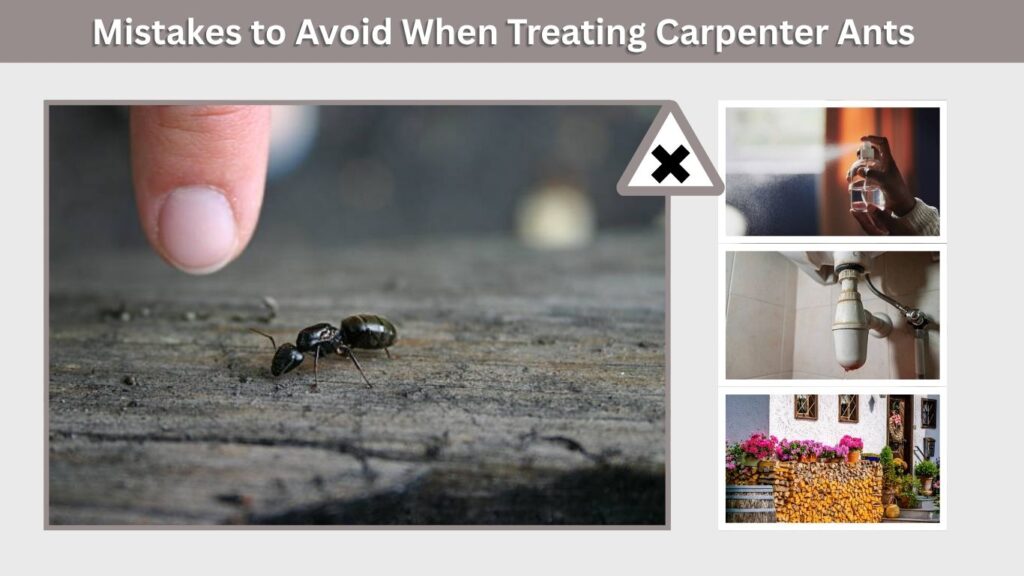
Many infestations continue because homeowners treat the symptoms instead of the source.
Avoid these common mistakes:
- Spraying only the ants you see
- Ignoring sawdust or damaged wood
- Using bait and repellent spray in the same area
- Leaving leaks unrepaired
- Storing firewood against the house
- Sealing walls before checking for nests
- Assuming all winged ants are termites
- Waiting too long when ants keep returning
Killing visible workers may make the problem look better for a few days, but it rarely destroys the colony. The nest must be found and treated, especially when activity continues indoors.
When to Call a Professional
Call a pest control professional if you see carpenter ants repeatedly, find frass indoors, hear sounds in walls, notice winged ants inside, or suspect structural damage. You should also get help if the nest is inside wall voids, ceilings, crawl spaces, or hard-to-reach wood.
Professional help is especially important when you cannot locate the nest. Carpenter ant colonies may have parent and satellite nests, so treating only one area may not solve the problem. A professional can inspect moisture sources, trace trails, identify nesting sites, and apply treatments in places homeowners should not disturb.
If damage is found in joists, beams, wall studs, or porch supports, contact a qualified contractor after the ants are controlled. Pest treatment removes the insects, but damaged wood may still need repair.
FAQs
What is the fastest way to get rid of carpenter ants?
The fastest effective method is to locate the nest and treat it directly with a carpenter-ant-labeled product. Baits can also work, but they may take longer because worker ants need to carry the bait back to the colony. For a serious indoor infestation, professional treatment is usually the fastest and most reliable option.
Do carpenter ants eat wood?
No, carpenter ants do not eat wood. They excavate wood to create tunnels and nesting galleries. This is why you may see sawdust-like frass near infested areas. Even though they do not eat wood, their tunneling can still weaken damaged or moisture-softened wood over time.
Why do I keep seeing carpenter ants in my bathroom?
Bathrooms often attract carpenter ants because they provide moisture. Leaks around tubs, sinks, toilets, windows, or wall cavities can soften wood and create good nesting conditions. If you keep seeing ants in the bathroom, check for plumbing leaks, damp trim, soft flooring, and wall void activity.
Can I get rid of carpenter ants without an exterminator?
You may be able to control a small problem yourself if you find the nest, use the right bait, remove moisture, and seal entry points. However, hidden indoor nests are harder to eliminate. If ants return after treatment or you find frass indoors, it is better to call a professional.
How long does it take to get rid of carpenter ants?
It depends on the colony size, nest location, and treatment method. Direct nest treatment can work quickly when the nest is found. Baiting may take days or weeks. If there are multiple nests or moisture problems, full control can take longer because the conditions attracting the ants must also be fixed.