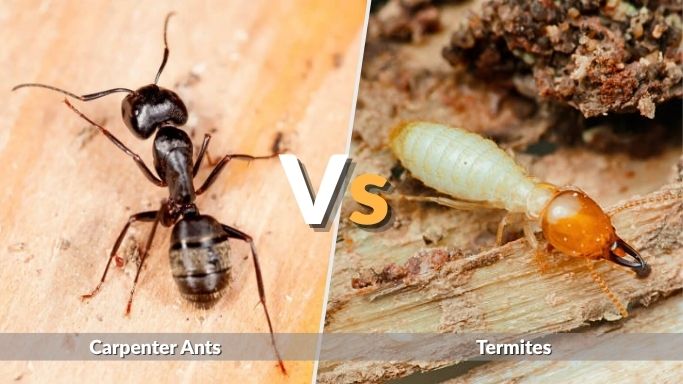
Carpenter ants and termites are two wood-damaging pests that homeowners often confuse. Both can appear near damaged wood, both may have wings during swarming season, and both can become expensive if ignored. The key difference is simple: termites eat wood, while carpenter ants excavate wood to build nests. Knowing the difference helps you choose the right treatment and avoid costly structural damage.
Carpenter Ants vs Termites: Quick Difference
Carpenter ants and termites can look similar from a distance, especially when they are winged swarmers. However, their body shape, wings, antennae, and damage patterns are different. Identifying them correctly is important because termite treatment and carpenter ant treatment are not the same.
| Feature | Carpenter Ants | Termites |
|---|---|---|
| Body shape | Narrow, pinched waist | Broad, straight waist |
| Antennae | Bent or elbowed | Straight |
| Wings | Front wings longer than back wings | Four wings equal in size |
| Wood behavior | Chew tunnels for nesting | Eat wood for food |
| Damage look | Smooth, clean galleries | Muddy or rough tunnels |
| Frass | Sawdust-like wood shavings | Pellets or mud-like material, depending on species |
| Visibility | Often seen walking around | Often hidden inside wood or soil |
| Main risk | Nesting in damp wood | Continuous wood consumption |
Winged ants usually have elbowed antennae, a pinched waist, and unequal wings, while termite swarmers have straight antennae, a thicker waist, and wings of similar size.
Identification: Carpenter Ant vs Termite
Identification is the first step before treatment. Many homeowners see a winged insect near a window and immediately think it is a termite. But winged carpenter ants are also common, especially near moisture-damaged wood, tree stumps, decks, or wall voids.
How to Identify Carpenter Ants
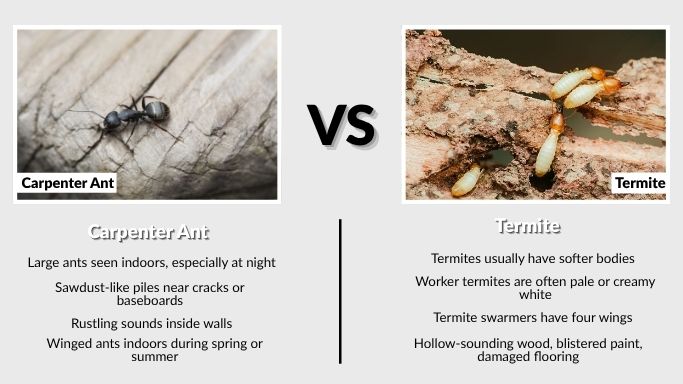
Carpenter ants are usually black, dark brown, reddish-black, or sometimes reddish. They have a clearly pinched waist and bent antennae. Workers are often larger than common household ants. Winged carpenter ants have two pairs of wings, but the front wings are longer than the back wings.
Important carpenter ant signs include:
- Large ants seen indoors, especially at night
- Ants near sinks, bathrooms, windows, roofs, or damp wood
- Sawdust-like piles near cracks or baseboards
- Rustling sounds inside walls
- Winged ants indoors during spring or summer
- Trails leading from trees, firewood, or stumps to the house
Carpenter ants can damage structural wood if they remain inside a building, and finding all nests is one of the most important steps in control.
How to Identify Termites
Termites usually have softer bodies, straight antennae, and a thicker waist. Worker termites are often pale or creamy white, while swarmers may be darker. Termite swarmers have four wings that are almost equal in size and shape.
Common termite signs include mud tubes, discarded wings, hollow-sounding wood, blistered paint, damaged flooring, and hidden tunnels. Termites often stay out of sight, so damage may become serious before the insects are noticed. The EPA recommends learning termite signs early and choosing safe, effective treatment methods when infestation is suspected.
Carpenter Ant Damage vs Termite Damage
The biggest difference is how they damage wood. Carpenter ants do not eat wood. They remove wood to create clean nesting galleries. Termites eat wood and digest cellulose, which means they may continue feeding inside walls, floors, and framing for a long time.
Carpenter Ant Damage
Carpenter ant damage usually appears in damp, soft, or previously damaged wood. The galleries are often smooth, clean, and polished-looking. Because carpenter ants push debris out of their tunnels, you may find small piles of frass near the nest.
Carpenter ant damage is common around:
- Window frames
- Door frames
- Roof leaks
- Bathroom walls
- Kitchen plumbing
- Decks and porches
- Crawl spaces
- Tree stumps and firewood piles
Rutgers Extension notes that carpenter ant tunnels often cross the wood grain, while termite tunnels usually follow the grain. Carpenter ant tunnels are also cleaner, while termite tunnels are often covered with mud.
Termite Damage
Termite damage is usually more hidden and may look like water damage at first. Subterranean termites often build mud tubes to travel between soil and wood. Drywood termites may leave tiny pellets near infested wood. Termite galleries are usually rougher than carpenter ant galleries and may contain mud, soil, or fecal material.
Termite damage may appear as:
- Hollow-sounding wood
- Sagging floors
- Blistered paint
- Mud tubes on walls or foundations
- Discarded wings near windows
- Tiny holes in wood
- Weak or crumbling boards
- Tight doors or windows caused by damaged framing
Termites are often considered more dangerous because they feed directly on wood and can stay hidden for long periods.
Carpenter Ant Frass vs Termite Frass
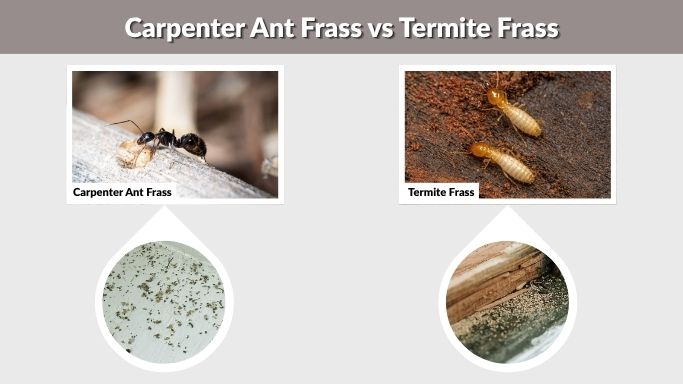
Frass is one of the most searched comparison points because it is often the first visible sign of a wood pest. But carpenter ant frass and termite frass are not the same.
Carpenter Ant Frass
Carpenter ant frass looks like sawdust or wood shavings. It may contain tiny insect parts, soil, or insulation pieces. Since carpenter ants excavate wood but do not eat it, they push the waste material out of their galleries. That is why small piles may appear below wall cracks, window frames, baseboards, or wooden beams.
If you see sawdust-like debris inside your home with large ants nearby, carpenter ants are more likely than termites.
Termite Frass
Termite frass depends on the termite type. Drywood termites often leave hard, tiny, oval pellets that may look like sand, pepper, or small grains. Subterranean termites usually do not leave dry pellets in the same way; they use soil and fecal material to build mud tubes and keep their tunnels moist.
If the material looks like tiny pellets, drywood termites may be involved. If you see mud tubes along the foundation, basement wall, or crawl space, subterranean termites are more likely.
Carpenter Ants With Wings vs Termites
Winged carpenter ants and termite swarmers cause the most confusion. Both may gather near windows, lights, or doors. However, their wings and body shape are different.
Winged Carpenter Ants
Winged carpenter ants have a pinched waist, elbowed antennae, and front wings that are longer than the back wings. Their bodies are usually black, brown, or reddish-black. Seeing winged carpenter ants indoors can be a warning sign of a mature nest inside or near the home.
Winged Termites
Winged termites have a straight body, straight antennae, and four wings of equal size. Their wings are usually longer than the body and may break off easily. Piles of discarded wings near windows, doors, or light fixtures are a common termite warning sign.
If you are unsure, collect a sample in a small container or take clear photos. A pest professional or local extension office may help with identification.
Which Is Worse: Carpenter Ants or Termites?
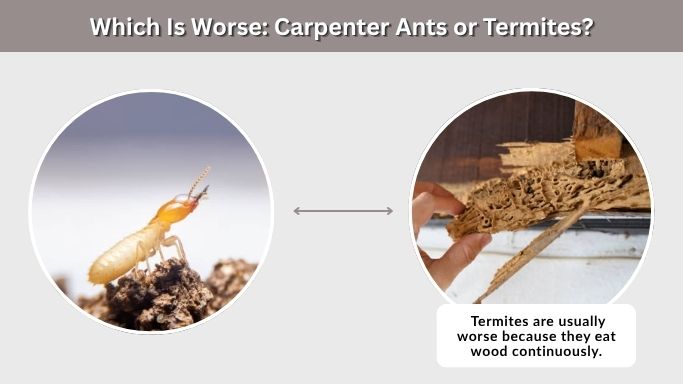
Both can damage a home, but termites are usually worse because they eat wood continuously and may remain hidden for years. Carpenter ants can still cause serious structural problems, especially when they nest in moist wood and expand into sound wood over time.
Carpenter Ant Risk
Carpenter ants often indicate a moisture problem. If you fix the leak, remove rotten wood, and treat the nest, the problem may be controlled before severe damage occurs. However, ignoring them can allow satellite nests to spread through walls, ceilings, and structural wood.
Termite Risk
Termites are more destructive because wood is their food source. A hidden termite colony can weaken framing, floors, and support beams. Homeowners should take termite signs seriously and avoid relying only on surface sprays.
Treatment Differences
Carpenter ants and termites need different control strategies. Treating them the same way can waste time and allow more damage.
Carpenter Ant Treatment
Carpenter ant control focuses on locating the nest, removing moisture, and treating trails or nesting sites. Baits may help if workers carry the bait back to the colony. Damaged wood, tree branches touching the home, wet insulation, and firewood near the foundation should be corrected.
Helpful steps include:
- Follow ant trails at night
- Find moisture-damaged wood
- Repair leaks and drainage issues
- Remove rotting stumps or logs near the house
- Use carpenter ant bait near trails
- Seal cracks and entry points
- Call a professional if nests are inside walls
Termite Treatment
Termite treatment usually needs professional inspection and control. Depending on the termite type, treatment may include soil treatment, bait stations, wood treatment, fumigation, or moisture correction. The EPA explains that registered pesticide products must be reviewed before sale and that termite control should be handled safely and according to product directions.
Do not guess with termites. If you find mud tubes, equal-winged swarmers, hollow wood, or termite pellets, schedule an inspection quickly.
Prevention Tips for Both Pests
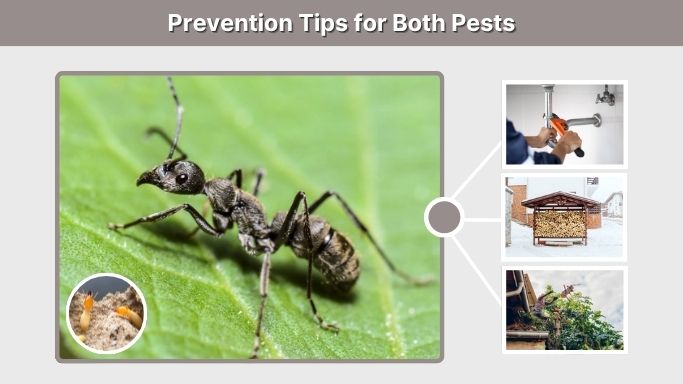
Preventing moisture and wood contact is one of the best ways to reduce both carpenter ant and termite risk. These pests are different, but both are attracted to conditions that make wood easier to enter or damage.
Use these prevention steps:
- Fix roof, plumbing, and gutter leaks
- Keep wood dry and ventilated
- Store firewood away from the house
- Remove old stumps and rotting logs
- Trim branches away from the roof
- Seal gaps around windows and doors
- Keep mulch away from siding
- Repair damaged deck or porch boards
- Inspect crawl spaces and basements
- Schedule inspections if you live in a termite-prone area
FAQs
Are carpenter ants the same as termites?
No, carpenter ants and termites are different insects. Carpenter ants chew wood to create nests, but they do not eat it. Termites eat wood and use it as a food source. Their bodies are also different: ants have pinched waists and bent antennae, while termites have straight bodies and straight antennae.
How can I tell carpenter ant damage from termite damage?
Carpenter ant damage usually has clean, smooth galleries and sawdust-like frass nearby. Termite damage is often rough, muddy, or hidden inside wood. Subterranean termites may create mud tubes, while drywood termites may leave tiny pellets near infested wood.
What does carpenter ant frass look like?
Carpenter ant frass usually looks like sawdust, wood shavings, or small piles of debris. It may include tiny insect parts or insulation material. You may find it below wall cracks, window frames, baseboards, beams, or other areas where ants are tunneling inside wood.
What do termite droppings look like?
Drywood termite droppings often look like tiny hard pellets, similar to sand grains or pepper. Subterranean termites usually make mud tubes instead of leaving dry pellet piles. If you see mud tubes or pellet-like droppings near wood, a termite inspection is recommended.
Should I call a professional for carpenter ants or termites?
Yes, call a professional if you see winged insects indoors, repeated frass piles, mud tubes, hollow wood, or ongoing activity after DIY treatment. Termites almost always need professional inspection. Carpenter ants may also need expert help if the nest is hidden inside walls or structural wood.