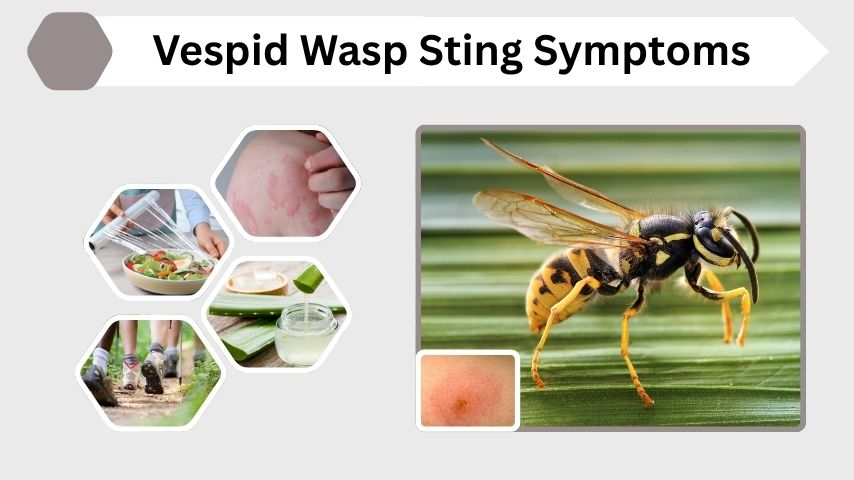
A vespid wasp sting can cause sudden pain, swelling, redness, and itching that may last from several hours to several days. Vespid wasps belong to the Vespidae family and include yellow jackets, hornets, paper wasps, and European wasps. Unlike bees, many vespid wasps can sting multiple times because they do not lose their stinger after attacking. Most stings are mild and improve with home treatment, but some people develop severe allergic reactions that require emergency care. Understanding vespid sting symptoms and treatment helps reduce complications and improve recovery.
What Is a Vespid Wasp?
Vespid wasps are social stinging insects known for building paper-like nests and aggressively defending their colonies. They are commonly found around homes, gardens, trees, roofs, and outdoor structures during warmer months. Many species become more defensive in late summer and early fall.
Common Types of Vespid Wasps
Common vespid wasps include:
- Yellow jackets
- Hornets
- Paper wasps
- European wasps
- Red paper wasps
- Aerial yellow jackets
These insects vary in size and color but share similar stinging behavior.
How Vespid Wasps Differ From Bees
| Feature | Vespid Wasps | Bees |
| Body Shape | Slim and smooth | Hairier and thicker |
| Sting Ability | Can sting repeatedly | Usually sting once |
| Nest Type | Paper nests | Wax hives |
| Aggression | More defensive | Usually calmer |
Why Vespid Wasps Sting
Vespid wasps sting mainly to protect their nests and colonies. Sudden movement, vibrations, or accidental contact with a nest often trigger defensive attacks.
What Happens During a Vespid Wasp Sting?
When a vespid wasp stings, venom enters the skin through the stinger. The venom immediately irritates nerves and tissues, causing pain and inflammation around the sting site.
How Vespid Venom Works
The venom contains chemicals that trigger inflammation and immune responses. Blood vessels widen around the sting area, which creates swelling, redness, and warmth.
Why Vespid Stings Hurt
Pain from a vespid sting is usually described as burning or sharp. This happens because venom directly stimulates nerve endings while also causing skin irritation.
Can Vespid Wasps Sting Multiple Times?
Unlike honey bees, vespid wasps usually keep their stinger after attacking. This allows them to sting repeatedly if they continue feeling threatened.
Common Vespid Sting Symptoms
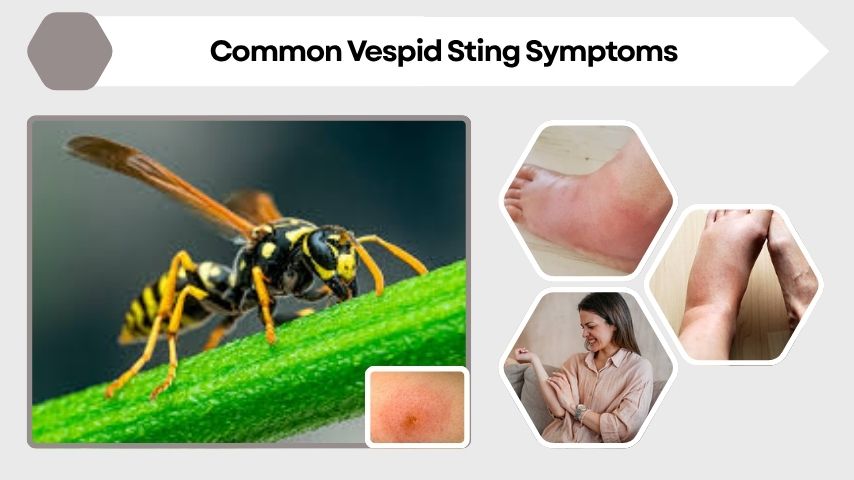
Most vespid stings cause temporary discomfort that improves naturally over time. Symptoms may vary depending on the location of the sting and the person’s sensitivity to venom.
Mild Sting Symptoms
Common mild symptoms include:
- Burning pain
- Redness
- Swelling
- Itching
- Warm skin around the sting
These symptoms often become strongest during the first 24 hours after the sting occurs.
Moderate Sting Reactions
Some people develop larger local reactions where swelling spreads beyond the sting site. A sting on the finger, for example, may cause swelling throughout the hand or wrist.
Vespid Sting Swelling Timeline
| Time After Sting | Common Symptoms |
| First Minutes | Sharp pain and redness |
| 1–6 Hours | Increasing swelling |
| 24–48 Hours | Peak swelling and itching |
| Several Days | Gradual healing |
Allergic Reactions to Vespid Wasp Stings
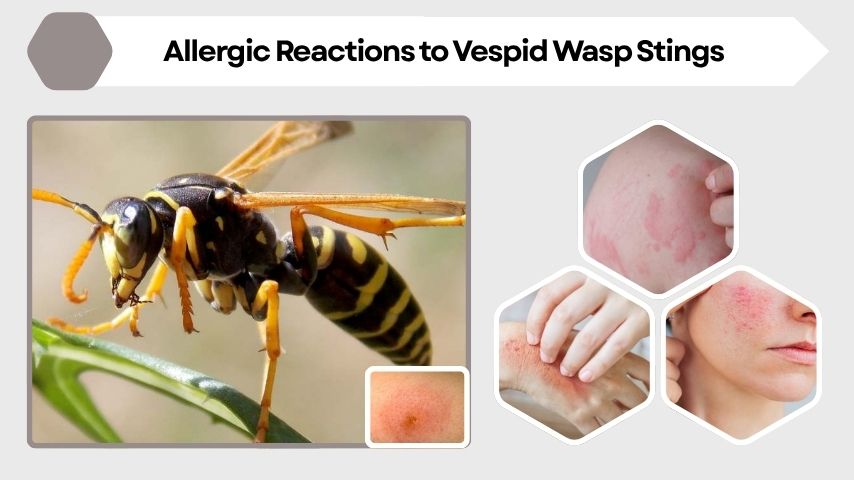
Although most stings are mild, allergic reactions can become dangerous very quickly. Some people are highly sensitive to vespid venom and may experience severe symptoms within minutes.
Mild Allergic Reactions
Mild allergic reactions may include:
- Hives
- Widespread itching
- Skin rash
- Increased swelling
- Red irritated skin
These reactions may continue for several days after the sting.
Severe Allergic Reactions
A severe allergic reaction, also called anaphylaxis, is a medical emergency. Symptoms can include breathing difficulty, throat swelling, dizziness, and rapid heartbeat.
Delayed Allergic Reactions
Some reactions appear several hours or days later. Swelling may return after initially improving, especially in people sensitive to venom.
Yellow Jacket, Hornet, and Paper Wasp Stings
Different vespid wasps may cause slightly different reactions depending on their venom and defensive behavior. Yellow jackets are especially aggressive and may sting multiple times during an attack.
Yellow Jacket Vespid Sting
Yellow jackets are highly defensive and often attack in groups when their nest is disturbed. Their stings usually cause strong burning pain and rapid swelling.
Hornet Sting Reactions
Hornets are larger wasps that can inject more venom with each sting. Swelling from hornet stings may become severe, especially after multiple stings.
Paper Wasp Sting Symptoms
Paper wasp stings commonly produce delayed itching, moderate swelling, and burning discomfort around the sting site.
Vespid Wasp Sting Treatment
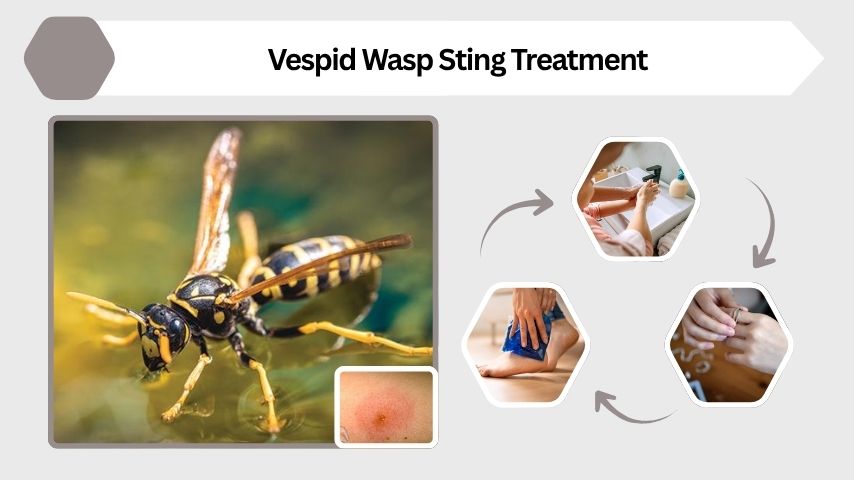
Most mild stings can be treated at home using basic first aid and over-the-counter medications. Quick treatment helps reduce pain and swelling.
Immediate First Aid Steps
Important first aid steps include:
- Move away from the nest area
- Wash the sting site with soap and water
- Apply a cold compress or ice pack
- Remove tight jewelry near swelling
- Keep the area clean
Medications for Relief
Common treatments include antihistamines, hydrocortisone cream, ibuprofen, and acetaminophen. These medications may help reduce itching, swelling, and discomfort.
How to Reduce Swelling
Elevating the affected area and applying cold packs throughout the day may reduce inflammation and improve comfort during recovery.
Natural Remedies for Vespid Wasp Stings
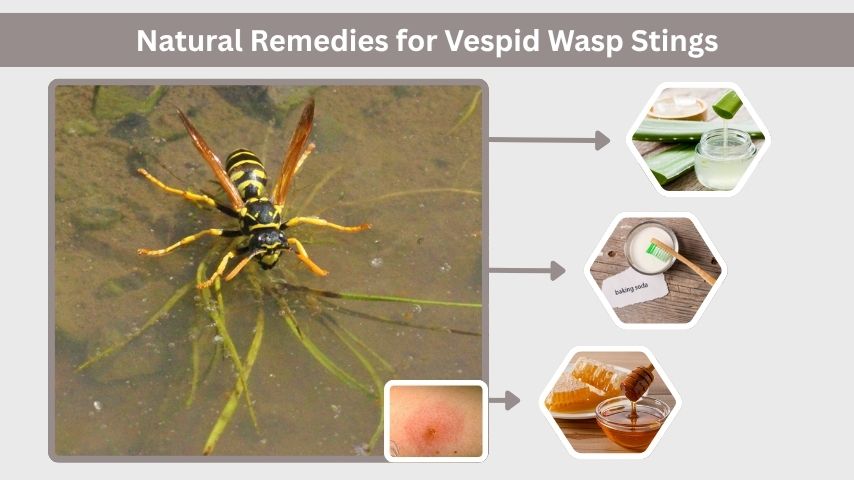
Some people prefer natural remedies to help calm irritation and itching after a sting. While these treatments may not replace medical care, they are commonly used for mild reactions at home.
Aloe Vera and Cooling Treatments
Aloe vera gel may provide temporary cooling relief for irritated skin. Cold compresses also help reduce inflammation and numb the sting area.
Baking Soda Paste
A baking soda paste made with water is often used to soothe itching and burning sensations around the sting site.
Tea Bags and Honey Remedies
Popular home remedies include:
- Cool tea bags
- Honey applications
- Oatmeal paste
- Vinegar solutions
- Ice packs wrapped in cloth
These methods may help reduce mild irritation and swelling.
Vespid Sting Swelling After 48 Hours
Swelling from a vespid sting sometimes continues for several days, especially after large local reactions. In many cases, swelling peaks around 24 to 48 hours before gradually improving.
Is Swelling After Two Days Normal?
Mild to moderate swelling after 48 hours is often normal. Large local reactions may cause swelling that spreads beyond the sting site and lasts up to a week.
Signs Swelling May Be Serious
Some symptoms suggest the reaction may require medical attention, including rapidly spreading redness, severe pain, or fever.
When Swelling Requires Medical Care
Medical evaluation may be necessary if swelling affects breathing, vision, or continues worsening after several days.
Vespid Venom and Immune Response
The body reacts to vespid venom differently depending on a person’s immune sensitivity and previous exposure to stings.
Chemicals in Vespid Venom
Vespid venom contains inflammatory substances that trigger pain, swelling, and redness. The immune system reacts by sending fluids and immune cells to the sting site.
Why Some People React More Strongly
Some individuals naturally have stronger immune responses to insect venom. Previous stings may also increase sensitivity and the risk of allergic reactions.
Venom Immunotherapy
People with severe sting allergies may receive venom immunotherapy, a treatment designed to reduce the risk of dangerous allergic reactions in the future.
Vespid Stings in Children and Pets
Children and pets may react differently to wasp stings because of their smaller body size and increased sensitivity to pain and swelling.
Symptoms in Children
Children commonly experience:
- Swelling and redness
- Crying or emotional distress
- Increased itching
- Puffy skin around the sting
- Fear of additional stings
Most mild stings improve with basic home care and monitoring.
Dog and Cat Sting Reactions
Pets are commonly stung on the face, mouth, or paws while exploring outdoors. Swelling, limping, drooling, or difficulty breathing may occur after a sting.
Emergency Warning Signs
Emergency veterinary or medical care may be necessary if symptoms include breathing problems, throat swelling, collapse, or repeated vomiting.
Preventing Vespid Wasp Stings
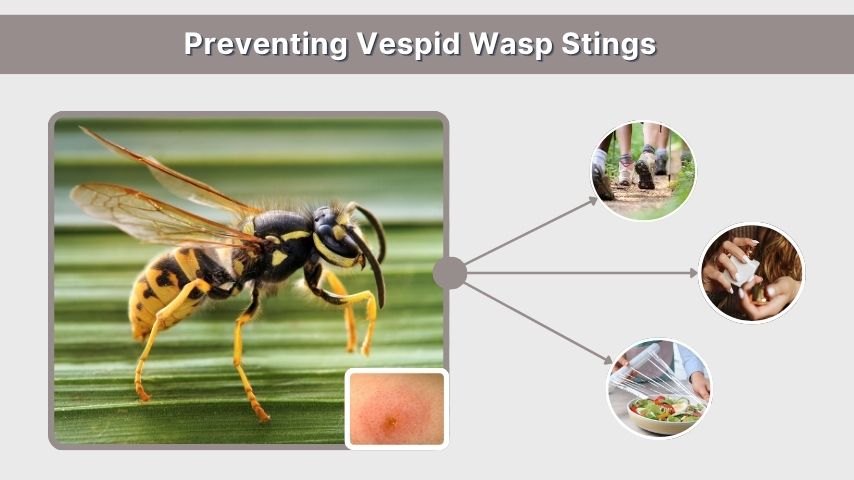
Avoiding stings is the best way to prevent painful reactions and allergic emergencies. Simple precautions can greatly reduce sting risks outdoors.
Avoiding Wasp Nests
People should avoid disturbing visible nests around roofs, trees, sheds, or underground areas. Calm movement around wasps may also reduce defensive behavior.
Outdoor Safety Tips
Helpful sting prevention methods include:
- Avoid sweet drinks outdoors
- Wear shoes outside
- Avoid floral perfumes
- Keep food covered
- Check outdoor furniture before use
Professional Nest Removal
Large or aggressive nests should be removed by trained pest control professionals using proper safety equipment.
When to Seek Emergency Medical Help
Some vespid sting reactions become life-threatening and require immediate treatment. Quick medical attention is especially important for allergic individuals.
Signs of Anaphylaxis
Symptoms of anaphylaxis include:
- Difficulty breathing
- Swollen throat or tongue
- Dizziness or fainting
- Rapid heartbeat
- Severe hives
Multiple Sting Emergencies
Multiple stings can expose the body to large amounts of venom, increasing the risk of toxic reactions and severe swelling.
Emergency Treatment Options
Emergency treatment may include epinephrine injections, oxygen support, intravenous medications, and hospital observation.
FAQs
What is a vespid wasp?
A vespid wasp is a member of the Vespidae family, which includes yellow jackets, hornets, paper wasps, and related social wasps.
Are vespid wasp stings dangerous?
Most stings are mild, but severe allergic reactions or multiple stings can become dangerous and require emergency medical care.
Can vespid wasps sting more than once?
Yes, vespid wasps can sting repeatedly because they usually do not lose their stinger after attacking.
How long does vespid sting swelling last?
Mild swelling often improves within a few days, while large local reactions may last up to a week.
When should you seek medical help after a vespid sting?
Medical attention is important if breathing problems, throat swelling, severe pain, or rapidly spreading swelling occur.