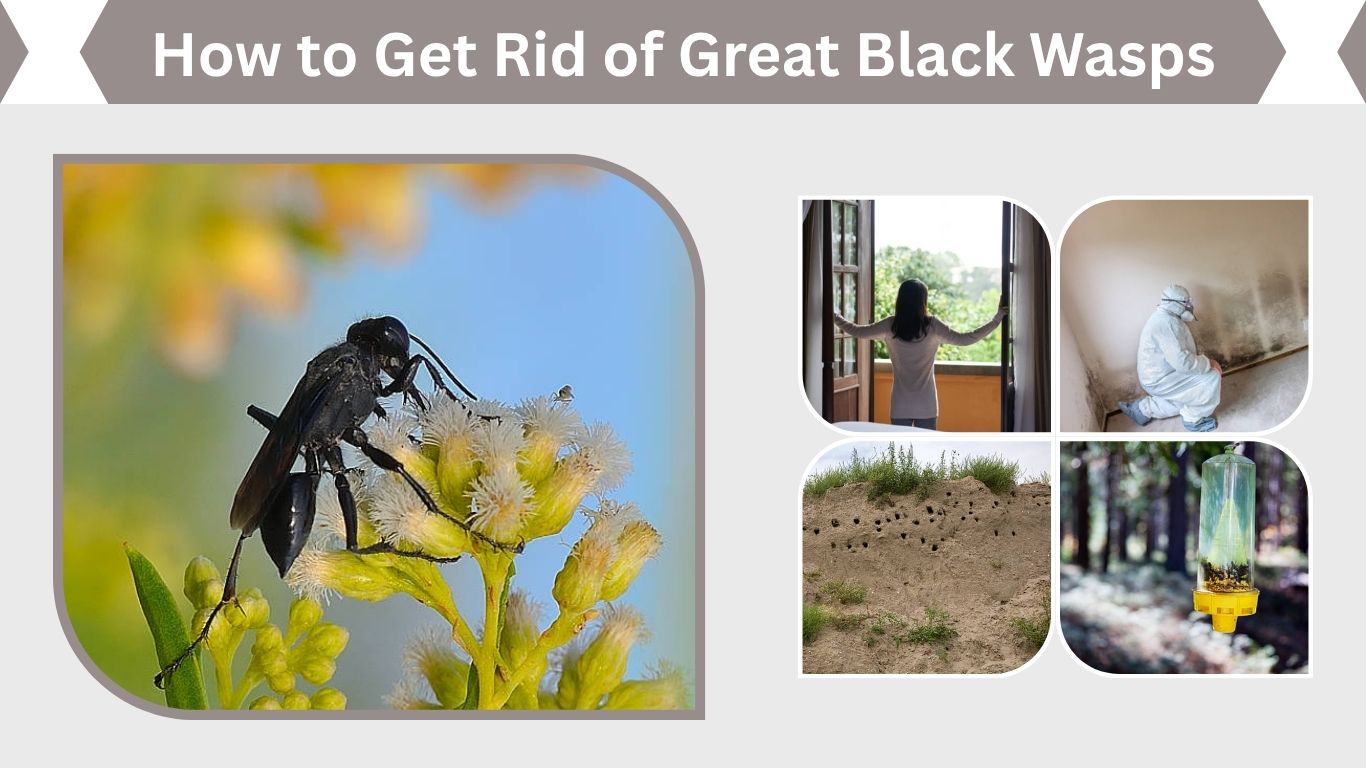
Great black wasps are large solitary insects often seen flying around gardens, lawns, patios, and flower beds during warm months. Although they may appear intimidating because of their size and dark color, these wasps are usually non-aggressive and beneficial to the environment. Many homeowners still want to remove them when nests appear near homes, walkways, or outdoor gathering areas. Learning how to get rid of great black wasps safely can help reduce unwanted activity while avoiding unnecessary harm to beneficial pollinators and natural pest-controlling insects.
What Are Great Black Wasps?
Great black wasps, also called great black digger wasps, are solitary ground-nesting insects known for hunting grasshoppers and crickets. Unlike yellowjackets or hornets, they do not form aggressive colonies or swarm around people.
These wasps are commonly found in gardens and open yards where soil conditions allow easy digging.
Why Great Black Wasps Appear Around Homes
Great black wasps are attracted to areas that provide food, sunlight, and loose soil for nesting. Flowering plants also attract adults because they feed on nectar while searching for prey insects for their larvae.
Common reasons they appear near homes include:
- Dry or sandy soil
- Open lawn areas
- Flower gardens
- High grasshopper populations
- Cracks near sidewalks or foundations
Warm and sunny areas are especially attractive for nesting activity during summer.
Are Great Black Wasps Dangerous?
Great black wasps are generally calm insects that avoid human interaction whenever possible. Female wasps can sting, but this usually happens only if they are trapped, stepped on, or directly threatened.
Because they are solitary wasps, they do not aggressively defend nests like social wasps. This makes them less dangerous than yellowjackets or hornets commonly found around homes.
How to Get Rid of Great Black Wasps Naturally
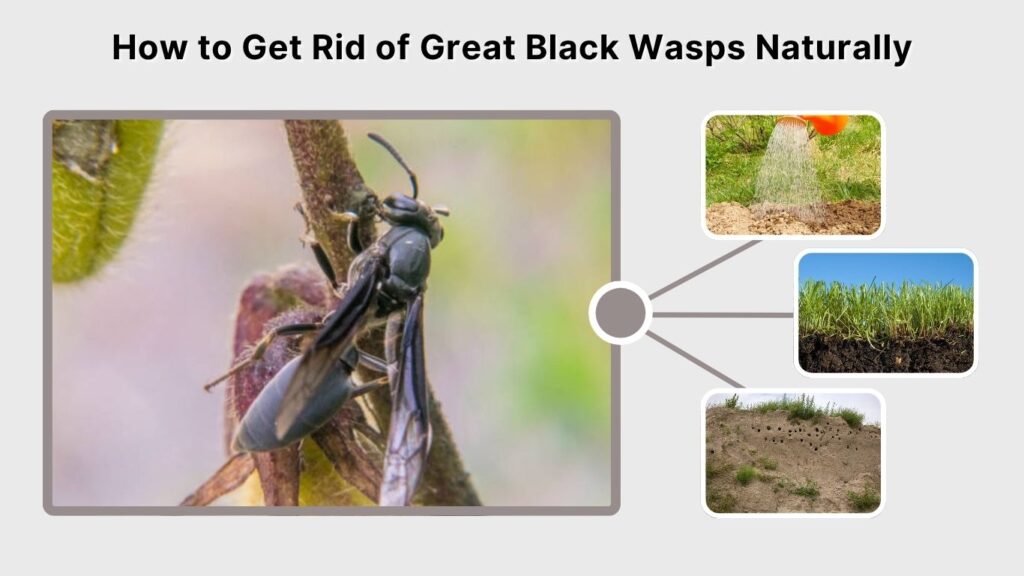
Natural control methods are often the best first step because great black wasps provide important environmental benefits. Changing the conditions that attract them can encourage the insects to move elsewhere without heavy pesticide use.
Reduce Attractive Nesting Areas
Great black wasps prefer loose and dry soil where they can dig tunnels easily. Making the ground less suitable can reduce nesting activity.
Helpful prevention methods include:
- Watering dry soil regularly
- Covering exposed ground with mulch
- Planting thick grass over bare soil
- Filling abandoned burrows
- Reducing sandy patches near homes
These simple changes often discourage future nesting without harming pollinators.
Use Natural Wasp Repellents
Some homeowners use natural repellents to reduce wasp activity around patios and outdoor spaces. While these methods may not eliminate nests completely, they can help make the area less attractive.
Popular natural repellents include:
- Peppermint oil spray
- Vinegar and water mixtures
- Citrus peels
- Soap and water solutions
- Eucalyptus oil sprays
Natural treatments work best when combined with proper yard maintenance and nest prevention.
How to Get Rid of Great Black Wasp Nests
Removing a great black wasp nest usually involves identifying the underground burrow entrance and treating the area carefully. Since these wasps are solitary, nests are generally smaller and easier to manage than social wasp colonies.
Most nest activity occurs during warm daylight hours when females leave to hunt insects.
How to Identify an Active Nest
Great black wasp nests are usually hidden underground and may resemble small holes in dry soil. Watching the movement of wasps is often the easiest way to find the exact nest location.
Signs of an active nest include:
- Small round holes in the ground
- Loose dirt around openings
- Frequent wasp movement
- Wasps carrying insects underground
- Multiple nearby burrows
Observing from a safe distance can help locate nests without disturbing the insects.
Safe Nest Removal Methods
The safest time to treat a nest is during evening or early morning when wasp activity is lower. Homeowners should avoid standing directly over the burrow during treatment.
Common removal methods include:
- Filling inactive holes with soil
- Applying wasp dust carefully
- Flooding abandoned burrows with water
- Covering nesting areas with mulch
- Hiring a pest control professional
Protective clothing is recommended when working near active nesting sites.
How to Get Rid of Great Black Wasps in the House
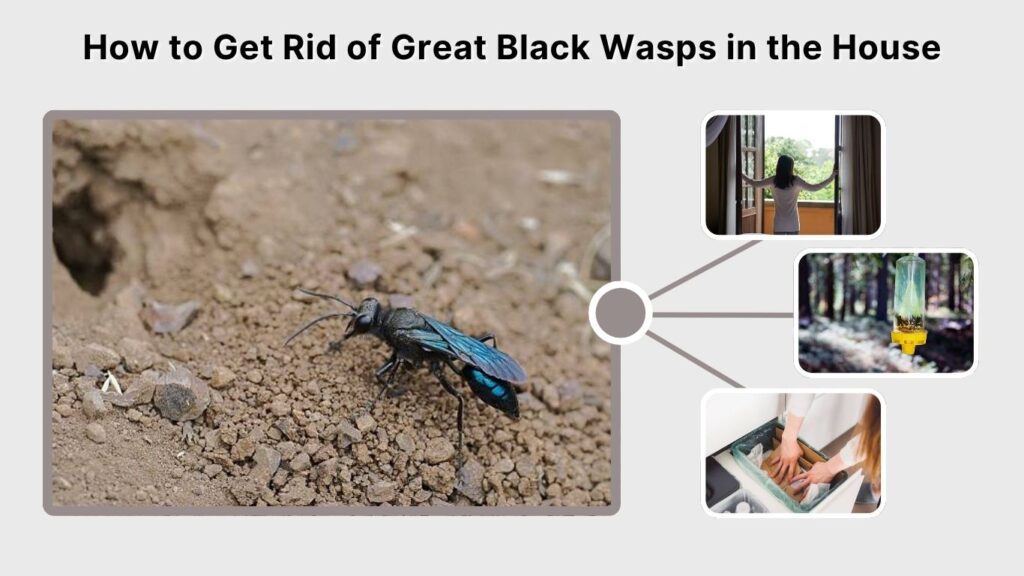
Great black wasps occasionally enter homes through open doors, damaged screens, or small cracks around windows and foundations. Indoor wasps are usually accidental visitors rather than signs of a major infestation.
Why Great Black Wasps Enter Houses
Wasps may fly indoors while searching for light, warmth, or escape routes after becoming trapped near windows or doors. Bright interior lighting can also attract wandering insects at night.
In most cases, a single wasp indoors does not mean there is a nest inside the home.
Safe Indoor Removal
Indoor great black wasps can often be removed without chemicals if handled calmly and carefully.
Recommended indoor removal methods include:
- Opening windows or doors
- Trapping the wasp with a container
- Sliding paper beneath the container
- Releasing the wasp outdoors
- Avoiding sudden movements or swatting
Panic often increases the chance of accidental stings, so calm handling is important.
Chemical Treatments for Great Black Wasps
Some homeowners prefer chemical treatments when natural methods fail or when nests are located in high-traffic areas. Dust insecticides and ground wasp sprays are commonly used for underground nests.
However, pesticides should be used carefully because they may also harm bees and other beneficial insects.
Should You Remove Great Black Wasps?
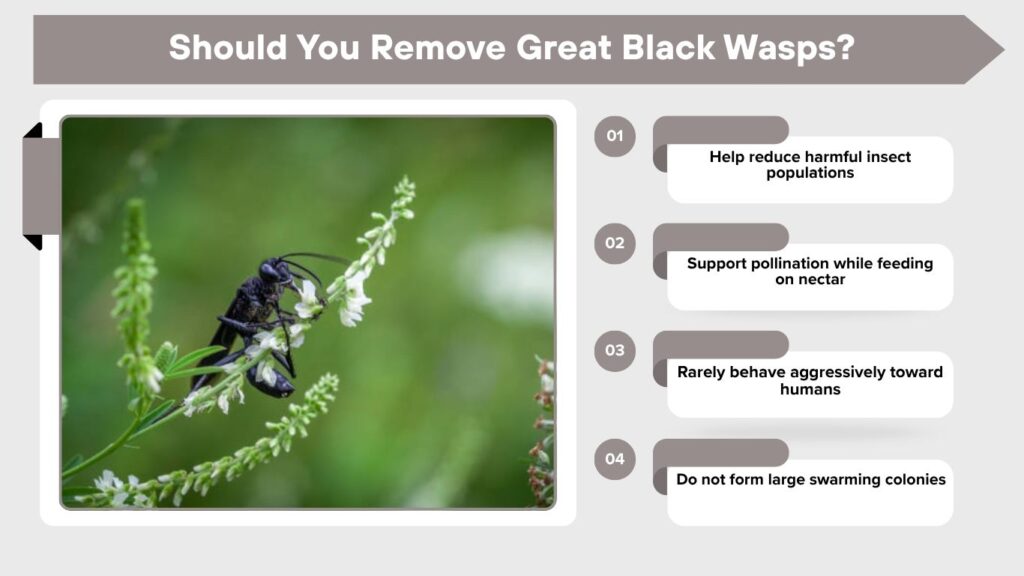
Great black wasps are considered beneficial insects because they help control pest populations naturally. They hunt grasshoppers, crickets, and similar insects that may damage gardens and landscaping.
In many situations, leaving the wasps alone is the safest and most environmentally friendly option.
Benefits of Great Black Wasps
These solitary wasps provide several important ecological benefits in residential landscapes and gardens.
- Help reduce harmful insect populations
- Support pollination while feeding on nectar
- Rarely behave aggressively toward humans
- Do not form large swarming colonies
- Improve natural garden pest control
Because they work independently rather than in colonies, they are much less threatening than social wasp species.
When Removal May Be Necessary
Although generally harmless, removal may be necessary in some cases. Nests located in heavily used outdoor areas can create safety concerns for families, pets, or people with insect sting allergies.
Removal is often recommended when:
- Nests are near entryways
- Children or pets play nearby
- Someone has severe sting allergies
- Large numbers appear in one area
- Wasps repeatedly enter the home
In these situations, professional pest control may provide the safest solution.
Preventing Great Black Wasps From Returning
Long-term prevention focuses on reducing the nesting conditions that attract great black wasps. Since these insects prefer dry, loose soil, small landscaping changes can greatly reduce future activity.
Consistent yard maintenance is often more effective than repeated chemical treatments.
Best Prevention Tips
Several simple prevention methods can help discourage future nesting around homes and gardens.
- Keep lawns thick and healthy
- Cover bare soil with mulch or plants
- Water dry ground regularly
- Seal cracks near foundations
- Remove abandoned nesting burrows
Reducing prey insects such as crickets and grasshoppers may also make the area less attractive for hunting female wasps.
What Kills Great Black Wasps Instantly?
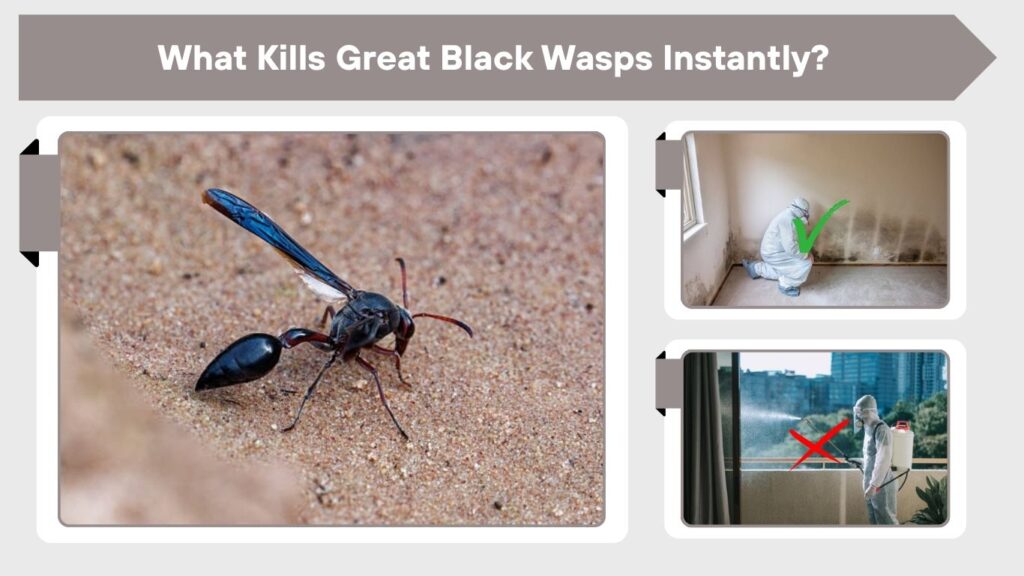
Many homeowners search for fast treatment options when wasps appear near patios or walkways. Commercial wasp sprays and dust insecticides can kill great black wasps quickly when applied directly to active nests.
However, chemical treatments should always be used carefully to avoid harming beneficial pollinators.
Using Wasp Sprays Safely
Ground wasp sprays are often applied during evening hours when activity is lower. Direct treatment of the nest entrance may help reduce active populations.
Important safety precautions include:
- Wear protective clothing
- Keep children and pets away
- Avoid spraying during windy weather
- Follow product label instructions carefully
- Never block escape routes while treating nests
Improper pesticide use can increase sting risks and damage surrounding wildlife.
Great Black Digger Wasp Control for Yards
Yard control usually involves a combination of prevention, habitat modification, and careful monitoring. Since great black wasps are seasonal insects, activity often declines naturally once cooler weather arrives.
Most adult wasps die before winter, leaving only developing offspring underground until the following season.
Yard Maintenance Strategies
Maintaining a healthy yard can significantly reduce nesting opportunities for great black digger wasps.
Helpful landscaping strategies include:
- Aerating compacted soil
- Reducing exposed sandy areas
- Installing ground cover plants
- Removing insect prey sources
- Monitoring sunny nesting spots
These methods create conditions that are less favorable for burrow construction.
Common Mistakes When Removing Great Black Wasps
Homeowners sometimes make mistakes that increase the risk of stings or make wasp problems worse. Understanding proper removal techniques can improve both safety and effectiveness.
Mistakes to Avoid
Several common errors should be avoided during nest treatment and wasp removal.
- Swatting at flying wasps
- Treating nests during daytime activity
- Pouring flammable liquids into burrows
- Blocking active nest entrances immediately
- Ignoring protective safety equipment
Patience and careful planning are much safer than aggressive removal attempts.
FAQs
How do I get rid of great black wasps naturally?
You can naturally reduce great black wasps by watering dry soil, covering bare ground with mulch, planting thick grass, and using peppermint oil or vinegar sprays. Removing attractive nesting areas is often the most effective long-term solution.
Are great black wasps aggressive toward humans?
Great black wasps are usually non-aggressive and prefer to avoid people. Unlike yellowjackets or hornets, they do not swarm or defend large colonies. Female wasps may sting only if directly threatened or trapped.
What attracts great black wasps to my yard?
Great black wasps are attracted to loose sandy soil, flowering plants, and areas with insects such as crickets and grasshoppers. Warm sunny locations with dry ground are ideal nesting environments for these solitary wasps.
Can great black wasps damage my home?
Great black wasps rarely damage homes because they typically nest underground rather than inside walls or structures. However, they may enter houses accidentally through open doors, cracks, or damaged window screens.
Should I remove a great black wasp nest?
Removal is usually unnecessary unless the nest is located near high-traffic areas, pets, or people with severe sting allergies. Since great black wasps are beneficial pollinators and pest controllers, leaving them undisturbed is often the best option.