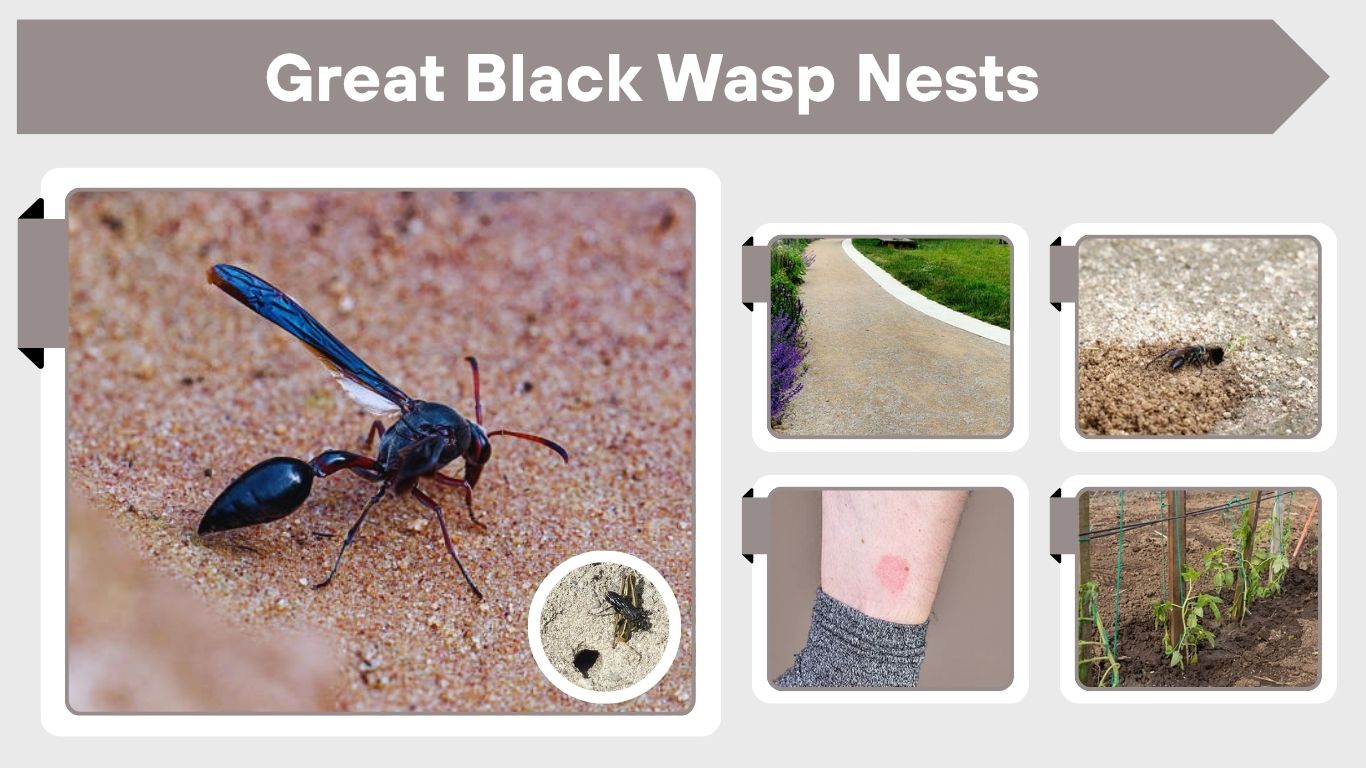
Great black wasps are large solitary insects commonly seen flying around gardens, lawns, and flower beds during summer. Although their size and dark appearance may seem intimidating, these wasps are generally non-aggressive and beneficial to the environment. Many homeowners search for great black wasp nests after noticing holes in the ground or increased wasp activity near their homes. Understanding where these wasps nest, what their nests look like, and how to manage them safely can help prevent unnecessary fear while protecting beneficial pollinators and natural pest controllers.
What Is a Great Black Wasp?
Great black wasps, scientifically known as Sphex pensylvanicus, are solitary digger wasps found throughout many parts of North America. Unlike social wasps such as yellowjackets, they do not live in large colonies or defend communal nests aggressively.
These wasps are easy to recognize because of their shiny black bodies, long wings, and large size. Adult females spend much of their time digging nests and hunting insects for their young.
Why Great Black Wasps Are Beneficial
Great black wasps play an important role in gardens and natural ecosystems. They help control insect populations and also contribute to pollination while feeding on flower nectar.
Benefits of great black wasps include:
- Hunting grasshoppers and crickets
- Pollinating flowering plants
- Reducing garden pest populations
- Rarely stinging humans
- Supporting healthy ecosystems
Because they are solitary insects, they are usually far less aggressive than social wasp species.
What Does a Great Black Wasp Nest Look Like?
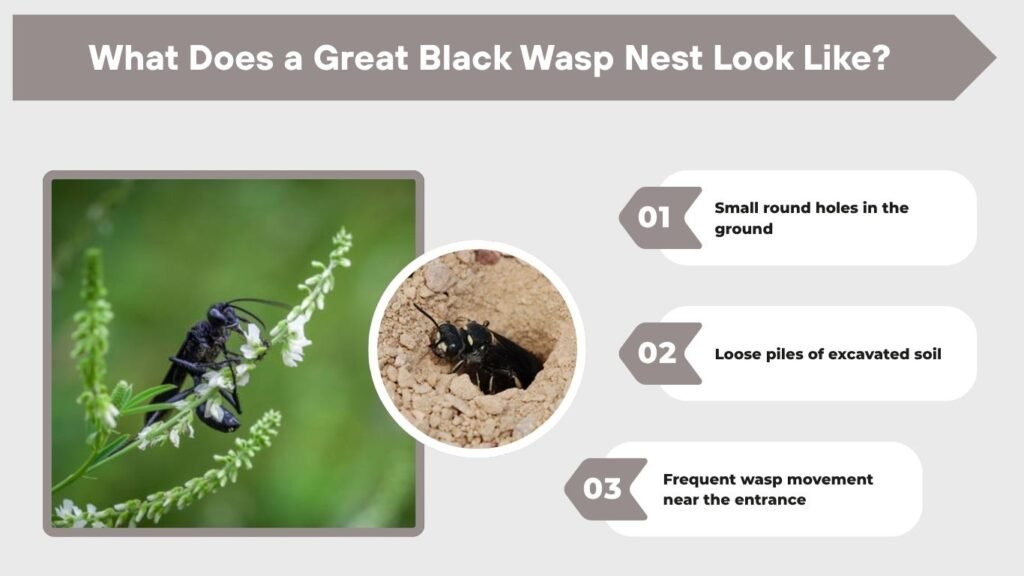
Great black wasp nests are usually hidden underground and can be difficult to notice unless the wasps are actively entering or leaving the burrow. Most nests appear as small holes in dry soil with loose dirt surrounding the entrance.
Unlike paper wasps or hornets, great black wasps do not build hanging paper nests in trees or roof corners.
Main Features of a Great Black Wasp Nest
Several signs can help identify a great black wasp nest in lawns, gardens, or landscaping areas.
- Small round holes in the ground
- Loose piles of excavated soil
- Frequent wasp movement near the entrance
- Sandy or dry nesting areas
- Multiple nearby burrows in some locations
The nests may appear alone or grouped in areas with suitable soil conditions.
Great Black Wasp Nest Size
The tunnel system created by female wasps can extend several inches underground. Inside the nest are separate chambers used for eggs and food storage.
Each chamber typically contains paralyzed insects that will serve as food for developing larvae after the eggs hatch.
Where Do Great Black Wasps Nest?
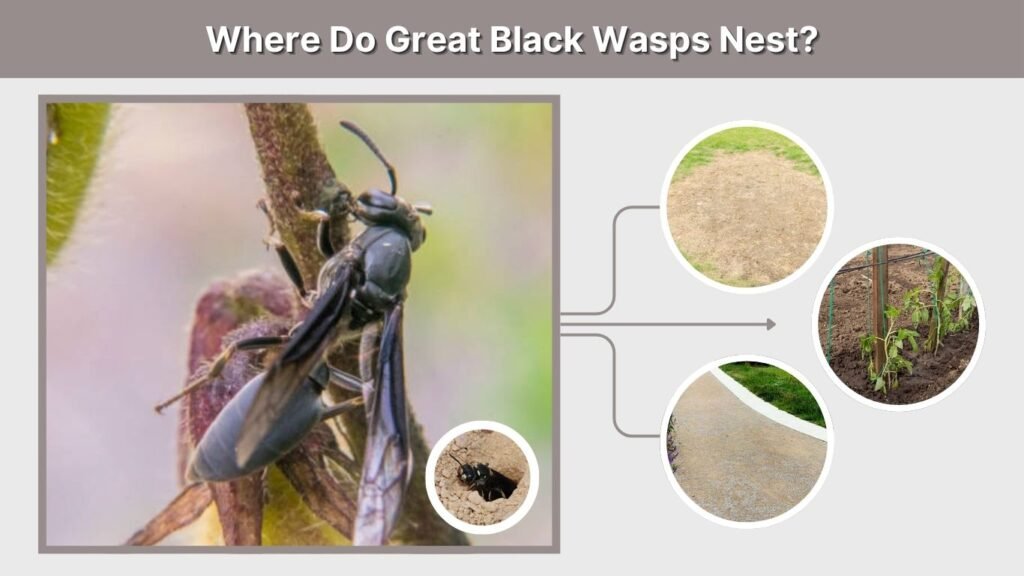
Great black wasps strongly prefer underground nesting sites. They usually select dry, loose, and sandy soil where digging is easier. Gardens, lawns, flower beds, and open ground near homes are common nesting locations.
Although they are ground nesters, some wasps may occasionally use existing cavities or abandoned insect tunnels above ground.
Underground Great Black Wasp Nests
Most great black wasp nests are built underground. Female wasps dig tunnels using their legs and jaws, creating chambers where eggs are deposited.
Common underground nesting locations include:
- Bare soil patches
- Dry garden beds
- Sandy pathways
- Lawn edges
- Areas near patios or sidewalks
The wasps often prefer sunny areas with minimal vegetation because digging is easier in loose soil.
Great Black Wasps Near Homes
Homeowners sometimes notice great black wasps nesting close to foundations, driveways, or garages. The insects are attracted to warm soil and protected nesting areas around buildings.
Despite their intimidating appearance, these wasps usually ignore people unless directly handled or threatened. Their solitary nature means they do not swarm like social wasps.
Great Black Wasp Nesting Habits
Great black wasps spend much of their lives searching for food, digging nests, and caring for offspring. Female wasps work independently and do not rely on worker wasps to maintain nests.
The nesting process is highly organized and designed to protect developing larvae underground.
How Great Black Wasps Build Nests
The female begins by digging a tunnel into suitable soil. She then creates several side chambers where eggs and prey insects are stored.
Typical nesting behavior includes:
- Digging underground burrows
- Hunting crickets and grasshoppers
- Paralyzing prey with stings
- Placing insects inside chambers
- Laying eggs beside stored prey
After sealing the chamber, the female continues creating additional nesting cells nearby.
Do Great Black Wasps Use Leaves?
Great black wasps do not use leaves or paper materials to build nests like paper wasps or hornets. Their nests are made entirely within soil tunnels and underground chambers.
This difference helps homeowners distinguish great black wasps from other common wasp species that build visible hanging nests around houses or trees.
How to Find a Great Black Wasp Nest
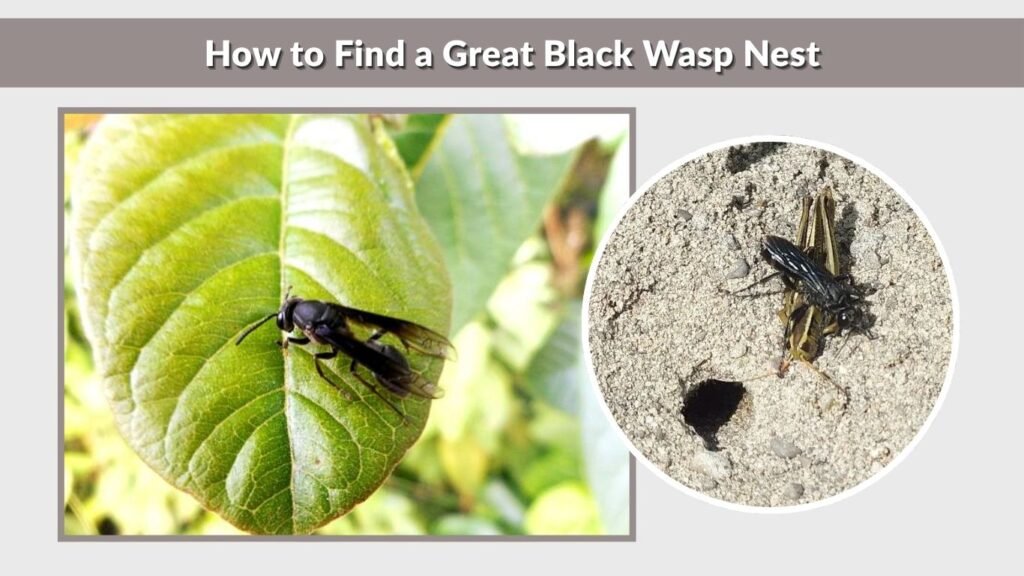
Finding a great black wasp nest usually requires observing the movement of adult wasps during warm daylight hours. The insects frequently fly low over the ground before entering nest openings.
Active nests are most noticeable during summer when females are hunting insects and expanding nesting chambers.
Signs of Active Nesting
Several behaviors can help identify an active nesting site.
- Wasps repeatedly entering the same hole
- Fresh soil around burrows
- Increased activity during warm afternoons
- Hunting behavior near gardens
- Multiple nearby nesting holes
Watching from a safe distance is usually enough to locate the nest entrance without disturbing the wasps.
Great Black Wasp Nest Removal
Great black wasps are generally considered beneficial insects, so removal is not always necessary. However, nests located near entryways, patios, playgrounds, or heavily used yard areas may become a concern for homeowners.
Because these wasps are solitary, removing nests is usually much easier and safer than dealing with aggressive social wasps.
Should You Remove Great Black Wasp Nests?
In many cases, leaving the nests alone is the best option because great black wasps help reduce harmful insect populations naturally. They rarely sting humans and usually avoid direct interaction.
Removal may be necessary when:
- Nests are near children or pets
- Burrows create hazards in lawns
- Large numbers appear near entrances
- Someone in the home has insect sting allergies
- Nesting activity becomes disruptive
Most nests become inactive once the season ends, as adult wasps typically die off before winter.
How to Remove a Great Black Wasp Nest Safely
Safe removal should focus on minimizing stress to both people and beneficial insects. Since great black wasps are not aggressive colony defenders, chemical treatments are often unnecessary.
Recommended removal methods include:
- Filling inactive burrows with soil
- Watering dry soil to discourage nesting
- Covering nesting areas with mulch
- Reducing bare sandy ground
- Contacting a pest professional if needed
Avoid disturbing active nests directly during peak daytime activity because females may sting if trapped or handled.
Are Great Black Wasps Dangerous?
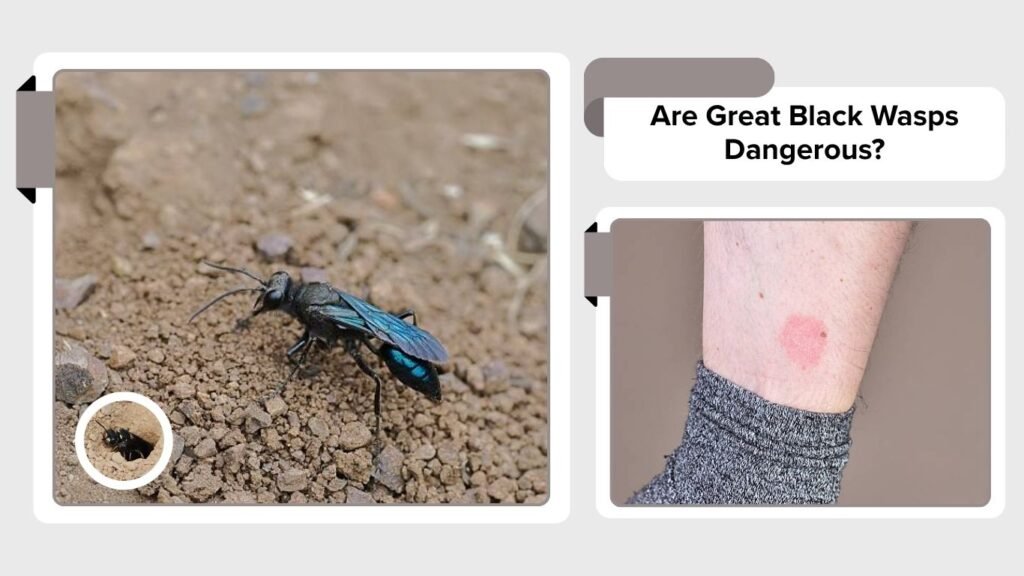
The large size and loud buzzing of great black wasps often make people nervous, but these insects are not considered highly dangerous. They are solitary hunters and do not aggressively defend nests like hornets or yellowjackets.
Female wasps can sting, but this usually happens only when they are grabbed, stepped on, or threatened.
Do Great Black Wasps Sting?
Yes, female great black wasps are capable of stinging because they use their stinger to paralyze prey insects for their larvae. Male wasps do not have stingers.
Most stings occur accidentally and are typically mild for people without allergies.
Are Great Black Wasps Aggressive?
Great black wasps are generally calm around humans. They often continue feeding or digging even when people are nearby.
Unlike social wasps, they do not swarm or attack in groups because each female manages her own nest independently. This solitary lifestyle makes them far less aggressive than common household wasps.
Great Black Wasp Larvae and Nest Chambers
Inside the underground nest, female wasps prepare chambers where larvae will develop safely. Each chamber contains food stored specifically for the young wasp after the egg hatches.
The prey is carefully selected and paralyzed rather than killed immediately.
What Do Great Black Wasps Put in Their Nests?
Female great black wasps commonly hunt insects such as crickets and grasshoppers. After stinging and paralyzing the prey, they drag it into the underground chamber before laying an egg nearby.
Common prey items include:
- Grasshoppers
- Crickets
- Katydids
- Small insects living in vegetation
When the egg hatches, the larva feeds on the stored insects until it matures into an adult wasp.
Regional Great Black Wasp Nesting Habits
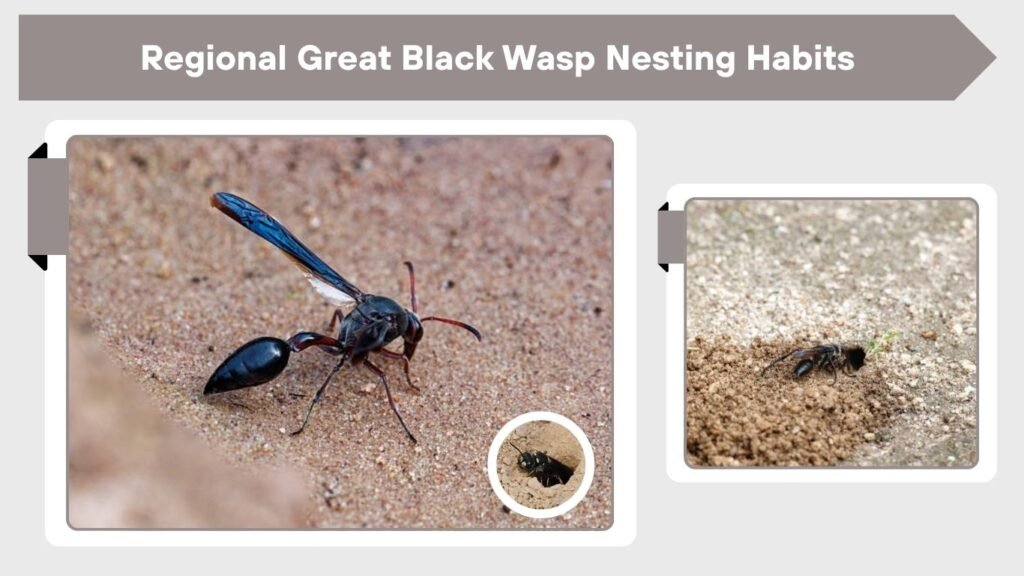
Great black wasps are found across many parts of the United States, especially in warm months when soil conditions are suitable for nesting.
Regional climate and soil quality can influence where nests are commonly found.
Great Black Wasps in Michigan
In Michigan, great black wasps are often seen nesting in sandy lawns, gardens, and open soil during summer. Sunny locations with loose soil are especially attractive for burrow construction.
Great Black Wasps in Minnesota
Minnesota homeowners may notice these wasps around dry ground, sidewalks, and flower beds in warmer months. Ground nesting is common where soil remains well-drained and lightly vegetated.
Great Black Wasps in Pennsylvania
Pennsylvania provides excellent habitat for great black wasps because of its combination of gardens, wooded areas, and open landscapes. Nesting activity often peaks during mid to late summer.
Preventing Future Great Black Wasp Nests
Preventing future nests usually involves making the area less attractive for digging and nesting. Since these wasps prefer loose, dry soil, changing soil conditions can help reduce activity naturally.
Best Prevention Methods
Simple landscaping adjustments may discourage nesting around homes.
- Cover bare soil with grass or mulch
- Keep soil slightly moist during summer
- Seal cracks near foundations
- Reduce exposed sandy areas
- Maintain thick lawn coverage
These methods are often enough to encourage wasps to move to more suitable natural habitats nearby.
FAQs
What does a great black wasp nest look like?
A great black wasp nest usually appears as a small hole in dry or sandy soil with loose dirt around the entrance. The actual nest consists of underground tunnels and chambers used for eggs and stored prey insects.
Where do great black wasps usually build nests?
Great black wasps commonly build nests in gardens, lawns, flower beds, sandy soil, and areas near sidewalks or patios. They prefer sunny locations with loose ground that is easy to dig.
Are great black wasps harmful to humans?
Great black wasps are generally not harmful and rarely sting people unless threatened or handled directly. Unlike social wasps, they do not swarm or aggressively defend nests.
How deep are great black wasp nests?
Most great black wasp nests extend several inches underground and contain multiple chambers. The depth depends on soil conditions and the number of nesting cells created by the female wasp.
Why are great black wasps attracted to my yard?
Great black wasps are attracted to yards with loose soil, flowering plants, and plenty of insects such as grasshoppers and crickets. These conditions provide ideal nesting areas and food sources for their larvae.