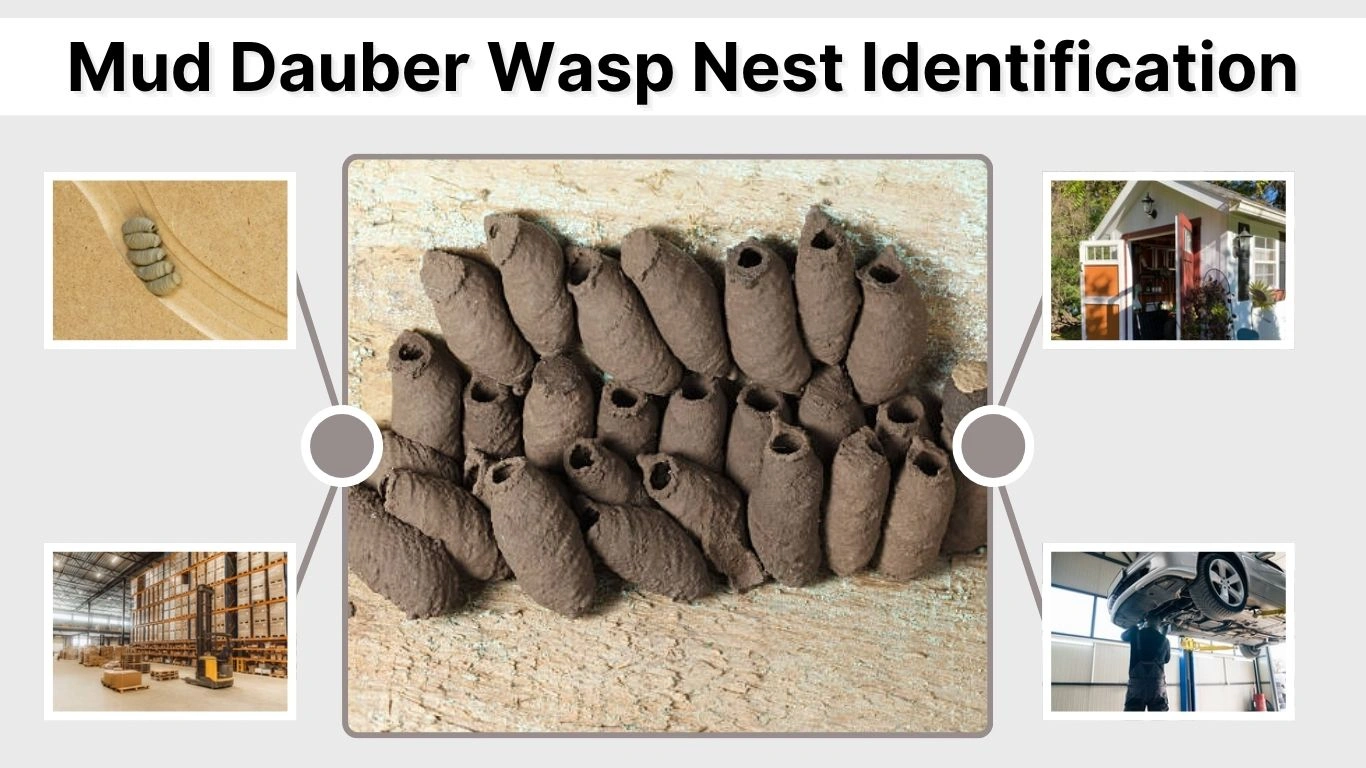
Mud dauber wasp nests are commonly found around garages, porches, attics, and outdoor walls where these solitary insects can safely build their mud chambers. Unlike aggressive social wasps, mud daubers are usually calm and rarely sting humans. Their nests often attract attention because of their unusual tube-like appearance and the spiders stored inside for developing larvae. Understanding how to identify mud dauber nests, where they are commonly located, and how to remove them safely can help homeowners manage these insects without unnecessary concern.
What Is a Mud Dauber Wasp Nest?
Mud dauber nests are hardened mud structures built by solitary wasps to protect eggs and developing larvae. These nests are very different from paper wasp or hornet nests because they are made entirely from mud rather than chewed wood fibers.
What Does a Mud Dauber Wasp Nest Look Like?
Mud dauber nests are usually small clusters of mud tubes or chambers attached to walls, ceilings, or sheltered surfaces. Their rough clay-like appearance makes them easy to identify once dried. Depending on the species, nests may appear as long narrow tubes or grouped mud compartments.
Why Mud Dauber Nests Are Unique
Several characteristics make mud dauber nests different from other wasp nests:
- Made entirely from mud or clay
- Built by solitary wasps rather than colonies
- Contain separate chambers for eggs
- Usually found in sheltered dry locations
- Rarely defended aggressively
How Mud Daubers Build Their Nests
Female mud daubers collect wet mud from puddles or damp soil and carry it back to a protected area. They shape the mud into small chambers where eggs are placed along with paralyzed spiders that serve as food for the larvae after hatching.
Mud Dauber Nest vs Wasp Nest

Many homeowners confuse mud dauber nests with paper wasp nests because both are commonly attached to buildings. However, their appearance, materials, and behavior are very different. Understanding these differences can help identify whether the insects nearby are aggressive or mostly harmless.
Mud Dauber Nest vs Paper Wasp Nest
Mud dauber nests are fully enclosed mud structures, while paper wasp nests are open comb-like structures made from chewed wood fibers. Paper wasps also live in colonies, which makes them more defensive around their nests.
Important differences include:
- Mud daubers use mud while paper wasps use paper-like material
- Mud dauber nests are tube-shaped or clustered
- Paper wasp nests have visible open cells
- Mud daubers are solitary insects
- Paper wasps aggressively defend colonies
Wasp Nest vs Mud Dauber Nest
A traditional wasp nest often contains dozens or hundreds of insects working together inside a colony. Mud dauber nests, however, are designed only for individual offspring. This is one reason mud daubers are much less likely to sting humans near the nest area.
Paper Wasp vs Mud Dauber Nest
Paper wasp nests are usually suspended beneath roof edges or branches and appear lightweight and papery. Mud dauber nests are heavier, rougher, and more solid because they are made from dried mud. Their appearance alone is often enough to tell the two species apart.
Types of Mud Dauber Wasp Nests

Different mud dauber species build slightly different nests depending on their habitat and behavior. Some species create long tube-shaped nests while others form rounded mud chambers grouped closely together.
Blue Mud Dauber Wasp Nest
Blue mud daubers are metallic blue-black wasps that commonly reuse old nests created by other mud dauber species. They often repair abandoned nests instead of building entirely new structures, especially around garages, barns, and sheds.
Black Mud Dauber Wasp Nest
Black mud dauber nests are commonly found in warm regions where damp soil is easy to access. These nests are usually thicker and more compact than those of some other mud dauber species.
Yellow-Legged Mud Dauber Wasp Nest
Yellow-legged mud daubers are known for their long tube-shaped nests and distinctive yellow legs. Their nests are often attached beneath eaves, porches, and outdoor ceilings where rain exposure is limited.
Where Are Mud Dauber Wasp Nests Found?

Mud daubers prefer protected nesting locations that remain dry and undisturbed. Homes and outdoor structures provide ideal shelter from predators and harsh weather conditions, which is why nests are frequently found near people.
Mud Dauber Wasp Nest in Attic
Attics are common nesting locations because they offer warmth, shelter, and little disturbance. Small openings around vents or roofing materials often allow mud daubers to enter and build nests safely inside.
Mud Dauber Wasp Nest Inside House
Mud dauber nests may occasionally appear inside garages, storage rooms, sheds, or behind doors and windows. Indoor nesting usually occurs when access points remain open during warmer months.
Mud Dauber Wasp Nest on Window
Windows and window frames provide stable surfaces protected from heavy rain and wind. Mud daubers often attach nests in corners where they can remain hidden while still allowing easy access for hunting spiders nearby.
What Is Inside a Mud Dauber Wasp Nest?
Mud dauber nests may look simple from the outside, but each mud chamber serves as a protected nursery for developing wasps. Inside the nest are eggs, paralyzed spiders, and larvae that feed safely until they mature into adult wasps.
Mud Dauber Wasp Nest Spiders
Mud daubers are skilled spider hunters. Female wasps capture spiders, sting them to cause paralysis, and place them inside the nest chambers. The spiders remain alive but unable to move, which keeps them fresh as food for the developing larvae.
Common spiders found inside mud dauber nests include:
- House spiders
- Orb-weaver spiders
- Wolf spiders
- Crab spiders
- Occasionally black widow spiders
Inside Mud Dauber Wasp Nest
Each mud chamber usually contains one egg and several spiders stored for food. After the egg hatches, the larva feeds on the spiders until it is fully developed. The larva then enters the pupal stage before emerging as an adult wasp.
Unlike social wasps, mud daubers do not maintain active colonies around the nest. Once the chambers are sealed, the adult female often leaves permanently and does not guard the developing offspring.
How Many Wasps Are in a Mud Dauber Nest?
Many homeowners expect mud dauber nests to contain large numbers of insects, but these nests are usually much smaller than colony-based wasp nests. Each chamber generally supports only one developing larva.
A single mud structure may contain:
- One egg per chamber
- Several chambers in one nest
- Only a few developing wasps overall
- No worker colony or queen system
Do Mud Dauber Wasps Stay With Their Nests?
Mud dauber wasps behave very differently from social wasps such as yellowjackets or paper wasps. They do not guard nests aggressively or remain nearby in large groups. This solitary behavior is one reason they are considered less dangerous around homes.
Do Mud Dauber Wasps Make Communal Nests?
Mud daubers are solitary insects, meaning each female creates and manages her own nest. Multiple nests may appear close together in favorable locations, but the wasps do not cooperate as a colony.
This solitary lifestyle means:
- No organized colony structure
- No worker wasps defending the nest
- Minimal interaction between adult wasps
- Lower risk of aggressive swarming
Mud Dauber Wasp Emergence Time From Nest
Young mud dauber wasps usually emerge during warmer months after completing development inside sealed mud chambers. In many regions, emergence occurs during spring or summer when temperatures rise and insect activity increases.
The timing depends on climate, species, and weather conditions. In colder regions, development may take longer because winter temperatures slow growth inside the nest.
How to Get Rid of Mud Dauber Wasp Nests

Mud dauber nests are generally harmless, but some homeowners remove them because of appearance, indoor nesting, or repeated activity around entrances. Safe removal methods can help prevent future nesting without unnecessary exposure to stings.
How to Remove Mud-Dauber Wasp Nest
Old or inactive mud nests can usually be removed by gently scraping them from the surface using a putty knife or similar tool. Protective gloves are recommended during removal because old nests may contain insects or debris.
The best time for removal is during cooler morning or evening hours when wasp activity is low. If nests are active, extra caution should be used to avoid disturbing the insects directly.
How to Get Rid of Mud Dauber Wasp Nest Safely
Several methods can help reduce mud dauber nesting activity around the home:
- Remove old nests quickly
- Seal cracks and small openings
- Reduce spider populations indoors
- Keep garages and sheds clean
- Eliminate standing water or wet mud sources
How to Remove Mud Dauber Wasp Nests From Soffits
Soffits and roof overhangs are common nesting areas because they provide protection from rain. Cleaning these areas carefully helps discourage future nesting activity. Using a long-handled scraper or gentle pressure washer can help remove dried mud without damaging surfaces.
Are Mud Dauber Wasp Nests Dangerous?
Mud dauber nests may appear alarming, especially when several are attached to walls or ceilings, but they are usually low-risk compared to nests built by social wasps. Mud daubers rarely sting unless directly threatened or trapped.
Can Mud Dauber Wasps Sting?
Yes, mud dauber wasps can sting, but stings are uncommon because these insects are not naturally aggressive. Most people can safely observe them without provoking defensive behavior.
Should You Remove Mud Dauber Nests?
Removing nests is often a personal decision based on location and comfort level. Nests near doors, windows, or frequently used areas may need removal, while isolated outdoor nests are usually harmless and may even help control spider populations nearby.
FAQs
What does a mud dauber wasp nest look like?
A mud dauber wasp nest usually looks like a group of small mud tubes or clay chambers attached to walls, ceilings, or sheltered corners. The surface appears rough and hardened after drying, which makes it different from paper wasp nests.
Are mud dauber wasp nests dangerous?
Mud dauber nests are generally not dangerous because the wasps are solitary and rarely aggressive. Unlike social wasps, they do not defend nests in large groups. Most nests can remain undisturbed unless they are located in high-traffic areas around the home.
Why are spiders inside mud dauber nests?
Mud daubers place paralyzed spiders inside nest chambers as food for developing larvae. After the egg hatches, the larva feeds on the stored spiders until it grows into an adult wasp. This hunting behavior also helps reduce spider populations near homes.
Do mud dauber wasps reuse old nests?
Some species, especially blue mud daubers, commonly reuse abandoned nests built by other mud dauber wasps. They may repair damaged sections and add new chambers instead of building an entirely new nest from scratch.
How do you safely remove a mud dauber nest?
Mud dauber nests can usually be removed by scraping dried mud away with a putty knife or similar tool while wearing gloves. Removal is safest during cooler hours when wasp activity is low. Sealing cracks and cleaning old nests can help prevent future nesting.