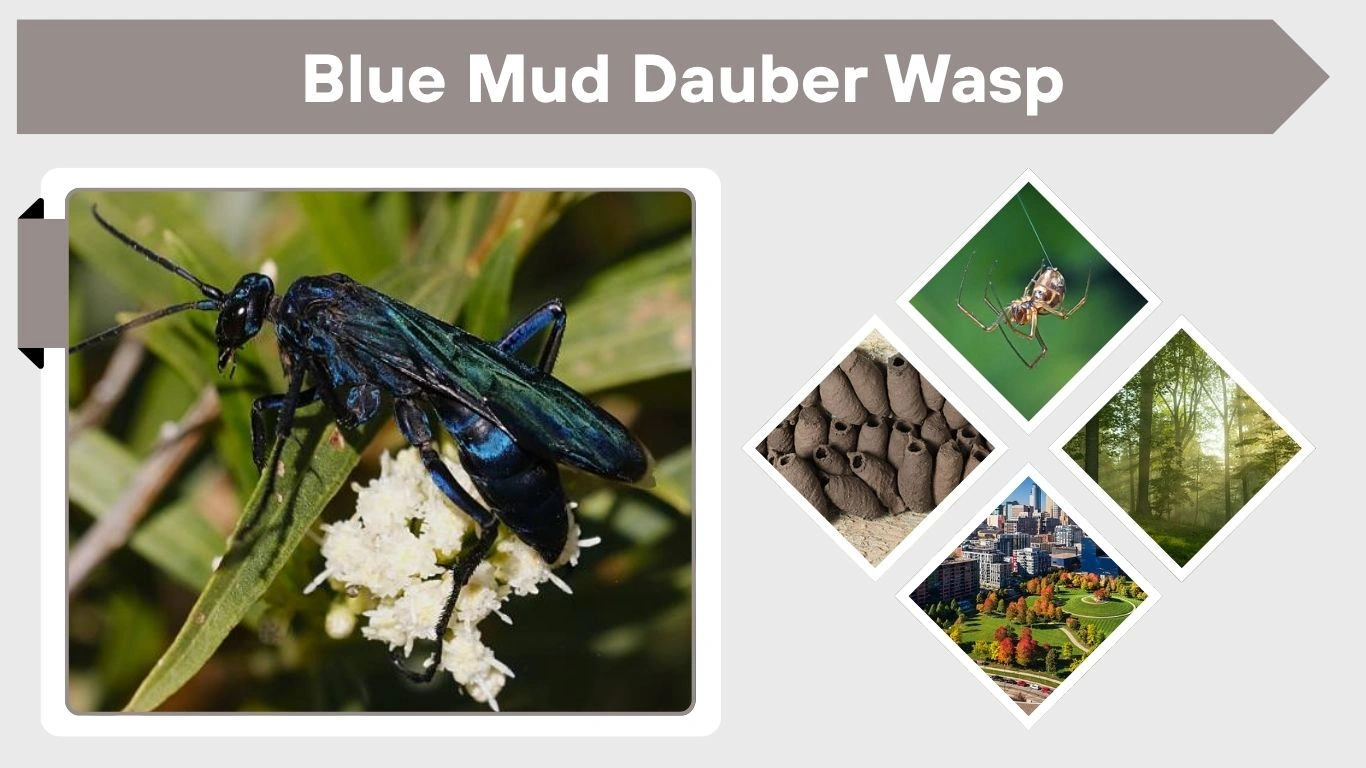
Blue mud dauber wasps are unusual insects that often surprise homeowners because of their shiny metallic blue bodies and quiet behavior. Unlike aggressive social wasps, these solitary hunters rarely bother people and spend most of their time searching for spiders. They commonly build mud nests around garages, sheds, porches, and attics, which makes many people curious or concerned when they appear near the home. Understanding their appearance, nesting habits, and sting behavior can help you decide whether they are harmless visitors or pests that need removal.
What Is a Blue Mud Dauber Wasp?
Blue mud dauber wasps are solitary wasps known for their metallic blue-black appearance and mud-building behavior. They are considered beneficial insects because they help control spider populations. Unlike yellowjackets or hornets, they do not live in colonies or aggressively defend nests.
Scientific Name and Classification
The scientific name of the blue mud dauber wasp is Chalybion californicum. It belongs to the Sphecidae family, a group commonly called thread-waisted wasps. These insects are widely distributed throughout North America and are especially common in warmer regions where spiders and mud sources are easy to find.
Common Names
Blue mud daubers are known by several common names depending on the region. Some of the most common include:
- Blue mud dauber wasp
- Nearctic blue mud-dauber wasp
- Mud dauber blue wasp
- Common blue mud dauber
Why Blue Mud Daubers Are Unique
Several characteristics make these wasps different from other common stinging insects:
- Solitary rather than social
- Metallic dark blue body color
- Specialize in hunting spiders
- Build nests from mud instead of paper
- Rarely sting humans
What Does a Blue Mud Dauber Wasp Look Like?

Blue mud dauber wasps have a slender body shape with a narrow waist and long legs. Their shiny metallic blue coloring makes them easier to identify than many other wasp species. Although they look intimidating, their body structure is built more for hunting spiders than attacking people.
Physical Appearance
The body of a blue mud dauber usually appears deep metallic blue or blue-black in sunlight. Their wings are dark and slightly transparent, while their long legs hang downward during flight. They have smooth bodies without the fuzzy appearance commonly seen on bees.
Blue Mud Dauber Wasp Size
Most blue mud dauber wasps measure between 0.75 and 1 inch long. Females are often slightly larger because they carry spiders and build nests. Their narrow body shape can make them appear longer than they actually are when flying around structures.
Difference Between Blue Mud Dauber and Other Wasps
Many people confuse blue mud daubers with aggressive wasp species. However, they behave very differently from social wasps such as yellowjackets or paper wasps.
Key differences include:
- Blue mud daubers live alone instead of in colonies
- They build mud nests instead of paper nests
- They rarely defend nests aggressively
- Their primary prey is spiders
- They are less likely to sting humans
Blue Mud Dauber vs Great Black Wasp
The great black wasp is another large solitary wasp that resembles the blue mud dauber. Both species have dark bodies and hunt insects or spiders, but there are several visible differences.
The blue mud dauber has a metallic blue shine, while the great black wasp usually appears solid black with little reflective color. Great black wasps also have thicker bodies and often hunt grasshoppers instead of spiders. Blue mud daubers are usually slimmer and more delicate in appearance.
Where Are Blue Mud Dauber Wasps Found?

Blue mud dauber wasps are common throughout much of North America. They prefer warm climates but can also survive in cooler regions during the summer months. Because they search for sheltered nesting spaces, they are frequently found around homes and buildings.
Blue Mud Dauber Wasp Distribution
These wasps are widely distributed across the United States, Mexico, and parts of Canada. They are especially common in southern states where warm weather allows longer nesting seasons. In northern areas, they are mostly active during late spring and summer.
Blue Mud Dauber Wasp Range
The range of the blue mud dauber extends across nearly all of the continental United States. They can be found in rural fields, forests, suburban neighborhoods, and urban environments. Areas with accessible mud, water, and spider populations tend to attract larger numbers of these insects.
Blue Mud Dauber Wasp in Canada
Blue mud dauber wasps are also found in some Canadian regions, including Ontario. Warmer summer temperatures allow them to nest successfully in garages, barns, sheds, and covered outdoor structures. Their activity in Canada is usually shorter because of colder winters.
Blue Mud Dauber Wasp Nest Explained
Blue mud dauber nests are one of the easiest ways to identify these insects. Unlike paper wasps that build hanging paper nests, blue mud daubers construct tube-shaped nests using wet mud. These nests are commonly attached to walls, ceilings, and sheltered surfaces around buildings.
What Does the Nest Look Like?
A blue mud dauber nest usually appears as a cluster of narrow mud tubes. The dried mud surface may look rough or cracked over time. Older nests are sometimes reused or modified by other insects after the original wasp leaves the area.
How Blue Mud Daubers Build Their Nests

Female blue mud dauber wasps gather wet mud and carry it to protected locations where they build narrow chambers. Each chamber is designed to hold a single egg along with several paralyzed spiders that will serve as food for the developing larva. After stocking the chamber, the female seals it with another layer of mud.
These wasps often reuse abandoned nests created by other mud dauber species. Instead of constructing an entirely new nest every time, they may repair and expand older mud structures. This behavior helps conserve energy and allows them to produce more offspring during the nesting season.
Blue Mud Dauber Wasp Eggs
The eggs of blue mud daubers are small and usually hidden deep inside mud chambers. After the egg hatches, the larva feeds on the stored spiders until it is ready to pupate. The young wasp later emerges as a fully developed adult by breaking through the dried mud wall.
Do Blue Mud Dauber Wasps Sting?

Blue mud dauber wasps can sting, but they are considered one of the least aggressive wasp species. Most people never experience a sting because these insects prefer avoiding human contact. They typically sting only if trapped, handled, or directly threatened.
Are Blue Mud Dauber Wasps Aggressive?
Unlike social wasps that defend large colonies, blue mud daubers have little reason to attack people. Their solitary lifestyle means they do not guard nests aggressively. Even when nesting around homes, they usually continue hunting spiders without disturbing nearby humans.
Their calm nature is one reason many pest experts recommend leaving them alone unless nests become a problem in high-traffic areas. In many situations, they are more beneficial than harmful because they reduce spider populations around buildings.
Blue Mud Dauber Wasp Sting Symptoms
A blue mud dauber sting is usually mild compared to stings from yellowjackets or hornets. Common symptoms may include temporary discomfort, redness, and slight swelling around the sting site. Most reactions disappear within a few hours or days without medical treatment.
People with insect sting allergies may experience stronger reactions. In rare cases, symptoms such as severe swelling, difficulty breathing, or dizziness require immediate medical attention.
Blue Mud Dauber Wasp Sting Treatment
Most mild stings can be treated at home using basic first aid methods. Common treatments include:
- Washing the area with soap and water
- Applying a cold compress to reduce swelling
- Using antihistamines for itching
- Avoiding scratching the affected skin
- Monitoring for allergic reactions
What Do Blue Mud Dauber Wasps Eat?

Blue mud dauber wasps mainly feed on nectar as adults, but they are also skilled spider hunters. Their hunting behavior makes them important natural pest controllers in gardens, garages, barns, and outdoor structures.
Spider Hunting Behavior
Female blue mud daubers search for spiders, sting them to cause paralysis, and carry them back to the nest. The spiders remain alive but unable to move, which keeps them fresh for developing larvae. This hunting strategy helps ensure a stable food source for young wasps.
Some of the spiders targeted by blue mud daubers include common house spiders and even dangerous species such as black widows. Because of this, many homeowners tolerate their presence around the property.
Blue Mud Dauber Wasp vs Black Widow
Blue mud daubers are well known for hunting black widow spiders. Although black widows are venomous, the wasps can overpower them using quick attacks and precise stings. This behavior benefits homeowners because it helps reduce populations of potentially harmful spiders near living spaces.
How to Get Rid of Blue Mud Dauber Wasps
Although blue mud daubers are generally harmless, some people prefer removing them when nests appear in garages, porches, or entryways. Proper prevention methods can help reduce future nesting activity without encouraging more wasps to return.
How to Get Rid of Blue Mud Dauber Wasp Nests
The safest time to remove a nest is during cooler hours when the wasps are inactive. Old nests can often be scraped away using a putty knife or similar tool. Protective gloves are recommended when handling abandoned mud nests.
Preventing Future Infestations
Several prevention methods can discourage blue mud daubers from nesting around your home:
- Seal cracks and gaps around walls
- Reduce spider populations indoors
- Remove abandoned mud nests quickly
- Keep garages and sheds clean
- Limit standing water and wet mud sources
FAQs
Do blue mud dauber wasps sting humans?
Yes, blue mud dauber wasps can sting humans, but stings are uncommon. These wasps are solitary and non-aggressive, so they usually avoid people unless they are trapped or directly handled. Most homeowners never experience a sting even when nests are nearby.
Are blue mud dauber wasps dangerous?
Blue mud dauber wasps are generally not considered dangerous. Their stings are usually mild and cause only temporary pain or swelling. They are actually beneficial insects because they hunt spiders, including black widows, which helps reduce pest populations around homes.
What attracts blue mud dauber wasps?
Blue mud daubers are attracted to areas with mud, water, sheltered nesting spaces, and large spider populations. Garages, sheds, barns, porches, and attics often provide ideal nesting conditions, especially when spiders are present nearby.
How big are blue mud dauber wasps?
Most blue mud dauber wasps grow between 0.75 and 1 inch long. Their long narrow waist and metallic blue body can make them appear larger while flying. Females are usually slightly bigger because they carry mud and spiders to their nests.
Should I remove blue mud dauber nests?
Removing blue mud dauber nests is usually unnecessary unless they are located in busy areas around the home. Since these wasps are calm and beneficial, many people leave them alone. If removal is needed, it is safest to remove old nests during cooler hours when wasp activity is low.