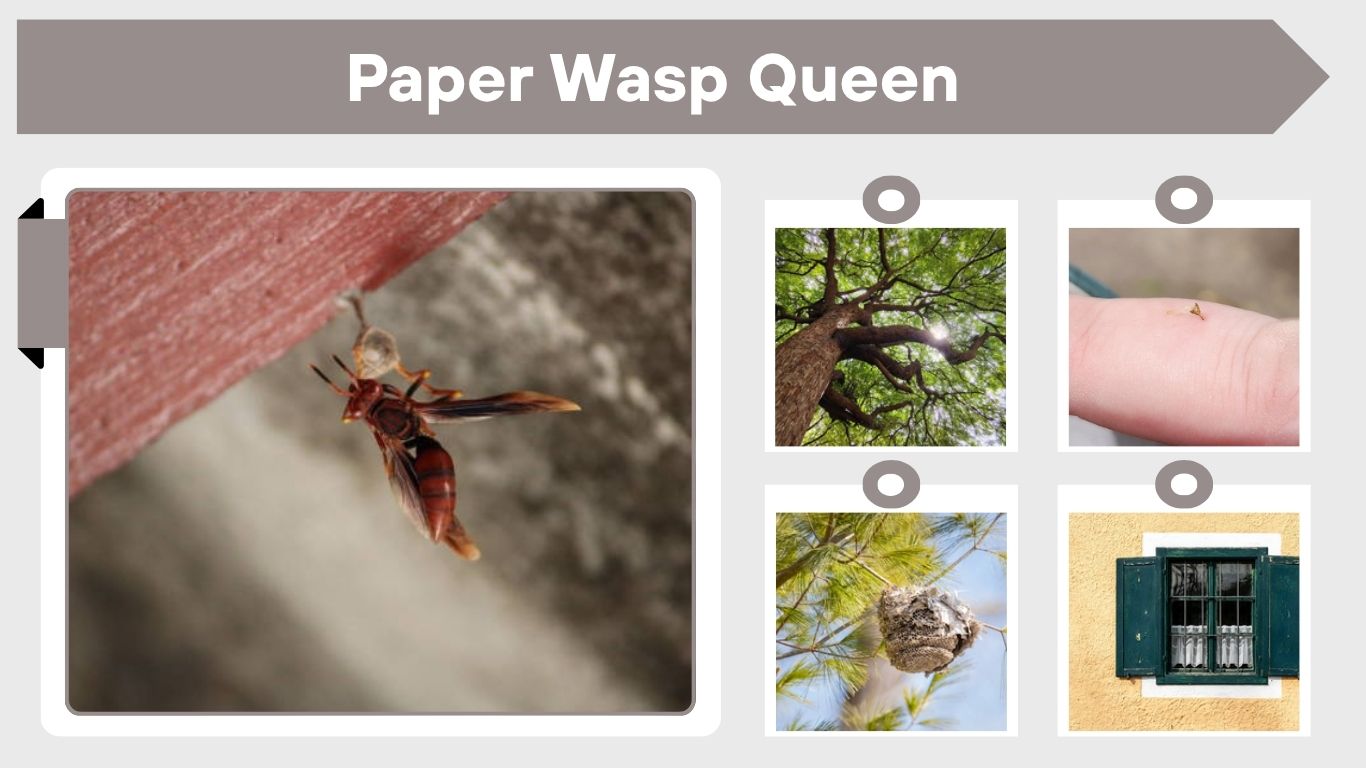
Paper wasps are common insects found in many regions, often recognized by their umbrella-shaped nests and slender bodies. At the center of every colony is the paper wasp queen, the most important individual responsible for reproduction and colony survival. Understanding how to identify the queen, how she behaves, and how she differs from workers can help you better recognize these insects and avoid unnecessary concern around them.
What Is a Paper Wasp Queen?
The paper wasp queen is the founding and reproductive member of the colony. She is the first to emerge after winter and takes on the responsibility of starting a new nest. Unlike worker wasps, the queen’s primary role is laying eggs and ensuring the growth of the colony. Without her, the colony cannot function or survive for long.
Do Paper Wasps Have a Queen?
Yes, paper wasps do have a queen, and her role is central to colony organization. In early spring, multiple female wasps may compete for dominance, but eventually, one becomes the primary queen. The others either leave or take on worker roles. This system ensures a clear hierarchy where reproduction is controlled by a single individual.
What Does a Paper Wasp Queen Look Like?

This section helps you visually identify a queen paper wasp. While differences between queens and workers can be subtle, careful observation of size, shape, and behavior can make identification easier, especially early in the season when the colony is just forming.
Physical Characteristics
- Slightly larger body than worker wasps
- More elongated abdomen
- Stronger and more dominant posture
Color Variations by Species
- Red paper wasp queen: reddish-brown body
- European paper wasp queen: yellow and black markings
- Brown or northern species: darker tones
Paper Wasp Queen vs Worker
Understanding the difference between a queen and a worker is essential for accurate identification. Although they look similar, their roles and behaviors within the colony are very different, especially during the early stages of nest development.
Key Differences
- Queen lays eggs and leads the colony
- Workers build the nest and gather food
- Queen is slightly larger in size
Behavioral Differences
- Queen stays near the center of the nest
- Workers are more active outside the nest
- Workers defend the colony more frequently
Paper Wasp Queen vs Other Wasps

This section compares the paper wasp queen with other types of wasp queens. These differences help avoid confusion, especially since some species, like yellow jackets, are often mistaken for paper wasps due to similar coloring.
Paper Wasp vs Yellow Jacket Queen
Paper wasps have longer legs and slimmer bodies, while yellow jackets are more compact and aggressive. Yellow jackets also build enclosed nests, unlike the open comb structure of paper wasps.
Paper Wasp vs Hornet Queen
Hornet queens are generally larger and bulkier than paper wasp queens. Their nests are fully enclosed and often found in trees or hidden spaces, making them visually and behaviorally distinct.
Lifecycle of a Paper Wasp Queen
The lifecycle of a paper wasp queen follows a seasonal pattern that begins with survival through winter and ends with the creation of a new generation. Each stage plays a crucial role in maintaining the species and ensuring colony continuity year after year.
Spring Colony Formation
In spring, the queen emerges from hibernation and begins building a small nest. She lays the first batch of eggs and cares for them until they develop into worker wasps.
Summer Colony Expansion
During summer, worker wasps take over tasks such as foraging and nest building. The queen remains focused on laying eggs, allowing the colony to grow rapidly.
Fall and Winter Transition
As temperatures drop, new queens are produced. These queens leave the nest to find shelter and hibernate, while the original queen and workers die off.
Do Paper Wasp Queens Hibernate?
Paper wasp queens are the only members of the colony that survive winter. They enter a dormant state known as hibernation, hiding in protected locations such as tree bark, wall crevices, or attics. This survival strategy allows them to re-emerge in spring and start the cycle again.
Nest Building and Role of the Queen

This section explains how the queen initiates and manages the early stages of nest development. Her role is critical before worker wasps emerge, as she alone is responsible for construction, feeding larvae, and protecting the nest during its most vulnerable phase.
How the Queen Builds the Nest
The queen begins by selecting a sheltered location and chewing wood fibers mixed with saliva to create a paper-like material. She forms small hexagonal cells where eggs are laid. This initial structure is simple but essential for colony growth.
Early Colony Responsibilities
- Builds and maintains the first nest cells
- Lays and protects eggs
- Feeds larvae by hunting small insects
Do Queen Paper Wasps Sting?

This section addresses a common concern about safety and human interaction. Many people wonder whether the queen is more dangerous than other wasps, but her behavior is generally defensive rather than aggressive.
Stinging Behavior
Queens are capable of stinging and will do so if they feel threatened. However, they are not naturally aggressive and usually avoid confrontation unless their nest is disturbed.
Is the Sting Dangerous?
For most people, a sting causes temporary pain, swelling, and redness. Severe reactions are rare and typically occur only in individuals with allergies to wasp venom.
Are Paper Wasp Queens More Aggressive?
This section explores behavior patterns and corrects common misconceptions. While wasps are often seen as aggressive insects, queens are usually less active in defense compared to worker wasps.
Behavior Around Humans
Queens tend to remain on or near the nest and are less likely to engage unless directly threatened. Workers, on the other hand, are more active and defensive.
When Aggression Occurs
Aggression usually happens when the nest is disturbed or when the wasps feel their colony is in danger. The queen’s priority is survival and reproduction, not confrontation.
What Happens If the Queen Dies?
This section explains how the colony reacts to the loss of its queen. Since the queen is the primary reproductive individual, her absence significantly affects colony stability and long-term survival.
Colony Changes
- Workers may begin laying unfertilized eggs
- Colony organization becomes unstable
- Growth and reproduction decline
Long-Term Outcome
Without a queen, the colony usually cannot sustain itself. Over time, the nest becomes inactive and eventually dies out.
Where Do Paper Wasp Queens Live?

This section focuses on habitat and nesting preferences. Paper wasp queens choose locations that provide protection and easy access to resources needed for building and feeding the colony.
Common Nesting Locations
- Roof eaves and building corners
- Tree branches and shrubs
- Window frames or sheltered outdoor structures
Winter Shelters
During colder months, queens hide in protected spaces such as wall gaps, under bark, or inside attics to survive until spring.
Paper Wasp Queen Identification Tips
This section provides practical guidance for identifying a queen in real-life situations. Since visual differences can be subtle, combining physical traits with behavior improves accuracy.
How to Identify a Queen
- Look during early spring when the queen is alone
- Observe slightly larger size compared to others
- Notice central position and reduced movement
Common Identification Mistakes
- Confusing large workers with the queen
- Relying only on size differences
- Ignoring behavioral cues
FAQs
How long does a paper wasp queen live?
A paper wasp queen typically lives about one year. She survives winter by hibernating, emerges in spring to start a new colony, and dies in late fall after producing new queens that will continue the cycle.
Can there be more than one queen in a paper wasp nest?
In early spring, multiple females may compete to become the queen. However, only one usually becomes dominant, while the others either leave or take on worker roles within the colony.
What does a queen paper wasp look like compared to workers?
A queen looks very similar to workers but is slightly larger with a more developed abdomen. Behavior is a better clue—queens stay on the nest and focus on laying eggs rather than foraging.
Do paper wasps become aggressive if the queen dies?
Paper wasps do not become significantly more aggressive if the queen dies. Instead, the colony becomes disorganized, and some workers may attempt to lay eggs, leading to eventual collapse.
Where does a paper wasp queen go in winter?
During winter, the queen leaves the nest and hibernates in protected places such as tree bark, wall crevices, or attics. She remains dormant until warmer temperatures return in spring.