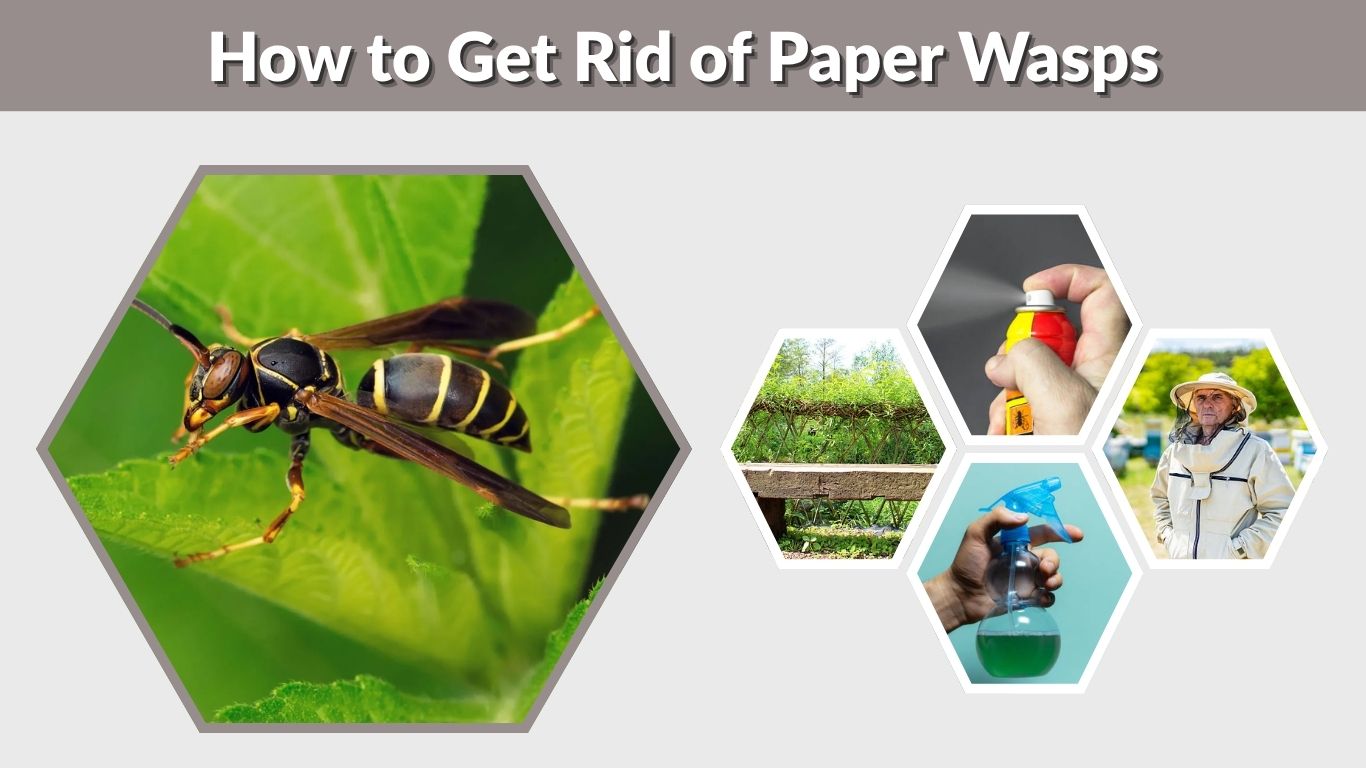
Paper wasps are common around homes, especially in warm seasons when they build nests under eaves, roofs, and trees. While they help control pests, their presence near living spaces can be risky due to painful stings and aggressive behavior when disturbed. This guide explains how to get rid of paper wasps safely, whether you’re dealing with a small nest or a larger infestation, along with natural and effective methods to keep them from coming back.
What Are Paper Wasps and Why Are They a Problem?
Paper wasps are slender insects with long legs and umbrella-shaped nests made from chewed wood fibers. They are less aggressive than some wasps but will sting if they feel threatened. The problem starts when they build nests close to doors, windows, or high-traffic areas, increasing the risk of accidental encounters and stings.
Where Do Paper Wasps Build Their Nests?

Paper wasps prefer sheltered, elevated spots that protect them from weather and predators. Identifying these areas early helps prevent a small issue from turning into a larger infestation.
- Under roof eaves and gutters
- Inside attics, walls, or under siding
- On tree branches, fences, and outdoor furniture
How to Get Rid of Paper Wasps (Step-by-Step)

Removing paper wasps requires caution and proper timing. Following a structured approach reduces risk and improves effectiveness.
Identify the Nest Size
Small nests with only a few wasps are easier and safer to handle. Larger nests may contain dozens of wasps and require extra care or professional help.
Choose the Right Time
The best time to treat a nest is early morning or late at night. During these hours, wasps are less active and most are inside the nest, making removal safer.
Wear Protective Clothing
Use long sleeves, gloves, and face protection to reduce the risk of stings. Even less aggressive species can react quickly when disturbed.
Apply Treatment
- Use a wasp spray for fast action
- Try soap and water for small nests
- Apply from a safe distance
Remove the Nest
After confirming there is no activity, carefully remove the nest using a stick or tool and dispose of it properly.
How to Get Rid of a Paper Wasp Nest
This section focuses specifically on handling nests based on their size and location. Each situation requires a slightly different approach for safe and effective removal.
Small Paper Wasp Nest
Small nests are usually found early in the season and contain only a few wasps. These can often be removed using simple methods like spraying soapy water and knocking the nest down once activity stops.
Large or Hard-to-Reach Nest
Larger nests or those located high up, inside walls, or in tight spaces can be dangerous to handle. In these cases, using specialized sprays or calling a professional is often the safest option.
Natural Ways to Get Rid of Paper Wasps

Many homeowners prefer natural solutions to avoid harsh chemicals. These methods can be effective for mild infestations and prevention.
- Peppermint oil spray mixed with water
- Vinegar and water solution for repelling
- Soap and water to eliminate small groups
Natural options are safer for the environment but may require repeated use for lasting results.
How to Prevent Paper Wasps from Coming Back
Prevention is the most effective long-term solution. By making your home less attractive to wasps, you reduce the chances of future infestations.
Remove Old Nests
Old nests can attract new colonies. Removing them discourages wasps from rebuilding in the same area.
Seal Entry Points
Check for cracks, gaps, and holes in walls, siding, and roofing. Sealing these areas prevents wasps from finding nesting spots.
Keep Outdoor Areas Clean
- Remove food scraps and sugary residues
- Keep garbage bins sealed
- Avoid leaving pet food outside
Maintaining a clean environment reduces the factors that attract wasps in the first place.
How to Get Rid of Paper Wasps in Specific Areas
Different areas of your home require slightly different approaches. Understanding where the wasps are nesting helps you choose the safest and most effective removal method without increasing the risk of stings or spreading the infestation.
In the House
If paper wasps get inside, it usually means there’s an entry point nearby. Stay calm, avoid swatting, and open windows or doors to guide them out. If a nest is inside, treat it carefully at night and seal any gaps afterward.
In the Yard
Outdoor infestations often start in trees, fences, or furniture. Regular inspection helps catch nests early. Removing attractants like food waste or standing water reduces the chances of wasps settling in your yard.
In Eaves, Attics, and Walls
These are the most common nesting spots. Use sprays designed for enclosed areas and apply them during low activity hours. Hidden nests may require professional help if they are difficult to reach safely.
Best Products to Kill Paper Wasps Quickly

For faster and more reliable results, many people use commercial products. These are especially helpful for larger nests or recurring infestations.
- Aerosol wasp sprays for long-distance application
- Foam sprays for cracks, walls, and tight spaces
- Insecticide dust for hidden or deep nests
Always follow safety instructions and avoid using chemicals in enclosed indoor spaces without proper ventilation.
How to Get Rid of Paper Wasps Without Killing Them
Some homeowners prefer humane solutions that remove wasps without harming them. This approach works best for small or newly formed nests.
Relocate Early-Stage Nests
When nests are small and inactive, they can sometimes be removed carefully and relocated away from your home. This should be done during early morning or late evening when wasps are less active.
Use Natural Deterrents
Strong scents like peppermint or eucalyptus can discourage wasps from building nests. Applying these around common nesting areas helps push them to move elsewhere naturally.
Does the Paper Bag Trick Work?
The paper bag trick involves hanging a crumpled brown paper bag to mimic an existing wasp nest. Since paper wasps are territorial, they may avoid building near what appears to be another colony. However, this method is not always reliable. It may work as a preventive measure but is less effective once wasps have already established a nest.
Safety Tips to Avoid Getting Stung

Taking precautions is essential when dealing with paper wasps. Even small mistakes can lead to painful stings or aggressive swarming.
- Avoid disturbing nests during the daytime
- Wear protective clothing when near nests
- Keep a safe distance when applying treatments
- Do not use sudden movements or swatting
Being cautious and prepared significantly reduces the risk of injury.
When to Call a Professional
Sometimes, handling a paper wasp problem on your own isn’t the safest option. Professional pest control services have the tools and experience to deal with more serious infestations. If the nest is very large, located in a hard-to-reach area, or if you have allergies to stings, it’s best to seek expert help instead of taking unnecessary risks.
FAQs
How do you get rid of paper wasps permanently?
To get rid of paper wasps permanently, combine removal with prevention. Eliminate existing nests, seal entry points, and use deterrents like essential oils. Regular inspections and keeping outdoor areas clean also help stop new colonies from forming near your home.
What is the safest way to remove a paper wasp nest?
The safest way is to treat the nest at night when wasps are less active. Wear protective clothing, use a proper spray from a distance, and wait until all activity stops before removing the nest carefully.
Do natural remedies really work on paper wasps?
Natural remedies like peppermint oil or vinegar sprays can repel wasps, especially in early stages. However, they may not be strong enough for large nests, so repeated use or combining methods is often necessary.
Why do paper wasps keep coming back?
Paper wasps return when your home provides shelter and food. Open spaces, cracks, and leftover food attract them. Without proper prevention, new nests can appear even after old ones are removed.
Can paper wasps damage your house?
Paper wasps don’t usually cause structural damage, but their nests can create inconvenience and safety risks. The main concern is their presence near living spaces, which increases the chances of stings and repeated infestations.