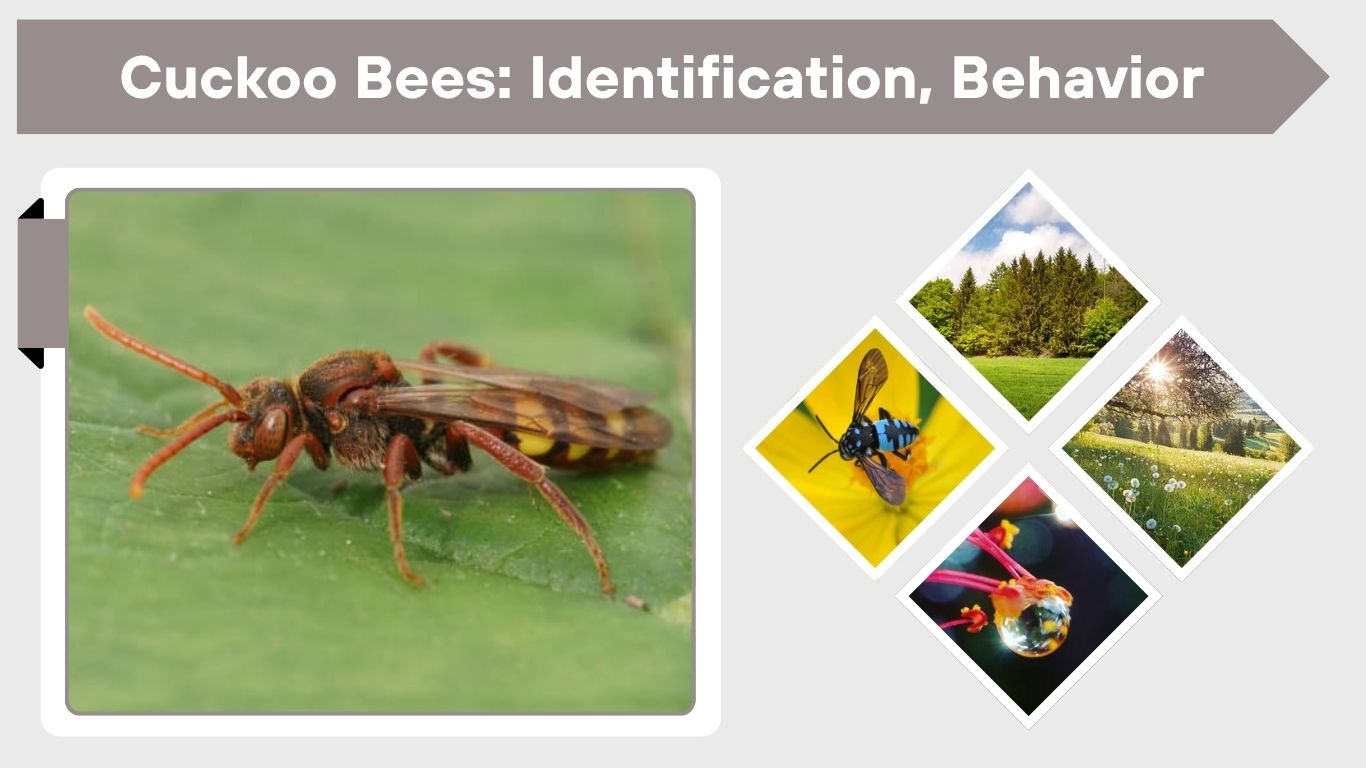
Cuckoo bees are among the most unusual types of bees in the world. Unlike typical bees that build nests and collect pollen, cuckoo bees rely on other bee species to raise their young. This unique behavior often surprises people and raises questions about whether they are dangerous or harmful.
Many people search about cuckoo bees because of their wasp-like appearance, bright colors, and unusual lifestyle. However, despite their strange habits, cuckoo bees are generally harmless and play an important role in maintaining ecological balance.
What Is a Cuckoo Bee?
A cuckoo bee is a type of parasitic bee that lays its eggs in the nests of other bees. Instead of building their own nests or gathering food for their offspring, they depend entirely on host bees.
Key characteristics of cuckoo bees include:
- Do not build nests
- Do not collect pollen
- Lay eggs in other bees’ nests
- Often have smooth, less hairy bodies
Because they do not need to carry pollen, cuckoo bees usually lack the dense hair seen on other bee species.
Why Are They Called “Cuckoo” Bees?
Cuckoo bees get their name from cuckoo birds, which are known for laying their eggs in the nests of other birds.
Similarities include:
- Both use brood parasitism
- Both rely on host species to raise offspring
- Both avoid parental care
This naming reflects their shared reproductive strategy, making the term “cuckoo” a perfect description of their behavior.
Scientific Classification of Cuckoo Bees
Cuckoo bees belong to several groups within the bee family, depending on the species.
Common classifications include:
- Family: Apidae and others
- Genera: Nomada, Triepeolus, and cuckoo bumblebees (Bombus subgenus)
These bees are closely related to other pollinators like honey bees and bumblebees, even though their behavior is very different.
Types of Cuckoo Bees (Common Species)

Cuckoo Bumble Bees
Cuckoo bumblebees invade the nests of bumblebees. Instead of building colonies, they take over existing ones.
Some species, such as Suckley’s cuckoo bumblebee, are known to:
- Enter host nests
- Kill or replace the queen
- Use worker bees to raise their young
Nomad Bees (Nomada)
Nomad bees are among the most common cuckoo bees. They are often brightly colored and resemble wasps.
Their features include:
- Red, black, or yellow patterns
- Slender, wasp-like bodies
- Fast, active flight
They commonly parasitize ground-nesting bees.
Checkered Cuckoo Bees
Checkered cuckoo bees are easily recognized by their black-and-white patterns. These markings often cause confusion with wasps or other insects.
They are frequently seen in open areas where their host bees are present.
Other Types
There are many other cuckoo bee species, including:
- Blue cuckoo bee
- Red-tailed cuckoo bee
- Lemon cuckoo bee
- Field cuckoo bee
Each species has unique traits, but all share the same parasitic lifestyle.
Neon Cuckoo Bee (Minecraft & Mods)
In gaming communities, especially in mods like “Productive Bees,” the neon cuckoo bee is a fictional variant inspired by real cuckoo bees.
Key points include:
- Bright neon colors
- Used for resource generation in-game
- Requires specific conditions to obtain
While not real, it reflects the popularity and curiosity surrounding cuckoo bees.
Cuckoo Bee Identification

Identifying cuckoo bees can be tricky because they often look like wasps rather than typical bees.
Common identification features:
- Smooth, shiny bodies (less hairy)
- Bright or contrasting colors
- Slender shape
- Quick, darting flight
Because of these traits, they are frequently mistaken for yellow jackets or other wasps.
Cuckoo Bee vs Wasp (Key Differences)

Although cuckoo bees resemble wasps, there are important differences.
- Body Structure: Bees are generally softer and less aggressive
- Diet: Bees feed on nectar, while wasps may hunt insects
- Behavior: Cuckoo bees are solitary and non-aggressive
- Role: Bees are pollinators; wasps are often predators
Understanding these differences helps avoid misidentification and unnecessary fear.
Cuckoo Bee Mimicry (Yellow Jacket Look-Alike)
One of the most interesting traits of cuckoo bees is their ability to mimic other insects, especially yellow jackets.
This mimicry is a survival strategy:
- Makes predators avoid them
- Creates confusion with stinging insects
- Provides natural protection
In some cases, this is an example of Müllerian mimicry, where multiple species share similar warning appearances.
Where Do Cuckoo Bees Live? (Habitat & Distribution)

Cuckoo bees are found in many parts of the world, including:
- North America (California, Oregon, Florida)
- United Kingdom
- Australia
- Other temperate regions
They prefer habitats where host bees are present, such as:
- Gardens
- Meadows
- Forest edges
- Agricultural areas
Their distribution is closely linked to the availability of host species.
Cuckoo Bee Nesting Behavior
Unlike most bees, cuckoo bees do not build their own nests.
Instead, they:
- Locate host nests
- Enter when the host is absent
- Lay eggs inside
- Leave the host to raise their young
In some species, the cuckoo bee larva may even destroy the host’s eggs or larvae to eliminate competition.
What Do Cuckoo Bees Eat?

Adult cuckoo bees feed primarily on nectar, which provides them with the energy needed for flying and reproduction.
Unlike other bees:
- They do not collect pollen
- They do not store food
- They rely on host bees to provide food for their larvae
Their larvae feed on the pollen and nectar collected by the host bee, which is stored inside the nest.
Are Cuckoo Bees Dangerous?
Cuckoo bees may look intimidating because they often resemble wasps, but they are generally harmless to humans.
They are:
- Non-aggressive
- Solitary (no hive to defend)
- Unlikely to interact with people
Since they do not protect nests like social bees, they have little reason to attack.
Do Cuckoo Bees Sting?
Can They Sting?
Yes, some cuckoo bees are capable of stinging, but this is very rare. Only females have stingers, and they typically use them only for defense.
Sting Severity
If a sting occurs, it is usually mild:
- Less painful than a wasp sting
- Short-lasting discomfort
- Rarely causes serious reactions
Most people will never experience a sting from a cuckoo bee.
Cuckoo Bees vs Bumblebees

Cuckoo bees and bumblebees are closely related, but their lifestyles are very different.
- Cuckoo Bees: Parasitic, do not build nests
- Bumblebees: Social, build and maintain colonies
- Cuckoo Bees: No workers
- Bumblebees: Have workers that collect food
Cuckoo bumblebees specifically target bumblebee colonies, making them dependent on their hosts.
Benefits of Cuckoo Bees (Are They Useful?)
Although cuckoo bees may seem harmful because they parasitize other bees, they still play an important role in nature.
Their benefits include:
- Helping regulate bee populations
- Contributing to ecological balance
- Supporting biodiversity
- Acting as indicators of healthy ecosystems
They are a natural part of the food web and should not be viewed as pests.
Cuckoo Bees Around the World
Cuckoo bees are found across many regions, with different species adapted to local environments.
- United Kingdom: Various Nomada species
- Australia: Chequered cuckoo bees and native species
- North America: Common in California, Oregon, and Florida
- Global Presence: Found in many temperate and tropical regions
Their distribution depends on the availability of host bees.
Interesting Facts About Cuckoo Bees
Cuckoo bees are full of surprising traits that make them unique among insects.
- They do not build their own nests
- Many species look like wasps for protection
- Some species invade and take over host nests
- They rely completely on other bees to raise their young
These behaviors make them one of the most unusual bee groups.
FAQ
Are cuckoo bees dangerous?
Cuckoo bees are not dangerous. They are solitary and non-aggressive insects that rarely interact with humans. While they can sting, it is extremely uncommon and usually only happens if they are handled or threatened directly.
Do cuckoo bees sting humans?
Yes, some cuckoo bees can sting, but only females have stingers. They rarely sting and prefer to avoid confrontation. Their sting is mild and not considered harmful for most people.
Where do cuckoo bees live?
Cuckoo bees live in areas where host bees are present. They are commonly found in gardens, meadows, forests, and agricultural fields across many parts of the world.
What makes cuckoo bees different from other bees?
Cuckoo bees do not build nests or collect pollen. Instead, they lay their eggs in the nests of other bees and rely on them to provide food for their offspring.
Are cuckoo bees good or bad?
Cuckoo bees are beneficial as part of the natural ecosystem. Although they parasitize other bees, they help maintain balance and biodiversity in nature.
Conclusion
Cuckoo bees are unique insects known for their parasitic lifestyle and wasp-like appearance. Despite their unusual behavior, they are harmless to humans and play an important role in maintaining ecological balance.
They rarely sting, are not aggressive, and contribute to biodiversity by interacting with other bee species. Understanding cuckoo bees helps reduce fear and highlights the complexity of nature, where even parasitic species have a valuable place.