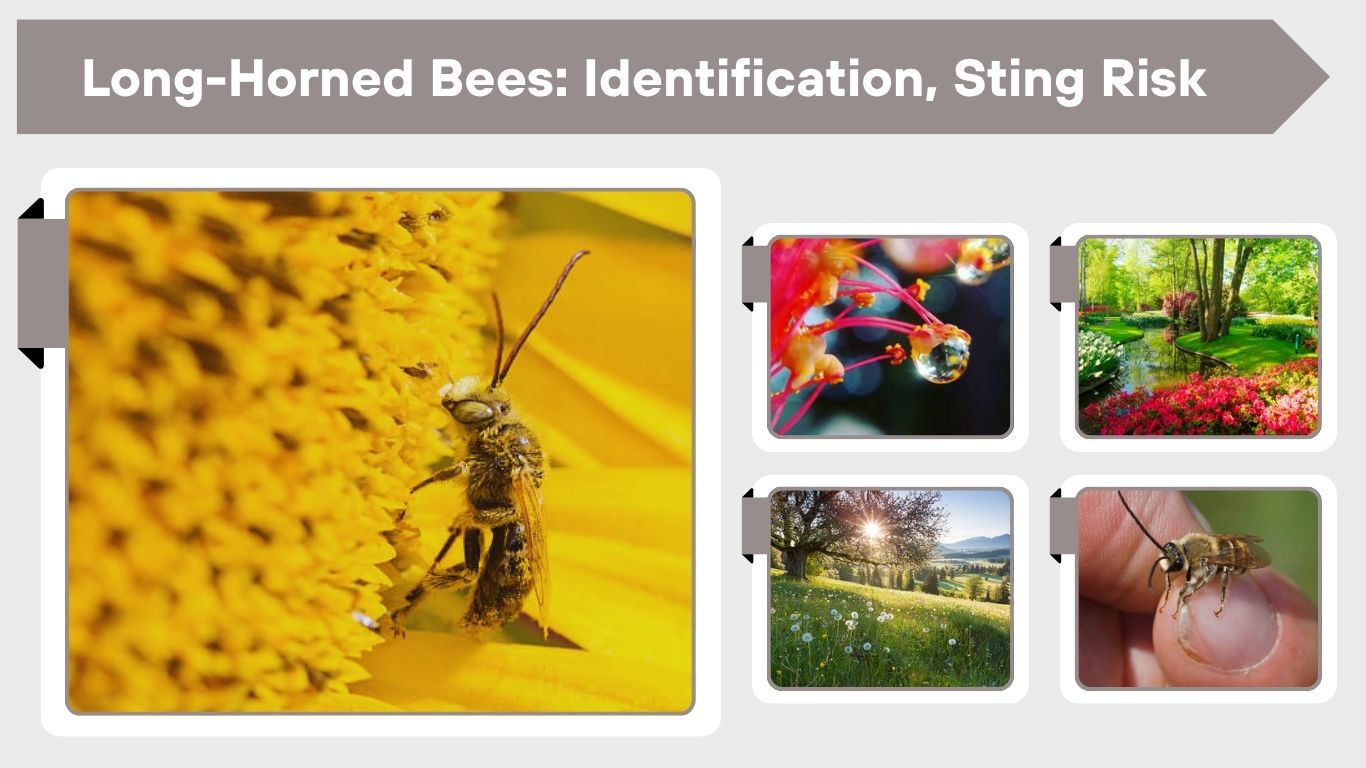
Long-horned bees are fascinating pollinators that often catch attention due to their unusually long antennae. These bees are commonly seen in gardens, fields, and agricultural areas, especially during warmer months. While their appearance may seem unusual or even intimidating, long-horned bees are generally harmless and play an essential role in pollination.
Many people search about long-horned bees to understand whether they sting, where they live, and how to identify them. Learning about their behavior and characteristics can help reduce fear and highlight their importance in the ecosystem.
What Are Long-Horned Bees?
Long-horned bees belong to the Melissodes genus, a group of solitary bees known for their distinctive long antennae. These antennae are especially noticeable in males, often extending longer than their bodies.
Unlike honey bees, long-horned bees do not live in large colonies. Each female builds her own nest and works independently. However, they are often seen in groups because many individuals choose the same area for nesting.
Key features of long-horned bees include:
- Long antennae (especially in males)
- Fuzzy bodies for collecting pollen
- Medium-sized, similar to honey bees
- Active during late spring and summer
They are commonly found across North America and are especially abundant in regions with plenty of flowering plants.
Scientific Classification of Long-Horned Bees
Long-horned bees are part of the larger bee family and share similarities with other well-known pollinators.
Their classification includes:
- Genus: Melissodes
- Family: Apidae
- Order: Hymenoptera
This family also includes honey bees and bumblebees, but long-horned bees differ significantly in behavior and nesting habits.
Types of Long-Horned Bees (Common Species)

Common Long-Horned Bee
The common long-horned bee is widely distributed and frequently found in gardens and open fields. It is often seen collecting pollen from a variety of flowering plants.
Two-Spotted Long-Horned Bee
This species is known for its distinctive markings, typically featuring two noticeable spots on its body. It is commonly found in North America and is active during the summer months.
Alfalfa Long-Horned Bee
As the name suggests, this bee is closely associated with alfalfa plants. It plays an important role in agricultural pollination and is beneficial for crop production.
Sunflower Long-Horned Bee
This species prefers sunflowers and is commonly seen in areas where these plants grow. It is especially active in late summer when sunflowers are in full bloom.
Other Notable Species
There are several other long-horned bees worth mentioning:
- Drury’s long-horned bee
- Thistle long-horned bee
- Small Catalina bee
Each species may vary slightly in appearance and habitat, but all share the characteristic long antennae and solitary behavior.
Male vs Female Long-Horned Bees

Male Long-Horned Bees
Male long-horned bees are the most recognizable due to their extremely long antennae. These antennae help them locate females during mating.
They are often seen resting or sleeping on flowers, sometimes in groups. An important fact is that male bees do not have stingers, so they are completely harmless to humans.
Female Long-Horned Bees
Female long-horned bees have shorter antennae compared to males. They are responsible for building nests, collecting food, and laying eggs.
Although females can sting, they rarely do so unless they are directly handled or threatened.
Where Do Long-Horned Bees Live? (Habitat & Distribution)

Long-horned bees are widely distributed, especially across North America. They are commonly found in:
- California
- Arizona
- Oregon
- Colorado
- Central and coastal regions of the United States
They prefer environments that provide both nesting sites and access to flowers. Typical habitats include:
- Open fields and meadows
- Gardens and backyards
- Agricultural lands
- Roadside vegetation
These bees thrive in areas with abundant flowering plants, which provide nectar and pollen.
Long-Horned Bee Nesting Behavior
Long-horned bees are ground-nesting insects, meaning they build their nests underground.
Each female digs her own burrow in the soil. Inside the tunnel, she creates small chambers where she lays eggs and stores pollen for her larvae.
Common nesting characteristics include:
- Small holes in the ground
- Loose or sandy soil preference
- Nests often grouped together
- Individual (non-shared) nesting systems
Even though many nests may appear in one area, each nest belongs to a single bee.
What Do Long-Horned Bees Eat?

Long-horned bees rely on flowers for their survival.
Their diet includes:
- Nectar for energy
- Pollen for feeding their young
Many species prefer specific plants, which makes them important for pollinating certain crops and wildflowers. Common plant preferences include:
- Sunflowers
- Alfalfa
- Thistles
This specialization makes them highly efficient pollinators.
Long-Horned Bee Behavior & Adaptations
Long-horned bees have several unique adaptations that help them survive and reproduce.
One of their most notable features is their long antennae, which are especially useful for detecting scents and locating mates.
Other behavioral traits include:
- Strong attraction to specific flowers
- Efficient pollen collection due to hairy bodies
- Adaptation to warm climates
- Solitary lifestyle with minimal aggression
These adaptations allow them to thrive in a variety of environments while playing a key role in pollination.
Can Long-Horned Bees Sonicate?
Yes, many long-horned bees are capable of sonication, also known as buzz pollination. This process involves vibrating their bodies to release pollen from certain types of flowers that do not easily give up their pollen.
This ability makes them especially valuable for pollinating crops and plants that depend on this technique, improving overall pollination efficiency.
Long-Horned Bee Mating Behavior
Long-horned bees have interesting mating habits that often occur near flowers where both males and females gather.
Male bees use their long antennae to detect female pheromones. You may often see males hovering around flowers or forming small groups while waiting for females.
Mating usually takes place:
- On or near flowers
- During peak activity hours (warm, sunny days)
- Shortly after females emerge
How Far Can Long-Horned Bees Fly?
Long-horned bees typically have a moderate flight range.
- Usually travel short distances from their nest
- Prefer to stay near reliable food sources
- Efficient at pollinating local plants
Their limited flight range actually benefits ecosystems by ensuring focused pollination in specific areas.
When Do Long-Horned Bees Emerge?
Long-horned bees are seasonal and their activity depends on climate and location.
- Typically emerge in late spring
- Most active during summer
- Peak activity occurs in warm, sunny conditions
Different species may emerge at slightly different times, especially those associated with specific plants like sunflowers.
Do Long-Horned Bees Sting?

Are They Dangerous?
Long-horned bees are not considered dangerous. They are solitary and do not defend nests aggressively.
They are generally:
- Calm and non-aggressive
- Unlikely to interact with humans
- Safe to observe in gardens
Sting Severity
Only female long-horned bees can sting, and even then, it is very rare.
- Sting is mild compared to wasps
- Occurs only if handled or trapped
- Causes minimal discomfort
Because of their gentle nature, stings are uncommon.
Long-Horned Bees vs Honey Bees

Although they may look similar at a glance, long-horned bees and honey bees have key differences.
- Social Structure: Long-horned bees are solitary, while honey bees live in colonies
- Nesting: Long-horned bees nest in the ground; honey bees build hives
- Honey Production: Long-horned bees do not produce honey
- Aggression: Long-horned bees are less aggressive
Understanding these differences helps people better identify and appreciate them.
Importance of Long-Horned Bees (Pollination Role)
Long-horned bees are highly valuable pollinators, especially for certain crops and wild plants.
Their importance includes:
- Pollinating sunflowers, alfalfa, and thistles
- Supporting agricultural productivity
- Maintaining biodiversity
- Helping ecosystems stay balanced
Their ability to specialize in certain plants makes them particularly effective.
Long-Horned Bees in California & USA
Long-horned bees are widely found across the United States, with strong populations in western and central regions.
They are especially common in:
- California (coastal and inland regions)
- Arizona and desert areas
- Oregon and Colorado
- Central agricultural zones
These regions provide the ideal combination of soil for nesting and flowers for feeding.
Interesting Facts About Long-Horned Bees
Here are some fascinating facts about these unique bees:
- Male bees often sleep in groups on flowers
- Their antennae can be longer than their bodies
- They are often mistaken for honey bees
- Some species specialize in pollinating specific plants
These traits make them one of the more interesting bee groups to observe.
FAQ
Do long-horned bees sting humans?
Long-horned bees can sting, but only females have stingers. They are not aggressive and rarely sting unless directly handled. Their sting is mild and usually causes only minor discomfort compared to other stinging insects.
Where do long-horned bees live?
They live in open habitats such as fields, gardens, and meadows. These bees prefer dry, well-drained soil where they can dig underground nests and stay close to flowering plants.
What do long-horned bees eat?
They feed on nectar for energy and collect pollen for their larvae. Many species prefer plants like sunflowers, alfalfa, and thistles, making them important pollinators for these species.
Are long-horned bees found in California?
Yes, long-horned bees are commonly found in California, especially in areas with abundant flowering plants such as agricultural fields and coastal regions.
When are long-horned bees most active?
They are most active from late spring through summer. Their activity peaks during warm, sunny days when flowers are in bloom and conditions are ideal for foraging.
Conclusion
Long-horned bees are unique and beneficial insects known for their long antennae and important role in pollination. Despite their unusual appearance, they are harmless, non-aggressive, and rarely sting.
They contribute significantly to plant reproduction and agricultural productivity, making them valuable to both natural ecosystems and human environments. Rather than fearing them, it is best to appreciate their role and allow them to thrive.