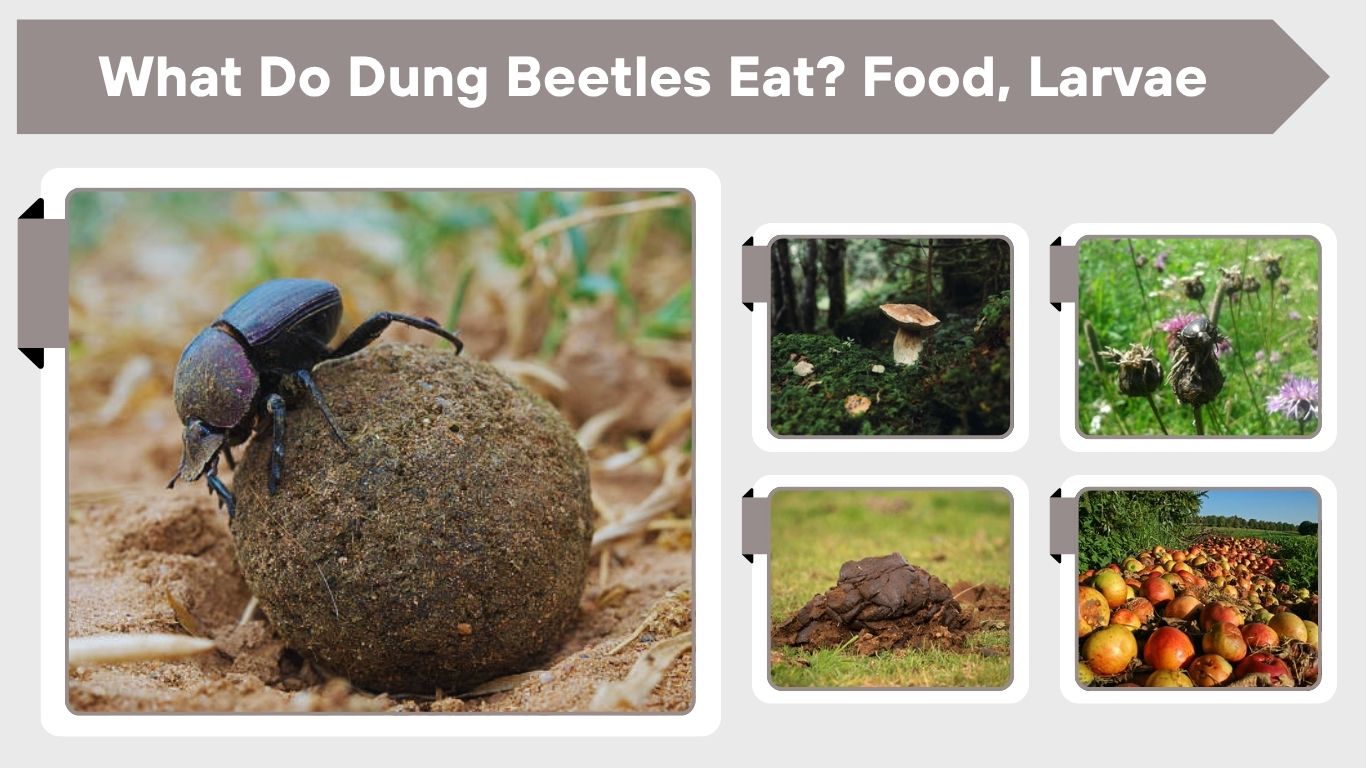
Dung beetles are well known for their unusual feeding habits. As their name suggests, these insects primarily eat animal dung, but their diet is more interesting and specialized than it might seem. Understanding what dung beetles eat helps explain their behavior, survival strategies, and importance in nature.
Introduction to Dung Beetle Diet
Dung beetles belong to a group of insects that rely heavily on animal waste as their main food source. They are found in many environments around the world, especially where large animals are present. Their diet is closely linked to the type of dung available in their habitat.
While dung may seem like an unlikely food, it actually contains undigested plant material, microorganisms, and nutrients that dung beetles can use for energy and growth.
What Do Dung Beetles Eat? (Quick Answer)

Dung beetles mainly eat animal feces, especially from herbivores like cows, horses, and elephants. This type of dung contains the most usable nutrients because plant matter is not fully digested by these animals.
Some species may also consume organic matter like decaying plants or fungi, but dung remains their primary and preferred food source.
Types of Dung They Prefer

Not all dung is equally valuable to dung beetles. They tend to choose dung based on its nutrient content and moisture level.
- Herbivore dung (cow, horse, elephant) – richest in nutrients
- Omnivore dung – sometimes used but less ideal
- Carnivore dung – rarely used due to low digestible material
- Fresh dung – preferred because it is moist and easier to process
Fresh dung is especially important because it contains more moisture and active nutrients, making it easier for beetles to consume and shape.
What Do Adult Dung Beetles Eat?
Adult dung beetles primarily feed on the liquid portion of dung. They do not chew solid material like many other insects. Instead, they use specialized mouthparts to extract and consume nutrient-rich fluids.
Inside dung, there are tiny particles of organic matter and microorganisms. Adult beetles filter out these nutrients and digest them for energy. This feeding method allows them to survive efficiently even in competitive environments where many beetles gather at the same dung source.
Some adult dung beetles may also feed on small bits of organic material found within the dung, but liquid nutrients remain their main source of sustenance.
What Do Dung Beetle Larvae Eat?
Dung beetle larvae have a very different feeding system compared to adults. They rely entirely on dung provided by their parents.
When adult beetles create dung balls for reproduction, they place their eggs inside them. After hatching, the larvae stay within the dung ball and feed on it as they grow. This dung serves as both their home and their only food source.
Because the dung ball is carefully prepared, it contains enough nutrients to support the larva through its entire development stage. This ensures a higher survival rate for the young beetles.
Do Dung Beetles Eat Anything Other Than Dung?

Although dung is their primary food, some dung beetles have a slightly more varied diet depending on their environment and species.
- Decaying plant matter
- Fungi and microorganisms
- Rotting fruit or organic debris
- Occasionally small amounts of carrion
These additional food sources are usually secondary and are only consumed when dung is limited. Most dung beetles still strongly prefer dung because it provides the most consistent nutrition.
What Do Dung Beetles Eat in ARK Survival Evolved?
In the game ARK Survival Evolved, dung beetles have a diet that closely reflects their real-life behavior but with some gameplay differences.
- Feces is their main food source
- They continue to consume dung after being tamed
- They convert feces into fertilizer and oil
- Regular feeding improves productivity
Players use dung beetles in the game mainly for resource production rather than survival, but their feeding behavior remains centered around feces.
What Do Tamed Dung Beetles Eat in ARK?
After being tamed in ARK Survival Evolved, dung beetles continue to rely on feces as their primary food source. Players must regularly provide different types of feces to keep them productive.
Feeding them consistently allows them to convert waste into useful resources like fertilizer and oil. The quality and quantity of feces can also affect how efficiently they produce these materials over time.
What Do Baby Dung Beetles Eat?

Baby dung beetles, also known as larvae, depend entirely on dung for survival. Unlike adults, they do not search for food or move around freely.
They grow inside dung balls prepared by adult beetles. These dung balls provide all the nutrients needed for development. As the larvae consume the dung, they gradually grow until they are ready to emerge as adult beetles.
This system ensures that young beetles have a safe environment and a steady food supply during their most vulnerable stage.
Do Dung Beetles Drink Anything?
Dung beetles do not usually need a separate water source. They get most of their moisture directly from the dung they consume.
Fresh dung contains enough liquid to keep them hydrated. This is one of the reasons why dung beetles prefer fresh dung over dry dung, as it provides both food and water at the same time.
In very dry environments, moisture becomes more important, and beetles may be more selective about the dung they choose.
How Dung Beetles Find Their Food
Dung beetles have an extremely strong sense of smell, which helps them locate food quickly. They can detect fresh dung from long distances and will fly directly toward it.
When an animal drops dung, beetles often arrive within minutes. This leads to intense competition, with many beetles trying to claim a portion.
Once they reach the dung, they quickly begin feeding or shaping it into balls to move it away. Speed and efficiency are key to securing their share before others take it.
Why Their Diet Is Important for Ecosystems

Dung beetles play a vital role in maintaining healthy ecosystems through their feeding behavior.
- Recycle nutrients back into the soil
- Reduce parasites and pest populations
- Improve soil structure and aeration
- Help with seed dispersal
By breaking down and burying dung, they contribute to cleaner environments and better soil health, which benefits plants, animals, and even agriculture.
Common Myths About Dung Beetle Diet
Many people believe dung beetles eat only waste without any variation, but this is not entirely true. While dung is their main food, some species can consume other organic materials when necessary. Another common myth is that all dung beetles eat the same type of dung, when in reality, different species have different preferences based on their environment.
FAQs
What do dung beetles eat the most?
Dung beetles mainly prefer herbivore dung, such as from cows or horses, because it contains the highest amount of undigested plant material. This makes it rich in nutrients and easier for them to digest compared to other types of dung.
What do dung beetles eat in ARK?
In ARK Survival Evolved, dung beetles eat feces just like in real life. Players feed them dung to keep them alive and productive, and they convert it into useful resources like fertilizer and oil.
What do dung beetle larvae eat?
Dung beetle larvae feed entirely on dung provided by adult beetles. They grow inside dung balls, which supply all the nutrients they need until they develop into adult beetles.
Do dung beetles eat plants?
Dung beetles do not directly eat fresh plants, but they may consume decaying plant matter or organic material found within dung. Their diet is still mainly focused on animal feces.
Do dung beetles eat meat?
Dung beetles generally do not eat meat, but some species may occasionally consume small amounts of decaying animal matter. However, this is not a primary food source and happens rarely.