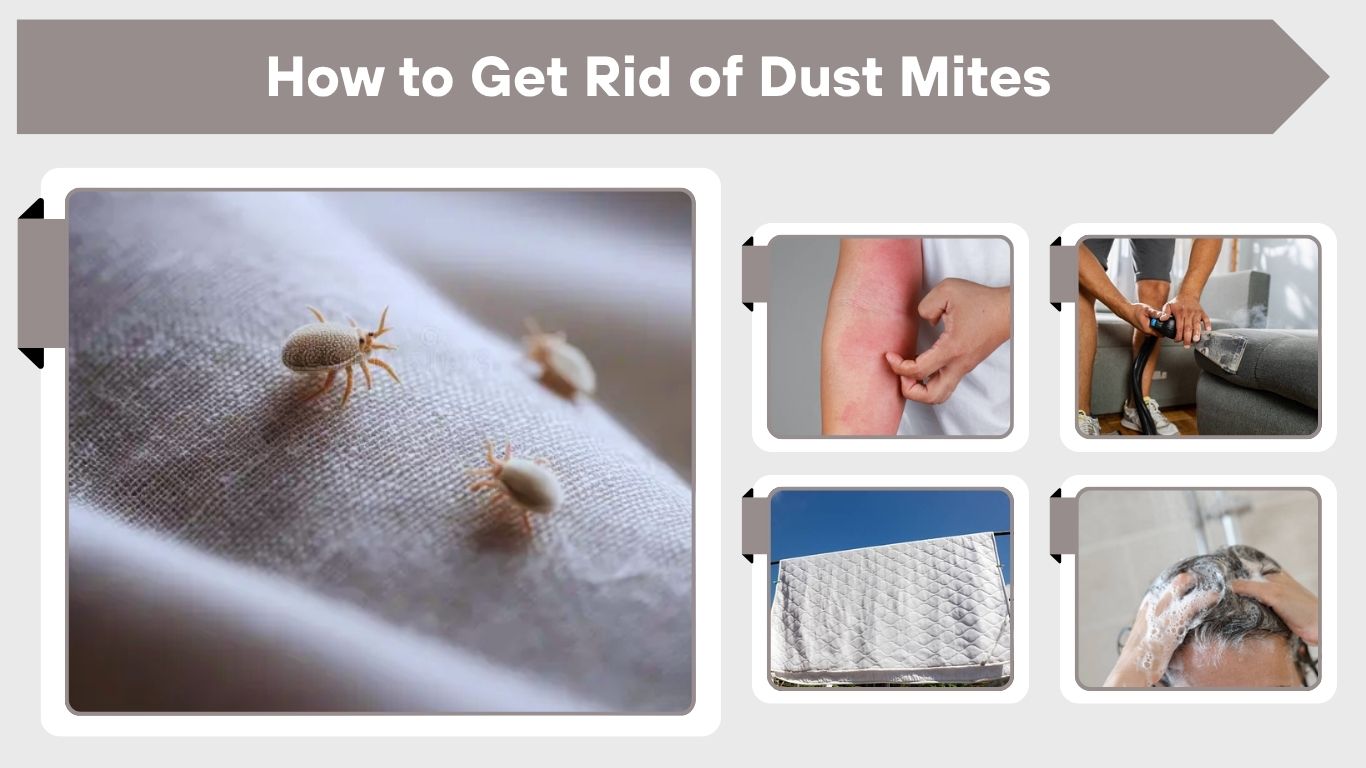
Dust mites are tiny, invisible creatures that live in your home, especially in bedding, carpets, and furniture. They feed on dead skin cells and thrive in warm, humid environments. While they don’t bite, they can trigger allergies, skin irritation, and breathing problems. The good news is that you can reduce and control dust mites effectively. In this guide, you’ll learn how to get rid of dust mites in your bed, mattress, and home using both practical and natural methods.
What Are Dust Mites and Why Are They a Problem?
Dust mites are microscopic pests that belong to the spider family. They are too small to see with the naked eye but are present in almost every home. They thrive in places where dust accumulates, especially in soft materials like mattresses, pillows, carpets, and sofas.
The real problem isn’t the mites themselves—it’s their waste and body fragments. These particles become airborne and can cause allergic reactions when inhaled.
Common symptoms of dust mite exposure:
- Sneezing and runny nose
- Itchy or watery eyes
- Skin rashes or irritation
- Coughing or asthma flare-ups
If you’re experiencing these symptoms regularly, dust mites in your home could be the cause.
How to Get Rid of Dust Mites in Bed and Bedding

Your bed is the number one place where dust mites live. Since you spend hours there every night, it becomes the perfect environment for them to grow and multiply.
Wash Bedding in Hot Water
One of the most effective ways to get rid of dust mites in your bed is washing your bedding regularly. Wash sheets, pillowcases, and blankets at least once a week in hot water (at least 60°C or 140°F). This temperature kills dust mites and removes allergens.
Use Dust Mite-Proof Covers
Investing in allergen-proof mattress and pillow covers can make a big difference. These covers create a barrier that prevents dust mites from entering or escaping, reducing exposure significantly.
Replace Old Pillows and Blankets
Old pillows and comforters can become a breeding ground for dust mites. Replace them every 1–2 years, and choose synthetic materials instead of feather-filled options, which tend to trap more dust.
How to Get Rid of Dust Mites in Mattress

Your mattress is another hotspot for dust mites because it absorbs sweat, dead skin cells, and moisture.
Vacuum Your Mattress Regularly
Use a vacuum cleaner with a HEPA filter to remove dust mites and allergens from your mattress. Vacuum it at least once a week, paying attention to seams and edges.
Use Baking Soda
Sprinkle baking soda over your mattress and let it sit for 30–60 minutes before vacuuming. This helps absorb moisture and odors, making the environment less suitable for dust mites.
Expose to Sunlight
Sunlight is a natural enemy of dust mites. If possible, place your mattress in direct sunlight for a few hours. UV rays help kill mites and reduce moisture.
Steam Cleaning
Steam cleaning is one of the most effective methods to kill dust mites instantly. High temperatures penetrate deep into the mattress and eliminate mites along with bacteria.
How to Get Rid of Dust Mites in Your House
Dust mites don’t just live in your bed—they can be found throughout your home. Controlling them requires a consistent cleaning routine.
Control Humidity Levels
Dust mites thrive in humid conditions. Keep indoor humidity below 50% using a dehumidifier or air conditioner. This alone can significantly reduce their population.
Clean with a Damp Cloth
Avoid dry dusting, which spreads allergens into the air. Instead, use a damp cloth to trap dust and remove it effectively from surfaces.
Reduce Clutter
Items like books, clothes, and decorative fabrics collect dust easily. Keeping your home organized and clutter-free reduces places where dust mites can live.
How to Get Rid of Dust Mites in Carpet, Couch, and Furniture

Soft furnishings like carpets and sofas are major dust mite hotspots because they trap dust and moisture.
Vacuum Frequently
Vacuum carpets, rugs, and furniture at least twice a week using a HEPA-filter vacuum. This helps capture tiny allergens that regular vacuums might miss.
Steam Clean Fabrics
Steam cleaning carpets and upholstery can kill dust mites instantly due to the high heat. It’s especially useful for deep cleaning.
Consider Removing Carpets
If possible, replace carpets with hard flooring like wood or tile. Dust mites struggle to survive on smooth surfaces, making your home easier to maintain.
How to Get Rid of Dust Mites Naturally
If you prefer chemical-free solutions, there are several natural ways to control dust mites effectively.
Sunlight and Fresh Air
Regularly airing out bedding, pillows, and rugs in direct sunlight helps kill dust mites and reduce moisture.
Essential Oils
Tea tree oil and eucalyptus oil have natural anti-microbial properties. Mix a few drops with water and spray lightly on surfaces like mattresses and curtains.
Vinegar Spray
Vinegar is a natural disinfectant that can help clean surfaces and reduce allergens. While it may not kill all mites, it helps maintain a cleaner environment.
How to Get Rid of Dust Mites on Skin and Body

Many people worry about dust mites living on their skin or body, but it’s important to understand that dust mites do not live on humans permanently. They prefer fabrics like bedding and carpets. However, their allergens can stick to your skin and cause irritation.
Shower Regularly
Taking a daily shower helps remove dust mite allergens from your skin. Use mild soap to wash away any particles that may cause itching or irritation.
Wash Hair Frequently
Hair can trap dust and allergens, especially if you’ve been exposed to dusty environments. Washing your hair regularly reduces the chances of irritation.
Wear Clean Clothes
Always wear fresh clothes, especially after sleeping. Dust mites and their allergens can cling to fabrics, so changing clothes helps reduce exposure.
How to Get Rid of Dust Mites on Dogs and Pets
Pets can carry dust mite allergens in their fur, especially if they spend time on carpets, beds, or sofas.
Bathe Pets Regularly
Give your pets regular baths using vet-approved shampoos. This helps remove allergens from their fur.
Wash Pet Bedding
Pet beds can accumulate dust mites just like human bedding. Wash them weekly in hot water to kill mites.
Vacuum Pet Areas
Clean areas where your pets sleep or rest frequently. This reduces dust buildup and prevents mites from spreading.
Dust Mite Bites vs Allergy: Important Truth

A common misconception is that dust mites bite humans. In reality, dust mites do not bite. What people often call “dust mite bites” are actually allergic reactions.
Symptoms Often Mistaken as Bites:
- Red, itchy skin
- Rash or irritation
- Eczema flare-ups
These reactions occur when your skin comes into contact with dust mite allergens.
How to Treat Dust Mite Rash
- Use anti-itch creams or soothing lotions
- Take antihistamines if needed
- Keep your environment clean to prevent further reactions
How to Reduce Dust Mites in the Air
Dust mite allergens can become airborne and circulate throughout your home, especially when cleaning or moving fabrics.
Use an Air Purifier
A HEPA air purifier can capture tiny airborne particles, including dust mite allergens, improving indoor air quality.
Improve Ventilation
Open windows regularly to allow fresh air in and reduce humidity levels inside your home.
Avoid Dust Accumulation
Regular cleaning prevents dust from building up and becoming airborne.
How to Get Rid of Dust Mite Allergy
If you suffer from dust mite allergies, managing your environment is key to reducing symptoms.
Use Allergen-Proof Covers
Mattress and pillow covers are essential for minimizing exposure while you sleep.
Maintain a Cleaning Routine
Consistent cleaning, washing, and vacuuming help keep allergen levels low.
Take Medication if Needed
Over-the-counter antihistamines or nasal sprays can help control symptoms. For severe allergies, consult a doctor.
Can You Completely Get Rid of Dust Mites?

It’s nearly impossible to completely eliminate dust mites from your home. They are a natural part of the indoor environment.
However, you can significantly reduce their numbers and control their impact by:
- Keeping your home clean
- Reducing humidity
- Using protective covers
- Washing fabrics regularly
The goal is not total elimination—but effective control.
How to Get Rid of Dust Mites Fast (Quick Checklist)
If you want quick results, follow this simple checklist:
- Wash bedding in hot water weekly
- Vacuum with a HEPA filter
- Use mattress and pillow covers
- Reduce humidity below 50%
- Declutter your space
- Let sunlight reach bedding and furniture
These steps can quickly reduce dust mite populations and improve your living environment.
FAQs
How to get rid of dust mites in bed naturally?
Wash bedding in hot water, expose it to sunlight, and use dust mite-proof covers for protection.
Do dust mites live in hair?
No, dust mites do not live on human hair or skin. They prefer fabrics and dust-rich environments.
What kills dust mites instantly?
Heat is the most effective method. Hot water washing, steam cleaning, and sunlight can kill dust mites quickly.
Does baking soda kill dust mites?
Baking soda doesn’t completely kill dust mites, but it helps absorb moisture and reduce their survival conditions.