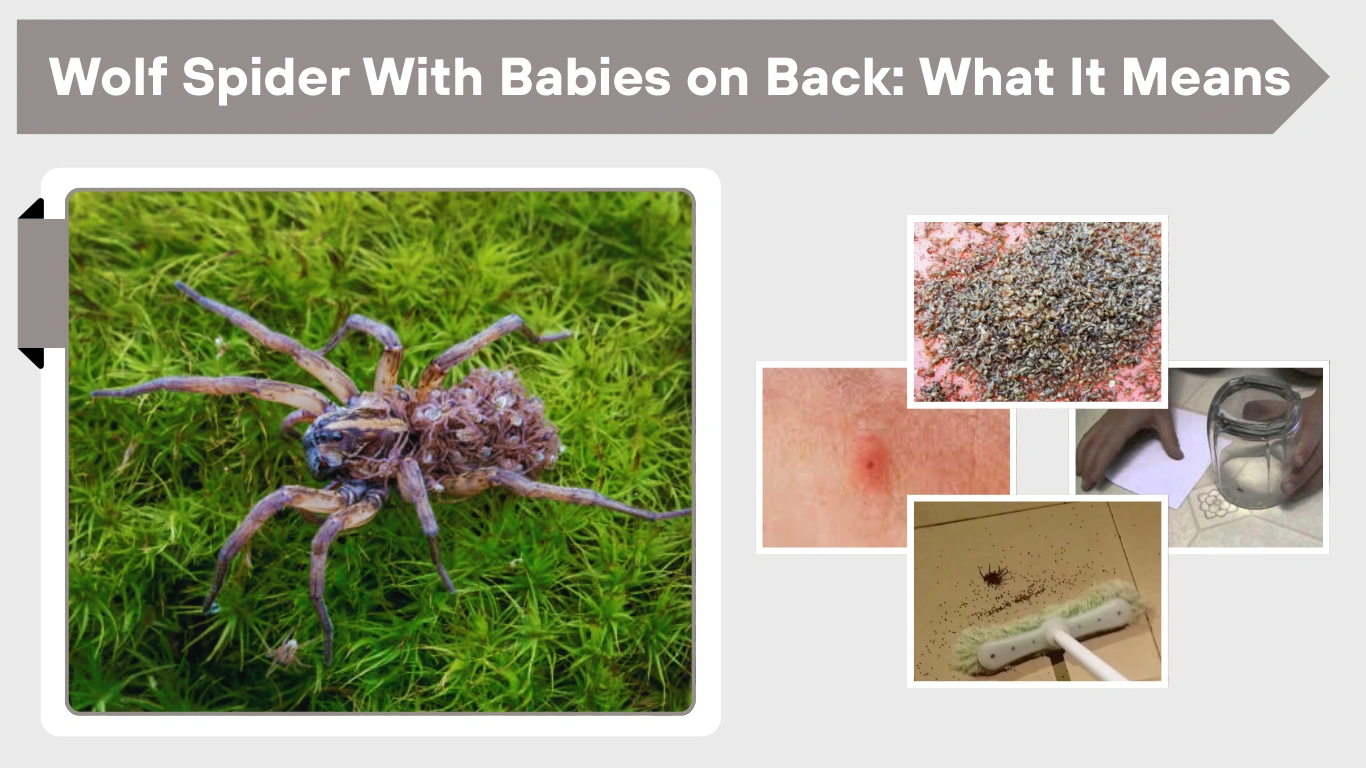
If you’ve ever seen a wolf spider covered in dozens of tiny spiders crawling across her back, you probably won’t forget it. The sight can be startling — even alarming — especially if it happens inside your home. However, this behavior is completely natural and actually one of the most fascinating examples of maternal care in the spider world. In this guide, we’ll explain why wolf spiders carry their babies, how long they stay together, and whether you should be concerned if you see one.
What Is a Wolf Spider?
Wolf spiders belong to the Lycosidae family and are known for their speed, strength, and hunting ability. Unlike many other spiders, they do not spin webs to trap prey. Instead, they actively chase and ambush insects, much like a wolf hunts — which is how they got their name.
They are common throughout North America and many other parts of the world. Because they are ground hunters, they are often found outdoors, though they may wander indoors by accident.
How to Identify a Wolf Spider
Wolf spiders have several distinctive features that make them easier to recognize:
- Large, robust, and hairy bodies
- Brown, gray, tan, or black coloring with subtle markings
- Long, strong legs built for running
- Eight eyes arranged in three rows (four small eyes on bottom, two large middle eyes, two medium top eyes)
- Excellent night vision due to reflective eye tissue
Adult wolf spiders typically range from about half an inch to over an inch in body length, not including their legs. They move quickly and prefer to run rather than climb high surfaces or spin large webs.
Where Wolf Spiders Are Commonly Found
Wolf spiders prefer ground-level environments. Outdoors, you may find them:
- In gardens and lawns
- Under rocks, logs, or leaf litter
- Around woodpiles
- In tall grass or mulch
Indoors, they are usually spotted in:
- Basements
- Garages
- Crawl spaces
- Near doors or foundation cracks
They typically enter homes while hunting or seeking shelter, not to build nests.
Why Does a Wolf Spider Carry Babies on Her Back?

One of the most unique things about wolf spiders is their maternal behavior. While many spider species lay eggs and leave them behind, wolf spiders take motherhood much more seriously.
From Egg Sac to Spiderlings
The process begins when the female produces an egg sac — a small, round silk bundle containing dozens (sometimes over 100) eggs. She attaches this egg sac to her spinnerets at the rear of her abdomen and carries it everywhere she goes.
Unlike other spiders that abandon their eggs, the wolf spider continues hunting while dragging the egg sac behind her. After about one to two weeks, the eggs hatch — but the spiderlings don’t immediately disperse.
Instead, they climb onto their mother’s back.
They gather on her abdomen in a wriggling mass, clinging to fine hairs. From a distance, it can look like the spider has grown extra texture or bumps.
Survival Advantages of This Behavior
Carrying her young provides several important survival benefits:
Protection from predators:
Small spiderlings are extremely vulnerable. Staying on their mother’s back keeps them elevated and guarded.
Mobility:
Instead of being stuck in one place, the babies are transported to safer environments.
Temperature and moisture regulation:
Being close to the mother can help protect them from environmental stress.
This maternal care significantly increases the spiderlings’ chances of survival compared to species that leave eggs unattended.
How Long Do the Babies Stay on the Mother?

The spiderlings typically remain on their mother’s back for several days to a few weeks. During this time, they undergo their first molt — shedding their outer skin as they grow.
After this early development stage, the spiderlings begin to disperse. They gradually climb down and scatter into the surrounding environment.
It’s important to understand that not all of them will survive. In fact, most spiderlings fall victim to predators or environmental hazards. Producing a large number of offspring helps ensure that at least some reach adulthood.
While seeing dozens of tiny spiders can be unsettling, this stage is temporary. The mother does not permanently carry them, and the group will eventually separate on its own.
Are Wolf Spiders With Babies Dangerous?

Seeing a large spider already makes many people nervous. Seeing one covered in moving baby spiders can make the fear even worse. But are wolf spiders with babies actually dangerous?
The short answer is no — at least not in the way most people imagine.
Wolf spiders are generally non-aggressive and prefer to avoid humans. They do not seek confrontation and typically run away when disturbed. Carrying babies does not suddenly make them highly aggressive or more venomous.
Are They More Aggressive When Carrying Babies?
It’s natural to assume a mother spider would be more defensive. While she may react if directly threatened, wolf spiders are still far more likely to flee than attack.
If cornered, stepped on, or handled, a wolf spider may bite in self-defense. However, this is rare and usually avoidable.
They do not chase people, jump at them, or deliberately attack.
What Happens If You Disturb One?
If a wolf spider carrying babies is startled or crushed, the spiderlings may scatter quickly in all directions. This dramatic dispersal is a survival instinct.
The sudden movement can be alarming, but it does not mean your home will become infested. Most spiderlings will not survive indoors unless there is a steady food source and suitable hiding places.
The mother will typically attempt to escape rather than fight.
Is a Wolf Spider Bite Harmful?
Wolf spider venom is designed to subdue insects, not humans. If a bite occurs, symptoms are usually mild and may include:
- Localized pain
- Redness
- Mild swelling
- Itching
Serious reactions are uncommon. As with any bite, individuals with allergies should monitor symptoms and seek medical care if needed. For most people, a wolf spider bite is comparable to a bee sting in discomfort and severity.
Why Do the Babies Scatter Everywhere?

One of the most startling moments is when the babies suddenly spread out in every direction. This behavior is not random — it is a built-in survival mechanism.
When threatened, dispersing quickly reduces the chance that all spiderlings will be eaten or destroyed at once. By scattering, at least some have a better chance of surviving.
It’s also important to understand that this does not signal an infestation. Wolf spiders do not create large colonies, and they are not social spiders. Once the babies disperse, they live independently.
Most will move outdoors or die off naturally if trapped inside a home without enough insects to eat.
Wolf Spider vs. Other Spiders
Because wolf spiders are large and hairy, they are sometimes mistaken for other species. Proper identification can ease unnecessary fear.
Do Other Spiders Carry Their Babies?
Most spiders carry only their egg sacs. After the eggs hatch, the spiderlings disperse immediately.
Wolf spiders are unique because they carry live spiderlings on their backs after hatching. This is one of their most recognizable traits.
Commonly Confused Species
Nursery Web Spiders:
Similar in size and color, but they do not carry spiderlings on their backs.
Fishing Spiders:
Often larger and found near water, but again, no baby-carrying behavior.
Brown Recluse:
Frequently feared, but very different in appearance. Brown recluses do not carry babies on their backs and have a distinctive violin-shaped marking.
Correct identification can prevent unnecessary panic and help you decide on appropriate action.
What Should You Do If You See One in Your Home?

If you encounter a wolf spider with babies indoors, try not to panic.
Safe Removal Options
- Capture and release: Place a container over the spider, slide a stiff card underneath, and release it outside away from your home.
- Vacuum method: Carefully vacuuming can remove the spider and spiderlings quickly.
- Avoid crushing: Crushing may cause the babies to scatter suddenly.
Prevention Tips
To reduce the chances of wolf spiders entering your home:
- Seal cracks and gaps around doors and windows
- Keep basements and garages clutter-free
- Remove outdoor debris near your foundation
- Reduce insect populations that attract spiders
Because wolf spiders hunt insects, minimizing prey will naturally make your home less attractive to them.
Are Wolf Spiders Beneficial?
Despite their intimidating appearance, wolf spiders play an important ecological role.
They are natural pest controllers, feeding on:
- Flies
- Ants
- Beetles
- Roaches
- Garden pests
In outdoor environments, they help maintain balance in the ecosystem and reduce the need for chemical pesticides.
While seeing one indoors can be unsettling, especially with babies on her back, wolf spiders are not dangerous invaders. They are solitary hunters performing a remarkable display of maternal care — one that may look frightening but is entirely natural.
Conclusion
A wolf spider carrying babies on her back may look alarming, but it’s actually a fascinating example of protective motherhood in the insect world. The spiderlings stay with their mother only temporarily before dispersing to live independently. Wolf spiders are not aggressive, their bites are rarely serious, and they do not form infestations. In many cases, they are beneficial predators that help control pest populations. Understanding their behavior can replace fear with awareness — and maybe even a little appreciation.