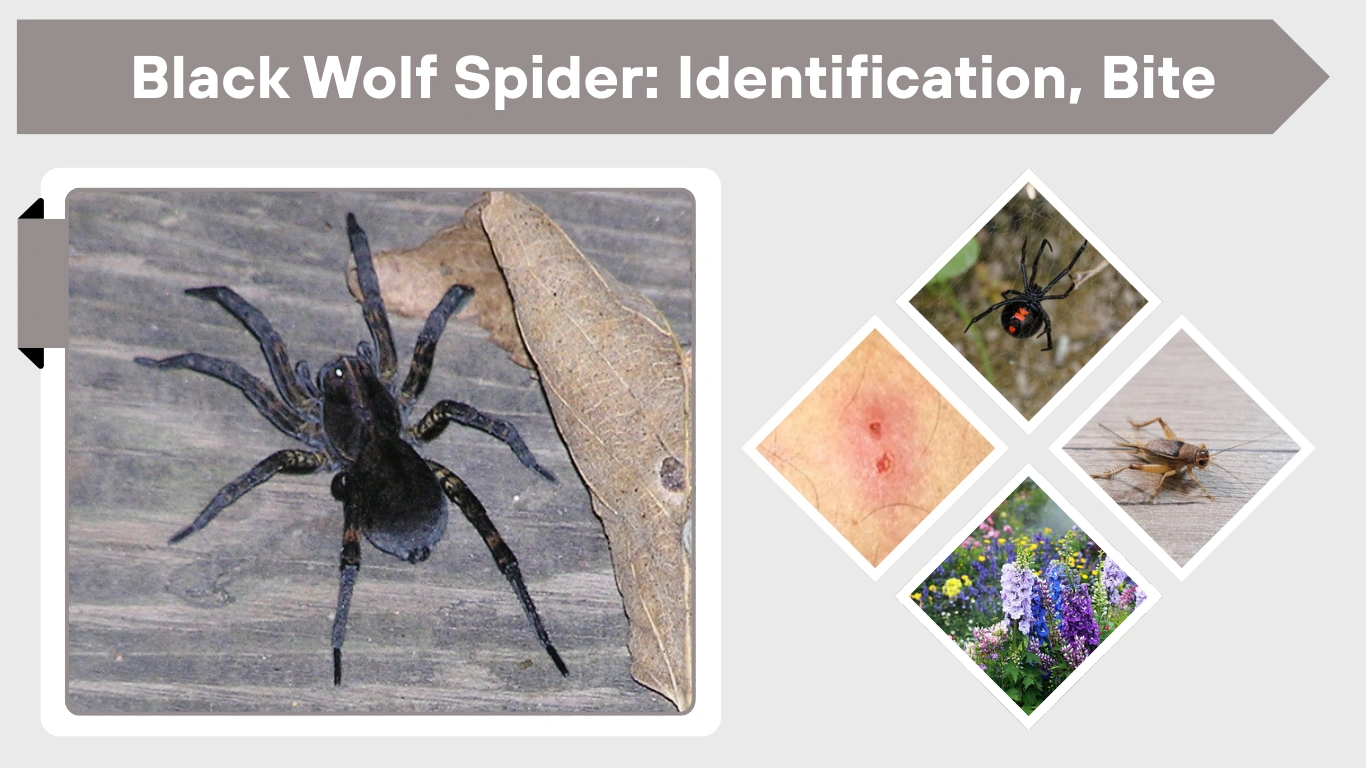
A black wolf spider often causes alarm because of its dark color, fast movement, and large, hairy body. Many homeowners mistake it for a black widow, a dangerous house spider, or even a brown recluse. In reality, “black wolf spider” is a general name used for several dark-colored wolf spider species. This guide explains how to identify a black wolf spider, how big it gets, what it looks like, and why it sometimes appears inside houses.
What Is a Black Wolf Spider?
A black wolf spider is not a single species but a common term for wolf spiders that appear jet black or very dark brown. These spiders belong to the family Lycosidae, a group known for active hunting rather than web-building. Some black wolf spiders are naturally dark, while others are melanistic forms of larger species such as the Carolina wolf spider or Hogna species.
Unlike house spiders, wolf spiders do not wait in webs. They roam floors, soil, and walls in search of prey. Their strong legs, sharp eyesight, and quick reflexes make them highly effective hunters. Because of their size and speed, they often startle people when they suddenly run across a room or garage floor.
Black Wolf Spider Identification Guide

Black wolf spiders share several physical and behavioral traits that make them easier to recognize once you know what to look for.
- Body color: Jet black, dark brown, or black with faint gray or white markings
- Eye pattern: Eight eyes arranged in three rows, with two large central eyes
- Legs: Thick, powerful, and usually covered with visible hair
- Markings: Some individuals show white stripes or pale spots on the back
- Movement: Fast runners that rarely stay still
- Hair texture: Dense, slightly velvety appearance
- Web behavior: Do not spin capture webs
These features help separate black wolf spiders from glossy black widows, thin-legged house spiders, and small jumping spiders.
Black Wolf Spider Size and Appearance

Average size of black wolf spiders
Most black wolf spiders measure 0.8 to 1.5 inches in body length. When the legs are included, their full leg span may reach 2.5 to over 3 inches. This large size is one of the main reasons people describe them as “huge” or “giant” black spiders.
Their bodies are thick and muscular, not slim or delicate. The abdomen is usually oval, and the cephalothorax appears broad and strong.
Small vs large black wolf spiders
Small black wolf spiders are usually juveniles or naturally smaller species. These may be under one inch long and are often mistaken for house spiders. Large black wolf spiders are commonly mature females of Hogna or Carolina wolf spider types. These are responsible for most “big black wolf spider” and “giant black wolf spider” sightings.
Environmental factors also play a role. Areas with abundant prey allow wolf spiders to grow larger and darker.
Male vs female black wolf spider
Female black wolf spiders are typically larger and heavier than males. They also show one of the most recognizable wolf spider behaviors: carrying egg sacs attached to the abdomen and later carrying spiderlings on their back.
Males are usually slimmer, with longer front legs and more wandering behavior, especially during mating season.
Black and White Wolf Spider Markings
Although many black wolf spiders appear solid black, some display white or light-gray stripes, faint abdominal bands, or pale leg joints. These markings lead many people to search for “black spider with white stripes on back” or “black and white wolf spider.”
These spiders are often confused with jumping spiders. However, jumping spiders are compact, short-legged, and frequently pause and jump. Wolf spiders are longer-legged, continuously moving runners that rarely jump and appear more “stretched” in shape.
White markings are more visible in young adults and freshly molted spiders, which is why some individuals look darker than others.
Black Wolf Spider Habitat and House Behavior

Black wolf spiders naturally live in grasslands, forests, gardens, farmland, under rocks, woodpiles, and leaf litter. They prefer ground-level environments where insects are abundant.
They enter houses accidentally while hunting or when weather conditions change. Heavy rain, extreme heat, and cold seasons often drive them into basements, garages, crawl spaces, sheds, and ground-floor rooms. Because they do not build webs, indoor sightings usually involve a spider running across the floor or disappearing under furniture.
A black wolf spider inside a home does not indicate an infestation. It usually means outdoor prey is nearby or small entry gaps exist around doors, windows, or foundations.
Black Wolf Spider by State Distribution
Midwest sightings (Ohio, Michigan, Illinois, Indiana, Wisconsin, Iowa, Missouri)
Black wolf spiders are common throughout the Midwest, especially in fields, gardens, basements, barns, and woodpiles. In these states, they are most often seen in late summer and fall when mature spiders become more active and frequently wander indoors. Many “black house spider” reports in this region turn out to be wolf spiders.
Southern and Western sightings (Texas, California, Tennessee, Pennsylvania, New Jersey)
In warmer states, larger wolf spider species are more common. Texas and California report frequent sightings of giant dark wolf spiders in yards, garages, and rural homes. In Tennessee and eastern states, black wolf spiders often appear in crawl spaces and ground-level rooms, especially during humid seasons.
Black Wolf Spider Bite Facts

Do black wolf spiders bite humans?
Yes, black wolf spiders can bite, but only in self-defense. Bites usually happen when a spider is trapped against the skin, picked up, or accidentally pressed inside clothing or bedding. They are not aggressive and prefer to escape rather than attack.
Black wolf spider bite symptoms
A typical bite causes mild to moderate pain similar to a bee sting, followed by redness, slight swelling, and itching. Some people may feel warmth or minor numbness around the area. Symptoms usually improve within a few hours and resolve completely within two to three days.
When to seek medical attention
Medical care is rarely needed. However, seek help if pain becomes severe, redness spreads rapidly, signs of infection appear, or if the person bitten has known allergies or a weakened immune system.
Is a Black Wolf Spider Poisonous?
Black wolf spiders are venomous, but they are not dangerous to humans. Their venom is designed to subdue insects, not people. Unlike black widows or brown recluses, wolf spider venom does not cause tissue damage or serious neurological symptoms. The idea that black wolf spiders are highly poisonous is a common myth based on their dark color and large size.
Black Wolf Spider vs Black Widow

Black wolf spiders are often mistaken for black widows, leading to unnecessary fear. Wolf spiders are hairy, fast, and ground-hunting, while black widows are shiny, slow-moving, and web-dwelling. Widows build messy webs in corners and dark spaces and display a red hourglass marking. Wolf spiders run across open floors and rarely stay in webs. Black widow bites are medically significant, while wolf spider bites are usually mild.
Black House Spider vs Wolf Spider
House spiders build tangled webs in corners, ceilings, and window frames. They wait for prey to become trapped. Black wolf spiders do not build capture webs. They actively hunt insects on the ground. If the spider is running across the floor instead of sitting in a web, it is much more likely to be a wolf spider.
Black Wolf Spider vs Brown Recluse
Brown recluse spiders are smooth-bodied, light to medium brown, and marked with a violin-shaped pattern. Black wolf spiders are darker, hairier, larger, and patterned. Recluse bites can cause serious skin injury, while black wolf spider bites are typically mild. Misidentification is common, especially in areas where both spiders may exist.
What Do Black Wolf Spiders Eat?

Black wolf spiders feed on a wide range of pests, including crickets, cockroaches, beetles, ants, flies, silverfish, and even other spiders. Large individuals are capable of killing black widows and other similarly sized spiders. Their presence outdoors often helps reduce insect populations naturally.
Giant and Jet-Black Wolf Spiders
Giant and jet-black wolf spiders are often melanistic forms of large species such as the Carolina wolf spider. These spiders appear almost solid black, giving them a striking, glossy look. They are responsible for most “huge black wolf spider” and “giant black wolf spider” searches and sightings.
Black Wolf Spider Life Cycle
Female black wolf spiders carry egg sacs attached to the abdomen. After hatching, dozens of spiderlings climb onto the mother’s back, where they stay for several days. They later disperse and grow through multiple molts before reaching adulthood. Most wolf spiders live about one year.
Are Black Wolf Spiders Good or Bad in Houses?
Black wolf spiders are beneficial predators because they control insect pests. However, their size and speed make them unwelcome indoors. They do not damage property, spin messy webs, or infest homes. Their presence usually indicates insects nearby rather than a spider problem.
How to Keep Black Wolf Spiders Out of Your Home
- Seal cracks around doors, windows, and foundations
- Reduce indoor insects that attract hunting spiders
- Remove clutter and stored boxes from floors
- Keep basements and garages dry and well-lit
- Trim vegetation and remove woodpiles near the house
- Use gentle capture and release methods indoors
FAQs
Are black wolf spiders dangerous to humans?
Black wolf spiders are not dangerous to humans. Their venom is mild, and most bites cause only minor redness, swelling, or itching. They are shy, non-aggressive spiders that usually flee when disturbed. Serious reactions are extremely rare.
How can you tell a black wolf spider from a black widow?
Black wolf spiders are hairy, patterned, and fast runners, while black widows are shiny, web-dwelling spiders with a red hourglass marking. Wolf spiders do not build capture webs and are commonly seen moving across floors instead of hanging upside down in webs.
Why do black wolf spiders come into houses?
They usually enter homes while hunting insects or escaping extreme heat, rain, or cold. Basements, garages, and crawl spaces provide shelter and prey. Indoor sightings typically mean accidental entry, not infestation.
Can a black wolf spider kill a black widow?
Yes. Large wolf spiders are capable of killing and eating black widows. They are powerful hunters and sometimes prey on other spiders when they encounter them.
What should you do if a black wolf spider bites you?
Wash the area with soap and water, apply a cold compress, and monitor symptoms. Most bites heal on their own. Seek medical care if severe pain, spreading redness, or allergic reactions develop.