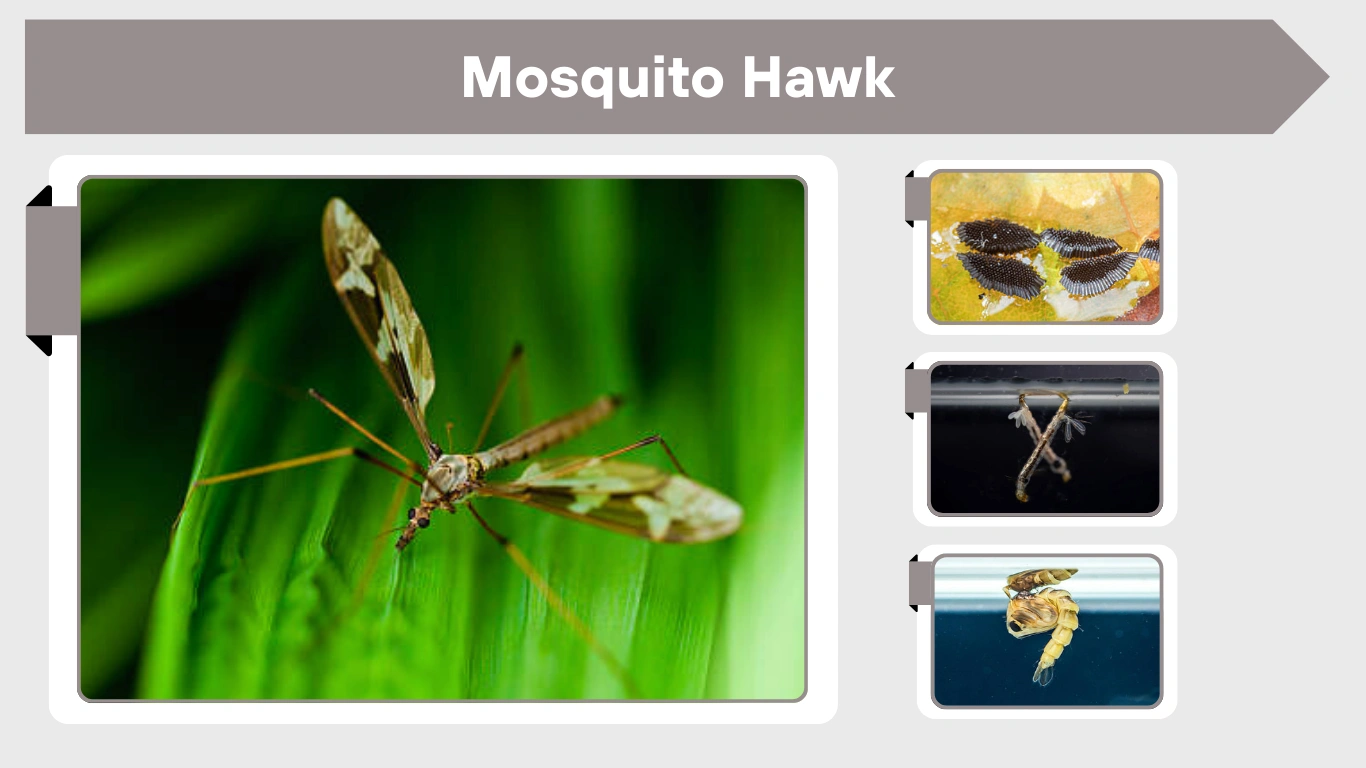
Few insects cause as much confusion as the mosquito hawk. Its large size, long legs, and slow, awkward flight make it look like a giant mosquito—leading many people to assume it bites, stings, or feeds aggressively on mosquitoes. Others believe mosquito hawks are beneficial predators that help control mosquito populations. In reality, most of what people think they know about mosquito hawks is wrong.
Despite their intimidating appearance, mosquito hawks are harmless insects with no interest in biting humans or hunting mosquitoes. Understanding what a mosquito hawk really is, what it eats, and why it appears around homes can help clear up common myths and reduce unnecessary fear.
What Is a Mosquito Hawk?
“Mosquito hawk” is a common nickname, not a scientific name. In most cases, when people talk about mosquito hawks, they are referring to crane flies—large, long-legged insects that resemble oversized mosquitoes. Other regional names include “skeeter hawk” or “mosquito eater,” though none of these accurately describe what the insect does.
The name comes entirely from appearance. Crane flies have slender bodies, long legs, and wings that make them look like exaggerated mosquitoes. However, they belong to a completely different insect family and behave very differently.
Is a Mosquito Hawk the Same as a Crane Fly?
Yes. In everyday usage, mosquito hawk and crane fly are the same insect. The term “mosquito hawk” is more common in parts of the southern United States, including Texas, while “crane fly” is the name used by entomologists. The word “hawk” suggests predatory behavior, but crane flies do not hunt or kill other insects.
What Do Mosquito Hawks Look Like?

Mosquito hawks are often much larger than people expect. Many species have bodies about an inch long, with legs that can double or triple their apparent size. Their wings are clear or lightly tinted, and their bodies are usually brown, gray, or tan. Some species may appear slightly reddish, which leads to searches for “red mosquito hawks.”
They are weak fliers and often drift or bounce into walls, windows, and ceilings. This clumsy movement makes them even more noticeable indoors.
Mosquito Hawk vs Mosquito
At a glance, mosquito hawks look like giant mosquitoes, but the differences are obvious up close. Mosquitoes are small, compact, and agile, with specialized mouthparts designed to pierce skin. Mosquito hawks lack these piercing mouthparts entirely. They also do not hover or dart like mosquitoes and are far less coordinated in flight.
Mosquito Hawk vs Dragonfly
Mosquito hawks are sometimes confused with dragonflies, but the two insects are very different. Dragonflies have thick bodies, large heads, and powerful flight. They are active hunters that eat mosquitoes and other insects. Mosquito hawks, by contrast, have thin bodies, long dangling legs, and no interest in hunting prey.
Mosquito Hawk vs Mayfly
Mayflies are another insect commonly mixed up with mosquito hawks. Mayflies usually have visible tail filaments and shorter legs, while mosquito hawks have extremely long legs and no tail extensions. Their life cycles and behaviors are also very different.
Do Mosquito Hawks Eat Mosquitoes?

This is the most common question—and the biggest myth. Mosquito hawks do not eat mosquitoes. They do not hunt, kill, or significantly reduce mosquito populations in any way.
The idea likely comes from the name “mosquito hawk,” which implies a predator, and from confusion with dragonflies, which do eat mosquitoes. Unfortunately, the nickname stuck, even though it is inaccurate.
What Do Mosquito Hawks Actually Eat?
Adult mosquito hawks typically feed on nectar, plant juices, or not at all. Some species have such short adult lifespans that they don’t eat once they emerge. Their primary purpose as adults is reproduction, not feeding.
What Do Mosquito Hawk Larvae Eat?
Mosquito hawk larvae live in soil, grass, or moist environments. They feed on decaying organic matter, roots, and plant debris. While large populations can sometimes damage lawns, most larvae play a minor role in breaking down organic material and enriching soil.
Do Mosquito Hawks Bite Humans?
No. Mosquito hawks do not bite people, sting, or suck blood. They lack the mouthparts required to pierce skin. Even when handled, they are incapable of biting in a meaningful way.
People sometimes assume they’ve been bitten because mosquitoes are often present at the same time of year, leading to mistaken identity.
Are Mosquito Hawks Dangerous?
Mosquito hawks are not dangerous to humans, pets, or homes. They do not spread disease, damage structures, or act aggressively. Their size can be startling, but they pose no threat beyond being a mild nuisance when they wander indoors.
Are Mosquito Hawks Beneficial or Harmful?
Mosquito hawks are generally considered harmless and, in some cases, mildly beneficial. While adult mosquito hawks do not control mosquito populations, their larvae play a small role in the ecosystem. By feeding on decaying organic matter and plant debris, larvae help break down material in soil and contribute to nutrient cycling.
Mosquito hawks also serve as a food source for birds, frogs, fish, and other insects. This makes them a natural part of the food chain rather than a pest that needs to be eliminated. In most situations, their presence is temporary and does not indicate a larger problem.
Mosquito Hawk Life Cycle

Mosquito hawks go through a complete life cycle that includes four stages: egg, larva, pupa, and adult. Most of their life is spent out of sight, with the adult stage being the shortest.
Egg and Larval Stages
Female mosquito hawks lay their eggs in moist soil, grass, or near water. Once hatched, the larvae live in the ground or shallow water, where they feed on organic material and plant roots. This stage can last several months and accounts for most of the insect’s lifespan.
In rare cases where larvae populations are high, they may cause minor lawn damage by feeding on grass roots. However, this is uncommon and usually limited to poorly drained or overly wet lawns.
Pupal and Adult Stages
After the larval stage, mosquito hawks enter the pupal stage before emerging as adults. Adult mosquito hawks live for only a few days to a couple of weeks. During this time, their primary purpose is to mate and lay eggs. Many adults do not feed at all.
How Long Do Mosquito Hawks Live?
While the larval stage can last several months, adult mosquito hawks have a very short lifespan. This is why they often appear suddenly in large numbers and then disappear just as quickly.
Why Do Mosquito Hawks Appear After Rain?

Mosquito hawks are closely associated with moisture. Heavy rain softens soil and creates ideal conditions for larvae to mature and emerge as adults. This is why people often notice a surge in mosquito hawks after rainstorms or during humid seasons.
They are also attracted to lights and may accidentally wander indoors through open doors, windows, or garages. Once inside, they tend to fly toward ceilings and lights, making them more noticeable but no more dangerous.
Why Are Mosquito Hawks Common in Texas and the South?
Warm temperatures, frequent rain, and moist soil make southern regions especially suitable for mosquito hawks. Lawns, fields, and drainage areas provide ideal breeding environments, which explains why they are especially common in Texas and other southern states during certain times of the year.
How to Get Rid of Mosquito Hawks (If Needed)
In most cases, mosquito hawks do not require control. If they enter your home, the easiest solution is simply to guide them back outside using a cup, net, or open window. They are fragile insects and should not be sprayed or crushed unnecessarily.
Lawn and Yard Management
If mosquito hawks appear in large numbers outdoors, improving drainage can help reduce larval habitats. Avoid overwatering lawns, repair areas where water pools, and keep grass properly maintained. These steps reduce moist environments that larvae prefer.
Do Mosquito Hawk Repellents Work?
There are no specific repellents designed for mosquito hawks, and most insect sprays are unnecessary. Products marketed as mosquito hawk repellents are often ineffective or misleading. Since mosquito hawks do not bite or cause harm, chemical control is rarely justified.
FAQs
Do mosquito hawks actually eat mosquitoes?
No. Despite their name, mosquito hawks do not eat mosquitoes.
Can mosquito hawks bite people?
No. They lack biting mouthparts and cannot sting.
Are mosquito hawks harmful?
No. They are harmless to humans, pets, and homes.
Why are mosquito hawks so big?
Their long legs and wings make them appear larger than they actually are.
What is the purpose of mosquito hawks?
They play a small ecological role as decomposers (as larvae) and as food for other animals.
Conclusion
Mosquito hawks may look intimidating, but they are among the most misunderstood insects around homes and gardens. They do not bite, sting, or eat mosquitoes, and they pose no danger to people or pets. Their sudden appearance, especially after rain, is a natural part of their short adult life cycle. Understanding what mosquito hawks really are helps replace fear with facts—and in most cases, the best response is simply to let them be.