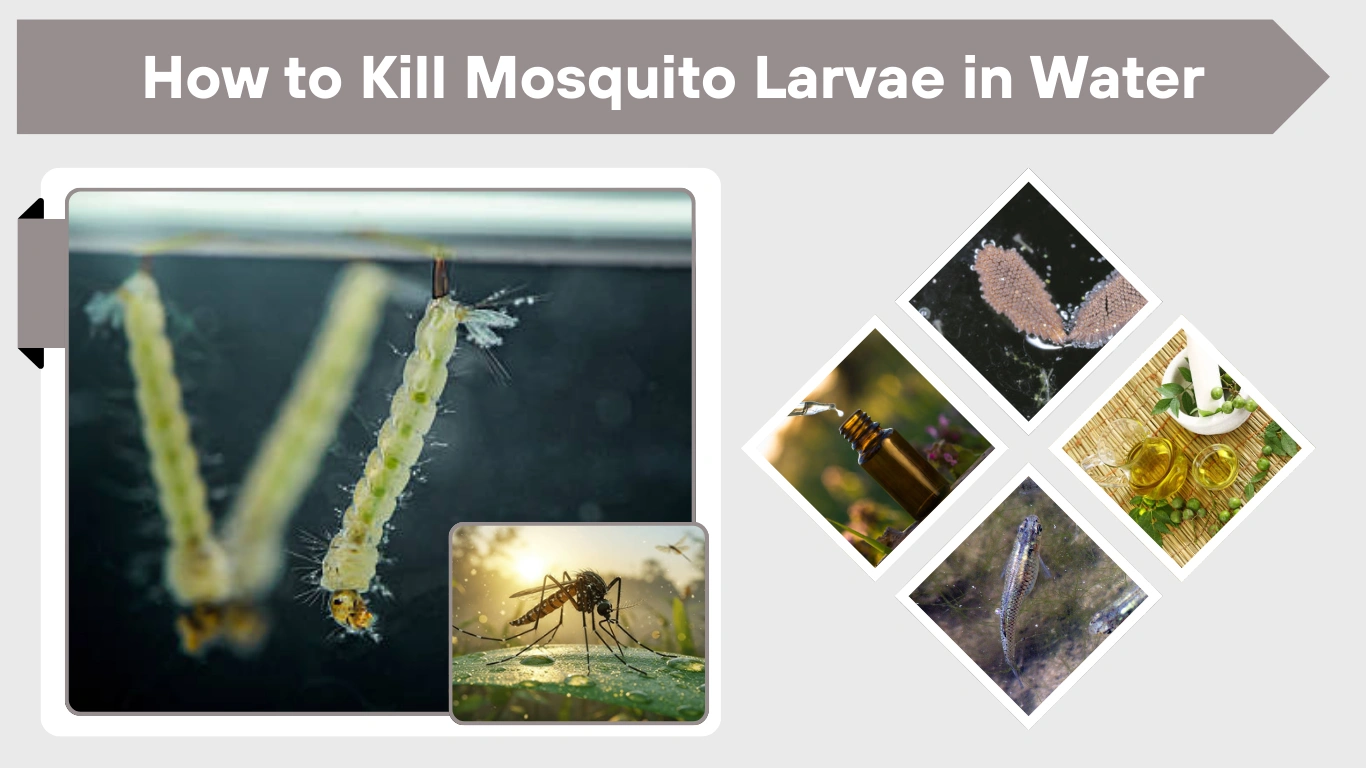
Mosquito larvae in water are the main reason mosquito populations grow so quickly around homes, gardens, and farms. These larvae develop in standing water such as buckets, plant trays, water tanks, ponds, and even animal water troughs. If they are not removed early, they can turn into adult mosquitoes in just a few days, increasing biting problems and the risk of disease. This guide explains what mosquito larvae look like in water, why they live there, how long they survive, and how to kill them safely before they mature.
What Are Mosquito Larvae?
Mosquito larvae are the immature stage of mosquitoes that live entirely in water. After a female mosquito lays eggs on the surface or edges of still water, the eggs hatch into larvae.
Key facts about mosquito larvae:
- They live only in water
- They must reach the surface to breathe air
- They feed on microorganisms and organic matter
- They grow rapidly in warm conditions
Under favorable conditions, mosquito larvae can develop into adult mosquitoes in as little as 7 to 10 days, which is why even small amounts of standing water can quickly lead to infestations.
What Do Mosquito Larvae Look Like in Water?

Many people see larvae but don’t recognize what they are. Knowing how to identify mosquito larvae makes it easier to act quickly.
How to Identify Mosquito Larvae
Mosquito larvae usually look like:
- Thin, worm-like creatures
- Brown, black, or reddish in color
- Actively wriggling or jerking in the water
- Floating just below the water surface
They often move in sharp, “S-shaped” motions and quickly dive when the water is disturbed.
Can You See Mosquito Larvae in Water?
Yes, mosquito larvae are usually visible to the naked eye, especially in:
- Clear water
- Shallow containers
- Sunlit areas
If you notice tiny creatures wiggling near the surface of standing water, they are almost always mosquito larvae.
Mosquito Larvae in Water vs Tadpoles
Mosquito larvae are often confused with tadpoles, but there are clear differences:
- Mosquito larvae are much smaller and thinner
- They move in quick, jerky motions
- Tadpoles are rounder and swim smoothly
- Tadpoles are usually found in ponds, not small containers
Why Do Mosquito Larvae Live in Water?
Mosquito larvae live in water because it provides everything they need to survive.
They depend on water because:
- Mosquito eggs need water to hatch
- Larvae breathe air at the water’s surface
- Water contains microorganisms they feed on
- Still water protects them from predators
Mosquitoes prefer stagnant or slow-moving water, which is why standing water is such a problem around homes.
How Do Mosquito Larvae Get in Water?

Mosquito larvae appear when female mosquitoes lay eggs in standing water. Many people believe only dirty water attracts mosquitoes, but this is a common myth.
Important points:
- Mosquitoes lay eggs in clean or dirty water
- Eggs hatch within 24–48 hours
- Eggs can stick to container walls above the waterline
- Even small amounts of water can support larvae
This means that flower pots, bottle caps, buckets, and uncovered tanks can all become breeding sites.
Common Places Mosquito Larvae Are Found
Mosquito larvae can be found in many places around homes and outdoor areas.
Common locations include:
- Buckets, barrels, and storage containers
- Standing water in yards
- Plant trays and water plants
- Water tanks and drums
- Ponds, fountains, and water features
- Stagnant areas of swimming pools
- Animal water troughs and bowls (dogs, cattle, chickens)
Animal water containers are especially at risk if they are left outside and not cleaned or refilled daily.
How Long Do Mosquito Larvae Live in Water?
Mosquito larvae live in water until they complete their development into adult mosquitoes.
Typical timeline:
- Eggs hatch in 1–2 days
- Larvae live in water for 5–10 days
- Larvae change into pupae
- Adult mosquitoes emerge shortly after
Warm temperatures speed up this process, while cooler water slows it down. This is why mosquito problems increase rapidly during warm and rainy seasons.
Can Mosquito Larvae Survive in Different Water Conditions?

Mosquito larvae are adaptable, but certain conditions affect their survival.
Can Mosquito Larvae Live in Moving Water?
Most mosquito larvae cannot survive in moving water. Flowing water prevents larvae from staying at the surface and disrupts egg-laying. This is why mosquitoes prefer stagnant or still water.
Can Mosquito Larvae Live in Chlorinated Water?
Lightly chlorinated or untreated water tanks can still support larvae. Properly maintained swimming pools with correct chlorine levels usually prevent mosquito larvae from surviving.
Can Mosquito Larvae Survive in Cold or Soapy Water?
- Cold water slows development but doesn’t always kill larvae
- Soapy water kills larvae by breaking surface tension and blocking breathing
How to Kill Mosquito Larvae in Water

The most effective way to control mosquitoes is to kill them at the larval stage before they become adults. The best method depends on whether the water can be emptied or must remain in place.
Best Way to Kill Mosquito Larvae in Standing Water
If possible, the simplest and safest solution is to remove the water entirely.
Steps to follow:
- Dump out standing water
- Scrub container walls to remove eggs
- Let containers dry completely before reuse
Drying is important because mosquito eggs can stick to surfaces above the waterline and hatch later.
If the water cannot be removed, treatment is required.
What Can You Put in Water to Kill Mosquito Larvae?
For water that is not used for drinking, pets, or plants, several options work:
- Dish soap (a few drops): breaks surface tension and suffocates larvae
- Cooking or mineral oil: forms a thin layer that blocks breathing
- Commercial larvicides designed specifically for mosquito control
⚠️ Never use soap or oil in drinking water, pet bowls, or livestock water.
What Kills Mosquito Larvae in Water Naturally?

Natural methods are preferred when safety is a concern.
Natural Mosquito Larvae Killers
- Bacillus thuringiensis israelensis (BTI) – a naturally occurring bacteria that kills mosquito larvae but is safe for humans, pets, and wildlife
- Neem oil – interferes with larval growth
- Biological control such as mosquito-eating fish (ponds only)
BTI is one of the best options for ponds, fountains, and water features because it targets larvae only.
What Eats Mosquito Larvae in Water?
In larger water bodies:
- Goldfish
- Guppies
- Minnows
These fish naturally reduce mosquito larvae populations.
Does Bleach Kill Mosquito Larvae in Water?
Yes, bleach can kill mosquito larvae, but it should be used with extreme caution.
Will Bleach Kill Mosquito Larvae in Standing Water?
Bleach kills larvae quickly, but it is toxic.
Bleach should never be used in:
- Drinking water tanks
- Pet or livestock water
- Plant water
Bleach may be used only for empty containers, drains, or surfaces that will be thoroughly rinsed afterward.
Vinegar, Oil, and Other Home Chemicals
- Vinegar: may kill some larvae but is unreliable
- Oil: effective in non-drinking water by suffocating larvae
- Ammonia or peroxide: unsafe and not recommended
Using harsh chemicals often causes more harm than good.
How to Kill Mosquito Larvae in Specific Situations

Mosquito Larvae in Drinking Water Tanks
- Keep tanks tightly covere
- Use fine mesh on vents and openings
- Use approved larvicides only if permitted
- Clean tanks periodically
Never add soap, oil, or bleach to drinking water.
Mosquito Larvae in Plant Water
Mosquito larvae often appear in plant trays or waterlogged soil.
Solutions include:
- Empty trays regularly
- Improve soil drainage
- Avoid overwatering
- Use BTI granules if needed
Mosquito Larvae in Dog, Cattle, or Livestock Water
For animal water:
- Dump water immediately
- Wash containers with soap and water
- Refill with clean water
- Change water daily
Do not add chemicals to animal drinking water.
Mosquito Larvae in Ponds, Pools, and Fountains
- Keep water moving with pumps or fountains
- Use BTI products
- Maintain proper chlorine levels in pools
- Remove debris regularly
Moving water alone greatly reduces mosquito breeding.
What to Do When You Find Mosquito Larvae in Water
Follow this simple action plan:
- Identify the water source
- Dump water if possible
- Treat water that can’t be emptied
- Clean and dry containers
- Prevent water from standing again
Quick action stops larvae from reaching adulthood.
How to Prevent Mosquito Larvae in Water

How to Prevent Mosquito Larvae in Standing Water
- Inspect outdoor areas weekly
- Remove stagnant water
- Store containers upside down
- Improve drainage
How to Prevent Mosquito Larvae in Water Plants
- Avoid water pooling
- Use sand or gravel over soil
- Check trays frequently
What Can You Put in Water to Prevent Mosquito Larvae?
- BTI products
- Safe biological controls
Mosquito Life Cycle in Water
Understanding the life cycle helps stop mosquitoes early:
- Egg stage
- Larva stage
- Pupa stage
- Adult mosquito
Breaking the cycle at the larval stage is the most effective control method.
Quick Action & Safety Checklist
- Check standing water weekly
- Look for wriggling larvae
- Dump or treat water immediately
- Protect pets, livestock, and drinking water
- Cover tanks and containers
FAQs
What do mosquito larvae look like in water?
They look like small, thin, wriggling worms near the water surface.
How do you kill mosquito larvae in water?
Dump standing water or use BTI or approved larvicides for water that cannot be emptied.
Does bleach kill mosquito larvae in water?
Yes, but bleach should never be used in drinking, pet, or livestock water.
Can mosquito larvae live in clean or chlorinated water?
They can survive in clean or lightly chlorinated stagnant water.
How do I prevent mosquito larvae permanently?
Remove standing water, cover containers, and maintain water sources regularly.