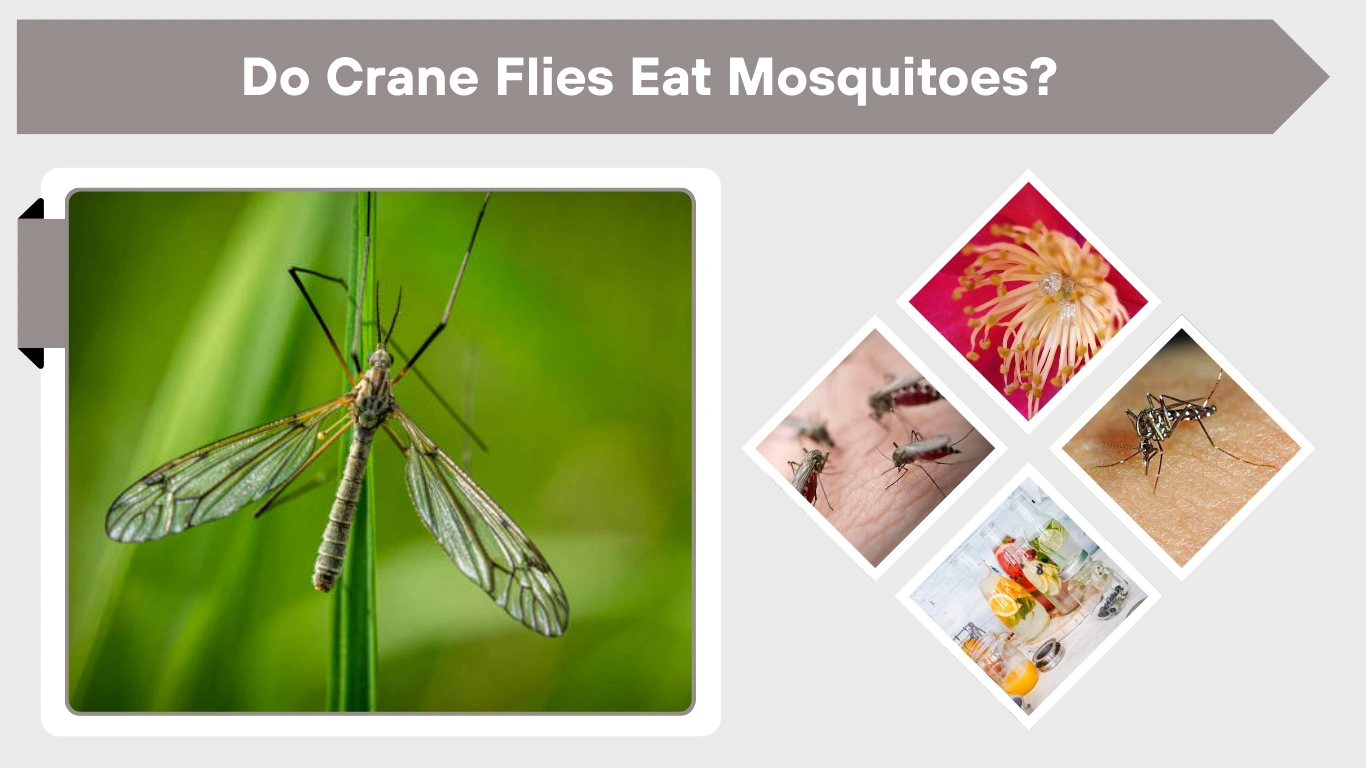
Crane flies are often mistaken for giant mosquitoes and are commonly called mosquito eaters or mosquito hawks. Because of these names, many people believe crane flies eat, kill, or control mosquitoes. In reality, this belief is based on long-standing myths rather than science. This article explains what crane flies really are, whether they eat mosquitoes, how they differ from mosquitoes, and why so many people confuse the two insects.
What Is a Crane Fly
Crane flies are insects belonging to the family Tipulidae. They are known for their long legs, slender bodies, and slow, clumsy flight. Crane flies are commonly referred to as mosquito hawks, mosquito eaters, or giant mosquitoes, even though none of these names accurately describe their behavior.
Adult crane flies are harmless insects that usually appear during certain seasons, often in large numbers. They are frequently attracted to lights and may wander indoors, which increases human encounters and confusion.
What Is a Mosquito
Mosquitoes belong to the family Culicidae and are very different from crane flies in behavior and impact. Female mosquitoes bite humans and animals to drink blood, which they need to produce eggs. Mosquitoes are also responsible for spreading serious diseases such as malaria, dengue, Zika, and West Nile virus.
Mosquitoes are small, fast, and aggressive, especially when feeding. This makes them one of the most dangerous insects to humans worldwide.
Are Crane Flies Mosquitoes

Crane flies are not mosquitoes.
Although both insects are flies and belong to the order Diptera, they come from completely different families. Crane flies do not bite, do not drink blood, and do not transmit diseases. The confusion exists mainly because crane flies share a similar body shape with mosquitoes, especially their long legs and narrow wings.
Are Crane Flies Male Mosquitoes
A common myth is that crane flies are male mosquitoes. This is false.
Male mosquitoes are much smaller than crane flies and closely resemble female mosquitoes in shape. While male mosquitoes do not bite, they are still mosquitoes. Crane flies are a separate insect group entirely and are not related to mosquito gender in any way.
Why Do Crane Flies Look Like Mosquitoes
Crane flies look like mosquitoes because both insects have elongated bodies, long legs, and narrow wings. This visual similarity often causes people to panic when they see a crane fly indoors.
However, crane flies lack the needle-like mouthparts that mosquitoes use to pierce skin. Their resemblance to mosquitoes is superficial and not functional.
Are Crane Flies Related to Mosquitoes

Crane flies and mosquitoes are only distantly related. Both belong to the order Diptera, which includes all true flies, but they evolved into separate families millions of years ago.
This distant relationship explains why they look somewhat alike but behave very differently.
Why Are Crane Flies Called Mosquito Eaters
The nickname “mosquito eater” comes from a long-standing misunderstanding. Because crane flies appear around the same time as mosquitoes and resemble them, people assumed they prey on mosquitoes.
In reality, there is no scientific evidence that crane flies eat mosquitoes at any stage of their life. The name persists mainly because it sounds useful and reassuring.
Are Crane Flies Mosquito Hawks
The term mosquito hawk is another common name for crane flies. Like mosquito eater, this name is misleading. Crane flies do not hunt, chase, or kill mosquitoes.
The word “hawk” suggests predatory behavior, but crane flies are passive insects that avoid confrontation and spend most of their short adult lives resting or reproducing.
Do Crane Flies Eat Mosquitoes
Crane flies do not eat mosquitoes.
They lack the mouthparts, speed, and hunting instincts required to catch mosquitoes. Adult crane flies either feed on nectar or do not feed at all. Scientific studies confirm that crane flies play no role in reducing mosquito populations.
Do Crane Flies Actually Eat Mosquitoes or Kill Them

Crane flies do not kill mosquitoes either directly or indirectly. They are not predators and do not compete with mosquitoes for food. Their presence does not reduce mosquito numbers, nor does it discourage mosquitoes from breeding nearby.
The belief that crane flies control mosquitoes is a myth that has been repeated for decades without evidence.
Do Crane Flies Eat Mosquito Larvae
Crane flies do not eat mosquito larvae. The two insects develop in very different environments and rarely interact in ways that would allow predation.
Mosquito larvae live in standing water such as ponds, puddles, buckets, or birdbaths. Crane fly larvae, often called leatherjackets, live in soil, grass, or moist ground. Because their habitats do not overlap, crane fly larvae have no opportunity to feed on mosquito larvae.
What Do Crane Flies Actually Eat

Crane flies have simple feeding habits that do not involve hunting other insects.
Adult Crane Fly Diet
Adult crane flies feed mainly on nectar, plant sap, or other sugary liquids. Many adult crane flies do not feed at all because their lifespan is very short, often lasting only a few days. Their primary purpose as adults is reproduction rather than feeding.
Crane Fly Larvae Diet
Crane fly larvae feed on decaying organic matter, roots, and grass in the soil. While they play a role in breaking down organic material, they can sometimes damage lawns if populations become large. They do not consume insects or mosquito larvae.
Do Crane Flies Bite Like Mosquitoes
Crane flies do not bite humans or animals. They lack the piercing mouthparts that mosquitoes use to suck blood.
Even though crane flies may fly close to people or land on walls and ceilings, they pose no threat. They do not sting, bite, or transmit disease.
Are Mosquitoes More Aggressive Than Crane Flies
Mosquitoes are far more aggressive than crane flies. Female mosquitoes actively seek out humans using body heat, carbon dioxide, and scent. They will persistently attempt to bite until successful or killed.
Crane flies, on the other hand, are passive insects. They do not seek out humans and often try to escape when disturbed. Their erratic flight is a sign of poor coordination, not aggression.
Crane Fly vs Mosquito: Key Differences

When comparing crane flies and mosquitoes, the differences are clear.
- Biting behavior: Crane flies do not bite; mosquitoes do
- Aggressiveness: Crane flies are harmless; mosquitoes are persistent feeders
- Disease risk: Crane flies carry no diseases; mosquitoes transmit serious illnesses
- Diet: Crane flies feed on nectar or plants; mosquitoes feed on blood (females)
These differences make crane flies harmless insects despite their intimidating appearance.
Is a Crane Fly a Giant Mosquito
A crane fly is not a giant mosquito. There are no mosquito species that grow as large as crane flies. Insects commonly described as giant mosquitoes are almost always crane flies.
Size alone is one of the most reliable ways to tell them apart. If the insect is unusually large, it is almost certainly a crane fly.
How to Tell a Crane Fly From a Mosquito
You can easily identify whether an insect is a crane fly or a mosquito by observing a few traits.
- Crane flies have extremely long legs
- Mosquitoes have a visible needle-like proboscis
- Crane flies fly slowly and awkwardly
- Mosquitoes fly quickly and land directly on skin
Behavior is often more helpful than appearance when identifying these insects.
Big Mosquito-Looking Bugs That Aren’t Crane Flies
Several insects are mistaken for mosquitoes or crane flies, including midges and certain flies. Unlike mosquitoes, these insects do not bite or transmit disease.
Correct identification helps reduce unnecessary fear and prevents people from killing harmless insects.
Do Crane Flies Keep Mosquitoes Away
Crane flies do not repel mosquitoes or keep them away. Their presence has no effect on mosquito behavior or population size.
To reduce mosquitoes, effective methods include eliminating standing water, using repellents, and installing screens. Relying on crane flies for mosquito control does not work.
Ecological Role of Crane Flies
Crane flies play a modest but useful role in ecosystems. Their larvae help break down organic matter in soil, while adult crane flies serve as food for birds, frogs, and other predators.
Although crane flies do not control mosquitoes, they are part of natural food webs and contribute to environmental balance.
Why Do People Think Crane Flies Eat Mosquitoes
The belief that crane flies eat mosquitoes comes from misleading names, visual similarity, and repeated misinformation online. Terms like mosquito eater and mosquito hawk create unrealistic expectations about their role.
Once a myth becomes widespread, it often persists despite scientific evidence to the contrary.
FAQs
Do crane flies eat mosquitoes?
No, crane flies do not eat mosquitoes. Despite being called mosquito eaters or mosquito hawks, crane flies lack the mouthparts and behavior needed to hunt insects. Adult crane flies feed on nectar or do not feed at all, while their larvae eat decaying organic matter.
Are crane flies mosquitoes or male mosquitoes?
Crane flies are not mosquitoes and are not male mosquitoes. They belong to a completely different insect family called Tipulidae. Male mosquitoes are much smaller and still resemble female mosquitoes, while crane flies are larger and harmless.
Why are crane flies called mosquito eaters or mosquito hawks?
Crane flies are called mosquito eaters or mosquito hawks because of a long-standing myth. Their mosquito-like appearance led people to assume they prey on mosquitoes. In reality, these names are misleading and do not reflect their actual behavior or diet.
Do crane flies bite like mosquitoes?
Crane flies do not bite humans or animals. They lack the sharp, needle-like mouthparts that mosquitoes use to pierce skin. Although they may look intimidating due to their size, crane flies are completely harmless and do not spread diseases.
How can you tell the difference between a crane fly and a mosquito?
Crane flies are much larger, have extremely long legs, and fly slowly and awkwardly. Mosquitoes are smaller, more agile, and actively land on skin to bite. Mosquitoes also have a visible proboscis, which crane flies lack.