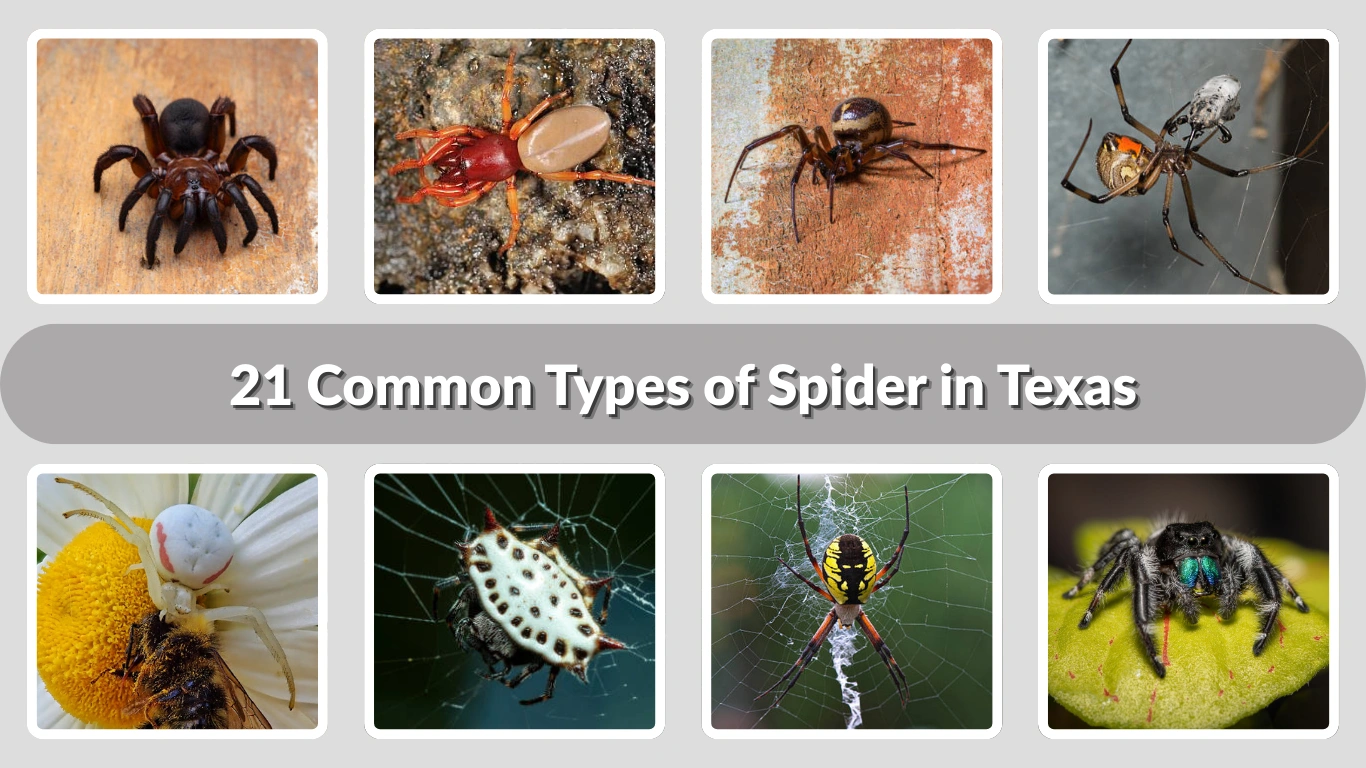
Texas is home to a wide variety of spider species that live in deserts, grasslands, forests, wetlands, and even inside homes. From large tarantulas to tiny jumping spiders, these arachnids play an important role in controlling insect populations. While a few species have medically significant venom, most Texas spiders are harmless and avoid human contact. Learning to identify common spiders helps reduce fear and encourages appreciation of their ecological value.
1. Texas Brown Tarantula (Aphonopelma hentzi)

The Texas Brown Tarantula is the largest and most well-known spider in Texas. Despite its size and intimidating appearance, it is generally calm, slow-moving, and not considered dangerous to humans.
Identification
- Large, heavy-bodied spider with thick legs
- Brown to dark brown coloration with dense hairs
- Females larger and more robust than males
- Males have longer legs and a slimmer body
Habitat
This species is commonly found in grasslands, deserts, scrublands, and open woodlands across Texas. It lives in silk-lined burrows in the ground, often using natural soil cracks or abandoned animal burrows for shelter.
Behavior
Texas Brown Tarantulas are mostly nocturnal and spend the day hidden in their burrows. Males are frequently seen wandering in late summer and fall while searching for mates. When threatened, they may rear up or flick urticating hairs but rarely bite.
Lifecycle
Females can live 20 years or more, remaining in the same burrow for much of their lives. Males mature faster and usually die shortly after mating. Females produce egg sacs containing hundreds of spiderlings, which disperse after hatching.
2. Southern Black Widow (Latrodectus mactans)

The Southern Black Widow is one of the most recognizable spiders in Texas due to its glossy black body and distinctive red hourglass marking. It is venomous but reclusive, and bites are uncommon.
Identification
- Shiny black body with a rounded abdomen
- Bright red hourglass marking on the underside
- Females significantly larger than males
- Long, slender legs
Habitat
This species prefers dark, sheltered locations such as woodpiles, sheds, garages, crawl spaces, and outdoor debris. It is commonly found near human structures where insects are abundant.
Behavior
Southern Black Widows are nocturnal and spend most of their time in tangled webs. They are shy and avoid human contact, usually biting only when accidentally disturbed or pressed against skin.
Lifecycle
Females can live several years and produce multiple egg sacs during their lifetime. Eggs hatch within a few weeks, and spiderlings disperse shortly after. Males mature quickly and die soon after mating.
3. Brown Recluse (Loxosceles reclusa)

The Brown Recluse is one of the most medically significant spiders found in Texas. It is secretive by nature and prefers to remain hidden, which is why encounters are relatively uncommon despite its wide distribution.
Identification
- Light to dark brown body color
- Distinct violin-shaped marking on the cephalothorax
- Six eyes arranged in three pairs (not eight)
- Long, slender legs with fine hairs
Habitat
Brown Recluses favor dry, undisturbed indoor and outdoor locations. They are commonly found in closets, attics, basements, storage boxes, sheds, and under furniture. Outdoors, they hide beneath rocks, logs, and debris.
Behavior
This spider is nocturnal and avoids human interaction. It does not build a typical web for catching prey, instead using silk retreats for shelter. Bites usually occur when the spider is trapped against skin, such as in clothing or bedding.
Lifecycle
Brown Recluses can live one to two years. Females lay egg sacs containing dozens of eggs in protected areas. Spiderlings hatch within weeks and mature slowly, molting several times before reaching adulthood.
4. Mediterranean Recluse (Loxosceles rufescens)

The Mediterranean Recluse is an introduced recluse spider now found in parts of Texas, particularly in urban environments. It is similar in appearance and behavior to the brown recluse but is encountered less frequently.
Identification
- Light reddish-brown to tan body
- Faint violin-shaped marking on the cephalothorax
- Six eyes arranged in three pairs
- Slender legs with a smooth appearance
Habitat
This species is commonly found indoors, especially in warehouses, apartments, storage areas, and older buildings. It prefers dry, dark, and undisturbed locations similar to other recluse spiders.
Behavior
Mediterranean Recluses are nocturnal and secretive. They do not actively hunt using webs and instead wander at night to find prey. Bites are rare and typically occur only when the spider is accidentally trapped.
Lifecycle
Females lay several egg sacs during their lifetime, each containing dozens of eggs. Spiderlings hatch within a month and mature slowly. Adults may live for more than one year under favorable conditions.
5. Wolf Spider (Lycosidae family)

Wolf Spiders are common throughout Texas and are often mistaken for more dangerous species due to their size and speed. They are harmless hunters that do not rely on webs to catch prey.
Identification
- Brown, gray, or tan body with striped or mottled patterns
- Large, muscular legs adapted for running
- Prominent eyes arranged in three rows
- Females larger and heavier than males
Habitat
Wolf Spiders inhabit grasslands, deserts, forests, agricultural fields, and residential areas. They live on the ground, hiding under rocks, logs, leaf litter, and sometimes inside homes during cooler or wetter weather.
Behavior
These spiders are active hunters that chase down insects, especially at night. They rely on speed and good vision rather than webs. When disturbed, wolf spiders usually flee instead of showing aggression.
Lifecycle
Females carry their egg sacs attached to their spinnerets and later carry newly hatched spiderlings on their backs. Most wolf spiders live about one year, though some larger species may survive longer.
6. Bold Jumping Spider (Phidippus audax)

The Bold Jumping Spider is a common and easily recognizable spider found across Texas. It is known for its excellent vision, quick movements, and curious behavior around humans.
Identification
- Black body with white or orange spots on the abdomen
- Compact, fuzzy appearance
- Large forward-facing eyes
- Short, thick front legs
Habitat
This species is found in gardens, fields, forests, fences, walls, and around windows. It prefers sunny, open areas and does not build webs for catching prey.
Behavior
Bold Jumping Spiders are active during the day and hunt by stalking and jumping on prey. They often pause to observe movement and use silk as a safety line while jumping. Bites are extremely rare.
Lifecycle
They typically live for about one year. Females lay eggs in silk retreats and guard them until hatching. Spiderlings disperse soon after and mature through several molts.
7. Green Lynx Spider (Peucetia viridans)

The Green Lynx Spider is a large, brightly colored spider commonly found in Texas, especially in gardens and open fields. It is known for its vivid green body and active hunting behavior on plants.
Identification
- Bright green body with long, spiny legs
- Red or black spots on the abdomen
- Slender, elongated body shape
- Females larger than males
Habitat
This spider lives on shrubs, flowering plants, crops, and tall grasses. It does not build a prey-catching web and is most often found in warm, sunny environments across Texas.
Behavior
Green Lynx Spiders are diurnal hunters that actively stalk insects on vegetation. They are fast, alert, and may jump or run when disturbed. Although defensive if handled, they are not aggressive toward humans.
Lifecycle
Females guard their egg sacs aggressively, often remaining nearby until the spiderlings hatch. Spiderlings disperse shortly after emerging. The full life cycle typically lasts about one year.
8. Yellow Garden Spider (Argiope aurantia)

The Yellow Garden Spider is one of the most striking spiders in Texas, known for its bold yellow-and-black coloring and large, decorative web. It is harmless to humans and commonly seen in late summer.
Identification
- Black and bright yellow patterned abdomen
- Long legs with alternating black and orange bands
- Females much larger than males
- Distinct zigzag silk pattern (stabilimentum) in the web
Habitat
This spider is commonly found in gardens, fields, meadows, roadsides, and agricultural areas. It builds large orb webs between tall plants, shrubs, and fences where flying insects are abundant.
Behavior
Yellow Garden Spiders are mostly diurnal and remain in the center of their webs during the day. They rely on web vibrations to detect prey and quickly wrap captured insects in silk. They are shy and rarely leave their webs.
Lifecycle
Females lay egg sacs in late summer or fall, attaching them to vegetation near the web. Adults usually die after the first frost, while spiderlings hatch the following spring and disperse by ballooning.
9. Banded Garden Spider (Argiope trifasciata)

The Banded Garden Spider is a large, eye-catching orb-weaver commonly found in Texas landscapes. It is known for its silvery body, banded legs, and impressive circular webs.
Identification
- Silvery-white abdomen with yellow and black bands
- Long legs with distinct dark and light striping
- Females much larger than males
- Elongated body compared to other garden spiders
Habitat
This species is commonly found in grasslands, fields, gardens, prairies, and roadsides. It builds large orb webs among tall grasses, shrubs, and low bushes where flying insects are plentiful.
Behavior
Banded Garden Spiders usually sit in the center of their web during the day. They are calm and non-aggressive, relying on web vibrations to detect prey. When disturbed, they may drop from the web or shake it rapidly.
Lifecycle
Females produce egg sacs in late summer or fall and attach them to nearby vegetation. Adults typically die with the onset of cold weather, while spiderlings hatch the following season and mature within one year.
10. Spiny-backed Orb-weaver (Gasteracantha cancriformis)

The Spiny-backed Orb-weaver is a small but striking spider found in eastern and southern Texas. It is easily recognized by its hard, brightly colored abdomen with prominent spines.
Identification
- Flat, hard abdomen with six sharp spines
- White, yellow, red, or orange body with black markings
- Small body size despite bold appearance
- Females much larger than males
Habitat
This spider is commonly found in woodlands, gardens, shrubs, and forest edges. It builds small orb webs between tree branches and bushes, usually at eye level or lower.
Behavior
Spiny-backed Orb-weavers are mostly sedentary and remain in the center of their webs. They rely on the web to capture flying insects and rarely leave it. The spiny abdomen helps deter predators.
Lifecycle
Females lay egg sacs on nearby leaves or bark. Spiderlings hatch within weeks and disperse by ballooning. Most individuals complete their life cycle within a single year.
11. Flower Crab Spider (Misumena vatia)

The Flower Crab Spider is a colorful ambush predator found across Texas, especially in gardens and wildflower areas. It is known for blending into flowers and capturing pollinating insects.
Identification
- White, yellow, or pale green body coloration
- Wide, flattened body with long front legs held sideways
- Females much larger than males
- Smooth, glossy appearance
Habitat
This spider is commonly found on flowers, flowering shrubs, meadows, and gardens. It does not build a hunting web and instead relies on camouflage while sitting on petals or leaves.
Behavior
Flower Crab Spiders wait motionless for prey such as bees and butterflies. When an insect lands nearby, they grab it with their strong front legs. They are slow-moving and non-aggressive toward humans.
Lifecycle
Females lay egg sacs on leaves or flower stems and guard them until hatching. Spiderlings disperse soon after emerging and mature through several molts within one year.
12. Fishing Spider (Dolomedes spp.)

Fishing Spiders are large, semi-aquatic spiders found in parts of Texas near freshwater habitats. They are known for their ability to walk on water and hunt insects and small aquatic prey.
Identification
- Large brown or gray body with light striping
- Long, powerful legs often held outstretched
- Flattened body shape compared to wolf spiders
- Females significantly larger than males
Habitat
These spiders live near ponds, lakes, rivers, streams, and wetlands. They are commonly seen resting on rocks, vegetation, docks, or tree trunks close to the water’s edge.
Behavior
Fishing Spiders hunt without webs, relying on vibrations on the water’s surface to detect prey. They can run across water and even dive briefly to escape predators. They are mostly nocturnal and shy.
Lifecycle
Females carry egg sacs in their jaws and later attach them to vegetation, guarding them until hatching. Spiderlings remain near the female for a short time before dispersing. The life cycle typically lasts about one year.
13. Cellar Spider (Pholcus phalangioides)

The Cellar Spider is a common indoor spider in Texas, easily recognized by its extremely long legs and delicate body. It is harmless and often found in homes, garages, and basements.
Identification
- Small, pale tan or gray body
- Extremely long, thin legs
- Elongated abdomen
- Often confused with “daddy longlegs”
Habitat
Cellar Spiders are most often found indoors in ceilings, corners, basements, crawl spaces, and garages. Outdoors, they may live in caves, under bridges, or sheltered crevices.
Behavior
They build loose, irregular webs and hang upside down while waiting for prey. When disturbed, they vibrate rapidly in their webs. Cellar spiders are non-aggressive and may prey on other spiders.
Lifecycle
Females carry egg clusters in their mouthparts until hatching. Spiderlings stay nearby briefly before dispersing. Indoors, cellar spiders can live for several years under stable conditions.
14. Southern House Spider (Kukulcania hibernalis)

The Southern House Spider is a large, fast-moving spider commonly found in Texas homes and buildings. It is often mistaken for more dangerous species but is harmless to humans.
Identification
- Dark brown to black body color
- Long legs with a slightly hairy appearance
- Females larger with thicker bodies than males
- Males have longer legs and slimmer bodies
Habitat
This spider is commonly found in homes, garages, sheds, barns, and warehouses. Outdoors, it lives in cracks, crevices, under bark, and around building foundations where it can remain undisturbed.
Behavior
Southern House Spiders are nocturnal and shy. Females stay near their webs, while males wander in search of mates, especially at night. When threatened, they prefer to flee rather than bite.
Lifecycle
Females may live several years and remain in the same location for long periods. Egg sacs are placed in protected crevices. Spiderlings hatch and disperse nearby, maturing through multiple molts.
15. Grass Spider (Agelenopsis spp.)

The Grass Spider is a fast-moving funnel weaver commonly found throughout Texas. It is harmless and often seen in lawns and gardens, where it helps control insect populations.
Identification
- Brown or gray body with two dark stripes on the cephalothorax
- Long, slender legs built for speed
- Distinct, visible spinnerets extending from the abdomen
- Females slightly larger than males
Habitat
Grass Spiders are commonly found in grasslands, lawns, gardens, shrubs, and along building foundations. They build flat sheet webs with a funnel-shaped retreat, usually close to the ground.
Behavior
They wait inside the funnel and rush out quickly when prey touches the web. Grass spiders are shy and will retreat rapidly when disturbed rather than confront threats.
Lifecycle
Grass Spiders typically live for about one year. Females lay egg sacs in late summer or fall, attaching them to vegetation or hidden surfaces. Spiderlings hatch in spring and mature through several molts.
16. Long-jawed Orb-weaver (Tetragnatha spp.)

The Long-jawed Orb-weaver is a slender spider commonly found across Texas, especially near water. It is known for its elongated body and distinctive long jaws, which give it a unique appearance among orb-weavers.
Identification
- Long, narrow abdomen
- Very long jaws (chelicerae), especially in males
- Green, brown, or silvery body coloration
- Long, thin legs often held stretched along the body
Habitat
This spider is typically found near ponds, streams, rivers, wetlands, and marshy areas. It builds orb webs among reeds, grasses, and low vegetation close to water where flying insects are abundant.
Behavior
Long-jawed Orb-weavers are mostly nocturnal. During the day, they rest stretched along plant stems, blending in with their surroundings. They are non-aggressive and rely on web vibrations to detect prey.
Lifecycle
Females lay egg sacs on vegetation near water. Spiderlings hatch within a few weeks and disperse by ballooning. Most individuals complete their life cycle within one year.
17. Golden Silk Orb-weaver (Trichonephila clavipes)

The Golden Silk Orb-weaver is a large, eye-catching spider found in eastern and southern parts of Texas. It is best known for its strong, golden-colored webs and impressive size.
Identification
- Large elongated abdomen, yellow, orange, or brown
- Long legs with dark bands and hair tufts
- Females much larger than males
- Web silk appears golden in sunlight
Habitat
This species lives in woodlands, gardens, forest edges, and near trails or water sources. Webs are often built between trees and shrubs in warm, humid environments.
Behavior
Golden Silk Orb-weavers are mostly stationary, spending much of their time at the center of their large webs. They are non-aggressive and rely on their webs to capture flying insects. Males often live on the edges of the female’s web.
Lifecycle
Females attach egg sacs to nearby vegetation. Spiderlings hatch after several weeks and disperse by ballooning. Females may live over a year, while males have much shorter lifespans.
18. Brown Widow (Latrodectus geometricus)

The Brown Widow is a widow spider species found in parts of Texas, especially in urban and suburban areas. It is less aggressive and generally less venomous than the black widow but looks similar.
Identification
- Light to dark brown body with mottled patterns
- Orange or yellow-orange hourglass marking on the underside
- Spiky, tan-colored egg sacs
- Females larger than males
Habitat
Brown Widows prefer warm, sheltered locations around human structures. They are commonly found under outdoor furniture, railings, fences, mailboxes, sheds, and building eaves.
Behavior
This species is shy and non-aggressive. It builds messy, irregular webs and remains hidden most of the time. Bites are rare and usually occur only when the spider is accidentally pressed or disturbed.
Lifecycle
Females produce multiple egg sacs throughout the warmer months. Eggs hatch within a few weeks, and spiderlings disperse soon after. Females may live for several years, while males die shortly after mating.
19. False Widow (Steatoda grossa)

The False Widow is a common spider in Texas that closely resembles true widow spiders but is far less dangerous. It is frequently encountered in and around homes and other buildings.
Identification
- Dark brown to purplish-black body
- Rounded abdomen with faint pale markings
- Smaller and less glossy than true black widows
- Females larger than males
Habitat
False Widows are commonly found in garages, sheds, basements, crawl spaces, fences, and outdoor furniture. They prefer dark, sheltered, and undisturbed locations.
Behavior
This spider is shy and spends most of its time in its tangled web. It avoids human contact and rarely bites. False widows often prey on insects and other spiders, including pest species.
Lifecycle
Females lay multiple egg sacs in protected areas. Spiderlings hatch within weeks and disperse nearby. Adults can live for several years under favorable conditions.
20. Woodlouse Spider (Dysdera crocata)

The Woodlouse Spider is a distinctive ground-dwelling spider found in many parts of Texas. It is easily recognized by its large fangs and specialized diet that mainly consists of woodlice.
Identification
- Reddish-brown head and legs
- Pale gray or cream-colored abdomen
- Very large, forward-projecting fangs
- Smooth, shiny body with a low profile
Habitat
This species prefers dark, damp environments such as under rocks, logs, leaf litter, garden debris, and inside basements or crawl spaces. It is often found in areas where pill bugs are common.
Behavior
Woodlouse Spiders are nocturnal hunters and do not use webs to catch prey. They actively search for woodlice and use their powerful fangs to penetrate the hard exoskeleton. They are not aggressive toward humans.
Lifecycle
Females guard their eggs in hidden chambers. Spiderlings remain with the mother briefly after hatching before dispersing. Most individuals live for one to two years.
21. Trapdoor Spider (Myrmekiaphila spp.)

Trapdoor Spiders are secretive, burrowing spiders found in parts of Texas. They are rarely seen above ground and are known for their hidden, hinged burrows used to ambush prey.
Identification
- Dark brown to black, stocky body
- Large, powerful fangs
- Short, thick legs with a heavy build
- Males have longer legs and are more often seen
Habitat
These spiders live in dry to semi-moist soil in woodlands, grasslands, and scrub areas. They construct silk-lined burrows in the ground, covered with a camouflaged “trapdoor” made of soil and vegetation.
Behavior
Trapdoor Spiders are ambush predators. They wait just beneath the trapdoor and quickly emerge to grab passing insects. Females remain in their burrows most of their lives, while males wander during mating season.
Lifecycle
Females can live for many years inside the same burrow. Eggs are laid within the tunnel, and spiderlings stay inside briefly before dispersing. Males mature faster and usually die shortly after mating.
FAQs
Are spiders in Texas dangerous to humans?
Most spiders in Texas are harmless and avoid human contact. Only a few species, such as the Southern Black Widow and Brown Recluse, have medically significant venom, and bites are rare when spiders are not disturbed.
What is the most common spider found in Texas homes?
Common house spiders in Texas include cellar spiders, southern house spiders, false widows, and grass spiders. These species are attracted to shelter and insects and are generally non-aggressive.
What is the largest spider in Texas?
The Texas Brown Tarantula is the largest spider in Texas by size and weight. Despite its intimidating appearance, it is calm and rarely bites humans.
Do spiders help control pests in Texas?
Yes, spiders play an important role in controlling insect populations. They feed on flies, mosquitoes, cockroaches, and other pests, helping maintain ecological balance naturally.
When are spiders most active in Texas?
Spiders are most noticeable in late summer and fall. This is when many species, especially males, become more active while searching for mates and when larger web-building spiders are fully grown.