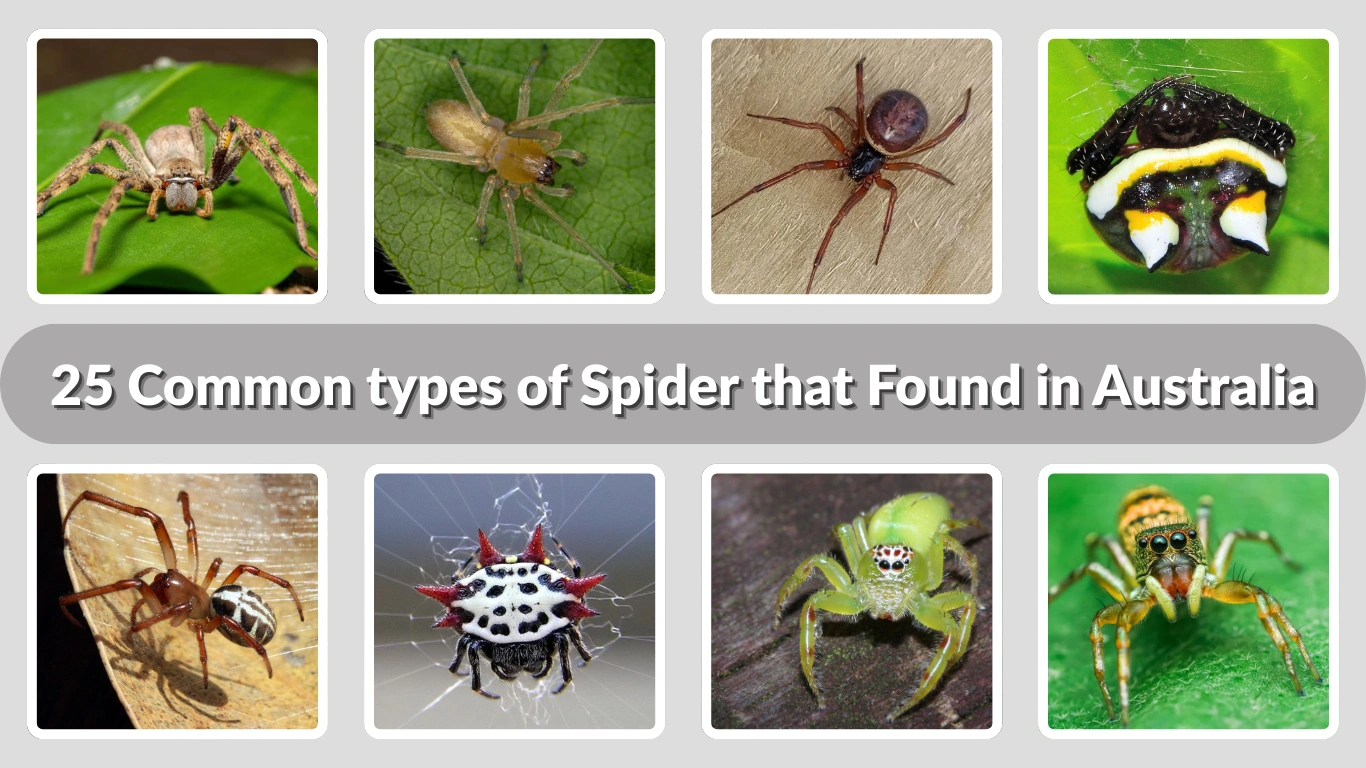
Australia is home to an incredible variety of spider species, ranging from harmless garden dwellers to a few medically significant ones. This guide highlights 25 of the most commonly encountered spiders across the country, including their appearance, habitats, and behaviors. Whether you’re exploring the bush or inspecting your backyard, understanding these species helps you stay informed, prepared, and appreciative of Australia’s unique arachnid diversity.
1. Sydney Funnel-Web Spider

The Sydney Funnel-Web Spider is one of Australia’s most infamous arachnids, known for its potent venom and aggressive defensive behavior. Found mostly in moist forests and urban areas along the east coast, this spider is easily recognized by its shiny dark body and powerful fangs.
Identification
- Glossy dark brown to black body
- Large, robust build with thick legs
- Distinct downward-pointing fangs
- Smooth carapace with a polished look
- Usually 1–5 cm in body length
Habitat
Sydney Funnel-Web Spiders prefer moist environments, often living in burrows under logs, rocks, and leaf litter. Their burrows typically feature silk-lined trip lines used to detect prey and intruders. In suburban areas, they may also appear in gardens or near homes after heavy rain.
Behaviors
These spiders are nocturnal hunters and rely heavily on their trip lines to locate prey. When threatened, they display a characteristic defensive posture, raising their front legs and exposing their fangs. Males wander more frequently, especially during warm, humid nights, increasing human encounters.
Diet and Lifecycle
Sydney Funnel-Web Spiders feed on insects, small lizards, and occasionally other spiders. Females can live over a decade, remaining in the same burrow, while males have shorter lifespans. Reproduction occurs when males seek females during mating season, after which females guard their egg sacs until spiderlings disperse.
2. Northern Tree Funnel-Web Spider

The Northern Tree Funnel-Web Spider is a highly venomous arboreal species native to Australia’s eastern rainforests. Known for climbing trees and hiding in moist bark crevices, it is closely related to the Sydney Funnel-Web but adapted to a more vertical lifestyle.
Identification
- Shiny, dark brown to black coloration
- Slightly slimmer body than ground-dwelling funnel-webs
- Strong, downward-pointing fangs
- Prominent spinnerets
- Typically 2–4 cm in body length
Habitat
This species lives high in forested areas, often taking shelter inside tree hollows, rotting bark, and moist vegetation. Unlike burrow-dwelling funnel-webs, it creates silk retreat tubes above ground level. It thrives in humid, shaded rainforest environments.
Behaviors
The Northern Tree Funnel-Web is nocturnal and highly defensive when disturbed. It climbs rapidly and uses its silk retreats as ambush sites for prey. Males wander during the breeding season and are more likely to encounter humans during this time.
Diet and Lifecycle
Its diet includes insects, beetles, and occasionally small vertebrates. Females tend to stay in the same silk-lined retreat, while males have shorter lifespans. The lifecycle includes egg sac development, maternal guarding, and gradual dispersal of spiderlings once they mature.
3. Redback Spider

The Redback Spider is one of Australia’s most recognizable venomous spiders, notable for the female’s distinctive red stripe on her abdomen. Common across urban and rural environments, this species thrives around human structures and sheltered outdoor areas.
Identification
- Females: shiny black body with a red dorsal stripe
- Males: smaller, lighter brown with faint markings
- Round abdomen and long, thin legs
- Females typically 1 cm body length; males much smaller
- Irregular, messy web structure
Habitat
Redback Spiders prefer warm, dry, sheltered locations. They commonly build webs under outdoor furniture, sheds, mailboxes, rocks, and debris. Their adaptability makes them widespread across suburban areas, farms, and industrial sites throughout Australia.
Behaviors
Females are sedentary, remaining in their webs and capturing prey through sticky snares. Males roam in search of mates and may be found near female webs. This species shows minimal aggression unless disturbed, though females can deliver medically significant bites.
Diet and Lifecycle
Redbacks feed on insects, small reptiles, and even trapped mice if they become entangled in the web. Females produce several egg sacs annually, each containing hundreds of eggs. Spiderlings disperse by crawling or ballooning, helping the species spread widely across Australia.
4. White-Tailed Spider

The White-Tailed Spider is a slender, fast-moving hunter commonly encountered inside Australian homes. It is easily recognized by the pale white tip on its abdomen and is known for its wandering habits rather than building webs to catch prey.
Identification
- Dark grey to reddish-brown body
- Distinct white tip at the end of the abdomen
- Cylindrical body shape with long legs
- Adults typically 1–2 cm in body length
- Often mottled patterns on the upper body
Habitat
White-Tailed Spiders prefer cool, dark places such as under bark, rocks, leaf litter, and within household crevices. Indoors, they hide in clothing piles, bedding, and shoes. They commonly roam at night in search of prey, especially other spiders.
Behaviors
These spiders are active hunters and do not build webs to trap prey. They move quickly and rely on stealth to capture spiders like black house spiders. White-tailed spiders are usually shy and avoid confrontation, retreating when disturbed.
Diet and Lifecycle
Their diet consists mainly of other spiders, particularly web-building species. Females lay eggs in silk sacs and guard them until hatching. Spiderlings disperse shortly after emerging, beginning a lifecycle that spans one to two years depending on environmental conditions.
5. Huntsman Spider

The Huntsman Spider is a large, fast-moving species well known across Australia. Despite their intimidating size and speed, they are generally harmless to humans and often found inside homes where they help control insect populations.
Identification
- Large, flattened body shape
- Long, sideways-oriented legs
- Brown, grey, or mottled coloration
- Leg span often reaching 15 cm or more
- Distinct crab-like stance
Habitat
Huntsman Spiders inhabit tree bark, crevices, foliage, and loose debris. Indoors, they may hide behind curtains, furniture, or wall fittings. Their flattened body allows them to squeeze into tight spaces, making them common visitors inside homes and sheds.
Behaviors
These spiders are agile hunters, relying on speed rather than webs to catch prey. They are mostly nocturnal and may move rapidly when disturbed. Huntsman Spiders are not aggressive but will defend themselves if handled. Many species show maternal care, guarding their egg sacs.
Diet and Lifecycle
Their diet includes moths, cockroaches, beetles, and other insects. Females lay eggs in a silk sac and may protect it until hatching. Young huntsman spiders grow through several molts before reaching maturity, completing their lifecycle over one to two years.
6. Golden Orb-Weaver

The Golden Orb-Weaver is famous for its large size and impressive golden-colored webs. Common throughout Australia, these spiders are often seen in gardens, forests, and near human dwellings, where their massive webs glisten in the sunlight.
Identification
- Large female with elongated abdomen
- Yellowish-brown to black coloration with patterns
- Long, slender legs often with tufts of hair
- Males are much smaller and less colorful
- Builds large golden-hued orb-shaped webs
Habitat
Golden Orb-Weavers thrive in warm, sheltered environments, especially along forest edges, gardens, and bushland. They suspend their webs between trees, fences, and structures where flying insects are abundant. They prefer humid, protected areas for web stability.
Behaviors
Females remain in their webs, repairing and rebuilding them regularly. Males approach cautiously during mating, as females may mistake them for prey. These spiders are not aggressive and tend to stay in place when disturbed, relying on their webs for security.
Diet and Lifecycle
Their diet includes flies, beetles, moths, and other flying insects that become trapped in their sticky webs. Females lay eggs in silk sacs attached near their webs. Spiderlings disperse after hatching, and the species completes its lifecycle over one season, though some adults survive longer in ideal climates.
7. St Andrew’s Cross Spider

The St Andrew’s Cross Spider is a striking orb-weaving species known for its unique web decorations shaped like an “X.” Its bold patterns and distinct posture make it easy to identify across many parts of Australia.
Identification
- Bright yellow, white, and black banded abdomen
- Long legs often held in pairs to form an X-shape
- Females larger than males
- Creates zigzag silk stabilimenta forming a cross
- Slender body and symmetrical markings
Habitat
This spider prefers sunny, open areas such as gardens, grasslands, and forest edges. It typically builds its webs between shrubs or low vegetation, positioning them at a height where flying insects are abundant. They are common in suburban gardens during warm months.
Behaviors
St Andrew’s Cross Spiders remain motionless at the center of the web, aligning their legs to mimic the cross-shaped silk pattern. The stabilimentum may help attract prey or deter predators. They are generally calm and retreat to the web’s edge if threatened.
Diet and Lifecycle
Their diet includes flies, small beetles, and other flying insects caught in their webs. Females lay egg sacs near the edges of vegetation, protecting them until spiderlings hatch. Juveniles create smaller webs and gradually increase web size as they mature through successive molts.
8. Mouse Spider

The Mouse Spider is a robust, burrow-dwelling species found across Australia. Known for its shiny body and powerful fangs, it closely resembles funnel-web spiders but generally poses less danger. Mouse Spiders are often identified by their stout build and sometimes vibrant coloration.
Identification
- Glossy black or dark blue body
- Females large and stocky; males may have red or blue markings
- Bulbous head region
- Strong, downward-pointing fangs
- Body length typically 1–3 cm
Habitat
Mouse Spiders create deep burrows in soil, often with a hinged trapdoor made of silk and soil. They prefer open woodlands, grasslands, and riverbanks. Their burrows may extend several centimeters underground, offering moisture and protection from predators.
Behaviors
These spiders are solitary and spend most of their lives underground. Females rarely leave the burrow, while males wander during mating season, especially after rain. Mouse Spiders can be defensive when disturbed but are generally less aggressive than funnel-webs.
Diet and Lifecycle
Their diet includes insects, small lizards, and other ground-dwelling arthropods. Females lay eggs in silk sacs within the burrow, where they guard the developing young. Spiderlings remain for a period before dispersing to create their own burrows, completing a multi-year lifecycle.
9. Garden Orb-Weaver

The Garden Orb-Weaver is one of Australia’s most common and widespread spiders, frequently seen in gardens and bushland. Known for its large, circular webs that appear at night, this species is an important predator of flying insects.
Identification
- Rounded abdomen with mottled brown, grey, or reddish patterns
- Females larger than males
- Strong, robust legs with bristles
- Webs are classic circular “orb” shapes
- Body length typically 1–3 cm
Habitat
Garden Orb-Weavers prefer outdoor spaces with plenty of vegetation. They build their webs between branches, fences, or structures where air currents carry insects. During the day, they often retreat to a nearby leaf or crevice, hiding until nightfall when they rebuild or repair their webs.
Behaviors
These spiders are nocturnal and highly active web-builders. Each evening they spin a fresh orb web to catch prey, then consume or discard it in the morning. They are shy and rarely bite, preferring to drop from the web or retreat when disturbed.
Diet and Lifecycle
Their diet consists of moths, beetles, flies, and other flying insects. Females lay egg sacs containing dozens to hundreds of eggs, usually hidden in foliage. Spiderlings emerge in spring and disperse by ballooning, continuing a lifecycle that typically lasts one season.
10. Trapdoor Spider

Trapdoor Spiders are burrow-dwelling arachnids known for their camouflaged, hinged doors made of soil and silk. These ambush hunters are widespread across Australia and are often mistaken for funnel-webs due to their similar body shape.
Identification
- Stout, dark brown to black body
- Shiny carapace with thick, strong legs
- Large fangs used for ambush attacks
- Females significantly larger than males
- Body length typically 1–4 cm
Habitat
Trapdoor Spiders construct silk-lined burrows in firm soil, often hidden under leaf litter, rocks, or logs. The burrow’s lid blends with the environment, allowing the spider to remain concealed while waiting for prey. They thrive in woodlands, scrublands, and suburban bushy areas.
Behaviors
These spiders are patient ambush predators, sitting just inside their trapdoor and sensing vibrations from insects or small animals passing by. They rarely wander far and are primarily nocturnal. Females may inhabit the same burrow for many years, expanding it as they grow.
Diet and Lifecycle
Their diet includes beetles, ants, millipedes, and small ground-dwelling creatures. Females lay eggs inside the burrow and guard them until the spiderlings emerge. Young spiders often remain in or near the burrow before dispersing to establish their own, completing a long-lived lifecycle.
11. Australian Tarantula (Whistling Spider)

The Australian Tarantula, often called the Whistling Spider due to the hissing sound it can produce, is one of the largest spiders native to Australia. These heavy-bodied spiders are known for their impressive size, powerful fangs, and burrowing lifestyle.
Identification
- Large, robust body covered in dense hairs
- Brown, grey, or reddish coloration depending on species
- Thick legs with prominent spines
- Body length typically 3–6 cm; leg span up to 16 cm
- Capable of producing a defensive “hiss” by rubbing mouthparts
Habitat
Australian Tarantulas prefer warm, dry regions, especially in northern and central Australia. They live in deep burrows found in grasslands, scrublands, and open woodland areas. Their burrows help regulate temperature and provide protection from predators.
Behaviors
These tarantulas are nocturnal ambush predators, waiting at the entrance of their burrow for passing prey. They can be defensive when threatened, raising their legs and displaying their fangs. Despite their intimidating appearance, they generally avoid confrontation.
Diet and Lifecycle
Their diet includes insects, frogs, small lizards, and even small mammals in rare cases. Females lay eggs in silk sacs within the burrow, guarding them until hatching. Tarantulas have long lifespans—females may live over a decade—while males have shorter, breeding-focused lifecycles.
12. Wolf Spider

The Wolf Spider is a fast-moving ground hunter commonly found across Australian forests, grasslands, and urban areas. Known for its excellent eyesight and agility, this spider does not rely on webs but actively chases down its prey.
Identification
- Brown, grey, or striped body with camouflage patterns
- Robust, low-profile build
- Large forward-facing eyes providing strong night vision
- Hairy legs and body
- Body length typically 1–3 cm
Habitat
Wolf Spiders live in a wide range of environments, including leaf litter, soil crevices, grasslands, and suburban gardens. Some species create shallow burrows, while others roam freely. Their excellent camouflage allows them to blend into natural ground cover.
Behaviors
These spiders are solitary hunters active mostly at night. They rely on speed and keen eyesight to catch prey. Female Wolf Spiders exhibit unique maternal behavior, carrying their egg sacs on their abdomen and later allowing spiderlings to ride on their back until they disperse.
Diet and Lifecycle
Wolf Spiders feed on insects, small arthropods, and occasionally other spiders. Their lifecycle involves egg sac production, hatching, and multiple molting stages before reaching maturity. They typically live for one to two years, depending on species and climate conditions.
13. Jumping Spider

Jumping Spiders are small, agile hunters found throughout Australia. Famous for their excellent vision and curious behavior, they are often seen exploring walls, plants, and windowsills. Their bright colors and bold patterns make many species visually striking.
Identification
- Compact body with short legs
- Large front eyes giving excellent binocular vision
- Varied coloration: black, brown, iridescent, or patterned
- Often fuzzy or hairy appearance
- Typically 0.5–1.5 cm in body length
Habitat
Jumping Spiders occupy diverse habitats including gardens, forests, grasslands, and inside homes. They prefer sunny spots where they can actively stalk prey. They do not build webs for hunting, but they may create small silk retreats in sheltered areas.
Behaviors
These spiders are active daytime hunters. They use precise jumps to ambush prey, often inspecting surroundings like tiny explorers. They are not aggressive toward humans and may even appear curious. Jumping Spiders communicate with visual signals, especially during mating rituals.
Diet and Lifecycle
Their diet consists of flies, mosquitoes, ants, and other small insects. Jumping Spiders spin silk eggs sacs in protected areas where females guard them. Spiderlings disperse after hatching and go through several molts before reaching adulthood, completing a lifecycle of about one year.
14. Daddy Long-Legs Spider

The Daddy Long-Legs Spider, also known as the cellar spider, is a common indoor species across Australia. Recognizable by its extremely long, thin legs, this spider frequently occupies corners of homes, sheds, and garages.
Identification
- Small, oval-shaped body
- Very long, slender legs
- Pale brown to grey coloration
- Builds loose, tangled webs
- Body length typically 0.5–1 cm
Habitat
These spiders thrive in dark, sheltered indoor spaces such as ceilings, cupboards, basements, and roof corners. Outdoors, they may also be found under rocks or in caves. Their preference for stable environments makes them one of the most common household spiders.
Behaviors
Daddy Long-Legs Spiders hang upside down in their webs and vibrate rapidly when threatened, making them harder for predators to catch. They are non-aggressive and capable of capturing other spiders, sometimes even species larger than themselves, using their quick movements.
Diet and Lifecycle
Their diet includes small insects, mosquitoes, and other spiders. Females carry their egg sacs in their jaws until they hatch, releasing spiderlings into the web. The lifecycle is relatively short, typically lasting one to two years depending on environmental conditions.
15. Peacock Spider

The Peacock Spider is a small but spectacular jumping spider renowned for its vibrant colors and elaborate courtship dances. Native to Australia, especially the southern regions, males display bright, fan-like abdomen patterns that resemble a peacock’s feathers.
Identification
- Tiny body with vibrant, iridescent coloration (males)
- Females are brown and less colorful
- Flattened, fan-shaped abdomen in males
- Large forward-facing eyes
- Typically 0.3–0.5 cm in body length
Habitat
Peacock Spiders inhabit dry shrublands, coastal dunes, grasslands, and leaf litter. They prefer sunny, open areas where males can perform courtship dances. Their small size allows them to hide easily among vegetation, sand, and debris.
Behaviors
Males perform intricate dances involving leg waves, abdomen raising, and rhythmic movements to attract females. These spiders are active hunters and rely on exceptional vision to detect prey and mates. They are harmless to humans and display curious, alert behavior.
Diet and Lifecycle
Their diet consists mainly of tiny insects such as gnats and small flies. Females create silk-lined nests to lay eggs, guarding them until hatching. Spiderlings disperse after emerging and go through several molts before reaching adulthood, usually completing their lifecycle within a year.
16. Black House Spider

The Black House Spider is a common web-building species found throughout Australia, frequently seen around homes and outdoor structures. Known for its messy, funnel-like webs, this spider plays an important role in controlling household insects.
Identification
- Dark brown to black velvety body
- Females larger and more robust than males
- Legs covered with fine hairs
- Funnel-shaped, messy webs often with a tubular retreat
- Body length typically 1–2 cm
Habitat
Black House Spiders inhabit sheltered places such as window frames, eaves, sheds, tree trunks, and rock crevices. They prefer stable structures where they can anchor their webs securely. They are commonly found in urban areas due to abundant hiding spots.
Behaviors
These spiders are shy and rarely leave their webs. When disturbed, they retreat quickly into the funnel-shaped retreat. They rebuild and maintain their webs regularly and use vibration signals to locate trapped prey. They seldom bite unless provoked.
Diet and Lifecycle
Their diet includes flies, moths, beetles, and other small insects caught in their sticky webs. Females guard their egg sacs inside the web retreat, protecting the developing spiderlings. The lifecycle includes multiple molts before reaching adulthood, typically spanning one to two years.
17. Brown House Spider

The Brown House Spider, often confused with the Black House Spider, is a common species found around buildings and sheltered outdoor spaces in Australia. It builds messy webs in corners and crevices, making it a frequent household visitor.
Identification
- Light to dark brown coloration
- Slender body with long, thin legs
- Less robust than the Black House Spider
- Builds irregular, tangled webs with a small retreat
- Body length typically 0.8–1.5 cm
Habitat
Brown House Spiders prefer protected areas around homes such as window sills, outdoor furniture, brickwork crevices, and garages. They thrive in dry, stable environments where insects are abundant and where their webs can remain undisturbed.
Behaviors
These spiders are timid and stay close to their webs, retreating instantly when disturbed. They capture prey through vibrations detected in their tangled web structure. Though harmless, they often rebuild webs frequently due to their loose design.
Diet and Lifecycle
Their diet consists of small insects like flies, midges, and gnats. Females lay their eggs in small silk sacs attached to the web retreat. After hatching, spiderlings disperse to create their own web spaces. Their lifecycle is relatively short, lasting about one year.
18. Recluse Spider (Rare in Australia)

The Recluse Spider is uncommon in Australia but occasionally found in isolated indoor environments. Known for its violin-shaped marking, this spider is more prevalent in other parts of the world, yet still recognized for its secretive behavior and preference for dark spaces.
Identification
- Light brown to dark brown body
- Distinct violin-shaped marking on the cephalothorax
- Long, thin legs without obvious spines
- Six eyes arranged in pairs (unlike most spiders with eight)
- Body length typically 0.6–1.2 cm
Habitat
Recluse Spiders prefer dry, undisturbed areas such as attics, cupboards, storage rooms, and behind furniture. They hide in cracks, cardboard boxes, and clothing piles. Outdoor sightings are extremely rare in Australia, as they favor human-made shelters for warmth and protection.
Behaviors
These spiders are shy, avoiding confrontation and light. They build irregular webs only as retreats, not for hunting. Recluse Spiders rely on stealth and stillness, only becoming active at night to search for prey. They are typically non-aggressive unless physically pressed.
Diet and Lifecycle
Their diet includes small insects and other soft-bodied arthropods. Females lay small clusters of eggs encased in silk sacs hidden in secluded areas. Spiderlings emerge and disperse cautiously, growing through multiple molts before reaching adulthood, with lifespans of one to two years.
19. Green Jumping Spider

The Green Jumping Spider is a vibrant, active hunter commonly seen in gardens, shrubs, and sunlit areas across Australia. Known for its striking green coloration and agile movements, it is one of the most eye-catching jumping spider species in the region.
Identification
- Bright green body with metallic sheen
- Compact build typical of jumping spiders
- Large forward-facing eyes providing excellent vision
- Males may have darker markings on the face
- Typically 0.5–1 cm in body length
Habitat
These spiders thrive in leafy vegetation, gardens, coastal shrubs, and forest edges. They prefer sunny areas where insects are abundant and where they can leap between leaves while hunting. Indoors, they may occasionally appear near windows or plants.
Behaviors
Green Jumping Spiders are curious and active during the daytime. They stalk prey visually and make precise leaps to capture insects. They are harmless to humans and often display exploratory behavior, moving quickly between foliage and surfaces.
Diet and Lifecycle
Their diet consists of flies, small moths, and various tiny insects. Females create silk retreats within leaves or crevices to lay their egg sacs, guarding them until hatching. Spiderlings disperse after emerging and develop through multiple molting stages before reaching adulthood.
20. Spiny Orb-Weaver

The Spiny Orb-Weaver is an easily recognizable spider found in various parts of Australia, known for its distinctive spiked abdomen. These colorful orb-weavers create intricate webs and are often spotted in gardens and forested areas.
Identification
- Broad, flattened abdomen with prominent spines
- Color varies: white, yellow, red, or patterned combinations
- Small body compared to other orb-weavers
- Short legs relative to body size
- Typically 0.5–1 cm in body length
Habitat
Spiny Orb-Weavers build their circular webs in gardens, woodlands, and along trails. They prefer areas with moderate vegetation where webs can be anchored securely. They are commonly seen during warmer months, often suspended between shrubs or low tree branches.
Behaviors
These spiders spend much of their time at the center of their webs, remaining still unless capturing prey. Their spiny appearance helps deter predators. They rebuild or repair their webs daily, and despite their fearsome look, they are not aggressive and avoid confrontation.
Diet and Lifecycle
Their diet includes small flying insects such as flies, mosquitoes, and gnats. Females lay eggs in silk sacs attached to leaves or stems. Spiderlings disperse after hatching and construct miniature orb webs as they grow through several molts to adulthood.
21. Leaf-Curling Spider

The Leaf-Curling Spider is a clever orb-weaver known for creating shelters by curling leaves and binding them with silk. Common throughout Australia, this spider uses its unique hideaway for protection while waiting for prey to become trapped in its web.
Identification
- Brown to reddish body with subtle patterns
- Long legs typical of orb-weavers
- Females larger than males
- Often found sitting inside a curled leaf retreat
- Body length typically 1–1.5 cm
Habitat
These spiders inhabit gardens, forests, and shrublands where leaves are plentiful. They build orb webs between branches or shrubs and use a curled leaf or debris piece secured with silk as a protective retreat. They thrive in areas with moderate vegetation and insect activity.
Behaviors
Leaf-Curling Spiders hide inside their curled leaf shelters during the day and wait for vibrations in their web to signal captured prey. They are shy and rarely expose themselves unless feeding or repairing their webs. Their behavior offers excellent camouflage and protection from predators.
Diet and Lifecycle
Their diet consists of small flying insects caught in their orb webs. Females lay egg sacs within their leaf retreats, providing a safe environment for their developing young. Spiderlings remain near the retreat initially before dispersing and beginning their own web-building cycles.
22. Two-Spined Spider

The Two-Spined Spider is a small, brightly colored orb-weaver found throughout Australia. Known for the two sharp spines protruding from its abdomen, this species is both distinctive and visually striking, often noticed in gardens and bushlands.
Identification
- Rounded abdomen with two prominent lateral spines
- Bright coloration: yellow, orange, red, or patterned
- Short legs compared to other orb-weavers
- Small body size, usually 0.5–1 cm
- Web is a neat, circular orb structure
Habitat
Two-Spined Spiders inhabit shrubs, gardens, woodlands, and forest edges. They prefer locations with moderate vegetation where they can anchor their orb webs securely. Their webs are commonly seen between branches or along paths where flying insects pass frequently.
Behaviors
These spiders sit at the center of their webs, relying on their bright colors and spines to deter predators. They are non-aggressive and remain motionless unless disturbed or capturing prey. Webs are maintained and rebuilt regularly, especially during warmer months.
Diet and Lifecycle
Their diet includes midges, flies, mosquitoes, and other small flying insects. Females lay eggs in silk sacs attached to nearby foliage. After hatching, spiderlings disperse and create small orb webs as they grow, progressing through multiple molting stages to adulthood.
23. Bandy-Bandy Spider

The Bandy-Bandy Spider is a lesser-known Australian species, occasionally spotted in bushland and dry habitats. Though not as commonly encountered as other spiders, it is recognized by its slender body and subtle banded patterns.
Identification
- Slender body with faint banded markings
- Long, thin legs
- Generally brown or grey in coloration
- Small to medium size, around 1–2 cm
- Builds simple webs or ground retreats depending on species
Habitat
These spiders inhabit dry forests, shrublands, and leaf litter. They prefer undisturbed natural areas where they can roam or create simple shelters. Their camouflage allows them to blend into soil, bark, and dry vegetation, making them difficult to spot.
Behaviors
Bandy-Bandy Spiders are shy, slow-moving, and typically nocturnal. They avoid confrontation and retreat quickly when disturbed. Their hunting strategy varies by species but commonly involves stalking small insects or using minimal web structures as retreats.
Diet and Lifecycle
Their diet includes ants, small insects, and other tiny arthropods. Females lay eggs in hidden silk sacs, guarding them until hatching. Spiderlings disperse after emerging, gradually maturing through several molts before completing their short, seasonal lifecycle.
24. Long-Legged Sac Spider

The Long-Legged Sac Spider is a slender, quick-moving species commonly found across Australia. Known for its elongated legs and tendency to wander indoors, this spider creates small silk sacs where it hides during the day.
Identification
- Pale yellow, cream, or light brown coloration
- Long, thin legs relative to body size
- Smooth, elongated abdomen
- Small, silk “sac” retreats in corners or crevices
- Body length typically 0.8–1.5 cm
Habitat
These spiders are frequently found in homes, sheds, gardens, and bushland. Indoors, they hide in wall corners, curtain folds, or under furniture. Outdoors, they shelter under bark, leaves, and rocks. Their adaptability allows them to thrive in many environments.
Behaviors
Long-Legged Sac Spiders are nocturnal hunters that do not rely on webs to catch prey. They move swiftly and may wander in search of insects. When threatened, they retreat into their silk sacs. They display mild defensiveness but are generally non-aggressive.
Diet and Lifecycle
Their diet includes small insects and other spiders. Females lay eggs within their protective silk sacs and guard them until hatching. Spiderlings disperse shortly afterward and develop through several molting stages before reaching adulthood, completing a lifecycle of about one year.
25. Badge Huntsman Spider

The Badge Huntsman Spider is a large, fast-moving species found across many parts of Australia. It is named for the distinctive “badge” or shield-shaped marking on its underside. Despite its size, it is generally harmless and commonly encountered in homes and bushland.
Identification
- Large, flattened body typical of huntsman spiders
- Light brown to grey coloration with mottled patterns
- Distinct badge-shaped marking on the underside of the abdomen
- Long, laterally extended legs
- Body length typically 1.5–2.5 cm; leg span much larger
Habitat
Badge Huntsman Spiders inhabit forests, bushland, gardens, and human dwellings. They hide under bark, behind furniture, inside sheds, and in wall cracks. Their flat bodies allow them to squeeze into narrow spaces, making them frequent indoor visitors.
Behaviors
These spiders are agile, nocturnal hunters that rely on speed rather than webs. When threatened, they may run quickly or display a defensive posture. They are non-aggressive toward humans, and many species show maternal care, guarding their egg sacs until spiderlings emerge.
Diet and Lifecycle
Their diet includes moths, cockroaches, beetles, and other insects. Females produce egg sacs that they protect in sheltered areas. Spiderlings disperse after hatching and grow through several molts before reaching adulthood. The lifecycle typically lasts one to two years.
FAQs
1. Are most spiders in Australia dangerous?
No, most Australian spiders are not dangerous to humans. Only a small number, such as the Sydney Funnel-Web and Redback Spider, have medically significant venom. The majority of Australia’s spiders are harmless, shy, and play important roles in controlling insect populations.
2. Why do so many spiders enter Australian homes?
Spiders often enter homes seeking shelter, food, or stable temperatures. Common indoor species like Daddy Long-Legs and House Spiders thrive in corners, crevices, and undisturbed areas. Warm weather, insect activity, and seasonal changes also increase the likelihood of spiders appearing indoors.
3. What should I do if I find a huntsman spider inside?
Huntsman spiders are large but generally harmless. If you find one indoors, you can gently guide it into a container and release it outside. Avoid handling it directly, as its speed may startle you. These spiders help reduce pests like cockroaches and moths.
4. How can I identify venomous spiders in Australia?
Venomous spiders often have distinctive features: funnel-webs have shiny black bodies and strong fangs, while Redbacks have a clear red stripe. Observing shape, web type, color, and behavior helps with identification. If unsure, avoid touching the spider and consult a reliable local guide.
5. Do Australian spiders build different types of webs?
Yes, Australian spiders build a wide variety of webs. Orb-weavers create circular webs, funnel-webs build silk-lined burrows, house spiders make messy cobwebs, and leaf-curling spiders use folded leaves as retreats. These web styles reflect each species’ hunting strategy and habitat preferences.