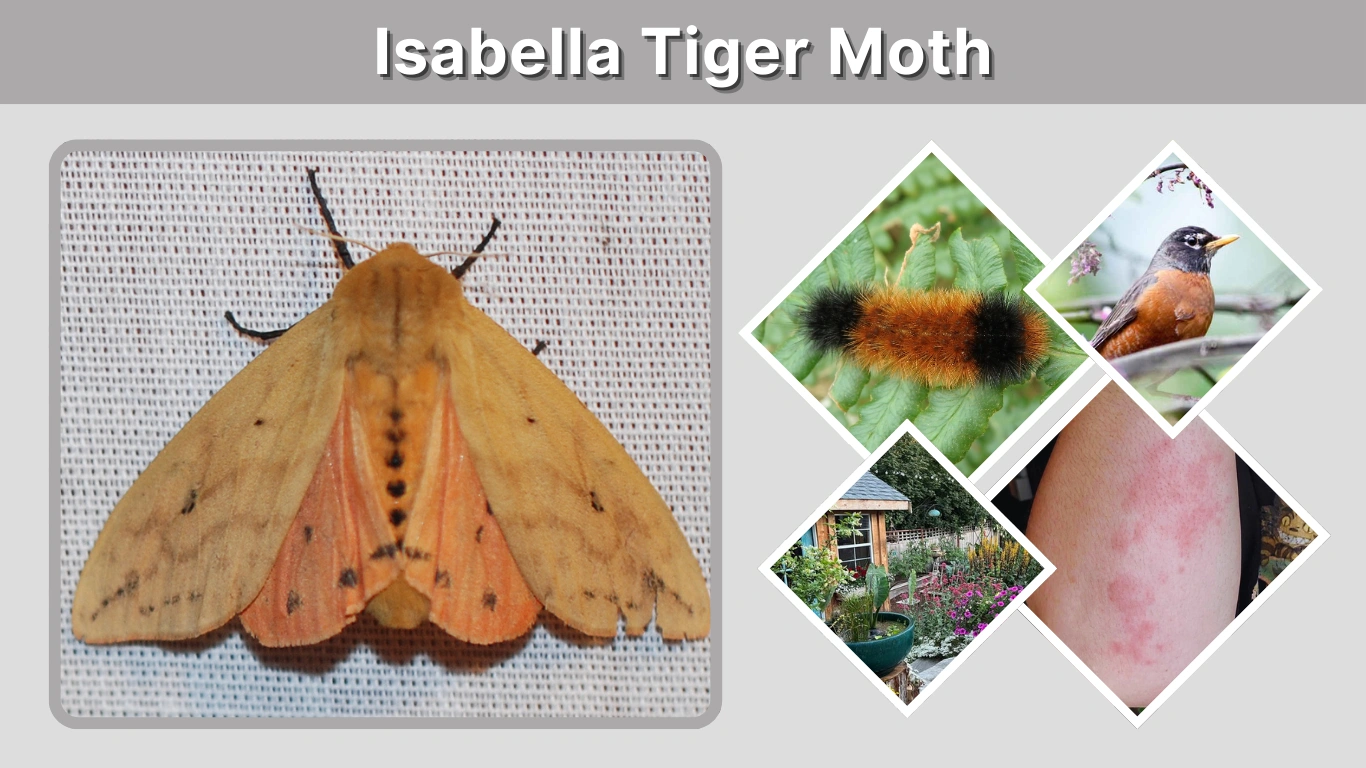
The Isabella tiger moth (Pyrrharctia isabella) is one of the most recognizable moth species in North America, thanks to its famous larval form—the banded woolly bear caterpillar. Known for its fuzzy black and orange bands and winter-weather folklore, this species appears in gardens, fields, and roadsides across the continent. In this guide, you’ll learn everything about its identification, life cycle, diet, habitat, safety, and care, helping you understand this beloved and iconic moth.
What Is the Isabella Tiger Moth?
The Isabella tiger moth is a medium-sized, orange-beige moth widely distributed across the United States, Canada, and parts of Mexico. Its scientific name is Pyrrharctia isabella, and it belongs to the Erebidae family. The species is best known for its caterpillar form—the banded woolly bear—which people often associate with predicting winter weather.
As adults, Isabella tiger moths are gentle, nocturnal insects. As larvae, they are hardy, cold-adapted caterpillars capable of surviving freezing temperatures by entering a state of natural suspended animation. Both stages are harmless to humans and play a valuable role in ecosystems.
Isabella Tiger Moth Identification

Adult Moth Appearance
Adult Isabella tiger moths have:
- Soft orange, tan, or beige wings
- A furry orange thorax
- Small black dots on their wings
- A wingspan of about 1½–2 inches
- A stout, fuzzy body typical of tiger moths
Males are sometimes slightly smaller and slimmer, while females often have fuller abdomens for egg production. Adults are most commonly seen near porch lights or resting in vegetation.
Caterpillar Identification (Banded Woolly Bear)
The woolly bear caterpillar is one of the easiest larvae to recognize. It features:
- Distinct black bands at the front and rear
- A rusty-orange or cinnamon-colored band in the middle
- A cylindrical, fuzzy body covered with stiff setae
- A length of up to 2 inches when fully grown
Band thickness varies with age, not weather—a myth that has persisted for decades. Older caterpillars often show wider orange bands as they molt.
Face & Body Features
A close look reveals:
- Tiny round face with short antenna-like mouthparts
- Black or dark brown head capsule
- Dense hair that protects them from predators and cold temperatures
These hairs are not venomous and rarely cause irritation.
Isabella Tiger Moth Life Cycle

Eggs
Female Isabella tiger moths lay clusters of pale yellow or cream-colored eggs on low-growing plants. Eggs hatch within one to two weeks depending on temperature. The tiny larvae immediately begin feeding on available vegetation.
Larvae (Woolly Bear Caterpillar)
The larval stage is the longest and most iconic phase of the species. Key features include:
- Growth through multiple molts known as instars
- Eating a wide variety of plants
- Curling into a tight ball when threatened
- Ability to survive winter by freezing almost completely
These caterpillars are found across numerous U.S. regions, including Arizona, Idaho, and Florida. They thrive in open fields, gardens, and roadside vegetation.
Cocoon / Pupa
When ready to pupate, the woolly bear spins an oval, brownish cocoon made from silk and its own shed hairs. This cocoon is often hidden in:
- Leaf litter
- Grasses
- Under rocks
- Near garden edges
Inside the cocoon, the caterpillar transforms into a pupa, where it remains for about 1–3 weeks before emerging as an adult moth.
Adult Emergence
The newly-emerged Isabella tiger moth unfurls soft wings that harden within minutes. Adults live only 1–2 weeks, focusing on mating and egg-laying. They do not survive the winter, but their caterpillars do.
Diet and Feeding

What Do Adult Isabella Tiger Moths Eat?
Adult moths typically feed very little. Some may sip nectar, but many emerge solely to mate and reproduce. Their energy comes primarily from reserves accumulated during the caterpillar stage.
Woolly Bear Caterpillar Diet
Woolly bears are generalist feeders. They consume:
- Plantain
- Clover
- Dandelion
- Grasses
- Nettle
- Maple and birch leaves
- Various weeds and wildflowers
Their flexible diet allows them to thrive in diverse habitats, from gardens to forests.
Caterpillar Care & Feeding in Captivity
If kept as a pet:
- Provide fresh leaves daily
- Keep the container ventilated and dry
- Add dry leaves for overwintering
- Avoid spraying water directly on the caterpillar
Proper care ensures safe growth and successful cocoon formation.
Habitat & Range

The Isabella tiger moth is one of the most widespread moth species in North America. It lives in a wide range of climates—humid, dry, cold, and temperate—thanks to its remarkably resilient caterpillar stage. You can find it in:
- Fields and meadows
- Forest edges
- Gardens and suburban yards
- Roadsides and open grassy spaces
Its range spans nearly all of the United States, southern Canada, and parts of northern Mexico. Woolly bear caterpillars are especially common in the fall as they search for overwintering sites.
Safety, Toxicity & Human Interaction

Are Isabella Tiger Moth Caterpillars Poisonous?
Woolly bear caterpillars are not poisonous or venomous. Their hairs are bristle-like and may cause mild irritation in sensitive individuals, but they do not sting or inject toxins. Most people can safely handle them with no reaction.
Are Adult Moths Poisonous?
Adult Isabella tiger moths are harmless. They do not bite, sting, or pose any danger to humans or pets. Their soft hairs and light bodies are simply adaptations for survival and camouflage.
Do They Bite or Sting?
Neither the caterpillar nor the adult moth bites or stings. The stiff hairs on the caterpillar are a defensive adaptation meant to discourage predators, not to harm people.
Are They Harmful or Destructive?
Isabella tiger moths are not destructive pests. They do not damage gardens extensively, and their feeding is usually light and spread across many plant types. They are not considered harmful to the environment; rather, they are an important part of local food webs.
Predators & Defense Mechanisms

Woolly bears have several natural predators, including:
- Birds
- Rodents
- Parasitic flies and wasps
- Predatory beetles
Their defenses include:
- Curling into a tight ball
- Bristly hairs that discourage predators
- Ability to freeze solid and survive winter
- Fast movement for a caterpillar
These traits contribute to their reputation for toughness and winter hardiness.
Size, Growth, and Lifespan
How Big Is the Isabella Tiger Moth?
Adult Isabella tiger moths have a wingspan of 1.5 to 2 inches. Their bodies are fuzzy, plump, and brightly colored.
Caterpillar Size
The woolly bear grows up to 2 inches long, making it one of the larger fuzzy caterpillars in North America.
Lifespan
The lifespan of Pyrrharctia isabella includes:
- Caterpillar stage: several months
- Pupa stage: 1–3 weeks
- Adult stage: 7–14 days
Adults live only long enough to mate, while caterpillars can survive nearly an entire year—especially in colder climates.
Behavior & Seasonal Traits
Nocturnal Activity
Adults are nocturnal, often seen at porch lights or resting during the day. Caterpillars are diurnal and frequently cross roads in autumn.
Pollinator Role
Although adults may not feed heavily, they occasionally visit flowers for nectar, contributing minor pollination activity.
Winter Prediction Myth
The belief that woolly bear band width predicts winter severity is folklore. Band size depends on:
- Age
- Molting stage
- Food availability
It does not reliably predict weather, though the myth remains a beloved tradition.
Care & Rearing
How to Raise an Isabella Tiger Moth
Raising a woolly bear is simple:
- Place the caterpillar in a ventilated container.
- Add fresh leaves daily—plantain, dandelion, or clover work well.
- Keep the enclosure dry to prevent mold.
- Provide dry leaves for overwintering.
- Allow the caterpillar to form its cocoon naturally.
- After pupation, release the adult moth outdoors.
What to Avoid
- Excess moisture
- Handling during brumation
- Feeding leaves treated with pesticides
- Keeping caterpillars in overheated rooms
Proper care ensures a healthy metamorphosis.
FAQs
What does the Isabella tiger moth eat?
Adult moths feed lightly on nectar or may not feed at all. Caterpillars are generalist herbivores and eat clover, dandelion, plantain, grasses, and various wild plants. Their flexible diet helps them thrive in many environments, from backyards to forests.
Are Isabella tiger moth caterpillars poisonous?
Woolly bears are not poisonous or venomous. Their stiff hairs may cause mild skin irritation in some people, but they do not sting or bite. They are safe to handle gently and pose no threat to pets or gardens.
Are Isabella tiger moths harmful or destructive?
No. They are not considered harmful, and their feeding habits rarely cause plant damage. They are a natural part of ecosystems and do not infest homes or gardens. Their presence usually indicates a healthy outdoor environment.
How long do Isabella tiger moths live?
The adult moth lives only 1–2 weeks, focusing on reproduction. The caterpillar stage lasts much longer, typically several months, and includes overwintering. Pupation lasts 1–3 weeks before emergence.
What does an Isabella tiger moth look like?
Adults have pale orange or beige wings with scattered black dots and a fuzzy orange thorax. Caterpillars have distinctive black and orange bands of stiff hairs, giving them their famous woolly bear appearance.