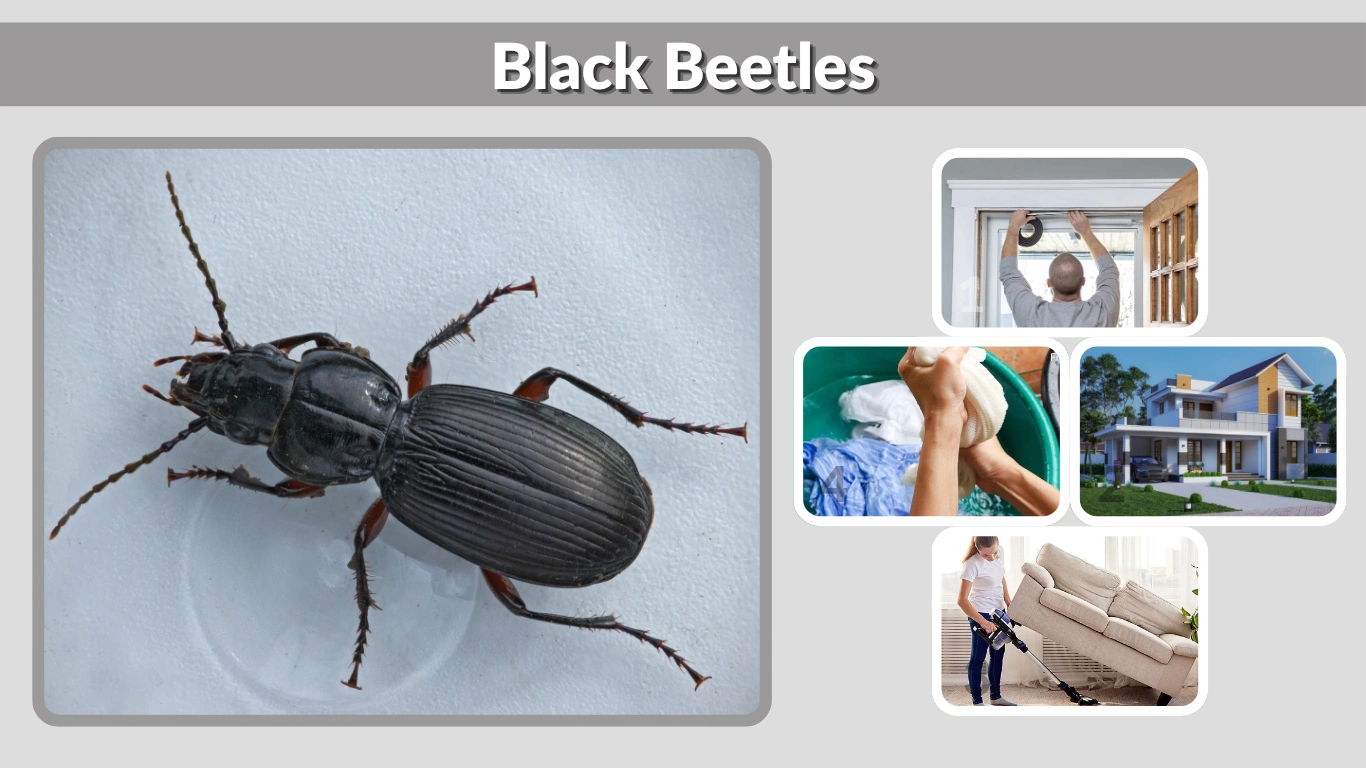
Black beetles are among the most common insects people encounter both indoors and outdoors. Their appearance varies widely—some are tiny and harmless, while others are large, shiny, and intimidating. With hundreds of species in North America alone, it’s no surprise that homeowners often struggle to identify which type of black beetle they are seeing. Some species wander indoors accidentally, while others, like carpet beetles, can cause real damage to fabrics, carpets, and stored items. Understanding how to recognize different black beetles and what attracts them is the first step toward proper control and prevention.
What Are Black Beetles?

General Characteristics
Black beetles come in many forms, but most share a few common traits. They have hard outer wing covers, six legs, and segmented antennae. Their coloration can range from matte black to glossy, and their bodies may be smooth, ridged, or covered with tiny hairs. Some species are active fliers, while others remain on the ground. Diets vary too—some eat plants, others rely on decaying materials, and some species become pantry or fabric pests when they enter homes. Because beetles adapt well to environments with food and shelter, they are found in nearly every region worldwide.
Are Black Beetles Dangerous?
Most black beetles are not dangerous to humans. They do not bite, sting, or transmit diseases. However, some species can cause damage to household items. Carpet beetle larvae can destroy fabrics, wool, and upholstery, while pantry beetles may infest stored grains. Large ground beetles may startle people when they appear indoors, but they are harmless and typically try to escape. Beetles with pincers, such as certain outdoor species, may look threatening but rarely harm humans unless provoked.
Types of Black Beetles (Color & Pattern Differences)

Solid Black Beetles
Many of the most common beetles are solid black with no additional markings. Ground beetles are frequent visitors indoors, especially during warm months when they wander in through gaps under doors. Black weevils may appear near plants or pantry areas, as they feed on seeds and grains. Carpet beetle adults are also small, black, and oval-shaped, often mistaken for other tiny beetles found near windows.
Black and Red Beetles
Red and black combinations are common among outdoor beetles. Some have bright red bodies with black spots, while others feature black shells with bold red stripes. Red-and-black flying beetles often show up near lights at night. While their coloration can look alarming, most of these species are harmless and live on plants or decaying vegetation.
Black and Orange Beetles
Many beetles with orange markings resemble ladybugs, although they may be larger or more elongated. Some have orange spots on a black shell, while others have orange-and-black stripes. These species are usually found outdoors and are mostly harmless. A few may accidentally enter homes, especially in fall when temperatures drop.
Black and Yellow Beetles
Beetles with black and yellow patterns often mimic the appearance of wasps, giving them natural protection from predators. These beetles are generally outdoor insects found on flowers, wood, or plants. They rarely infest homes but may appear near windows or patios during warmer months.
Black and White Beetles
These species may appear with white spots, stripes, or random patching. They are often wood-associated beetles, longhorn beetles, or other outdoor species. Some small black-and-white beetles may also enter homes and be mistaken for carpet beetles, making proper identification important.
Black and Brown Beetles
Beetles with brown stripes or patches include several common ground beetles and wood-boring species. Brown-and-black beetles are often found in gardens, mulch, or near foundations. A few may wander indoors during warm seasons or after rain.
Size-Based Black Beetle Identification

Tiny Black Beetles
Tiny black beetles are among the most common indoor pests people notice. These may include carpet beetles, pantry beetles, or fungus beetles attracted to moisture. Tiny beetles are often seen near windowsills, carpets, pantry shelves, or sinks. Their small size makes them difficult to identify without close inspection.
Small Black Beetles
Small beetles can be pantry pests like flour beetles or stored-grain insects. Others may be adult carpet beetles searching for light. Small beetles also wander in from outdoors and may show up in corners, bathrooms, or laundry areas.
Large Black Beetles
Large black beetles include ground beetles, giant beetles with hard shells, and beetles with visible pincers. These beetles often live outdoors but may enter homes accidentally. They can be startling due to size and appearance, but they rarely pose any danger.
Black Beetles in the Home

Why Black Beetles Enter Houses
Black beetles may enter homes for several reasons, most of which have nothing to do with dirt or hygiene. Many species wander indoors by accident while searching for food, moisture, or shelter. Some are attracted to lights at night and fly toward windows or doors. Others crawl inside through gaps in siding, vents, door sweeps, or foundation cracks. Seasonal shifts—especially the transition from warm to cool temperatures—cause outdoor beetles to look for protected areas, making homes an ideal refuge.
Common Household Black Beetles
The most frequently encountered black beetles inside homes include:
- Carpet beetles – notorious for damaging fabrics
- Pantry beetles – found in grains, cereals, or flour
- Ground beetles – harmless but often wander indoors
- Fungus beetles – appear in moist or damp areas
- Weevil beetles – infest seeds, grains, and dry foods
Identifying the correct species is essential because each requires a different management strategy.
Signs of a Black Beetle Problem
Although many beetles come indoors accidentally, repeated sightings may indicate a larger issue. Watch for:
- Small holes or thinning in carpets
- Shedded skins near baseboards
- Beetles gathered around windows or lights
- Damage to dry foods, cereals, or pet food
- Larvae crawling on walls, ceilings, or fabric
Finding multiple beetles over consecutive days suggests an active source of food or breeding area that needs addressing.
Black Carpet Beetles (Major Household Pest)

Identification
Black carpet beetles are among the most problematic household beetles. Adults are small, oval, and usually shiny black or dark brown. However, the larvae—which do the most damage—look very different. Larvae are elongated, fuzzy, and brown, with distinct bristly hairs. Carpet beetles can be mistaken for other small beetles, so recognizing the larval stage is key to identifying an infestation.
Carpet Beetle Damage
Carpet beetle larvae feed on:
- Wool and natural fabrics
- Carpeting and rugs
- Upholstered furniture
- Stored clothing
- Felt and leather
- Pet hair and lint in corners
Unlike moth larvae, carpet beetles do not leave webbing. Instead, they leave pinpoint holes, uneven thinning, or areas where fibers appear shaved down. Damage often goes unnoticed at first because larvae hide in dark, quiet places such as closets, drawers, and under furniture.
How to Get Rid of Black Carpet Beetles

Eliminating carpet beetles requires thorough cleaning and preventative measures:
- Vacuum deeply and frequently, especially along baseboards, under furniture, and in closets.
- Wash infested fabrics, blankets, and clothing in hot water.
- Use steam on carpets, rugs, and upholstery to kill larvae.
- Seal cracks, vents, and gaps where beetles may be hiding or entering.
- Store clothing in airtight containers, especially wool or natural fibers.
- Apply insecticides or boric acid if the infestation is widespread.
Because carpet beetles reproduce quickly, early detection and consistent cleaning are critical.
Outdoor Black Beetles

Ground Beetles
Ground beetles are one of the most commonly encountered outdoor beetles. They have shiny black bodies, long legs, and powerful jaws. Although they may look intimidating, ground beetles are beneficial predators that feed on pests like caterpillars, slugs, and aphids. They enter homes accidentally, particularly during warm summer nights. They do not infest homes or cause damage.
Black Weevils
Black weevils are small beetles with elongated snouts. They are often found near gardens, lawns, or potted plants, feeding on leaves and roots. When they enter homes, it is usually by accident, and they pose no threat to fabrics, food, or people. However, they may indicate outdoor plant damage that needs attention.
Flying Black Beetles
Some large black beetles are strong fliers attracted to lights at night. These insects may show up near porches, windows, or inside homes if a door is left open. Although their size can be alarming, most flying black beetles are harmless and leave once lights are turned off.
Special Appearance-Based Species
Black Beetles with Pincers
Beetles such as stag beetles or certain ground beetles have noticeable pincers. These insects look aggressive but rarely pinch humans unless threatened. Pincer-bearing beetles usually live in soil, wood, or gardens and are beneficial for controlling pests. Some species with large pincers are mistakenly believed to be poisonous, but they are not.
Black Beetles with Stripes or Spots
Striped or spotted beetles include a variety of longhorn beetles, soldier beetles, and patterned ground beetles. Many feature red, orange, yellow, or white markings used to deter predators. These color patterns help with species identification. Indoor appearances are uncommon, but when they occur, the beetles are typically lost or attracted to light.
How to Get Rid of Black Beetles in Your House

Prevention Steps
Preventing beetles begins with eliminating entry points and reducing attractants:
- Seal cracks around windows, doors, and foundations
- Fix torn window screens
- Replace worn-out door sweeps
- Reduce outdoor lighting or use yellow “bug lights”
- Store food in airtight containers
- Keep floors, carpets, and storage areas clean
Because beetles often enter accidentally, improving home barriers significantly reduces occurrences.
Cleaning Strategies
Proper cleaning discourages beetles from breeding or feeding:
- Vacuum carpets and rugs regularly
- Clean pantry shelves and remove outdated foods
- Store grains, cereals, and pet food in sealed bins
- Remove clutter that provides hiding spots
- Address moisture issues in basements or kitchens
Routine cleaning breaks the lifecycle of carpet beetles and reduces food access for other species.
When to Seek Professional Help
You may need professional pest control if:
- Carpet beetle damage is extensive
- Beetles continuously reappear
- Larvae are found throughout multiple rooms
- Moisture-loving beetles indicate a hidden leak or mold issue
Pest experts identify the exact species and apply targeted treatments to eliminate both adult beetles and larvae.
Pop Culture References to “Black Beetle”
Black Beetle (Comics)
In the DC Universe, Black Beetle is a villain who appears in Young Justice and comic storylines involving time travel and alternate timelines. Although unrelated to insects, the shared name causes frequent search confusion.
“Black Beatles” (Song)
The hit song “Black Beatles” by Rae Sremmurd featuring Gucci Mane surged in popularity due to the “Mannequin Challenge.” Many people search for “black beetles song,” accidentally spelling it like the insect.
FAQs
What causes black beetles to come inside?
Most black beetles enter homes accidentally while seeking light, food, or shelter, especially during seasonal changes.
Are black beetles harmful to humans?
No. Most species are harmless and do not bite or sting.
How can I identify a black carpet beetle?
Look for small, oval black adults and fuzzy brown larvae. Damage to fabrics, rugs, or clothing is a key sign.
Why do tiny black beetles appear in my home?
They may be carpet beetles, pantry pests, or moisture-loving beetles attracted to damp areas.
What’s the best way to prevent black beetles indoors?
Seal entry points, store food properly, reduce clutter, and maintain regular cleaning and vacuuming routines.