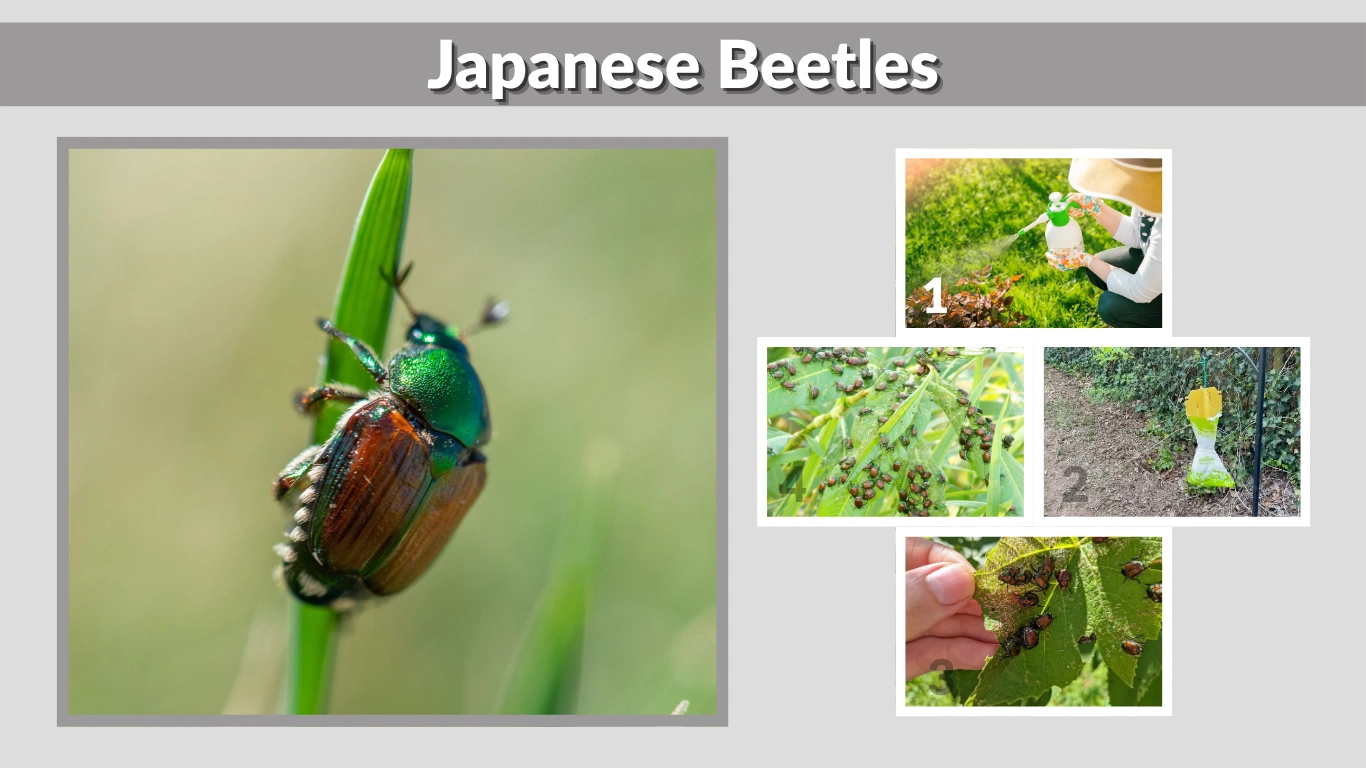
Japanese beetles may look beautiful with their metallic green and bronze bodies, but don’t be fooled — these shimmering pests are among the most destructive garden insects in North America. A single beetle might not do much harm, but in large groups, they can strip plants bare within days.
Since their accidental introduction from Japan in the early 1900s, Japanese beetles (Popillia japonica) have spread across much of the United States and parts of Canada and Europe. They feed on more than 300 plant species, including roses, grapes, and fruit trees, causing millions of dollars in agricultural damage each year.
If you’ve spotted shiny beetles eating your plants or noticed brown patches in your lawn, this guide will help you understand what Japanese beetles are, how they live, and — most importantly — how to get rid of them.
What Is a Japanese Beetle?

Origin and Scientific Classification
The Japanese beetle is a small scarab beetle belonging to the family Scarabaeidae. Native to Japan, it was first discovered in the United States in 1916 near Riverton, New Jersey. In its native country, natural predators keep the population under control. However, in North America, with few natural enemies and abundant food sources, the beetle has become a major invasive pest.
Today, Japanese beetles are found across the eastern and midwestern U.S., and their range continues to expand westward. Their rapid reproduction and adaptability make them one of the most challenging insects to manage in lawns and gardens.
What Does a Japanese Beetle Look Like?
Adult Japanese beetles are easily recognizable once you know their features:
- Size: About ½ inch long and ¼ inch wide.
- Color: Metallic green thorax and head with shiny copper-brown wing covers.
- Distinctive markings: Five small white tufts of hair on each side of the abdomen and two on the tip.
They often gather in clusters on plants, where they feed and mate in full sunlight. The shimmering colors make them easy to spot against green leaves.
Japanese Beetle vs Other Insects
Because of their round shape and coloring, Japanese beetles are often confused with other insects:
- Ladybugs: Ladybugs are smaller, dome-shaped, and bright red or orange with black spots. Japanese beetles have no spots and are metallic.
- June Bugs: June bugs are larger, solid brown, and primarily nocturnal, while Japanese beetles are smaller and active during the day.
- Japanese Rhino or Stag Beetles: These are unrelated, large horned beetles native to Japan that are often kept as pets — not plant pests.
Recognizing these distinctions helps ensure proper identification before starting any control treatments.
Life Cycle of the Japanese Beetle

Like many beetles, Japanese beetles go through four distinct life stages: egg, larva (grub), pupa, and adult. Understanding each phase is key to controlling infestations effectively.
The Four Life Stages Explained
- Egg: Female beetles lay 40–60 eggs in the soil during midsummer, typically in moist lawns or garden beds.
- Larva (Grub): The eggs hatch into small, white, C-shaped larvae that feed on grass roots underground. This stage causes the most damage to lawns.
- Pupa: The grubs enter the pupal stage in spring, developing into adults beneath the soil.
- Adult: Adult beetles emerge from late June through August to feed, mate, and start the cycle again.
The entire process takes about one year. Because eggs and larvae overwinter in the soil, controlling grubs in late summer and fall is one of the most effective prevention methods.
Japanese Beetle Grubs
Grubs are the immature, soil-dwelling stage of the beetle’s life cycle — and they can be even more destructive than adults. They are white, soft-bodied, and curled into a “C” shape when disturbed.
They feed on the roots of grass and other plants, causing brown, dead patches in lawns. When grubs are numerous, you may notice that turf easily pulls up like a loose carpet. Birds, skunks, and raccoons digging for food are another telltale sign of a grub problem.
Effective grub control methods include:
- Applying beneficial nematodes — microscopic worms that infect and kill grubs.
- Using milky spore disease powder, a natural soil treatment that specifically targets Japanese beetle larvae.
- Treating lawns with grub control insecticides during late summer or early fall when eggs hatch.
When Do Japanese Beetles Come Out?
Adult Japanese beetles emerge from the soil in late June and remain active for about 4–6 weeks, depending on climate. They are most active on warm, sunny days between late morning and early afternoon.
During this time, they feed voraciously on leaves, flowers, and fruits — and often return to the same plants daily. After mating, females burrow into the soil to lay eggs, restarting the infestation cycle.
What Do Japanese Beetles Eat?

Preferred Plants and Host Species
Japanese beetles aren’t picky eaters. They feed on more than 300 different plant species, favoring plants with soft, smooth leaves. Common targets include:
- Roses
- Grapevines
- Linden trees
- Fruit trees (apple, cherry, plum, peach)
- Corn, soybeans, and beans
- Birch and elm trees
They also attack ornamental plants and garden vegetables, making them a major threat to both home gardeners and farmers.
Signs of Feeding Damage
Japanese beetles cause a very distinct type of damage called skeletonization. They chew through the soft parts of leaves, leaving behind only the veins. The result is a lace-like appearance that quickly browns and dies.
Other symptoms include:
- Ragged holes in petals and fruit.
- Leaves that appear scorched or dried.
- Swarms of shiny beetles clustered on plants during the day.
On roses, they eat both leaves and blooms, often leaving nothing but the stems. For lawns, grub activity underground can create circular brown patches that spread as the larvae grow.
Are Japanese Beetles Dangerous?

To Plants
Yes — Japanese beetles are highly destructive to both ornamental and agricultural plants. A few beetles can strip a single plant in days, while large infestations can defoliate entire gardens or orchards. Repeated damage weakens plants, making them more vulnerable to disease and drought.
To Humans and Pets
Luckily, Japanese beetles don’t bite, sting, or transmit diseases. They are harmless to humans and animals, though their large numbers and tendency to cling to clothing or hair can make them unpleasant to deal with.
Environmental Impact
Because they are an invasive species, Japanese beetles disrupt local ecosystems. They outcompete native insects and provide little nutritional value to native predators. Their larvae also damage turf and crops, leading to costly maintenance and reduced yields.
How to Get Rid of Japanese Beetles

Japanese beetles are persistent and resilient, but with the right approach, you can significantly reduce or even eliminate their population. Successful management involves targeting both adults above ground and grubs below the soil to break their life cycle.
Manual Removal
For smaller infestations, handpicking is the simplest and most effective method. Early morning is best, when beetles are sluggish and easier to catch.
- Fill a bucket with soapy water.
- Gently shake or pluck beetles off leaves and drop them into the bucket.
- Repeat daily during peak season.
While it may sound tedious, this prevents mating and egg-laying, reducing future generations.
Natural Remedies
If you prefer an eco-friendly approach, several natural treatments can help control both adults and grubs without harming beneficial insects.
Neem Oil
Neem oil contains azadirachtin, a natural compound that disrupts the beetle’s feeding and reproductive cycle.
- Mix neem oil with water according to label instructions.
- Spray on affected plants in the early evening to avoid harming pollinators.
- Reapply every few days during infestations.
Beneficial Nematodes
Microscopic worms known as beneficial nematodes are one of the best defenses against grubs in soil. They invade the larvae and release bacteria that kill them from the inside.
Apply in late summer or early fall, when grubs are young and active near the surface.
Milky Spore Disease
A long-term biological control method, milky spore powder infects Japanese beetle larvae in the soil.
- Spread the powder evenly across the lawn.
- Once established, the bacteria can persist for up to 10 years, providing natural protection.
Chemical Control
In severe infestations, insecticides can provide fast relief, though they should be used carefully to protect beneficial insects and pollinators.
For Adults
Use pyrethrin-based or carbaryl insecticides labeled for Japanese beetles. Spray directly on affected plants in the evening when bees are inactive.
Commercial products such as Bonide Japanese Beetle Killer or Spectracide Beetle Spray are widely available.
For Grubs
Apply grub control insecticides containing imidacloprid or halofenozide in late summer, when eggs hatch and larvae are near the surface. Always water treatments into the soil to ensure they reach the grubs.
💡 Tip: Combine chemical and natural methods for best results — treat grubs underground with nematodes or milky spore and adults above ground with neem or insecticidal sprays.
Japanese Beetle Traps — Helpful or Harmful?

How Traps Work
Japanese beetle traps use a combination of floral scents and pheromones (chemical attractants) to lure beetles. Once inside, they fall into a collection bag or container and cannot escape.
Common options include Bonide, Spectracide, and Safer Brand traps.
Pros and Cons
- ✅ Pros: Can capture thousands of beetles and help monitor infestation levels.
- ❌ Cons: Often attract more beetles than they catch, potentially drawing pests closer to your garden.
If you use traps, place them at least 30–50 feet away from valuable plants — ideally at the perimeter of your property.
DIY Japanese Beetle Traps
Homemade traps can be made using a plastic container filled with a mixture of water, sugar, yeast, and fruit juice. The scent attracts beetles, which drown in the liquid. Replace the bait every few days for effectiveness.
Controlling Japanese Beetles at Different Stages

Grub Stage (Soil Control)
- Apply beneficial nematodes or milky spore in late summer or fall.
- Aerate lawns to improve soil drainage and reduce egg-laying sites.
- Keep lawns moderately dry — beetles prefer moist soil for laying eggs.
Adult Stage (Plant Protection)
- Spray neem oil or insecticidal soap directly on beetles and foliage.
- Cover sensitive plants with mesh or floating row covers during peak feeding season.
- Remove nearby plants that attract beetles (roses, grapes, linden trees) if infestations are severe.
Combining these two approaches — soil control and plant protection — prevents recurring infestations year after year.
Natural Predators and Repellents

What Eats Japanese Beetles?
In nature, several animals and insects help keep Japanese beetle populations in check:
- Birds such as starlings, robins, and crows.
- Predatory beetles and ground spiders.
- Parasitic wasps and tachinid flies, which lay eggs on adult beetles.
Encouraging these predators in your garden can provide lasting, natural control.
Plants That Repel Japanese Beetles
Certain plants naturally deter these pests through their scent or chemical composition. Planting them around vulnerable crops can help:
- Garlic
- Catnip
- Tansy
- Chives
- Marigolds
Conversely, avoid planting too many of their favorite plants together, such as roses, grapes, and linden trees, which act as magnets for beetles.
Prevention Tips
Lawn and Garden Care
- Mow regularly and remove thatch buildup.
- Avoid overwatering during July and August when females are laying eggs.
- Fertilize and reseed damaged areas to maintain healthy grass.
Indoor Prevention
Occasionally, beetles fly into homes through open windows.
- Vacuum any that enter.
- Install fine mesh screens and seal cracks around doors and windows.
Seasonal Maintenance
- Treat grubs in late summer to early fall.
- Protect vulnerable plants with sprays or netting in early summer.
- Reapply natural treatments (neem oil, nematodes) annually for best results.
FAQs
1. Do Japanese beetles bite?
No. They don’t bite or sting humans or pets.
2. When do Japanese beetles come out?
Adults typically emerge from the soil in late June, with peak activity lasting about 4–6 weeks.
3. What kills Japanese beetles naturally?
Neem oil, beneficial nematodes, and milky spores are the top natural options.
4. Are Japanese beetles invasive?
Yes — they are non-native and considered a serious invasive pest in North America.
5. Do traps really work?
They can help monitor beetle activity but may attract more beetles if placed too close to gardens.
6. How can I get rid of them permanently?
Use an integrated approach: treat grubs underground, spray adults above ground, and maintain healthy soil to deter egg-laying.