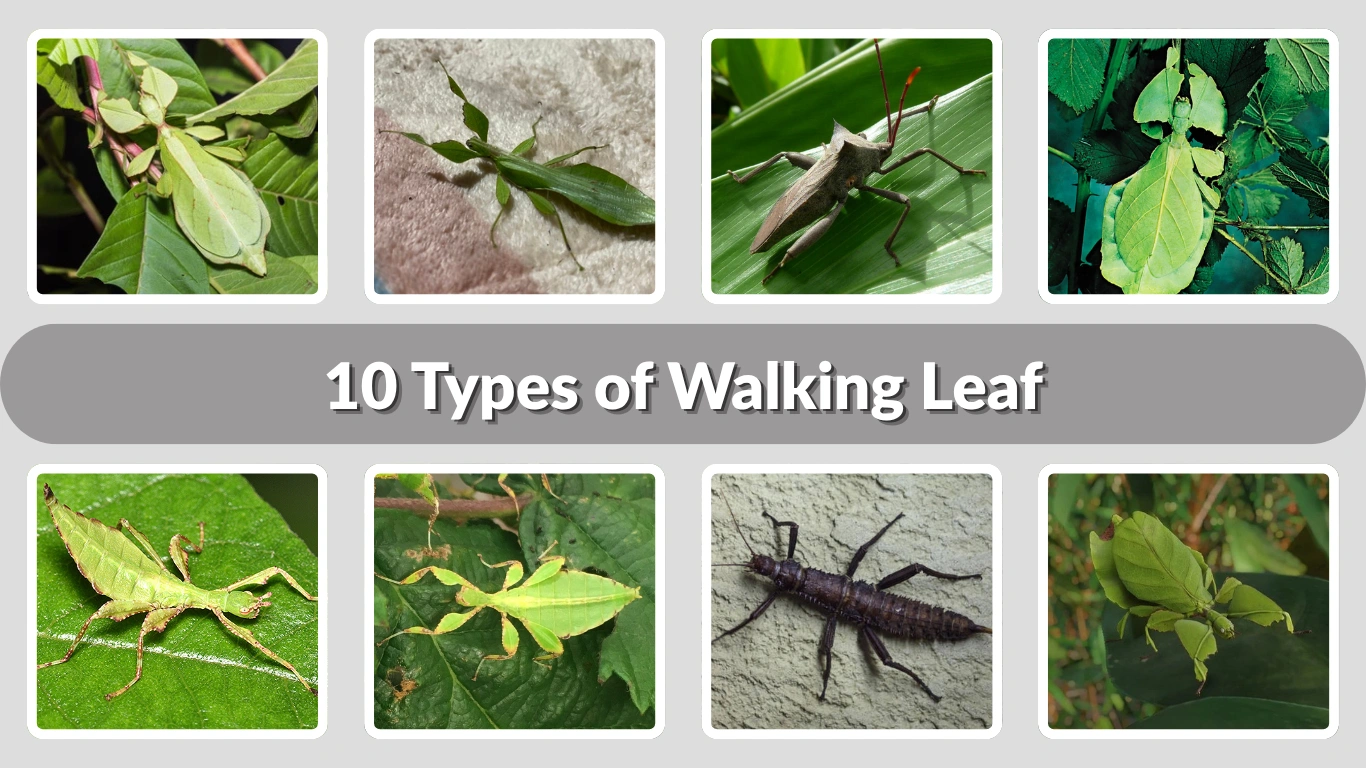
Walking leaf insects are nature’s ultimate masters of disguise, resembling real leaves with astonishing precision. Found across tropical forests of Asia and Australia, these insects mimic leaf veins, edges, and even decay spots to evade predators. Each species displays unique coloration and behavior adapted to its habitat. This guide explores 10 remarkable walking leaf species, focusing on their identification, habitats, behaviors, and fascinating survival facts.
1. Giant Malaysian Leaf Insect (Phyllium giganteum)

The Giant Malaysian Leaf Insect is one of the largest and most impressive species of leaf insect, native to the tropical rainforests of Malaysia. It is known for its near-perfect mimicry of green leaves, making it almost invisible among the foliage. Females are significantly larger than males and are often mistaken for real leaves due to their strikingly detailed camouflage.
Identification
- Large, flat body measuring up to 10 cm (4 inches) long
- Bright green coloration with brownish veins resembling leaf patterns
- Broad, leaf-shaped wings (more developed in males)
- Females are winged but flightless; males are smaller and capable of flight
- Short antennae and leaf-like legs with serrated edges
Habitat
The Giant Malaysian Leaf Insect inhabits humid tropical rainforests, dwelling among the upper canopy foliage of shrubs and trees. It prefers dense, leafy environments that provide both camouflage and a steady food source of leaves.
Behaviors
This species is nocturnal, remaining motionless during the day to avoid predators. It sways gently to mimic a leaf moving in the wind, enhancing its disguise. When threatened, it may drop to the forest floor and remain still, blending perfectly with fallen leaves.
Diet
Giant Malaysian Leaf Insects feed exclusively on leaves, particularly those of guava, mango, bramble, and oak plants. They are herbivorous, relying on fresh foliage for nutrition and moisture.
Lifecycle
The lifecycle consists of egg, nymph, and adult stages. Females lay large, seed-like eggs on the forest floor, which hatch after 6–8 months. Nymphs resemble small, brown leaves and gradually turn green as they mature. Adults live for around 6–12 months, completing one generation per year in the wild.
2. Indian Leaf Insect (Phyllium bioculatum)

The Indian Leaf Insect is a beautifully camouflaged species native to India, Sri Lanka, and Southeast Asia. Known for its leaf-like wings and bright green body, it’s often mistaken for real foliage. This species is slightly smaller than its Malaysian counterpart but equally fascinating for its intricate mimicry and gentle nature.
Identification
- Flat, leaf-shaped body measuring 6–8 cm long
- Bright green or yellowish coloration with vein-like markings
- Females are broader and heavier than males
- Males have longer antennae and fully developed wings for flight
- Legs and body edges have lobes that resemble leaf tears or decay marks
Habitat
Indian Leaf Insects live in tropical forests and dense woodlands, especially where broadleaf plants are abundant. They are commonly found on shrubs and trees with large, green leaves, blending seamlessly into the vegetation.
Behaviors
This species is docile and nocturnal, remaining motionless during the day to avoid predators. When disturbed, it gently sways like a leaf in the wind, enhancing its camouflage. Males are agile fliers, while females tend to stay on foliage for most of their lives.
Diet
Indian Leaf Insects feed on guava, mango, rose, and oak leaves, preferring soft and fresh foliage. In captivity, they thrive on bramble and raspberry leaves.
Lifecycle
Their lifecycle includes egg, nymph, and adult stages. Females lay small, brown, seed-like eggs on the ground or drop them from leaves. Eggs hatch after 4–6 months, and nymphs resemble small, dry leaves before turning green as they mature. Adults live up to 8–10 months in favorable conditions.
3. Java Leaf Insect (Phyllium pulchrifolium)

The Java Leaf Insect is a striking species native to Indonesia’s Java Island and surrounding regions. Famous for its vibrant green color and realistic leaf-like body, this insect is a master of disguise in tropical foliage. It’s smaller than the giant species but equally admired for its elegant shape and mimicry.
Identification
- Compact, broad, and flat body about 6–7 cm long
- Vivid lime to emerald-green color with visible leaf vein markings
- Females have short, rounded wings and are flightless
- Males are slimmer with long wings and can fly
- Legs have small leaf-like extensions enhancing their camouflage
Habitat
The Java Leaf Insect inhabits humid tropical forests, dwelling in dense vegetation and on broadleaf plants such as guava, bramble, and mango. It thrives in moist, shaded areas with high humidity.
Behaviors
This species is quiet and still during the day, relying on its camouflage to evade predators. When threatened, it drops to the ground and remains motionless. It’s also known for leaf-swaying behavior, mimicking natural foliage movement.
Diet
Java Leaf Insects feed on guava, oak, bramble, and mango leaves, preferring tender and young shoots. They are strictly herbivorous and feed mostly at night.
Lifecycle
The lifecycle includes egg, nymph, and adult stages. Females lay seed-shaped eggs resembling plant seeds, which hatch in about 5–6 months. Nymphs are brown initially and turn green as they mature. Adults live 6–9 months on average.
4. Philippine Leaf Insect (Phyllium philippinicum)

The Philippine Leaf Insect is an elegant species native to the Philippines, celebrated for its vivid coloration and extreme mimicry. Its body shape, color, and even the simulated leaf veins help it blend flawlessly among tropical foliage.
Identification
- Medium-sized insect measuring 6–8 cm long
- Bright green body with delicate leaf vein patterns
- Females have broad, rounded bodies and short wings
- Males are smaller, slender, and capable of flight
- Edges of body and legs are uneven, resembling natural leaf damage
Habitat
The Philippine Leaf Insect lives in humid rainforests and wooded regions, usually hiding among the upper canopy leaves. It prefers shady, moist environments rich in vegetation.
Behaviors
This species is docile and slow-moving, spending most of its time motionless. When disturbed, it performs rocking motions that mimic leaves swaying in the breeze. It’s primarily nocturnal, feeding after dusk.
Diet
Philippine Leaf Insects feed on guava, bramble, and mango leaves, but also accept rose and oak leaves in captivity. They are strict leaf eaters and require constant access to fresh greenery.
Lifecycle
The lifecycle includes egg, nymph, and adult phases. Females lay oval, seed-like eggs that hatch after 6–7 months. Young nymphs start brown and gradually turn green as they molt. Adults live for 8–10 months, completing a single yearly generation in natural habitats.
5. New Guinea Leaf Insect (Phyllium monteithi)

The New Guinea Leaf Insect is a stunning species native to the rainforests of Papua New Guinea and nearby islands. Its remarkable camouflage perfectly mimics green leaves, down to the veins and bite marks. This species is admired for its beauty and relatively calm behavior, making it a favorite among leaf insect enthusiasts.
Identification
- Medium-sized insect, about 7–9 cm long
- Bright leaf-green body with clear vein-like markings
- Females have wide, rounded abdomens and short wings
- Males are slimmer with longer wings and capable of flight
- Legs possess leaf-like lobes for added camouflage
Habitat
New Guinea Leaf Insects inhabit humid, tropical forests, hiding among broad-leaved plants and shrubs. They prefer dense, shaded canopies where moisture levels are high and predators are minimal.
Behaviors
This species is nocturnal and motionless by day, relying on its camouflage for protection. When threatened, it drops from leaves and remains still, blending perfectly with the forest floor. It also mimics the gentle sway of leaves to avoid detection.
Diet
New Guinea Leaf Insects are herbivorous, feeding on guava, bramble, rose, and mango leaves. They consume soft foliage during the night and rest during the day.
Lifecycle
Their lifecycle includes egg, nymph, and adult stages. Females lay seed-like eggs that hatch in about 6–8 months. Nymphs are brown at first, turning green as they mature. Adults live around 8–10 months, completing one generation annually.
6. Vietnamese Leaf Insect (Phyllium siccifolium)

The Vietnamese Leaf Insect is among the most common and well-known species, native to Vietnam and parts of Southeast Asia. It’s widely studied and kept in captivity due to its hardiness and fascinating mimicry. This species looks so convincingly like a leaf that even the veins and edges resemble natural decay.
Identification
- Medium-sized, about 6–8 cm long
- Light to medium green coloration with visible vein patterns
- Females are broad with short wings; males are slender and capable of flight
- Legs and antennae have leaf-like extensions
- Some individuals display brownish patches, mimicking leaf damage
Habitat
Vietnamese Leaf Insects thrive in tropical rainforests, gardens, and bamboo thickets. They prefer warm, humid conditions with dense foliage, where they can rest unnoticed among leaves.
Behaviors
They are peaceful, slow-moving, and nocturnal, usually feeding after dusk. When threatened, they sway gently like leaves in the breeze. Their natural stillness and shape make them almost invisible to predators.
Diet
Vietnamese Leaf Insects feed on bramble, oak, rose, and guava leaves. They prefer young, tender leaves and can adapt well to cultivated environments.
Lifecycle
The lifecycle follows egg, nymph, and adult stages. Females lay hundreds of small, seed-like eggs on foliage. Eggs hatch in 4–6 months, producing brown nymphs that turn green after a few molts. Adults typically live for 6–9 months, reproducing readily in warm climates.
7. Australian Leaf Insect (Phyllium australiense)

The Australian Leaf Insect is a rare and fascinating species native to Queensland and northern Australia. Known for its incredible mimicry, it resembles eucalyptus leaves so perfectly that even predators struggle to detect it. This species is one of the few members of the Phylliidae family found in Australia.
Identification
- Body length about 6–8 cm
- Bright green coloration with subtle brown or yellow veins
- Broad, leaf-like wings (shorter in females)
- Females are heavy-bodied and flightless; males are slender and capable of short flights
- Edges of the body and legs appear torn, mimicking leaf damage
Habitat
Australian Leaf Insects inhabit rainforests and eucalyptus woodlands, especially in humid coastal regions. They prefer dense foliage, where their leaf-like bodies blend seamlessly with surrounding vegetation.
Behaviors
This species is nocturnal and calm, staying motionless during the day. When disturbed, it performs a gentle rocking motion, resembling a leaf swaying in the wind. Females drop eggs from trees, allowing them to scatter naturally across the forest floor.
Diet
Australian Leaf Insects feed on eucalyptus, bramble, and guava leaves, preferring tender young growth. They are strictly herbivorous and rely on fresh foliage for hydration.
Lifecycle
The lifecycle includes egg, nymph, and adult stages. Females lay small, brown, seed-like eggs that hatch after 6–9 months. Nymphs begin brown and turn green as they mature. Adults live around 8–10 months, completing one generation yearly.
8. Madagascar Leaf Insect (Phyllium mabantai)

The Madagascar Leaf Insect is an exotic and beautifully camouflaged species native to Madagascar’s tropical forests. It’s renowned for its detailed mimicry, mimicking even leaf veins and decay marks to perfection.
Identification
- Size ranges from 6–8 cm in length
- Body color varies from lime green to olive, with brownish patches resembling decay
- Females have broad abdomens and short wings; males are smaller and slender
- Leaf-like lobes present on all legs
- Brown nymphs turn green after their first few molts
Habitat
Madagascar Leaf Insects live in tropical forests and plantations, especially where broadleaf plants provide shelter and food. They thrive in warm, humid environments with plenty of canopy cover.
Behaviors
This species is extremely still during the day, depending entirely on camouflage for defense. It becomes active at dusk, feeding quietly on leaves. When threatened, it drops to the ground and remains motionless among dead leaves.
Diet
Madagascar Leaf Insects feed on guava, mango, and bramble leaves. They may also feed on hibiscus and roses in captivity. Their diet consists exclusively of fresh foliage.
Lifecycle
The lifecycle includes egg, nymph, and adult stages. Females lay large, oval eggs resembling seeds, which hatch after 7–9 months. Nymphs resemble dead leaves initially, later turning green. Adults live up to 10 months, with one generation per year.
9. Celebes Leaf Insect (Phyllium celebicum)

The Celebes Leaf Insect is a captivating species native to Sulawesi (formerly Celebes Island), Indonesia. It is admired for its remarkable camouflage and unique brownish-green coloration that blends seamlessly with tropical leaves. Its slightly rugged body texture gives it the appearance of an aged or decaying leaf, adding to its incredible disguise.
Identification
- Medium-sized insect about 6–8 cm long
- Color ranges from olive green to light brown
- Prominent leaf-vein-like ridges on the body and wings
- Females are broad and flightless; males are smaller and capable of flight
- Jagged edges on legs and body mimic torn leaves
Habitat
Celebes Leaf Insects inhabit humid, tropical rainforests and lowland forests of Sulawesi. They prefer dense foliage and shady undergrowth, where their camouflage provides maximum protection from predators.
Behaviors
This species is nocturnal and remains perfectly still during the day, relying on its mimicry for defense. When threatened, it may sway like a leaf in the breeze or drop to the ground to remain undetected.
Diet
Celebes Leaf Insects feed on guava, bramble, rose, and mango leaves. They are strictly herbivorous and prefer tender, fresh leaves.
Lifecycle
The lifecycle includes egg, nymph, and adult stages. Females drop seed-like eggs to the forest floor, which hatch in 5–7 months. Nymphs are brown and gradually turn green as they mature. Adults live for 8–10 months, producing one generation per year.
10. Green Leaf Insect (Phyllium ericoriai)

The Green Leaf Insect, native to the Philippines and parts of Southeast Asia, is one of the most visually perfect examples of leaf mimicry. Its smooth, bright green body and delicate wing veins resemble a living leaf so closely that it’s nearly impossible to distinguish in its natural habitat.
Identification
- Body length about 6–8 cm
- Smooth, bright green coloration with fine vein-like markings
- Females are large and winged but flightless; males are slimmer and capable of flight
- Legs shaped like leaf edges, enhancing its disguise
- Brown or yellow patches occasionally appear, mimicking leaf decay
Habitat
Green Leaf Insects inhabit tropical rainforests, gardens, and humid woodlands. They are commonly found on broadleaf plants and shrubs where they can remain motionless and undetected among the foliage.
Behaviors
This species is quiet, nocturnal, and highly camouflaged. During the day, it stays still, and at night it moves slowly to feed. When disturbed, it drops from its perch and freezes to blend with fallen leaves.
Diet
Green Leaf Insects feed on guava, bramble, rose, and mango leaves, consuming only the softest parts of foliage. They are gentle herbivores and feed mainly during nighttime.
Lifecycle
The lifecycle includes egg, nymph, and adult stages. Females lay small, seed-like eggs that hatch in 5–6 months. Nymphs start out brown and turn green with age. Adults live about 8–10 months, with females capable of reproducing parthenogenetically (without males) in captivity.