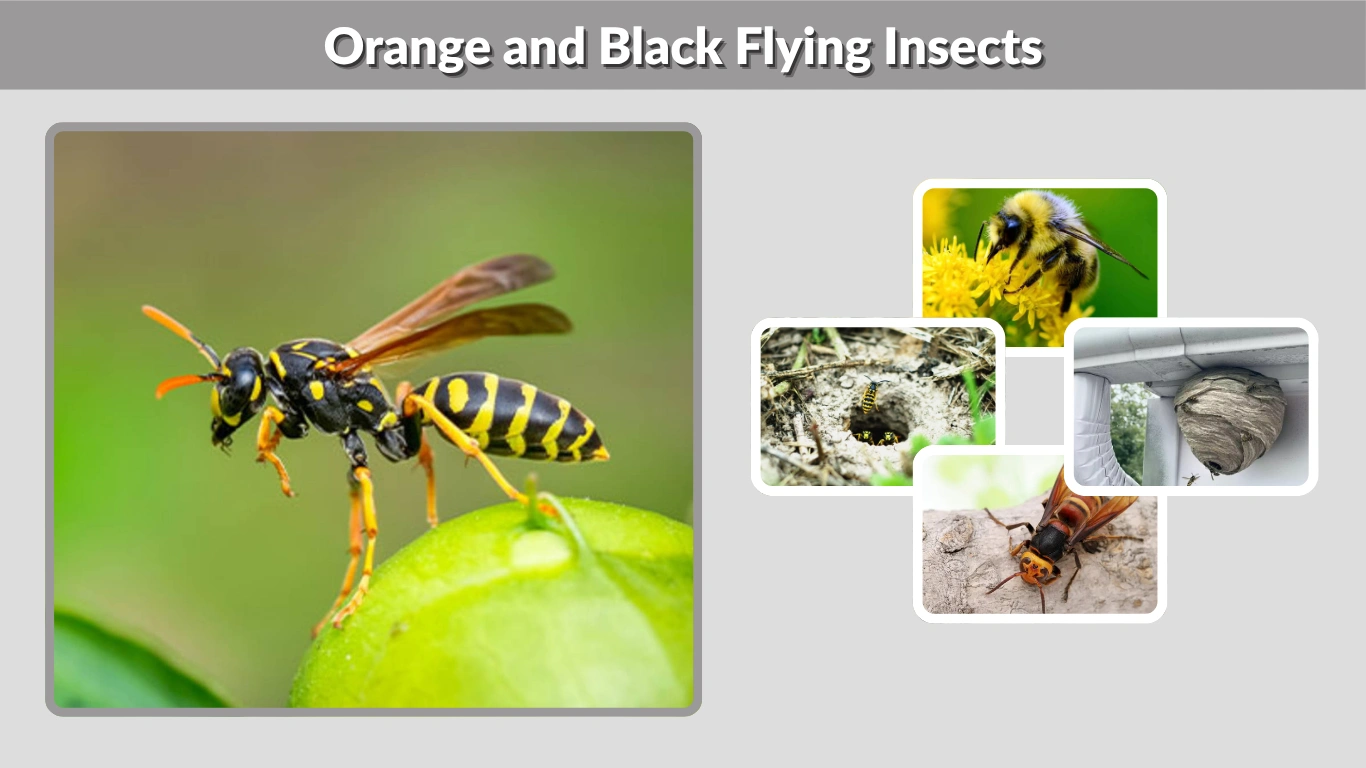
Orange and black flying insects are some of nature’s most striking species. Their bold colors aren’t just for show—they serve as a warning signal to predators that the insect might sting or taste unpleasant. While some are harmless pollinators, others can deliver painful stings if disturbed. Recognizing the differences between species helps you stay safe and understand their ecological importance.
Identification of Orange and Black Flying Insects

General Appearance
These insects often display bright orange and deep black bands across their bodies. The contrast acts as a defense mechanism known as aposematism, warning others of potential danger. They usually have:
- Slender or thick bodies, depending on species (wasps vs. beetles)
- Two pairs of wings, sometimes tinted orange or smoky black
- Prominent antennae for navigation and communication
- Smooth or slightly furry exoskeletons, depending on habitat
Their size varies from small hoverflies under 1 cm to large wasps over 5 cm in length, such as the tarantula hawk.
Typical Habitats
- Gardens and fields: Hoverflies, soldier beetles, and bees feeding on nectar
- Wooded areas: Wasps, hornets, and beetles nesting in logs or tree hollows
- Tropical climates: Larger, brightly colored wasps and metallic beetles
- Homes and sheds: Paper wasps or solitary wasps building mud or paper nests
Common Types of Orange and Black Flying Insects

Paper Wasps
Paper wasps are slim, long-legged insects with alternating orange and black markings. They are known for building open, paper-like nests beneath eaves, decks, or mailboxes. Found in Florida, Texas, and the U.K., paper wasps are beneficial predators that eat caterpillars and other pests. However, they will sting when threatened.
Tarantula Hawk Wasps
Among the largest wasps in the world, tarantula hawk wasps are instantly recognizable by their glossy black bodies and fiery orange wings. Common in Arizona, Australia, and the Dominican Republic, females hunt tarantulas to feed their young. Their sting is famously painful, though they are not aggressive unless provoked.
Hornets
Black-and-orange hornets are thick-bodied and powerful fliers. They usually have orange faces or abdomens and can grow up to 2 inches long. Found throughout North America and Europe, hornets are social insects that build large paper nests in trees or attics. They defend their colonies aggressively.
Orange Soldier Beetles
These harmless orange-and-black beetles are often seen resting on flowers in summer. Known as “leatherwing beetles,” they feed on pollen, nectar, and small pests. Common in gardens across the U.K., Australia, and the U.S., they play a helpful role in pollination.
Cuckoo Wasps
Cuckoo wasps are tiny, metallic orange or reddish-black insects with a jewel-like sheen. Solitary by nature, they lay their eggs inside the nests of other wasps. Their tough outer shell helps protect them from being stung when discovered. They are non-aggressive and beneficial for ecosystems.
Color and Pattern Variations

Orange and Black Stripes
This is the most recognizable pattern and is common among hornets, paper wasps, and hoverflies. The coloration acts as a warning that the insect might sting.
Black with Orange Wings
Seen in tarantula hawk wasps and some solitary wasps, this coloration indicates a strong defense mechanism. These insects are large, slow-flying, and often solitary.
Orange Body with Black Tips
Characteristic of soldier beetles and mimic bees, this coloration helps them blend in with stinging insects for protection.
Orange, Yellow, and Black Mix
Found in wasps, bees, and hornets across Texas, Florida, and Australia, this combination signals high alert—many of these species can sting.
Orange and Black with White Spots
Seen in certain moths and beetles, this pattern mimics dangerous insects, even though these species are harmless.
Regional Sightings
United States
- Florida & Texas: Paper wasps and hornets often nest under eaves or trees.
- Arizona: Tarantula hawk wasps dominate arid landscapes with their orange wings.
- Minnesota & Ohio: Black-and-orange flies and wasps are common during warm months.
- Dominican Republic: Large, vivid wasps and metallic beetles flourish in tropical gardens.
United Kingdom
Orange soldier beetles and paper wasps are common in gardens during summer. They are non-aggressive and often found on wildflowers.
Australia
Home to bright metallic wasps, orange soldier beetles, and tarantula hawks, Australia hosts some of the most vividly colored flying insects in the world.
Behavior and Safety

Stinging Insects
Several orange and black flying insects—such as paper wasps, hornets, and tarantula hawks—are capable of stinging. Their warning colors indicate this defense mechanism. Most stings occur when their nests are disturbed or when they feel threatened. The pain can vary from mild irritation to severe swelling, depending on the species and individual sensitivity.
If stung:
- Wash the area with soap and water.
- Apply ice to reduce swelling.
- Use antihistamines for itching or inflammation.
- Seek medical attention if allergic reactions occur.
Non-Stinging Species
Many brightly colored insects, like soldier beetles, hoverflies, and some moths, only mimic stinging species. This mimicry, known as Batesian mimicry, deters predators. These harmless insects play essential ecological roles such as pollination and pest control.
Attraction to Light and Warmth
Most orange and black insects are diurnal (day-active) and drawn to light and warmth. They may occasionally enter homes during summer evenings when porch or indoor lights are on. Switching to yellow-tinted bulbs helps reduce their attraction.
Control and Prevention
Indoor Prevention
- Keep windows and doors screened to prevent entry.
- Seal cracks and crevices where wasps or beetles may enter.
- Avoid bright outdoor lighting near entry points.
- Remove food sources such as sugary drinks or ripe fruit that attract wasps and flies.
Outdoor Prevention
- Inspect for nests in eaves, sheds, or trees—remove only during cool hours and from a safe distance.
- Trim plants and shrubs near windows and walls to reduce nesting spots.
- Cover garbage bins and compost to avoid attracting wasps or flies.
- Plant natural repellents like mint, basil, or citronella around patios and decks.
Natural Repellents
Natural deterrents are eco-friendly and effective for non-aggressive species:
- Peppermint oil spray – repels wasps and hornets.
- Vinegar and water mixture – discourages flies and beetles.
- Citrus peels – help deter paper wasps around outdoor furniture.
When to Seek Professional Help
If large numbers of orange and black wasps or hornets are nesting close to your home, contact a licensed pest control service. Attempting to remove active nests can be dangerous, especially during daytime when insects are most active.
Ecological Importance
Despite their alarming appearance, orange and black flying insects are vital to the environment.
- Wasps and hornets regulate pest populations by preying on caterpillars and flies.
- Beetles and hoverflies contribute to pollination, especially of wildflowers.
- Cuckoo wasps and tarantula hawks maintain ecological balance by controlling spider and insect populations.
Their presence supports biodiversity, soil enrichment, and plant reproduction, making them indispensable despite occasional conflicts with humans.
FAQs
What are orange and black flying insects?
They are mostly wasps, hornets, soldier beetles, and hoverflies. Their bright coloration serves as a warning to predators that they may sting or are mimicking dangerous species.
Are orange and black flying insects dangerous?
Only certain species, like paper wasps and hornets, can sting when threatened. Others, such as beetles and hoverflies, are harmless and even beneficial.
What is the large orange and black flying insect in Arizona?
That’s likely a tarantula hawk wasp, a large solitary species known for its striking orange wings and extremely painful sting.
Which orange and black flying insects are common in the U.K. and Australia?
In the U.K., orange soldier beetles and paper wasps are most common. In Australia, you’ll often see metallic orange wasps and tarantula hawks during the warmer months.
How can I keep orange and black flying insects away from my home?
Seal entry points, reduce outdoor lighting, and avoid leaving sweet foods or drinks uncovered. For stinging insects, avoid swatting or spraying directly—use deterrents or call professionals for nest removal.