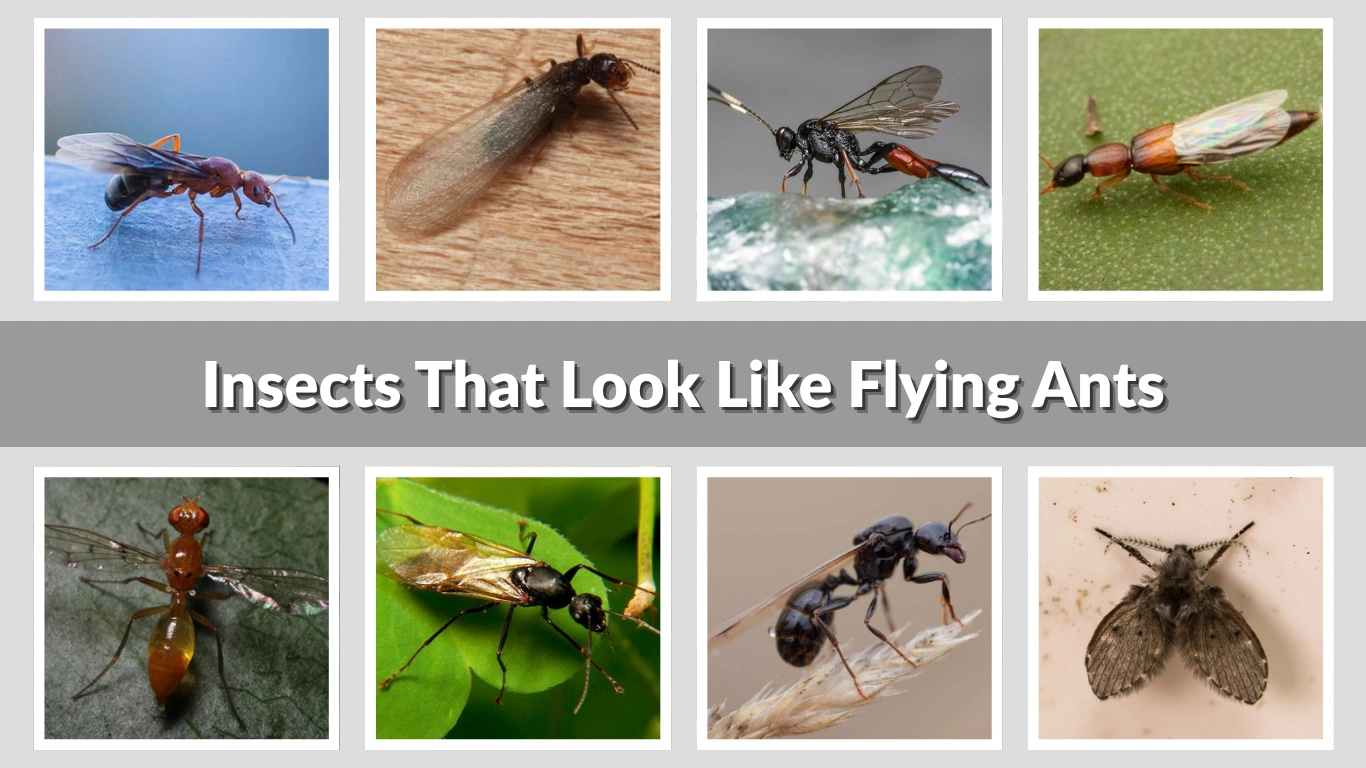
Flying ants are a common sight during warm and humid months, especially after rainfall. However, many insects closely resemble flying ants, causing confusion for homeowners. Some look-alikes, like termites or small wasps, can signal potential infestations or stinging hazards. Understanding how to tell them apart helps you identify whether the insect is harmless or a cause for concern.
Identification of Flying Ants

General Appearance
Flying ants, also known as alates, are reproductive males and queens that emerge from ant colonies during mating season. They have:
- Elbowed antennae that bend in the middle
- Narrow waists connecting the thorax and abdomen
- Two pairs of wings, with the front wings longer than the hind ones
- Dark brown or black bodies, usually 5–8 mm long
Behavior
Flying ants usually swarm in large numbers during humid weather, often near windows, porch lights, or entryways. After mating, males die, and fertilized queens shed their wings to start new colonies. These swarms typically last for a few days but can reappear each season.
Common Insects That Look Like Flying Ants

Termites
Winged termites are the most common insects mistaken for flying ants. They swarm in similar conditions and often appear near lights or wooden structures.
Key differences include:
- Straight antennae (ants’ are bent)
- Broad waists, not pinched
- Wings of equal length, while ant wings differ in size
- Pale or creamy bodies instead of dark-colored ones
If you notice several winged insects inside, especially near wooden walls or baseboards, termites may be present—and immediate inspection is necessary.
Wasps
Certain small wasps, such as parasitic wasps or paper wasps, resemble large flying ants because of their narrow waists and long, transparent wings. However, wasps have smooth, shiny bodies and can sting. They’re often spotted outdoors around eaves, gardens, or sheds but may fly indoors if windows are left open.
Winged Beetles
Some beetles mimic the shape and behavior of ants. Rove beetles and carpenter beetles have hard shells and short wing covers that expose part of their abdomen. Unlike flying ants, beetles have rigid outer wings that close when resting and do not form swarms.
Ant-Mimic Flies
A few fly species have evolved to look like ants as a defense mechanism. These flies, known as ant-mimic flies, have only one pair of wings and large compound eyes. They’re non-aggressive, harmless, and usually seen around lights or plants.
Carpenter Ants (with Wings)
Carpenter ants are true ants but are often mistaken for other flying insects because of their size. They are large (up to 15 mm), slow-moving, and usually black or dark brown. If found indoors, they may indicate nesting in damp or decaying wood.
How to Tell the Difference Between Flying Ants and Other Insects

| Feature | Flying Ants | Termites | Wasps | Beetles | Ant-Mimic Flies |
| Antennae | Elbowed | Straight | Curved | Straight | Straight |
| Waist | Narrow | Thick | Very narrow | Slightly thick | Narrow |
| Wing Pairs | Unequal lengths | Equal lengths | Unequal lengths | Hard outer wings | One pair only |
| Body Color | Black/Brown | Pale or cream | Yellow/Brown | Dark brown | Black |
| Behavior | Swarming near light | Wood damage | Builds nests | Crawls on surfaces | Hovers near plants |
By comparing these characteristics, you can quickly determine whether you’re seeing harmless ants or more concerning pests like termites or wasps.
Indoor Sightings and Behavior

Near Windows and Lights
Many homeowners notice flying ant-like insects clustering around windows or ceiling lights during warm evenings. These are often termite swarmers or ant alates attracted to artificial light. After mating, they shed wings that may pile up near window sills or floors.
In Bathrooms
Damp, enclosed spaces attract termite swarmers, drain flies, or ant alates seeking moisture. Small brown or black insects flying near sinks or tubs are likely termites or fungus gnats rather than true ants.
In Kitchens
Tiny insects that resemble ants but hover around fruits or drains are usually fruit flies or fungus gnats. They don’t bite or sting but can multiply quickly in warm, moist areas with organic residue.
Outdoor Sightings
In Gardens and Patios
Outdoors, swarms of insects that look like flying ants may include termite swarmers, paper wasps, or large carpenter ants. They’re most active during late spring and early summer. These insects are attracted to wood, soil, and standing water.
By Region
- Georgia and the Southern U.S.: High humidity brings swarms of flying ants and termites around homes.
- Wisconsin and the Midwest: Shorter swarming periods of carpenter ants appear after rainfall.
- Arizona and the Southwest: Large winged insects resembling ants are sometimes velvet ants (cow killer wasps)—brightly colored and capable of painful stings.
Attracted to Light

Flying insects that resemble ants are often strongly attracted to artificial light, especially during humid evenings. Termite swarmers, ant alates, and small wasps may gather around porch lamps, windowpanes, or indoor bulbs. This behavior occurs because light helps them navigate and signals open spaces for mating.
To reduce attraction:
- Replace outdoor bulbs with yellow-tinted or LED “bug lights.”
- Keep windows closed or screened at night.
- Turn off unnecessary lights, especially during summer swarming seasons.
Why These Insects Appear Indoors
Seasonal Swarming
Many of these insects appear suddenly during mating or swarming seasons, which typically occur in late spring and summer. After rain or in high humidity, reproductive ants and termites take flight to start new colonies.
Moisture and Wood Damage
Damp or decaying wood attracts both carpenter ants and termites. Bathrooms, basements, and attics are ideal entry points. If you notice winged insects repeatedly in the same area, check for leaks, soft wood, or moisture buildup.
Cracks and Openings
Gaps around windows, vents, or foundations can let flying ants, termites, or small wasps enter. Sealing entry points and installing fine mesh screens help prevent swarms from getting inside.
Hidden Nests
If insects appear regularly indoors, they may be nesting inside walls, window frames, or ceilings. Carpenter ants and termites often excavate galleries within wooden structures, leaving behind frass (wood dust) or shed wings as clues.
Control and Prevention
Identify the Species
Correct identification is the first step.
- Flying ants: Usually harmless and seasonal.
- Termites: Require immediate professional treatment.
- Wasps: Should be removed carefully due to stings.
- Beetles or flies: Typically harmless and can be vacuumed or trapped.
Indoor Prevention
- Seal gaps and cracks: Use caulk or weatherstripping to block entry.
- Reduce humidity: Use dehumidifiers in basements and bathrooms.
- Clean drains and vents: Prevent buildup that attracts insects.
- Vacuum regularly: Remove stray wings or dead insects that signal hidden nests.
Outdoor Prevention
- Inspect wooden structures: Check decks, fences, and eaves for soft spots or tunnels.
- Trim trees and shrubs: Keep branches from touching your house.
- Eliminate standing water: Empty flowerpots, gutters, or buckets that attract insects.
- Store firewood away from walls: Termites and carpenter ants can migrate from logs into the home.
Natural Repellents
If you prefer non-chemical options, natural repellents can help deter flying insects:
- Peppermint oil spray: Works well against ants and wasps.
- Vinegar and lemon mix: Repels small flies and fungus gnats.
- Cinnamon powder: Acts as a deterrent around windowsills and entryways.
Ecological Importance
Even though they can be a nuisance indoors, insects that resemble flying ants are vital to the environment. Ants and termites help break down dead wood and recycle nutrients, enriching soil. Wasps and beetles serve as pollinators and natural pest controllers. These insects maintain ecosystem balance, supporting both plants and other wildlife.
FAQs
What insects look like flying ants?
The most common are termites, small wasps, beetles, and ant-mimic flies. Termites are the closest look-alikes, with straight antennae and equal-sized wings.
What insect looks like a flying ant but isn’t?
Termite swarmers are often mistaken for flying ants. The key difference is that termites have thick waists and straight antennae, while ants have narrow waists and bent antennae.
Why are flying ant-like insects gathering near lights?
They are attracted to light for navigation and mating. Swarming ants and termites often appear after rainfall, especially in warm, humid conditions.
What kind of flying insect looks like an ant and stings?
Velvet ants—actually a type of wasp—look like large, hairy ants. They can deliver a very painful sting and are commonly found in Arizona and the southern U.S.
How do I get rid of flying insects that look like ants in my house?
Start by identifying the species. For termites or carpenter ants, call pest control. For other flying insects, seal openings, reduce light exposure, and use natural repellents like peppermint or vinegar.