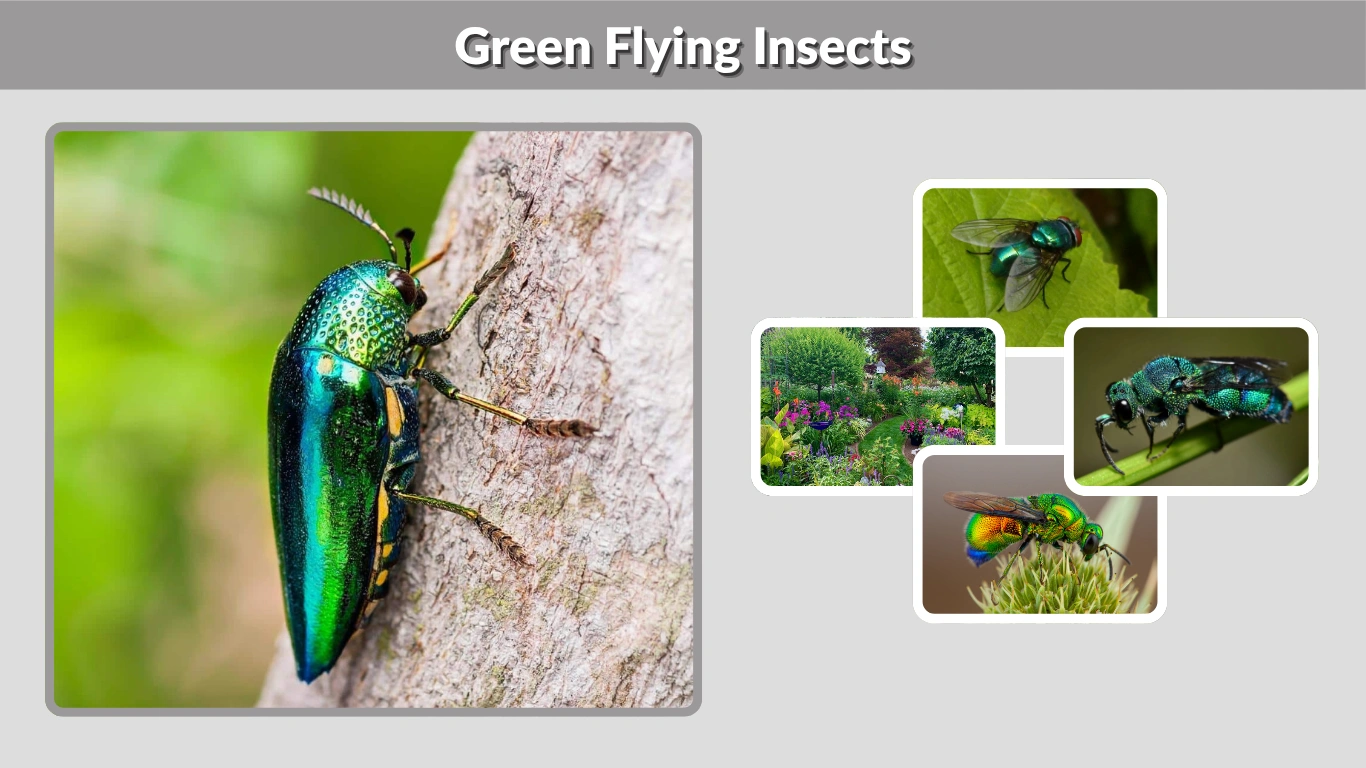
Green flying insects are some of the most vibrant and fascinating species in the insect world. Their bright hues range from pale lime to deep metallic emerald, often making them stand out against leaves and flowers. These insects can be found in gardens, forests, and even indoors. While many are harmless pollinators or pest controllers, a few species can bite or sting. Recognizing their features helps you understand their role in the ecosystem and how to manage them safely.
Identification of Green Flying Insects

General Appearance
Green flying insects vary widely in size and form. Some, like lacewings, are small and delicate with transparent wings, while others, like bottle flies or metallic beetles, display glossy emerald bodies. Their color can be light, dark, or iridescent, depending on habitat and sunlight exposure. Some even appear blue-green or golden due to reflective scales on their shells.
Key Physical Features
When identifying green flying insects, pay attention to these traits:
- Body color: Shades include lime, emerald, metallic green, and turquoise.
- Wings: Often transparent or clear with faint green veins.
- Eyes: May appear golden, green, or dark brown.
- Shape: Slim-bodied like flies or leaf-shaped like hoppers.
- Behavior: Flying near plants, lights, or water sources.
Behavior Cues
- Hover near garden lights → likely small green midges or lacewings.
- Rest on plant leaves → leafhoppers or aphid predators.
- Buzz around flowers → metallic green bees or wasps.
- Crawl on tree bark → green beetles or leaf miners.
Common Types of Green Flying Insects

Green Lacewings
Lacewings are tiny, pale-green insects with long antennae and delicate, net-patterned wings. They are gentle and highly beneficial, as their larvae feed on aphids, mites, and other plant pests. These insects are nocturnal and often attracted to porch lights.
Green Bottle Flies
Recognizable by their shiny, metallic green or blue-green bodies, green bottle flies are a type of blowfly. Though they feed on decaying material, they play an important role in decomposition and pollination. They are larger than common houseflies and often found near compost or garbage areas.
Cuckoo Wasps
These bright metallic blue-green flying insects are among the most dazzling species in the insect kingdom. Their jewel-like exoskeleton glistens under sunlight. Found in warm regions, they are solitary and parasitic, laying eggs in other wasp nests. They rarely sting humans and are not aggressive.
Leafhoppers and Planthoppers
These flat, green flying insects are small and fast-moving. They jump from plant to plant, feeding on sap. While they can sometimes cause minor leaf damage, they’re an important part of the garden food chain, serving as prey for larger insects and birds.
Green Horseflies and Biting Flies
Certain horseflies have green or blue eyes and metallic green bodies. Found near wetlands, they are strong fliers and feed on animal blood. Their bites can cause mild irritation but rarely pose a health risk.
Color and Appearance Variations

Metallic and Iridescent Species
Insects such as green bottle flies, cuckoo wasps, and jewel beetles have reflective, mirror-like bodies. This shimmer is caused by microscopic layers in their shell that refract sunlight. Their metallic tones not only make them beautiful but also serve as camouflage among leaves.
Light and Lime-Green Insects
Species like lacewings and leafhoppers display lighter shades of green, helping them blend into fresh foliage. Their delicate coloring makes them nearly invisible on leaves during the day.
Dark or Emerald Green Insects
Darker green shades are common in wasps and beetles, especially in shaded environments. The deeper tone helps absorb sunlight and keeps their body temperature stable.
Blue-Green and Turquoise Insects
Many tropical species exhibit blue-green or teal hues. Examples include metallic soldier flies and cuckoo wasps. These insects often have a hard shell that gleams like metal under natural light.
Mixed-Color Variants
Some green flying insects display vivid patterns:
- Green and black: Soldier flies and wasps.
- Green and yellow: Hoverflies and garden pollinators.
- Green and red: Leaf beetles or tropical planthoppers.
- Green and orange: Certain wasps and beetles found in warm climates.
Behavior and Habitats

Where They Live
Green flying insects are most commonly found in gardens, meadows, forests, and near water sources. They thrive in areas rich in vegetation and moisture. Indoors, they may enter homes through open windows or gather around lights at night.
Feeding and Life Cycle
- Pollinators: Green bees, wasps, and flies visit flowers for nectar.
- Predators: Lacewings and wasps eat smaller insects like aphids.
- Scavengers: Green bottle flies feed on decaying matter.
- Herbivores: Leafhoppers and plant-eating bugs feed on stems and sap.
Most species have a short lifespan, living only a few weeks to months, but their larvae or eggs can overwinter in soil or plant material.
Green Flying Insects That Bite or Sting
Biting Species
Some green flying insects, such as horseflies and biting midges, can bite humans and animals. These insects are usually found near wetlands or gardens, where they feed on plant nectar and occasionally blood. Their bites may cause red bumps, itching, or mild allergic reactions but rarely lead to serious health problems. Keeping skin covered and using natural repellents like citronella or lemongrass oil helps prevent bites.
Stinging Species
Certain green wasps and metallic cuckoo wasps are capable of stinging, though they’re typically not aggressive. Their sting is defensive, used only when threatened. Unlike hornets or yellowjackets, these insects are solitary and less territorial. Their stings may cause minor irritation similar to a bee sting. Avoid swatting or handling them to minimize the risk of stings.
Regional Variations
United States and Canada
In North America, common species include green bottle flies, lacewings, and blue-green wasps. These insects thrive in gardens, forests, and compost-rich areas. Green horseflies are more active during summer and near lakes or ponds.
United Kingdom and Europe
The green lacewing is one of the most common species in the U.K., admired for its translucent wings and pale body. Across Europe, emerald beetles and cuckoo wasps are frequently spotted around gardens and flowering plants, especially in Spain, France, and Italy.
Australia and Asia
Tropical and subtropical climates in Australia, Singapore, and Thailand host a wide range of bright green beetles, wasps, and grasshopper-like insects. Many species, such as metallic green bees, are vital pollinators in these regions.
Other Regions
In warmer European and Mediterranean countries like Portugal and Greece, lime-green leafhoppers and shiny soldier flies are common during late spring. Their activity decreases in colder months, but some species survive year-round in mild coastal areas.
Control and Prevention
Indoor Prevention
- Keep windows screened to block small flying insects drawn to light.
- Avoid overwatering houseplants, which attracts fungus gnats and midges.
- Use natural repellents such as eucalyptus, peppermint, or lavender oils.
- Clean drains and waste bins regularly to eliminate food sources for green bottle flies.
Outdoor Prevention
- Encourage beneficial insects like lacewings and hoverflies by planting herbs such as dill, fennel, or coriander.
- Remove standing water and empty containers after rain to prevent fly breeding.
- Avoid strong chemical pesticides, which harm helpful pollinators and disrupt natural balance.
- Keep compost covered to reduce attraction for scavenger species.
Ecological Importance of Green Flying Insects
Despite being misunderstood, green flying insects are essential to environmental health. Lacewings and hoverflies act as natural pest controllers, consuming aphids and mites. Wasps and bees pollinate flowers, ensuring plant reproduction and food production. Meanwhile, green bottle flies and beetles help decompose organic material, returning nutrients to the soil.
Their bright coloring is not just for beauty—it often serves as camouflage or a warning to predators. Protecting these insects ensures balanced ecosystems, cleaner environments, and thriving gardens.
FAQs
What is the bright green flying insect in my garden?
It’s most likely a green lacewing or leafhopper. Both are harmless and beneficial to plants, as they prey on common garden pests like aphids and mites.
What are metallic green flying insects?
These are typically green bottle flies or cuckoo wasps. Their shimmering, iridescent bodies help them blend into natural light and foliage while serving roles in pollination and decomposition.
Can green flying insects bite or sting?
Yes, a few species can. Green horseflies bite, and green wasps may sting if threatened. Most, however, are harmless and do not attack humans.
What green flying insects are common in the U.K. and Australia?
In the U.K., green lacewings and hoverflies dominate gardens. In Australia, metallic green bees, wasps, and beetles are widespread, especially in warmer coastal regions.
Why do some green insects look metallic or iridescent?
Their exoskeleton contains microscopic layers that reflect and refract light, producing a metallic shimmer. This optical effect helps them camouflage among shiny leaves or attract mates during daylight